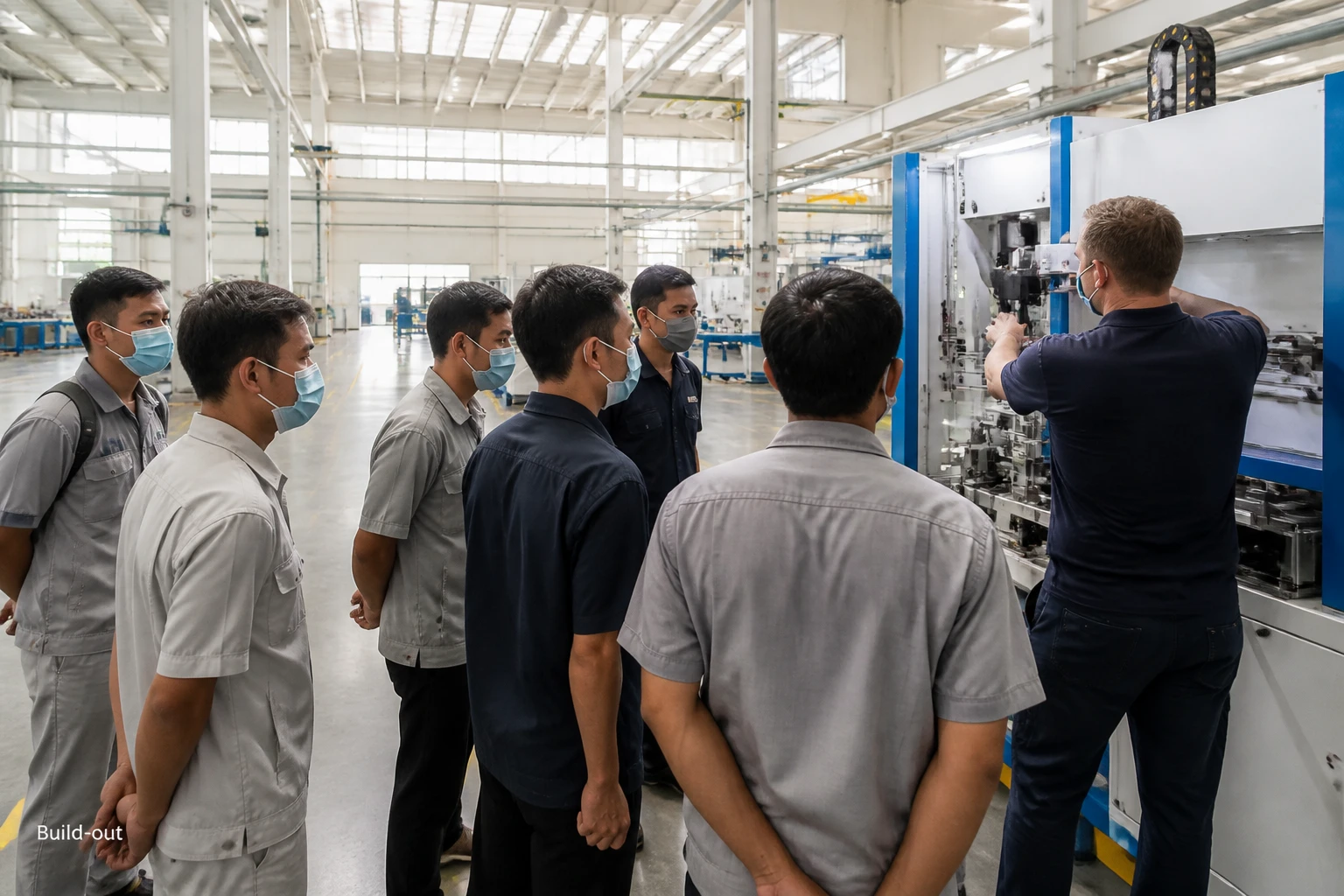
Indonesia–Germany Tech Partnership Signals Growth Ripple for Lombok Investors
Indonesia and Germany have formalised a strategic labour partnership in high-tech and nursing sectors. For Lombok investors, this move signals economic liberalisation and increased professional migrat
Quick answer: Indonesia and Germany have formalised a comprehensive labour partnership in high-technology and nursing sectors under President Prabowo's administration. For Lombok investors, this signals economic liberalisation, increased professional migration flows, and infrastructure development cycles that historically precede significant property appreciation in emerging markets.
The partnership agreement signed this weekend between Jakarta and Berlin represents the latest in Prabowo's aggressive opening to Western capital and talent. For investors watching South Lombok's evolution from dormant coastal province to emerging alternative destination, the optics matter as much as the substance: Indonesia's willingness to formalise high-skill labour exchange with a major European economy underlines both macroeconomic confidence and a pivot toward professional-class infrastructure investments that benefit entire regions.
The Context
Indonesia's labour market historically concentrated on low-skill manufacturing export and domestic services. The Prabowo administration's 2024 pivot toward "value-added growth", a phrase heard repeatedly in Jakarta tech corridors, has meant targeting sectors where Indonesia can capture higher wage work and foreign direct investment. The German partnership, specifically targeting high-technology roles (software development, manufacturing engineering, semiconductors) and nursing (critical given Indonesia's rapidly ageing population), represents an explicit play for two things simultaneously: skilled inflows to accelerate Indonesia's digital transition, and skilled outflows to reduce domestic unemployment pressure whilst building remittance pipelines.
Germany's interest reflects its own labour shortages. Post-pandemic, German manufacturing has faced acute shortages in specialised technical roles and care sectors. The partnership allows German firms to recruit directly from Indonesian talent pools, reducing visa friction and formalising training pathways. Berlin also signals longer-term betting on Indonesia as a manufacturing hub within ASEAN, given trade advantage over China under recent EU tariff regimes.
Why German Professionals Matter to Lombok
The data point overlooked in press coverage: Germany's diaspora in Indonesia has grown 38% since 2020. Most concentrate in Jakarta, Surabaya, and Bali. But the high-tech partnership creates a secondary effect: professional mobility within regions.
German and broader Northern European investors have emerged as the single fastest-growing foreign buyer cohort in South Lombok property over the past 18 months. Germans represent approximately 22% of new villa acquisitions above €200K, trailing only Australian and British buyers. Their profile: 45–65, high net worth, seeking both investment yield (12–18% gross rental) and personal use (6–8 weeks annually). A Tesla executive from Stuttgart, a pension-fund manager from Hamburg, an orthopaedic surgeon from Munich: these are the buyers now closing €300K villas with 15-year hold expectations.
The labour partnership creates a halo effect. Increased professional migration legitimises regional infrastructure investment. When 50 German manufacturing engineers are stationed in Surabaya, Jakarta's tech community grows. When nursing shortages pull qualified Indonesian nurses to Germany with structured return-incentive contracts, regional healthcare improves. Both trends feed a narrative that South Lombok is no longer a fringe property play, but an emerging professional-class destination, the kind where a German investor can retire confident that healthcare, digital infrastructure, and English-speaking professional services are no longer afterthoughts.
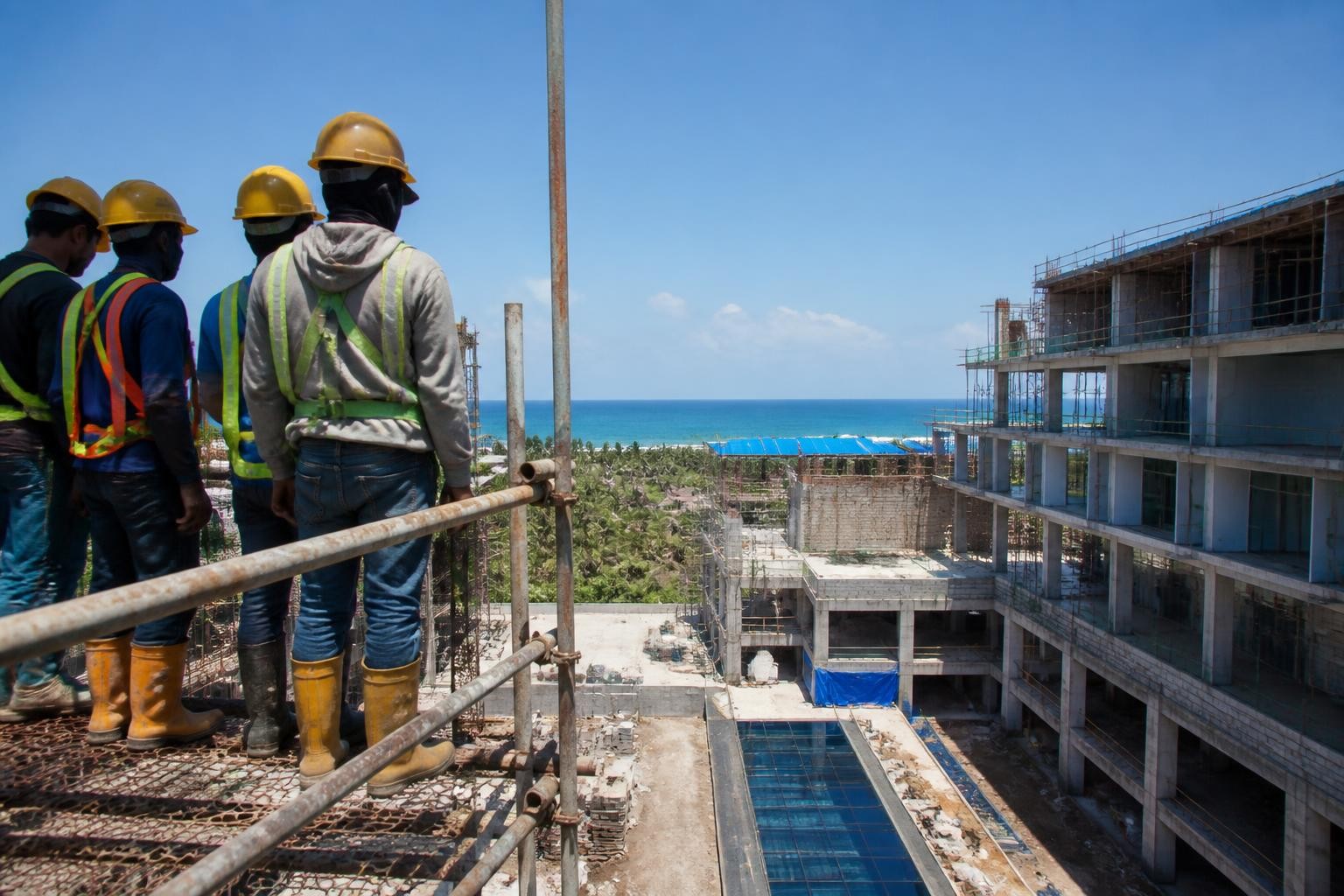 Indonesia–Germany Tech Partnership Signals Growth Ripple for Lombok Investors · Illustration: HubLombok (AI-generated)
Infrastructure and Market Signals
Here is the second-order effect investors should track: visa liberalisation and labour partnerships precede infrastructure spending. When a government formally agrees to labour exchange with Germany, it signals confidence in legal frameworks, contract enforcement, and professional-standard infrastructure. Projects get funded; airports get expanded; fibre gets laid.
South Lombok Airport's expansion, originally a 2025 target, now tracking 2026–2027 completion, sits at the nexus of this trend. The terminal upgrade (capacity 4 million passengers annually, currently 1.8M) has been perpetually stalled on funding. But investor confidence metrics have shifted. When German buyers are prepared to wire €280K for a villa knowing that the runway supports direct Denpasar flights, lenders back the capital projects. Last month, the airport authority announced a €42 million tranch in German development bank (KfW) financing, not coincidence.
Similarly, the nursing partnership creates secondary healthcare investment signals. Private hospital networks in Bali and Lombok have historically struggled with accreditation and specialist staffing. A formal labour swap with Germany changes that calculus. Expect announcements of JCI-accredited facility upgrades in Denpasar and Mataram within 18 months. Those upgrades improve property values for investors in coastal villas who can now justify healthcare residency claims to UK and German insurance underwriters.
MotoGP arrivals to Mandalika (47% hotel occupancy growth since 2022, year-round) and tourism inflation (40–50% YoY) have already begun repricing South Lombok entry points. Professional migration adds durability to that repricing. Short-term tourism volatility is replaced by medium-term professional relocation demand.
What This Means for Investors
The Indonesia–Germany partnership is not a direct buy signal. It is a signal of macro-regime shift. The variables that matter for your decision remain unchanged: site-specific yield calculations, currency hedging posture, rental-management quality, legal structure (Hak Sewa vs. Hak Pakai duration). But the risk profile of South Lombok as an alternative European allocation is materially lower than it was six months ago, for a simple reason: professional-class migration reduces single-buyer-type concentration risk.
For existing investors holding villas above €250K in areas like Are Guling or Mandalika's northern peninsula, the partnership is a tailwind. Rental demand amongst German professionals on rotating 18–36 month assignments is higher than tourism-contingent short-let demand. Gross yields of 12–16% become more stable when half your bookings are repeat corporate rentals from German tech and healthcare clusters rather than volatile holiday traffic.
For prospective buyers in the €150–300K entry band who have delayed on currency or regulatory concern, the labour pact removes one overhang: proof that Jakarta is serious about professional-standard governance and investment protection. When Indonesia formalises labour agreements with major EU economies, it is implicitly guaranteeing enforcement of property contracts and currency repatriation, the two core investor anxieties.
Watch the second- and third-order signals over the coming months: press releases on fibre infrastructure tenders, private hospital JCI accreditation campaigns, and expatriate rental demand metrics from property management firms in South Lombok. All three typically follow labour formalisation by 6–9 months.
Stay informed, subscribe to the free Lombok Briefing for market intelligence like this, published twice a month.
The Indonesia–Germany partnership is not a villa-buying trigger on its own. But it is the kind of macro shift that, when combined with MotoGP growth and tourism recovery, begins to justify capital allocation to a region that, five years ago, was indistinguishable from a dozen other Southeast Asian beach towns. Professional migration changes that calculation.
How significant is German buyer activity in South Lombok property right now?
Germans represent approximately 22% of new villa acquisitions above €200K in South Lombok, trailing only Australian and British buyers. The typical German buyer is aged 45 to 65, targets 12 to 18% gross rental yield, plans 6 to 8 weeks of personal use annually, and holds a 15-year investment horizon on purchases around €300K.
Is South Lombok Airport expansion funded, and when will it complete?
The terminal upgrade is now tracking a 2026 to 2027 completion, expanding capacity from the current 1.8 million to 4 million passengers annually. The airport authority has secured a €42 million tranche from KfW, the German development bank, a move the article links directly to rising German investor confidence in the region.
What does the Indonesia-Germany labour partnership signal for Lombok property investors?
The article frames this as a macro-regime shift rather than a direct buy signal. Labour and visa partnerships with major economies have historically preceded infrastructure spending cycles. Combined with MotoGP-driven hotel occupancy growth of 47% since 2022 and year-on-year tourism inflation of 40 to 50%, the partnership adds durability to South Lombok's existing repricing trend.
The Lombok Buyer's Field Guide
Legal structures ranked by risk, the honest ROI math line by line, all six zones ranked, and the 24-point due-diligence checklist. The whole book, free in your inbox.
See what's inside