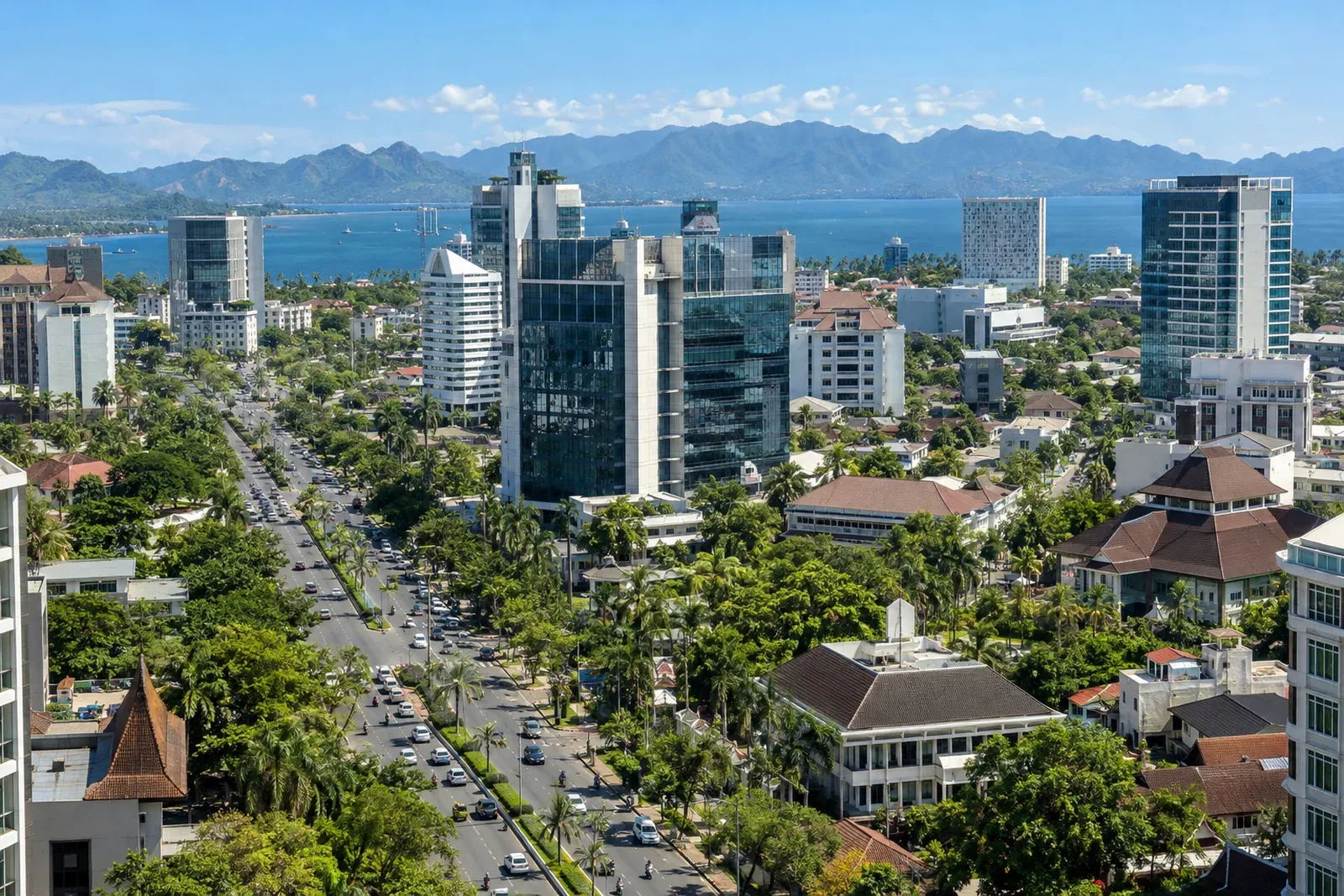
Indonesia’s $146.3bn Reserve Buffer: What Lombok Investors Should Watch
Bank Indonesia says reserves covered 5.3 months of imports at September’s end. The buffer is supportive, but it does not remove currency or project risk for investors.
Quick answer: Bank Indonesia reported US$146.3 billion in foreign exchange reserves at the end of September, enough to finance 5.3 months of imports. For Lombok investors, that is a reassuring national resilience signal, not a forecast for the rupiah, tourism or property returns. Currency exposure and each investment’s fundamentals still need separate scrutiny.
The latest reading is nearly unchanged from August and remains above the international adequacy standard cited by the central bank. That matters to investors considering Indonesia from abroad, but the headline is best read as a measure of capacity, not a promise about what happens next. The distinction is especially important when investment decisions involve a different currency from the one in which local costs or revenues are received.
The Context
In a statement reported by Antara Business on 7 October, Bank Indonesia said reserves stood at US$146.3 billion at September’s end, compared with US$146.5 billion at the end of August. The central bank described the position as relatively stable. Its account of the month’s movements included government withdrawals of external loans, tax and service revenues, payments on maturing government external debt, and Bank Indonesia’s exchange-rate stabilisation policy amid heightened uncertainty in global financial markets.
Those details offer a more useful frame than treating the headline balance as a simple scorecard. Reserves can be influenced by several public-sector flows and policy actions. The September figure therefore reflects both incoming resources and obligations, alongside the central bank’s response to market conditions. The source does not provide a breakdown of each contribution, so the available information does not support attributing the month’s position to a single cause.
The central bank said the reserves could finance 5.3 months of imports, or 5.2 months of imports and servicing of the government’s external debt. Both measures sit above the international adequacy standard of around three months of imports cited in the report. These are related but distinct measures: one includes the government’s external debt service, while the other counts imports alone. Investors should preserve that distinction when comparing the statement with future updates.
The signal: reserves remained relatively stable and covered more than the around three months of imports in the adequacy standard cited by Bank Indonesia.
What the reserve position says
The reserve coverage figures describe a national external buffer. They indicate how much import financing the reported stock could cover under the measures stated by Bank Indonesia. They do not say that every private business can access foreign currency on the same terms, that exchange rates will move in a particular direction, or that a property investment will earn a particular return. Those conclusions are not in the source.
For an overseas investor, the practical value is context. A stronger external position can be reassuring when assessing a country’s capacity to handle external payments, but a reserve figure is only one part of an investment decision. It cannot replace checking how a specific project is funded, what currency its income and obligations use, or how a buyer’s own budget responds to exchange-rate movements. These are questions to investigate, not outcomes implied by the September release.
Bank Indonesia also said reserves were sufficient to support external-sector resilience while maintaining macroeconomic and financial-system stability. It expects resilience to remain strong, supported by an adequate reserve level and foreign capital inflows, in line with positive investor perceptions of the national economic outlook and attractive investment returns. That is the central bank’s assessment and outlook. It should be read as such, rather than as independent confirmation of any individual investment’s prospects.
 Indonesia’s $146.3bn Reserve Buffer · Illustration: HubLombok (AI-generated)
Reading the policy signal
The statement also links the September position to Bank Indonesia’s exchange-rate stabilisation policy in response to heightened uncertainty in global financial markets. For investors, this indicates that the reserve discussion sits alongside active policy considerations. It does not disclose the scale or timing of any intervention, nor does it establish a future exchange-rate path. The supplied report provides no basis for adding those details.
A useful discipline is to separate three questions. First, what does the published reserve coverage say about national capacity? Second, what exchange-rate assumptions does an individual investment case rely on? Third, how would the decision look if those assumptions changed? The first question has a current answer in the central bank’s release. The next two require project-specific analysis and the investor’s own risk tolerance.
This matters particularly when comparing a headline macroeconomic indicator with a long-term asset. Reserves are a national balance-sheet measure reported for a particular period. A property purchase, by contrast, depends on its own price, legal structure, operating costs, demand and exit options. The reserve statement does not update those property-level facts. Investors should avoid letting a reassuring national indicator stand in for due diligence on a particular asset.
For a foreign buyer, currency conversion deserves explicit attention. The reported reserves are denominated in US dollars, while an investor may assess a purchase, future income and eventual resale in another currency. The source gives no forecast for those exchange rates. A sound comparison should therefore make its currency assumptions visible and test whether the investment remains acceptable under less favourable movements, without treating the reserve coverage as protection against them.
What This Means for Investors
The September report is a constructive data point for Indonesia’s external resilience: reserves were relatively stable month on month and coverage remained above the international standard cited by Bank Indonesia. That is relevant background for investors weighing country exposure. It is not a Lombok-specific indicator, a currency call or evidence that any individual asset is attractively priced.
For investors considering Lombok, the appropriate response is to keep the national signal in proportion. Use it as one input in a broader assessment, then examine the asset, its financing and its expected cash flows independently. Where returns are modelled in one currency and the investor’s capital is held in another, make the exchange-rate assumption explicit. If a case only works under a single favourable currency outcome, the reserve number does not resolve that vulnerability.
The next useful check is whether future central bank reporting continues to show an adequate buffer and how the stated drivers evolve. The current report gives a September position and the institution’s assessment, not a guarantee of future stability. Investors should look for the next verified release before treating this snapshot as a trend, and keep the distinction between official expectations and realised outcomes clear.
The central message is measured rather than dramatic: Indonesia entered the end of September with reserves that Bank Indonesia judged adequate, and the reported import coverage stayed above the cited international benchmark. For international investors, that supports a considered view of the country’s external position. It leaves the decisive work where it belongs, with the currency, legal and commercial risks of the individual investment.
Stay informed: subscribe to the free Lombok Briefing, published twice a month (the 1st and 15th), for market intelligence like this.
What did Bank Indonesia report about reserves in September?
Bank Indonesia reported foreign exchange reserves of US$146.3 billion at the end of September 2026, compared with US$146.5 billion at the end of August. It said the September position could finance 5.3 months of imports, or 5.2 months of imports and government external debt service.
Does the reserve figure mean the rupiah will strengthen?
No. The report describes reserve levels and import coverage, and notes that Bank Indonesia used exchange-rate stabilisation policy amid heightened global uncertainty. It does not forecast the rupiah’s direction. Investors should assess currency exposure separately from the national reserve indicator.
Does this report change the investment case for Lombok property?
It provides national economic context, not a property valuation or Lombok-specific forecast. The reserve figure does not establish an asset’s price, rental income or resale prospects. Investors still need to assess each project’s costs, legal structure, cash flows and currency assumptions.

The Lombok Buyer's Field Guide
Legal structures ranked by risk, the honest ROI math line by line, all six zones ranked, and the 24-point due-diligence checklist. The whole book, free in your inbox.
See what's inside