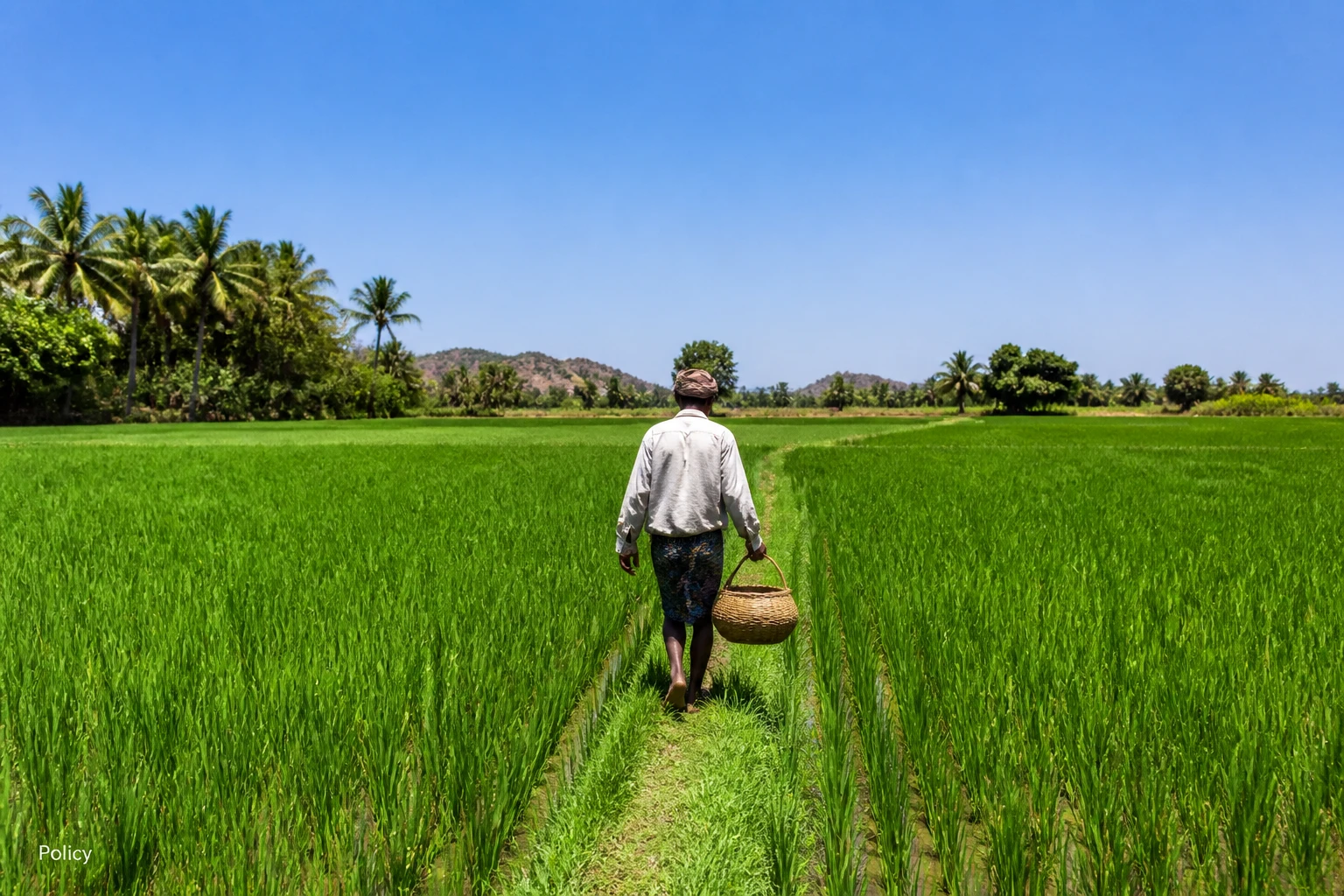
Indonesia's Food-Security Push Stabilises Economy: What It Means for Lombok Investors
Indonesia's new food-security strategy stabilises inflation and currency, reducing risk for Lombok property investors. How Prabowo's agenda reshapes the 2026 investment case.
Quick answer: Indonesia's food-security initiative under President Prabowo is designed to stabilise inflation and strengthen currency, key risks for foreign Lombok property investors. South Lombok is positioned as a regional agricultural hub, positioned to benefit from development spending that reduces macroeconomic volatility and supports property valuations.
In a striking assertion of Indonesia's economic transformation ambitions, the Prabowo administration has positioned food self-sufficiency as the cornerstone of its broader macroeconomic stabilisation agenda. Indonesia's persistent inflation, hovering above 4% throughout 2025-26, has been driven partly by volatile food prices, a drag on currency stability that foreign property investors cannot ignore. Here's why the government's new food-security strategy matters for your South Lombok villa investment.
The Context
Indonesia's inflation rate has hovered stubbornly above 4% for much of 2025-26, with food-price shocks accounting for a disproportionate share of the spike. The rupiah, already under pressure from global rate differentials and capital outflows, has faced additional headwinds from import-driven inflation. Agriculture accounts for roughly 10% of Indonesia's trade deficit, a structural vulnerability the government is determined to address.
The administration's response is comprehensive: a multi-year food-security agenda targeting domestic production scaling, supply-chain efficiency, and reduced import dependency. The ambition is audacious, to make Indonesia a net food exporter by 2030, and the strategic logic is economically sound. A nation that feeds itself is less exposed to global commodity swings, currency fluctuations driven by food prices, and the political pressure of subsidy burdens during price shocks. For property investors, this matters: macroeconomic stability translates directly to currency strength and lower inflation, both of which protect real estate valuations.
This signals that government spending and infrastructure prioritisation will flow toward agricultural modernisation with strategic focus. For property investors, especially those eyeing Southeast Asia, this matters enormously.
Lombok's Agricultural Moment
Less appreciated by international analysts: Indonesia's eastern islands, including Lombok, are now strategically central to this food agenda. The region's combination of lower labour costs, expanding irrigation infrastructure (funded via IRRI grants and World Bank loans), and post-MotoGP transport connectivity create an unusual opportunity. The Lombok airport expansion (completion 2025-26) is not merely a tourism play, it is infrastructure that enables agricultural logistics and agribusiness scale-up.
Lombok currently produces rice (~40% of provincial food calories), maize (feed grain, improving yields), cassava and tubers (drought-tolerant), and livestock (cattle, goats, underutilised). The new strategic focus on regional food production means government support will flow toward:
- Irrigated smallholder schemes (grant-funded via the agricultural ministry)
- Cold-chain and storage facilities to reduce post-harvest loss (currently 15-20%)
- Agricultural cooperatives and export-processing zones for value-add
- Rural electrification enabling agribusiness mechanisation
For property investors, this translates to non-property opportunities (agribusiness co-investments, agri-tourism hybrids) but more importantly, to macroeconomic tailwinds that insulate your villa investment from currency depreciation.
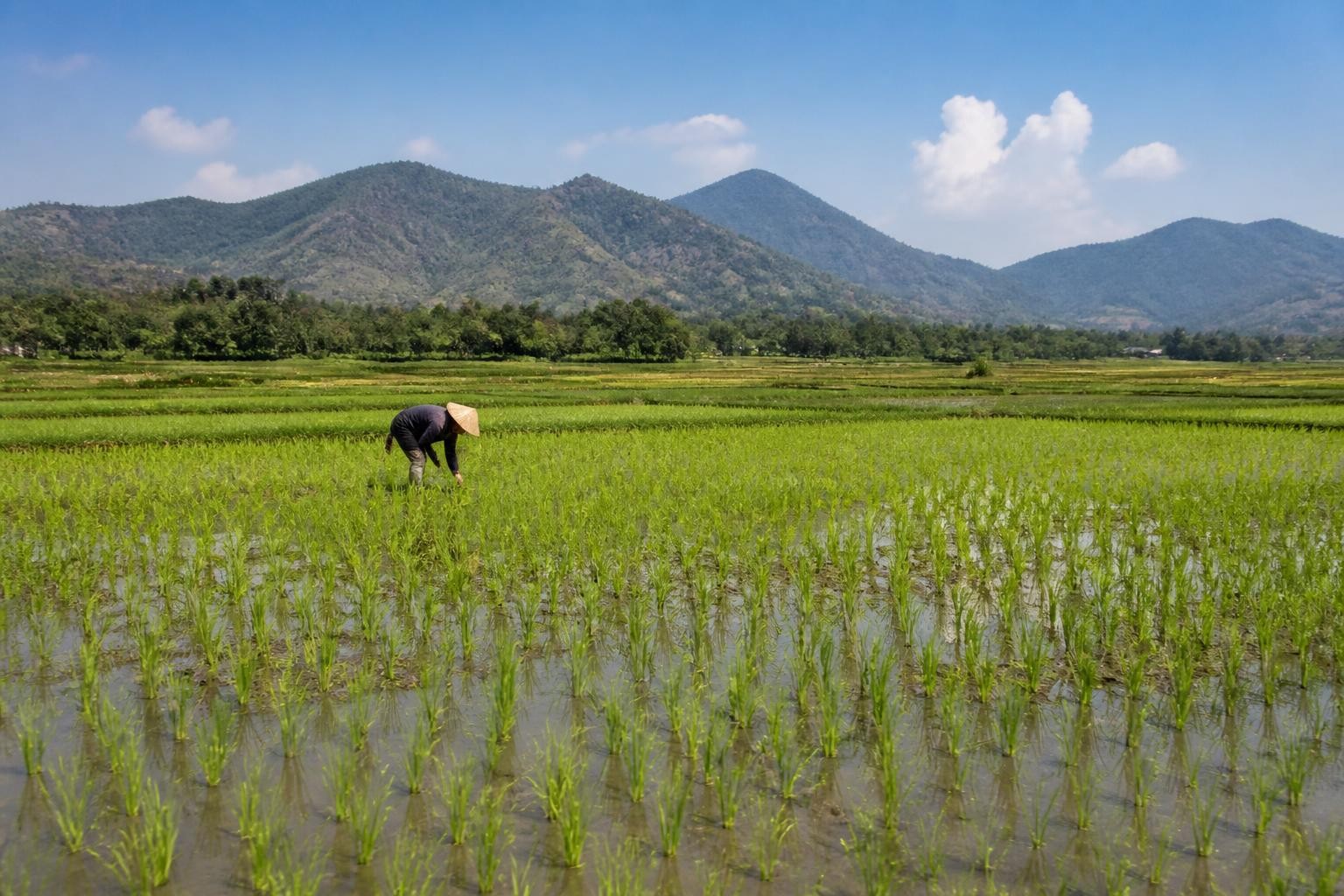 Indonesia's Food-Security Push Stabilises Economy, What It Means for Lombok Investors · Illustration: HubLombok (AI-generated)
Currency Stability and the Inflation-Hedge Narrative
Here is the critical linkage for investors: if Indonesia's food-security strategy succeeds, inflation moderates; if inflation moderates, the central bank gains confidence; if the rupiah stabilises, your €100-300K Lombok villa investment is protected from currency headwinds.
Consider the investor's dilemma in concrete terms: a European investor paying €250,000 for a South Lombok freehold villa with a gross rental yield of 14-16% is implicitly betting on two outcomes: (1) occupancy and rental rate stability (tourism, remote workers holding up), and (2) currency does not erode returns (rupiah does not depreciate beyond 3-4% annually).
The food-security agenda addresses outcome #2 directly. If inflation is controlled, anchored to 2.5-3% by end-2027, the central bank can maintain a supportive stance without burning reserves. A stable rupiah is a stable property valuation. A depreciating rupiah is a return killer: you buy at 13,000 IDR/EUR, enjoy 15% gross yield, but if the rupiah weakens 8% annually, your net EUR return collapses to 7%.
This is why institutional property investors (family offices, wealth managers) in Southeast Asia watch central-bank behaviour and inflation prints as closely as they watch tourism arrivals. Prabowo's food agenda is a signal that the government understands this nexus.
What This Means for Investors
The headline risk for European and Australian investors in 2026 was currency depreciation driven by persistent inflation and capital outflows. The Prabowo administration's food-security agenda is a credible macro-stabilisation policy, not a short-term stimulus or populist gesture. If it gains traction, and central-bank messaging suggests seriousness, foreign investors in Lombok have measurably reduced currency risk over 5-10 year hold periods, the sweet spot for villa ownership and rental income.
Separately, the strategic elevation of Lombok as an agricultural hub raises the island's political and economic priority within Indonesia's development hierarchy. Infrastructure spending follows political priority. The tourism narrative (MotoGP Grand Prix 2026, airport expansion, resort pipeline, +47% visitor YoY) is now reinforced by a credible agricultural growth story. This is the inflation-hedge narrative that distinguishes Lombok from Bali: stability plus growth, not tourism rebound speculation alone.
For investors currently on the sidelines, Prabowo's food-security pivot, backed by measurable KPIs, multilateral development-bank support, and regional prioritisation, is a material improvement in medium-term macroeconomic risk profile. The entry thesis is stronger in June 2026 than in January.
The Prabowo administration's food-security agenda unfolds over 3-5 years, with results measured in harvest yields, supply-chain efficiency, and inflation prints. But it signals strategic intent to address the inflation-currency nexus that has weighed on emerging-market property valuations. For Lombok, it reframes the investment case from pure tourism-recovery speculation to a macro-stabilisation play with concrete regional-development upside. That's a shift worth pricing into your due diligence.
Stay informed, subscribe to the free Lombok Briefing for market intelligence like this, published twice a month.
How does Indonesia's food-security policy affect foreign property investors in Lombok?
Indonesia's inflation hovered above 4% in 2025-26, partly driven by volatile food prices that weakened the rupiah. The Prabowo administration's food-security agenda targets domestic production scaling and reduced import dependency, aiming to anchor inflation to 2.5-3% by end-2027. A more stable rupiah protects foreign investors' returns, since currency depreciation of 8% annually can collapse a 15% gross yield to around 7%.
What is the currency risk for a European investor buying a villa in South Lombok?
A European paying €250,000 for a South Lombok villa with a gross rental yield of 14-16% is betting partly on currency stability. If the rupiah, bought at 13,000 IDR/EUR, depreciates 8% annually, net EUR returns can collapse to around 7%. Indonesia's goal of anchoring inflation to 2.5-3% by end-2027 is specifically designed to reduce this risk over a 5 to 10 year hold period.
Why is Lombok strategically important to Indonesia's food-security agenda?
Lombok is central to Indonesia's food-security push due to lower labour costs, expanding irrigation infrastructure funded by IRRI grants and World Bank loans, and post-MotoGP transport connectivity. The island produces rice covering roughly 40% of provincial food calories, along with maize, cassava, and livestock. Post-harvest losses run at 15-20%, an inefficiency the government targets through cold-chain and storage investment.
The Lombok Buyer's Field Guide
Legal structures ranked by risk, the honest ROI math line by line, all six zones ranked, and the 24-point due-diligence checklist. The whole book, free in your inbox.
See what's inside