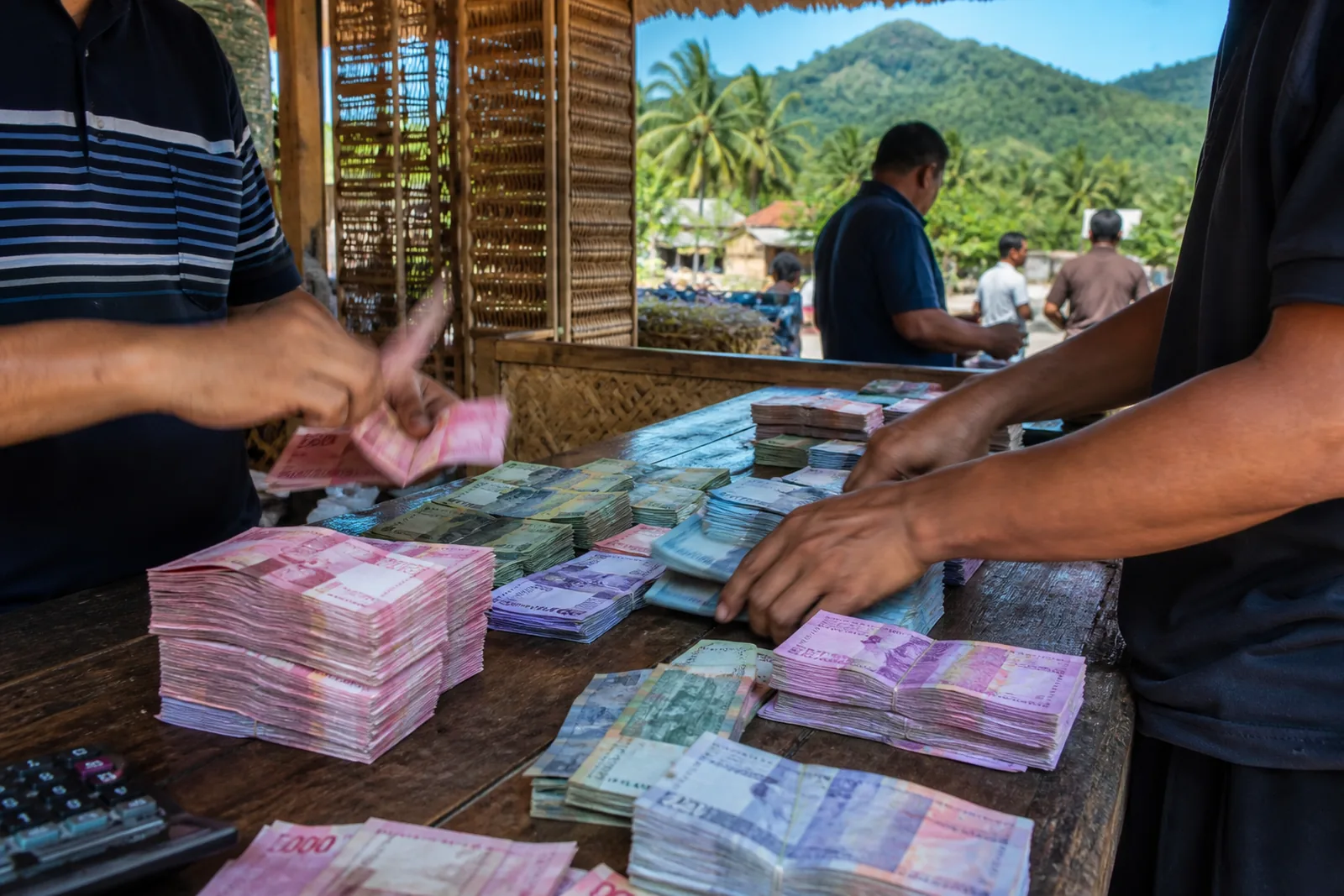
Indonesia Plans Financial Centre in Jakarta, Then Bali
President Prabowo has outlined plans for an Indonesia Financial Center in Jakarta, followed by Bali, with an international-facing legal and finance framework.
President Prabowo Subianto has announced plans for an Indonesia Financial Center, with Jakarta designated as the initial location and Bali being prepared as the next site. The proposal is ambitious: a financial hub intended to combine investment services, financial technology and internationally oriented dispute resolution.
A two-stage plan for an international hub
Speaking during his address on the 2027 State Budget Draft and its Financial Note at the People’s Consultative Assembly building in Jakarta, President Prabowo said the government had determined a temporary PFII location in Jakarta. Bali would follow once ready, with the possibility of similar centres in other locations considered attractive to investors and international funds.
Jakarta is the planned initial location for PFII; Bali is being prepared as the next location.
The announcement matters because it frames the proposed Indonesia Financial Center, or PFII, as more than a conventional office district. According to the President, it is intended to become an international financial hub focused on investment, financial technology, arbitration and commercial dispute resolution under international standards.
That emphasis on institutional infrastructure is notable. International capital does not assess an opportunity solely through a project’s commercial appeal; it also considers the frameworks through which contracts are made, disputes are resolved and capital is moved. The proposal places those questions at the centre of the government’s pitch.
The proposed legal architecture
The PFII framework described by President Prabowo would include several dedicated institutions:
- the PFII Advisory Council;
- the PFII Management Institute;
- the PFII Financial Services Supervisory Agency;
- the PFII Court under the Supreme Court; and
- the PFII Arbitration Institute.
The government also plans to permit the use of English in contracts and allow commercial-law principles and international standards to be adopted within the framework. President Prabowo said this was designed to provide greater legal certainty for businesses.
He further indicated that ad hoc judges could be selected from leading legal experts in Indonesia and internationally. Taken together, the proposed court and arbitration arrangements suggest an effort to offer commercial participants a dedicated setting for resolving disputes connected with the financial centre.
For investors, the distinction is important. A proposal to welcome overseas capital is one thing; establishing institutions that seek to give cross-border transactions a clearer legal setting is another. The practical effect will depend on how the framework is implemented, but the policy direction is explicit.
A broad menu of financial activity
President Prabowo said the PFII could support a wide range of financial services. These include banking, insurance, capital markets, derivatives, carbon exchanges, bullion, fintech, Islamic finance, family offices, treasury centres and investment management.
This breadth signals an intention to attract different forms of capital and service providers rather than concentrate only on one activity. Financial centres typically rely on an ecosystem: investors, advisers, financiers, legal specialists, technology companies and dispute-resolution services need to operate alongside one another. The Indonesian proposal appears designed around that principle.
The government is also preparing facilities intended to improve the centre’s appeal to international investors. These include certainty regarding the transfer and repatriation of capital and profits, tax facilities for eligible activities, golden visas and competitive licensing services.
None of these proposals removes the need for investors to examine transaction-level rules, eligibility requirements and implementation. Yet their inclusion in the announcement shows that the government sees international accessibility, not merely domestic financial activity, as central to PFII’s purpose.
Bali’s place in the proposal
Bali’s planned role is especially relevant for internationally minded investors with interests in Indonesia’s tourism and property markets. It is named as the next location after Jakarta, rather than as a peripheral afterthought, while the President also left open the prospect of future centres in other attractive investment locations.
The source announcement does not identify a Lombok location or set out a timetable for Bali’s opening. Investors should therefore distinguish the confirmed policy direction from details that remain to be established. It would be premature to treat PFII as an operational change to any particular property transaction, financing arrangement or investment process.
Still, the selection of Bali gives the policy a regional dimension. For foreign investors evaluating Indonesian opportunities, it places an international-finance initiative alongside one of the country’s best-known destinations for global visitors and capital. The significance for nearby markets will rest on subsequent rules and on how the proposed facilities develop in practice.
What this means for investors
The immediate takeaway is not that a new financial centre has already changed the investment landscape. It is that Indonesia’s government has publicly set out a plan to build an internationally oriented financial and commercial-law platform, starting in Jakarta and then extending to Bali.
Investors should watch for clarity on several points:
- the formal framework and operational status of PFII in Jakarta and Bali;
- the scope of English-language contracts and applicable commercial-law principles;
- the procedures of the proposed court and arbitration institute;
- eligibility and terms for tax facilities, visas and licensing; and
- the practical rules governing capital transfer and profit repatriation.
The announcement also carries a discipline worth noting. President Prabowo paired incentives with strict compliance expectations, including anti-money-laundering rules, beneficial-ownership transparency, tax obligations and international information-sharing standards. For serious investors, that combination is more meaningful than a simple promise of convenience: a credible international hub must be accessible while remaining accountable.
For Lombok-focused buyers, the prudent response is to keep the development on the watchlist without assuming direct effects. Existing property and investment decisions still require their own legal, commercial and operational due diligence. The proposed PFII may ultimately become a useful part of Indonesia’s wider investment architecture, but its relevance will be defined by the details that follow.
Stay informed, subscribe to the free Lombok Briefing for analysis like this, published twice a month.
What is the Indonesia Financial Center planned for Jakarta and Bali?
The proposed Indonesia Financial Center, or PFII, is intended as an international financial hub focused on investment, financial technology, arbitration and commercial dispute resolution under international standards. Jakarta is the initial planned location, with Bali being prepared as the next location.
Which services could the proposed PFII support?
President Prabowo said PFII could support banking, insurance, capital markets, derivatives, carbon exchanges, bullion, fintech, Islamic finance, family offices, treasury centres and investment management. The announcement describes a proposed framework rather than an already operational centre.
Does the PFII announcement directly change Lombok property investment rules?
No direct change to Lombok property investment rules is stated in the announcement. The source identifies Jakarta and Bali as planned PFII locations, while Lombok is not named. Investors should continue to assess each transaction’s legal, commercial and operational requirements independently.

The Lombok Buyer's Field Guide
Legal structures ranked by risk, the honest ROI math line by line, all six zones ranked, and the 24-point due-diligence checklist. The whole book, free in your inbox.
See what's inside