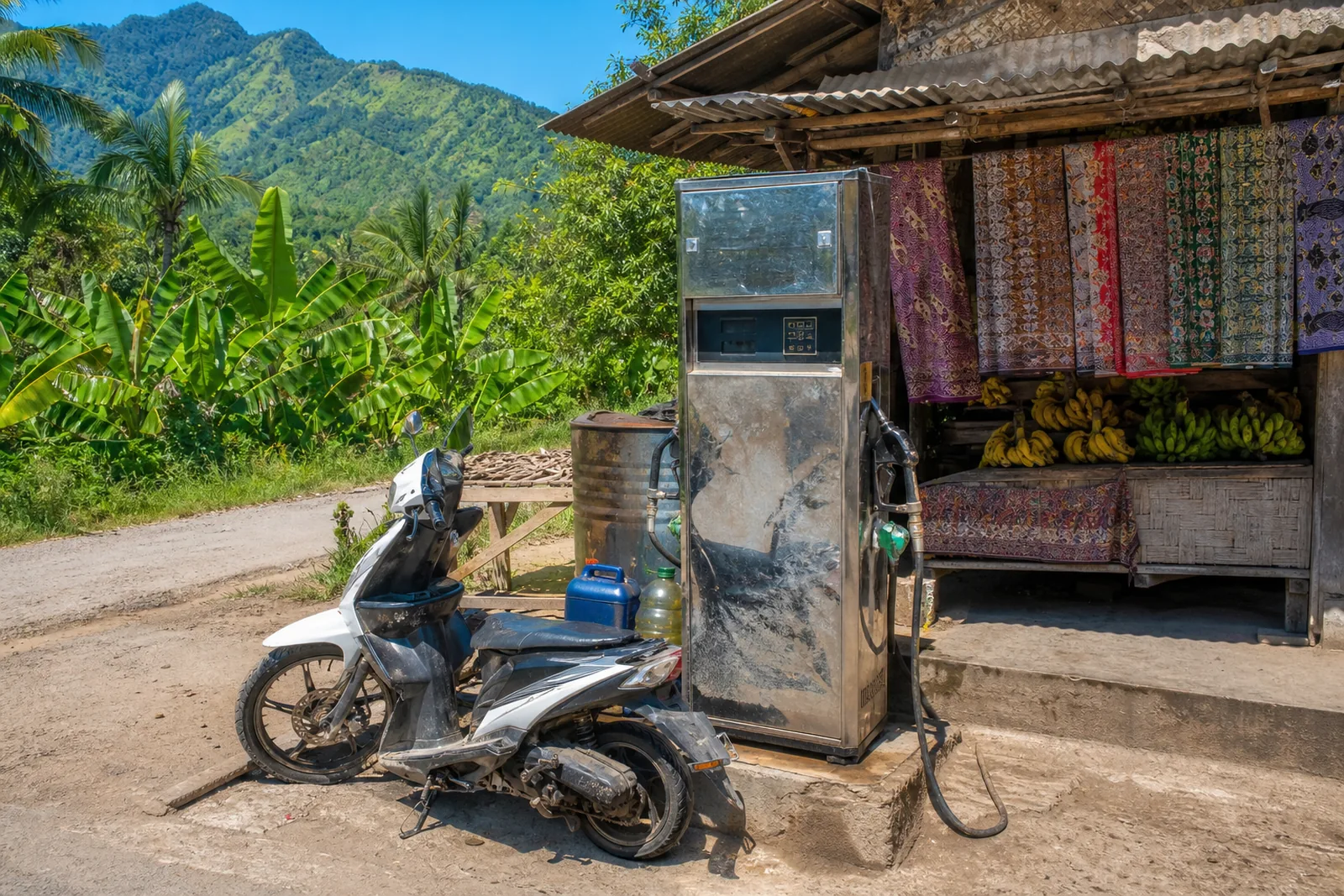
Indonesia Says Diesel Imports Will Stop After B50 Milestone
Indonesia’s planned halt to diesel imports puts energy policy at the centre of the investment conversation for Lombok.
Quick answer: Indonesia’s President Prabowo Subianto says diesel imports will stop from July 2026 following the success of B50. For Lombok investors, the immediate implication is strategic rather than transactional: monitor how the policy is implemented, what it means for fuel availability and costs, and whether it supports a more resilient national operating environment.
Indonesia’s latest energy-policy signal arrives with the force of a national statement, but not yet with the detail an investor would use to reprice an asset. According to Antara Business, President Prabowo Subianto announced that Indonesia will completely halt diesel imports starting in July 2026, following the success of B50. The announcement matters because fuel policy reaches well beyond refineries: it touches construction, logistics, tourism operations and the confidence with which capital assesses a fast-developing archipelago.
The Context
The reported policy is straightforward in ambition. Indonesia intends to cease diesel imports, and the stated basis is the success of B50. Yet the investment reading should remain disciplined. A presidential announcement establishes direction; it does not, by itself, answer every operational question that follows.
For a prospective Lombok buyer, this is not a reason to make an immediate property decision, nor is it a basis for assuming a particular change in local prices. The source provided does not set out the mechanism of implementation, the effect on retail or commercial fuel pricing, the treatment of supply logistics, or any timetable beyond the stated July 2026 start. Those distinctions matter.
The more useful interpretation is that Indonesia is placing domestic energy resilience high on its policy agenda. In practical terms, that creates a fresh due-diligence line for businesses and assets whose performance depends on transport, building activity or guest services. It is particularly relevant in destination markets, where the path from airport to villa, supplier to site, and operator to guest experience is inseparable from logistics.
South Lombok is already an investment market where underwriting requires care. Turnkey investment-grade villas enter at EUR 95,000-350,000, while honest net rental yields are generally 7-12% after management fees and realistic occupancy; top-performing assets can reach about 15% net. Developer-quoted gross yields of 12-22% are a different measure and exclude costs. An energy-policy headline should be considered alongside those fundamentals, never substituted for them.
A national pledge to end diesel imports is strategically significant. Its investable consequences depend on execution, supply conditions and the terms faced by operators on the ground.
From National Policy to Island Operations
The chain of relevance is real, even if the precise effect is not yet established. Diesel is part of the operating backdrop for construction and movement across Indonesia. A shift away from imported diesel could alter the risks and opportunities faced by firms connected to those activities. It could also become a broader test of the country’s ability to translate a nationally announced policy into reliable everyday provision.
That is why investors should distinguish three layers of analysis:
- Policy direction: the announced plan to halt diesel imports from July 2026, linked by the President to B50 success.
- Operational delivery: whether supply, distribution and commercial access remain dependable in the locations relevant to an investment.
- Asset economics: whether any change is material to construction budgets, property operations, transport arrangements or guest demand.
These layers should not be collapsed into a single conclusion. The source does not say that Lombok fuel costs will rise, fall or remain unchanged. It does not state that villa construction costs, airline operations or tourism demand will change. Nor does it provide a quantified economic impact. Any such assertion would go beyond the reported announcement.
For an investor examining a project, the appropriate response is therefore practical: ask the developer or operator how fuel exposure is handled; request clarity on construction contingencies and operating assumptions; and treat answers as evidence to test rather than sales copy to repeat. The discipline is familiar. In South Lombok, realistic stabilised occupancy over years one to three is 55-70%, compared with 70-85% in Bali. Management fees commonly sit at 18-22% of gross rental revenue, while OTA and booking commissions are 15-20%. Those established items belong in an operating model before a macro-policy development does.
The appeal of Lombok is not dependent on one energy announcement. The market’s established proposition is earlier-cycle positioning beside a more mature Bali. Foreign arrivals are trending 40-50% year on year, supported by tourism recovery and the MotoGP effect, while Kuta/Mandalika villa rates are about 38% year on year higher. These are market-context figures, not proof that the diesel-import policy will enhance returns. They simply explain why investors should follow national developments that may affect the conditions surrounding an island market.
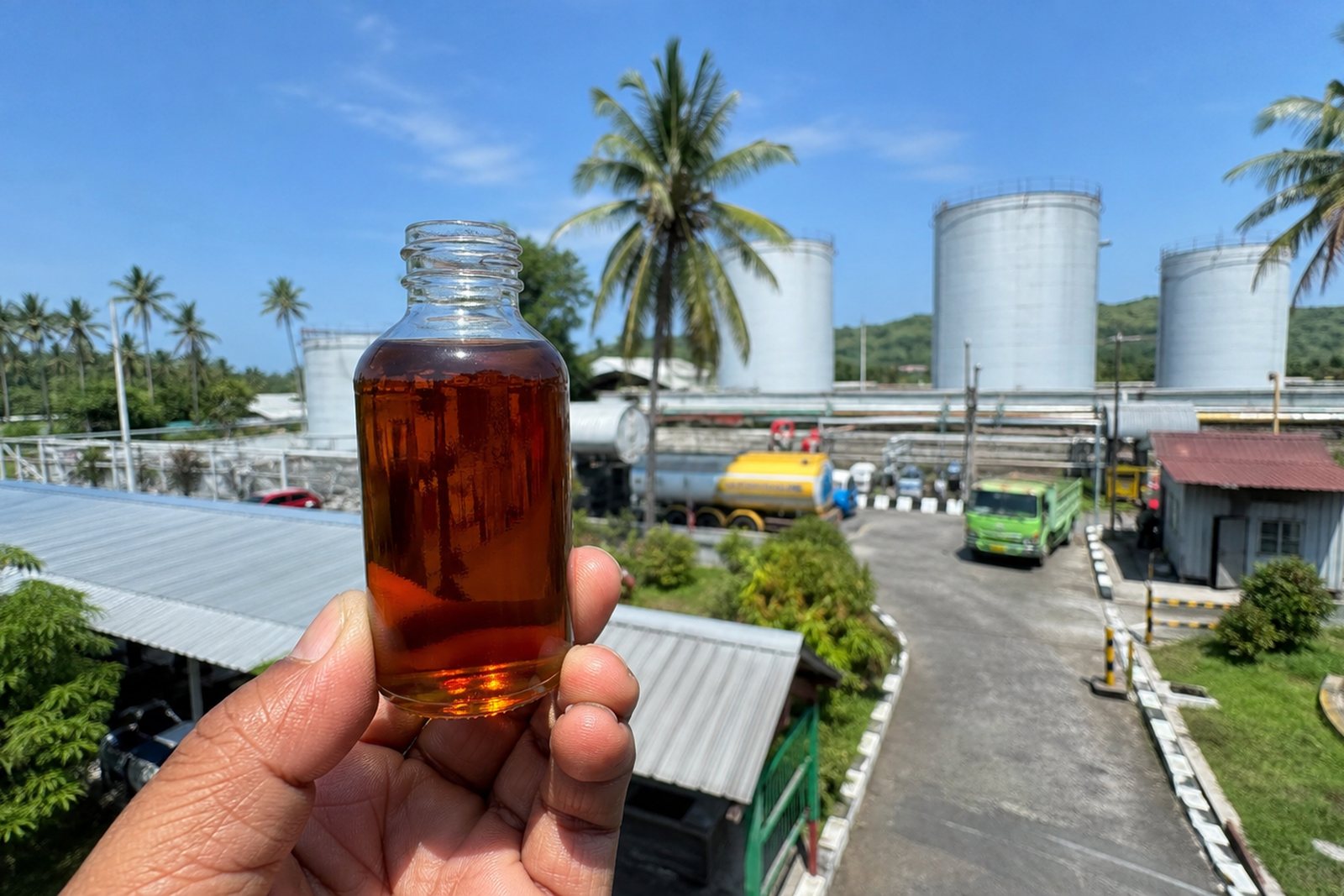 Indonesia Says Diesel Imports Will Stop After B50 Milestone · Illustration: HubLombok (AI-generated)
What Investors Should Watch Next
The next question is not whether the announcement is important; it is what evidence arrives after it. Antara Business reports the President’s intention and its link to B50 success. Investors should now look for formal implementation detail and for evidence from the relevant operating chain.
A sensible watchlist would include confirmation of how the transition is administered, whether there are practical implications for commercial users, and whether local counterparties revise assumptions in response. For off-plan purchasers, this means asking whether contractual construction budgets and delivery arrangements have changed. For operating assets, it means reviewing the assumptions behind maintenance, transfers, staffing and backup systems.
This is also a useful moment to revisit legal and ownership basics. Foreigners cannot hold freehold, or Hak Milik/SHM; citizens only can do so. Available routes include leasehold, typically 25-30 years with extensions; Hak Pakai for personal use with KITAS or KITAP residency; and a PT PMA holding Hak Guna Bangunan, or HGB, for 30 years extendable. Nominee structures, where an Indonesian holds freehold on a foreigner’s behalf, are illegal and void in court.
The relevance is not that energy policy changes those rules. It does not. Rather, volatile or evolving policy conditions are a reminder that the strength of an investment starts with matters the buyer can verify: title, zoning, ownership history, encumbrances, tax treatment and a properly documented transaction. Buyer transfer duty, BPHTB, is about 5% of assessed value. Deeds are executed by a licensed PPAT notary; the deed of sale is the AJB and the land agency is BPN.
TerraNusa Advisory, HubLombok’s legal and notary advisory partner, supports foreign buyers with due diligence, PT PMA setup, BPHTB/PPh taxes, and deed and title transfer at BPN. Its role is relevant because a notarial process should cover more than the deed alone. Investors should nonetheless obtain advice appropriate to their own circumstances and ensure that claims made by any seller, developer or adviser are documented.
What This Means for Investors
The immediate conclusion is measured. Indonesia’s reported move to stop diesel imports from July 2026 is a material national-policy development and a sign that B50 now sits at the heart of the government’s energy narrative. It does not provide a new valuation for Lombok land, villas or tourism businesses.
For investors, the opportunity is to be better prepared than the headline-driven buyer. Keep the policy in view, but maintain the hierarchy of evidence. First assess the asset: location, title, structure, build quality, operator and assumptions. Then assess the market: rents, occupancy and liquidity. Finally, assess the broader operating environment, including energy and logistics, as implementation facts become available.
Land itself illustrates why precision matters. The South Lombok range is about Rp 30-400 million per are. Kuta, the demand and liquidity leader, is Rp 300-400 million per are, while Are Guling is Rp 120-180 million per are and is described as an early-cycle frontier. These are local-market references, not a consequence of the B50 announcement. Good investment decisions preserve that distinction.
The most credible posture today is alert, not alarmed. A country reducing reliance on diesel imports may be strengthening an important part of its economic architecture; whether that produces a material benefit for a particular Lombok asset will be determined through execution and local evidence. Investors who ask exact questions now will be best placed to interpret the next official detail.
Stay informed, subscribe to the free Lombok Briefing for market intelligence like this, published twice a month.
What did President Prabowo announce about diesel imports?
According to Antara Business, President Prabowo Subianto announced that Indonesia will completely halt diesel imports starting in July 2026, following the success of B50. The supplied report does not provide operational detail on implementation, pricing or local supply conditions.
Will the diesel-import policy change Lombok property returns?
No direct effect on Lombok property returns is established by the reported announcement. Investors should monitor implementation and test construction, logistics and operating assumptions. South Lombok’s honest net rental-yield range remains 7-12% after management fees and realistic occupancy.
What should a foreign buyer check before buying in Lombok?
A foreign buyer should verify title, zoning, ownership history, encumbrances, taxes and the legal structure. Foreigners cannot hold freehold Hak Milik/SHM; leasehold, Hak Pakai and a PT PMA holding HGB are the available routes. Nominee freehold structures are illegal and void in court.

The Lombok Buyer's Field Guide
Legal structures ranked by risk, the honest ROI math line by line, all six zones ranked, and the 24-point due-diligence checklist. The whole book, free in your inbox.
See what's inside