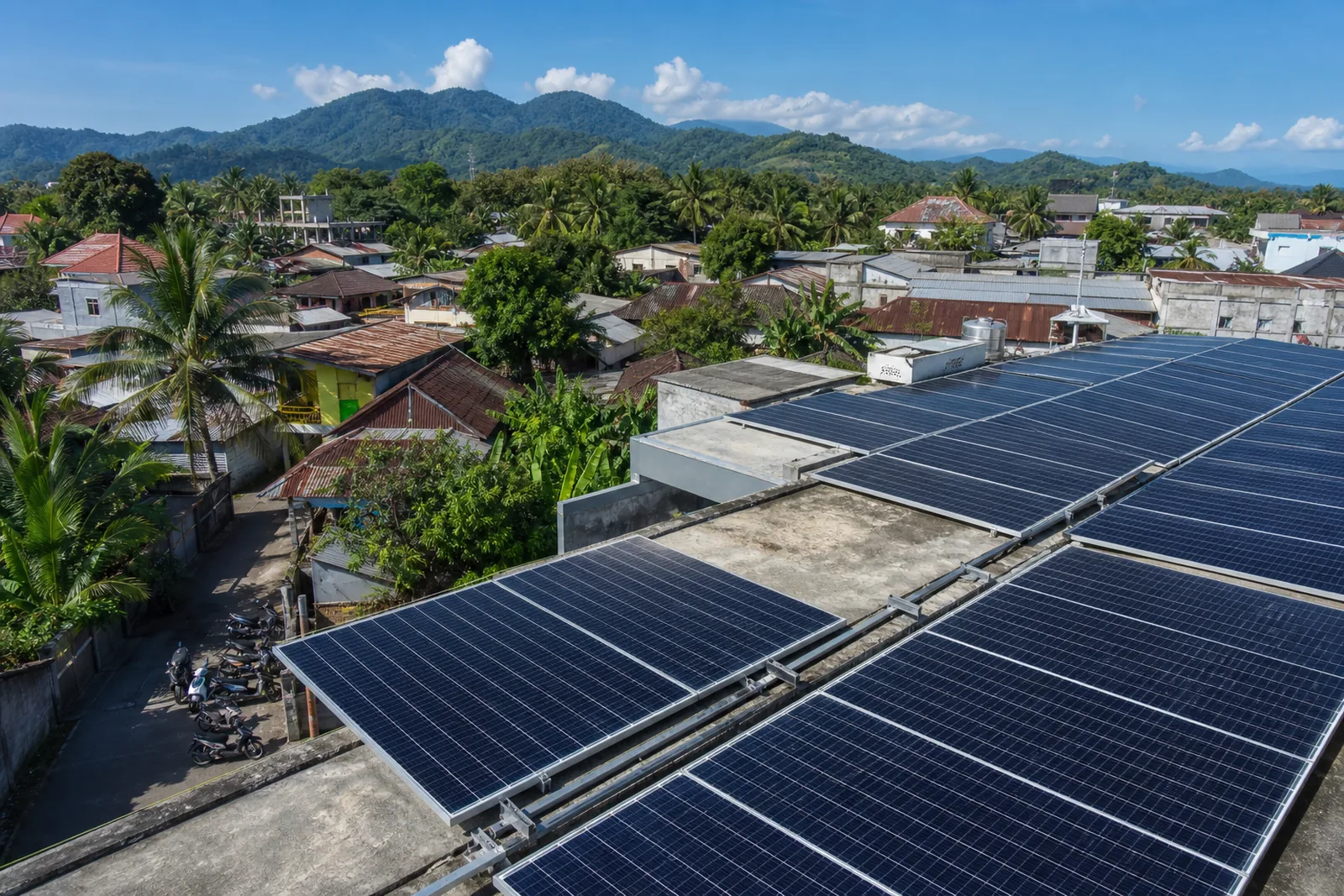
Indonesia Targets 100 GW of Solar Capacity Within Three Years
Indonesia has launched a programme targeting 100 GW of solar capacity in three years. For Lombok investors, the key point is ambition, not yet a local project allocation.
Quick answer: Indonesia has launched a national programme targeting 100 gigawatts of solar-power capacity within three years. For Lombok investors, it signals a more forceful national energy-security agenda, but the announcement does not identify a Lombok project, investment allocation, site or timetable beyond the programme’s three-stage run through 2029.
Indonesia’s solar ambitions have suddenly acquired a sharper timetable. At a programme launch in Jembrana District, Bali, President Prabowo Subianto said the government intends to build 100 GW of solar capacity within three years, a scale that would materially reshape the country’s stated electricity-generation mix if delivered.
For investors watching Lombok, the distinction is important. This is a national policy declaration, launched in Bali, rather than a confirmed South Lombok infrastructure announcement. Yet it places energy security, domestic generation and lower electricity costs more firmly at the centre of Indonesia’s economic agenda.
The Context
The President presented the solar programme as part of a broader drive towards energy self-sufficiency. According to his remarks, Indonesia currently generates 88 GW of electricity from coal, oil, gas and geothermal sources. The proposed solar build-out would therefore be larger than that stated current generation figure.
“We will build 100 gigawatts, and we are not taking this endeavour lightly. Our target is to reach 100 gigawatts in three years,” Prabowo said at the launch.
The government’s stated rationale begins with resource potential. Prabowo said Indonesia has 3,294 GWp of solar-energy potential, while installed solar capacity currently stands at 1.5 GWp. The programme is intended to lift installed capacity from that base.
The language matters because it frames solar not as a marginal environmental initiative but as an energy-security project. The President connected the proposal to reducing reliance on imported energy products, and said the country should gradually reduce that dependence.
For property and hospitality investors, dependable energy is not an abstract macroeconomic consideration. It is part of the operating environment: utilities affect construction planning, operating costs and the quality of the guest experience. But the source provides no specific conclusion about power prices, grid reliability or renewable-energy projects in Lombok. Those outcomes should not be assumed from a national target alone.
A Large Target, Delivered in Three Stages
The programme is expected to run through three stages through 2029. That creates a tension between the President’s stated three-year target and the longer three-stage programme horizon cited in the announcement. Investors should treat the declaration as a policy ambition with a defined administrative runway, rather than as evidence that every proposed capacity addition is already contracted or under construction.
The President sought assurances from senior officials responsible for economic affairs, energy, investment and downstreaming, alongside the presidents directors of state-run electricity company PLN and state-run oil-and-gas company Pertamina. The named officials included Coordinating Minister for Economic Affairs Airlangga Hartarto, Minister of Energy and Mineral Resources Bahlil Lahadalia, and Minister of Investment and Downstreaming Rosan Roeslani.
That senior-level involvement is a useful signal of political priority. It is not, however, a substitute for project-level evidence. A prudent investor will want to see, in due course:
- confirmed locations and land arrangements;
- grid-connection plans and delivery sequencing;
- financing and procurement detail;
- the role of PLN and other state entities;
- any specific implications for island grids, including Lombok.
The government expects the agenda to save up to Rp73.9 trillion, described as over US$4 billion, annually in national electricity costs. This is an official expectation, not a realised saving. It should therefore be read as an indication of the programme’s intended economic case, rather than a forecast an individual property owner can incorporate into operating assumptions today.
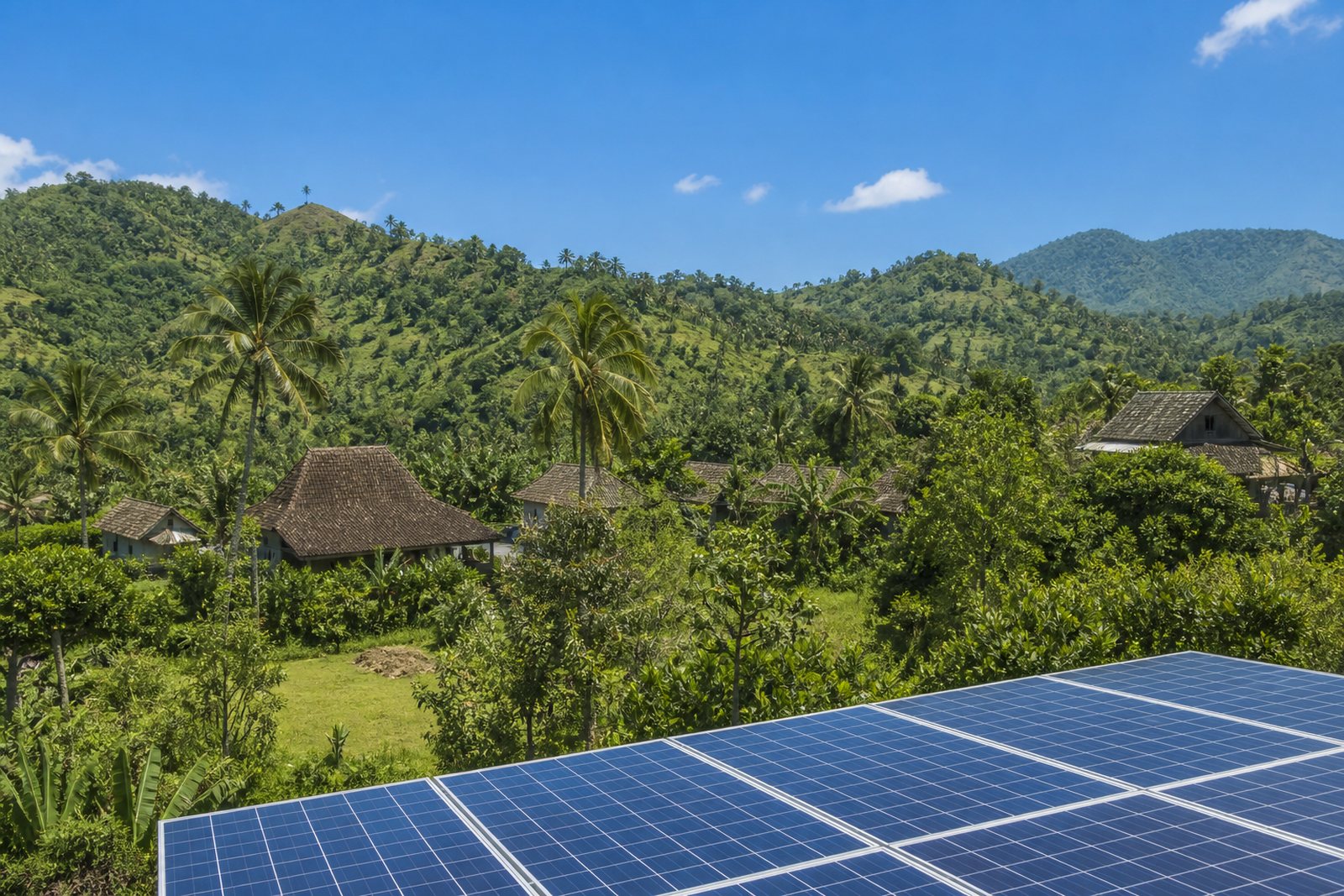 Indonesia Targets 100 GW of Solar Capacity Within Three Years · Illustration: HubLombok (AI-generated)
What the Announcement Does, and Does Not, Say
The dispatch offers a strong statement of direction but a limited investment blueprint. It says the government aims to develop 100 GW of solar capacity, identifies the national solar-potential figure, and links the effort to energy self-sufficiency and lower national electricity costs. It also confirms that the programme will proceed in stages through 2029.
It does not state how much capacity, if any, is planned for Lombok; whether a project will serve a particular tourism zone; or how the programme would alter tariffs, building requirements or private renewable-energy investment opportunities. It does not identify a developer, site, transaction structure or project-level return.
That restraint is particularly valuable in an early-cycle market. South Lombok’s investment case already rests on tourism, relative entry pricing and the possibility of Bali-overflow demand, not on an unannounced solar project. Turnkey investment-grade villas are cited in the market context at EUR 95,000-350,000, while honest net rental yields are generally 7-12% after management fees and realistic occupancy; top-performing assets can reach about 15% net. Those are market ranges, not benefits created by this solar announcement.
For offshore buyers, it is equally important not to let a national infrastructure headline obscure transaction fundamentals. Foreigners cannot hold freehold Hak Milik, or SHM. Available routes include leasehold, Hak Pakai for eligible residents, and a foreign-owned PT PMA holding Hak Guna Bangunan, or HGB. Nominee arrangements in which an Indonesian holds freehold on a foreign buyer’s behalf are illegal and void in court.
What This Means for Investors
The immediate implication is strategic, not transactional. Indonesia is signalling that solar generation and reduced imported-energy reliance are priorities at the highest political level. Investors with a long horizon in Lombok should watch whether that priority becomes visible in provincial planning, grid investment, commercial procurement or project announcements relevant to the island.
The appropriate response is neither to dismiss the announcement nor to capitalise it prematurely. It is to separate confirmed facts from possible downstream effects.
| Confirmed in the announcement | Not confirmed for Lombok investors | | --- | --- | | A target of 100 GW of solar capacity within three years | A Lombok solar project or capacity allocation | | Current installed solar capacity of 1.5 GWp | A change in local electricity tariffs | | A three-stage programme through 2029 | A property-level cost saving or return | | Expected annual national savings up to Rp73.9 trillion | A named private investment opportunity |
For buyers considering South Lombok property, maintain the same discipline required in any emerging market. Underwrite rental income using realistic occupancy and net, rather than gross, yield assumptions; verify legal structure and title; and distinguish national ambitions from an asset’s documented infrastructure position. Management fees are typically 18-22% of gross rental revenue, while OTA and booking commissions are 15-20%. These costs remain relevant regardless of future energy policy.
HubLombok is the editorial arm of Samudra Villas, an active developer in Are Guling, South Lombok. That connection does not turn the present national announcement into a local development commitment. It does, however, reinforce why investors should follow the detail that may emerge after the launch: energy policy can shape the investment environment, but its value is realised only through delivery, location and execution.
The next meaningful signal will be concrete evidence, announced sites, capacity allocations, grid plans or rules that connect the national programme to Lombok. Until then, this is best read as a significant national policy marker with potential long-term relevance, rather than a near-term property catalyst.
Stay informed, subscribe to the free Lombok Briefing for market intelligence like this, published twice a month.
Does Indonesia’s 100 GW solar target include Lombok?
The announcement sets a national target of 100 GW of solar capacity within three years, but it does not identify a Lombok project, capacity allocation, site or local delivery timetable. Investors should wait for project-level announcements before treating it as a Lombok-specific catalyst.
What is Indonesia’s current installed solar capacity?
President Prabowo said Indonesia currently has 1.5 GWp of installed solar capacity and solar-energy potential of 3,294 GWp. The government’s programme aims to expand capacity as part of a wider energy-security agenda running through three stages to 2029.
Should Lombok property investors change their assumptions now?
No immediate change is supported by the announcement. It provides no Lombok tariff, grid-reliability, project-location or property-return details. Investors should continue to assess assets using realistic net yields, occupancy, legal structure and verified local infrastructure rather than a national policy target.

The Lombok Buyer's Field Guide
Legal structures ranked by risk, the honest ROI math line by line, all six zones ranked, and the 24-point due-diligence checklist. The whole book, free in your inbox.
See what's inside