Hospitality Standards Are Becoming Part of Lombok’s Investment Story
Why a hospitality-standards push ahead of Mandalika MotoGP matters for Lombok property investors assessing rental income, operations and market maturity.
Quick answer: Indonesia’s effort to strengthen hospitality standards ahead of Mandalika MotoGP matters to Lombok investors because property returns depend on reliable guest experiences as much as location and design. For buyers, it reinforces the need to assess operators, distribution costs and realistic occupancy, not simply a developer’s headline yield.
A tourism market does not become investable merely because visitors arrive. It becomes investable when the experience surrounding an asset, arrival, service, cleanliness, booking, maintenance and problem-solving, can support repeatable pricing. Antara Business reports that Indonesia’s state-owned tourism-area developer, InJourney Tourism Development Corporation (ITDC), has conducted a hospitality-standards initiative ahead of Mandalika MotoGP.
For South Lombok, that is a useful signal rather than a reason for exuberance. MotoGP attention can bring demand, but a maturing hospitality culture is what determines whether a destination can turn visibility into a dependable rental proposition.
The Context
Mandalika is the special economic zone around the MotoGP circuit; Kuta is the adjacent town. The distinction matters to investors because they are connected in a visitor’s itinerary but are not the same property market. A circuit event can create a powerful focal point for international attention, while the wider hospitality ecosystem determines how broadly and durably that attention is absorbed.
The verified South Lombok data already show a market in transition. Foreign arrivals are reported to be up 40-50% year on year, linked to tourism recovery and the MotoGP effect. Kuta/Mandalika villa rates are about 38% higher year on year. These are meaningful movements, but they should not be mistaken for a complete operating history or a guarantee of future performance.
Hospitality standards are not cosmetic. They are the operating infrastructure that turns a villa from a building into a service business.
That distinction is particularly important for overseas buyers. An investor may be able to identify an attractive view, a compelling architectural scheme or a comparatively low entry price; the guest experiences that protect nightly rates are more prosaic. They include response times, housekeeping, maintenance, check-in, booking accuracy and the ability to recover gracefully when something goes wrong.
The economics make this unavoidable. A developer may quote a gross yield of 12-22%, but gross yield excludes important costs. An honest net rental yield is 7-12% after management fees and realistic occupancy, while top-performing assets can reach about 15% net. Management fees typically take 18-22% of gross rental revenue, and online-travel-agency or booking commissions are 15-20%. The operational standard is therefore not an abstract badge of quality: it is part of the discipline required to defend the net outcome.
Standards, Events and the Guest Experience
The Antara Business report is notable because it places hospitality standards alongside Mandalika MotoGP rather than treating the event as a stand-alone tourism spectacle. This is the more useful frame for investors. Large events may introduce a destination to audiences that would otherwise not encounter it, but the commercial value lies in what visitors find when they return outside an event window, or recommend the destination to others.
A practical investment review should separate three layers of the guest proposition:
- Destination confidence: the quality and consistency visitors perceive across the local stay.
- Asset execution: the villa’s design, condition, privacy and suitability for its target guest.
- Operating discipline: the operator’s ability to market, price, service and maintain the asset through normal trading conditions.
The first layer is inherently collective. A single property cannot substitute for a weak wider experience. Equally, an improving destination standard cannot rescue a badly managed villa. Investors should see the ITDC-linked initiative as evidence that the service layer is receiving attention, while still underwriting each asset on its own operating merits.
The contrast with Bali helps explain why this matters. South Lombok’s realistic stabilised occupancy in the first 1-3 years is 55-70%, compared with 70-85% in Bali. That gap is not simply a drawback; it is a reminder of where the investment work sits. Lombok’s proposition is earlier-cycle, with a lower-cost base in several areas, but the path from visitor interest to stable occupancy relies on credible management and destination development.
There is also a natural hierarchy of market maturity within South Lombok. Kuta is the demand and liquidity leader, with land at Rp 300-400 million per are, approximately $18,200-24,200 per are. Mandalika land is Rp 100-150 million per are, or roughly $6,100-9,100 per are. The different pricing should not be reduced to a simple ranking of quality: it reflects distinct positions in the market, including Kuta’s established demand profile and Mandalika’s role around the special economic zone and circuit.
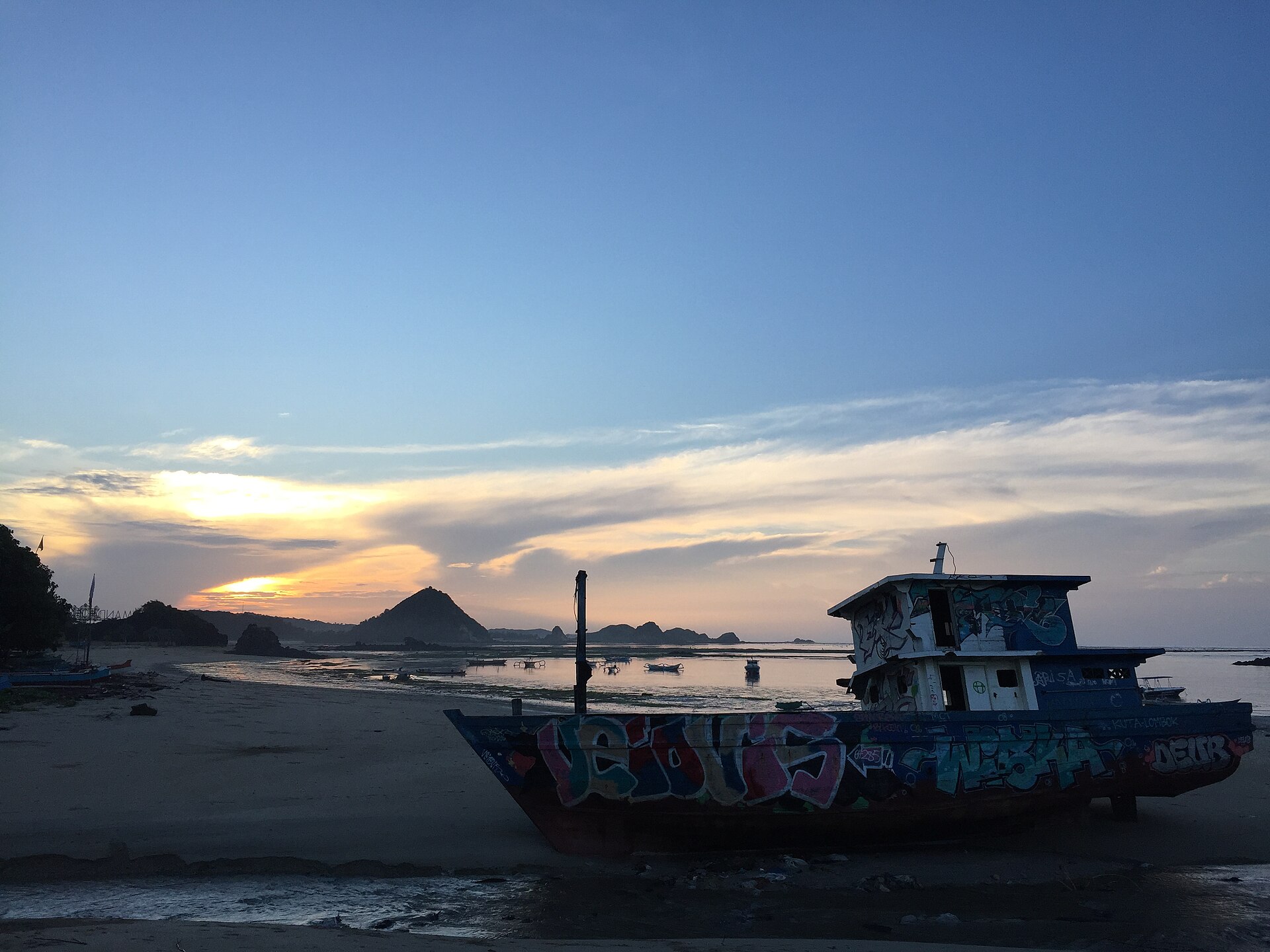
 Hospitality Standards Are Becoming Part of Lombok’s Investment Story · Photo by Afif Ramdhasuma on Pexels
Reading the Signal Without Overreading It
A standards programme ahead of a major event is encouraging, but it is not an investment return. Investors should be wary of two equal and opposite mistakes: dismissing such initiatives as public relations, or assuming they erase the ordinary risks of a young rental market.
The first mistake ignores the reality that service consistency is commercially valuable. Luxury travellers do not divide their judgement neatly between a villa and a destination. A smooth holiday experience can support positive reviews and repeat demand; a fragmented one can weaken even a beautiful property’s appeal.
The second mistake is more expensive. No hospitality initiative alters the basic need for conservative underwriting. Buyers should ask for assumptions rather than slogans:
| Question | Why it matters | |---|---| | Is the quoted yield gross or net? | Gross figures of 12-22% exclude costs that affect investor income. | | What occupancy is assumed? | A realistic stabilised range is 55-70% in the first 1-3 years. | | Who operates the asset? | Management fees of 18-22% of gross rental revenue shape the net result. | | How are bookings acquired? | OTA and booking commissions of 15-20% are a material operating cost. |
This is also where legal structure becomes inseparable from commercial judgement. Foreigners cannot hold freehold, or Hak Milik/SHM; it is reserved for Indonesian citizens. Legitimate routes include leasehold, typically 25-30 years with extensions; Hak Pakai for eligible residents with KITAS or KITAP; and a PT PMA holding Hak Guna Bangunan, with 30 years extendable. Nominee arrangements, where an Indonesian person holds freehold on a foreigner’s behalf, are illegal and void in court.
Proper diligence should cover the certificate, ownership history, zoning and encumbrances, alongside the commercial documents. TerraNusa Advisory, HubLombok’s independent licensed-notary and legal advisory partner for foreign buyers in Lombok, describes its role as handling the full chain: due diligence, PT PMA setup where appropriate, relevant BPHTB/PPh tax work, and deed and title transfer at BPN. Deeds are executed by a licensed PPAT notary; the deed of sale is the AJB. These details are not a substitute for individual advice, but they illustrate why investors should treat legal and operating diligence as one decision.
What This Means for Investors
The more nuanced Lombok thesis is not that MotoGP alone will transform every plot or villa. It is that a visible event, tourism recovery and attention to hospitality standards can strengthen the conditions in which a destination develops, provided the individual asset is bought at a sensible price, structured lawfully and operated competently.
For investors comparing South Lombok locations, the relevant question is therefore not simply where land is cheapest. Bumbang’s entry range is Rp 30-50 million per are; Mawun is Rp 50-80 million per are; Are Guling is Rp 120-180 million per are; Selong Belanak is Rp 150-250 million per are; Mandalika is Rp 100-150 million per are; and Kuta is Rp 300-400 million per are. Each figure represents a different balance of entry cost, market maturity and liquidity.
Are Guling, where Samudra Villas operates, is described in the verified market data as an early-cycle frontier, with land at Rp 120-180 million per are and momentum of about 47% year on year. HubLombok is the editorial arm of Samudra Villas, an active developer in Are Guling. That relationship is relevant context for readers assessing commentary on South Lombok development and should be weighed accordingly.
The prudent conclusion is modest but valuable. Hospitality standards will not make yield projections certain, and event-led demand should not replace due diligence. Yet a destination that takes service quality seriously is building part of the commercial foundation investors need. In Lombok, that foundation may prove as important as the villa itself.
Stay informed, subscribe to the free Lombok Briefing for market intelligence like this, published twice a month.
Why do hospitality standards matter to Lombok villa investors?
Hospitality standards matter because rental performance depends on the guest experience as well as the property itself. In South Lombok, honest net rental yields are typically 7-12% after management fees and realistic occupancy, so service quality and operational consistency can materially affect the income an investor actually receives.
Should investors treat MotoGP demand as a guarantee of Lombok rental returns?
No. Foreign arrivals are reported up 40-50% year on year, linked to tourism recovery and the MotoGP effect, but an event does not guarantee property income. Investors should distinguish developer-quoted gross yields of 12-22% from net results and assess realistic occupancy, management and booking costs.
Can a foreign investor buy freehold land in Lombok?
No. Foreigners cannot hold freehold Hak Milik or SHM, which is reserved for Indonesian citizens. Lawful routes include leasehold, Hak Pakai for eligible residents, or a PT PMA holding HGB. Nominee arrangements are illegal and void in court.
The Lombok Buyer's Field Guide
Legal structures ranked by risk, the honest ROI math line by line, all six zones ranked, and the 24-point due-diligence checklist. The whole book, free in your inbox.
See what's inside