Flores Quake Recovery Puts Road Access First in East Nusa Tenggara
Daily Dispatch: Indonesia’s Public Works Minister says reopened roads and bridge repairs are central to restoring access after the Flores earthquake.
Quick answer: Indonesia has made road access its immediate priority after the magnitude 7.7 Flores earthquake damaged routes and bridges in Sikka, East Nusa Tenggara. For Lombok investors, this is not a direct local-market event, but a live reminder that regional connectivity, resilient infrastructure and credible recovery capacity matter to tourism and operating assets.
The first task after a disaster is rarely glamorous: make places reachable again. In Sikka District, that task now sits at the centre of the official response, as authorities clear roads, assess unstable slopes and plan temporary alternatives where bridge damage has cut communities off from essential services and economic routes.
The Context
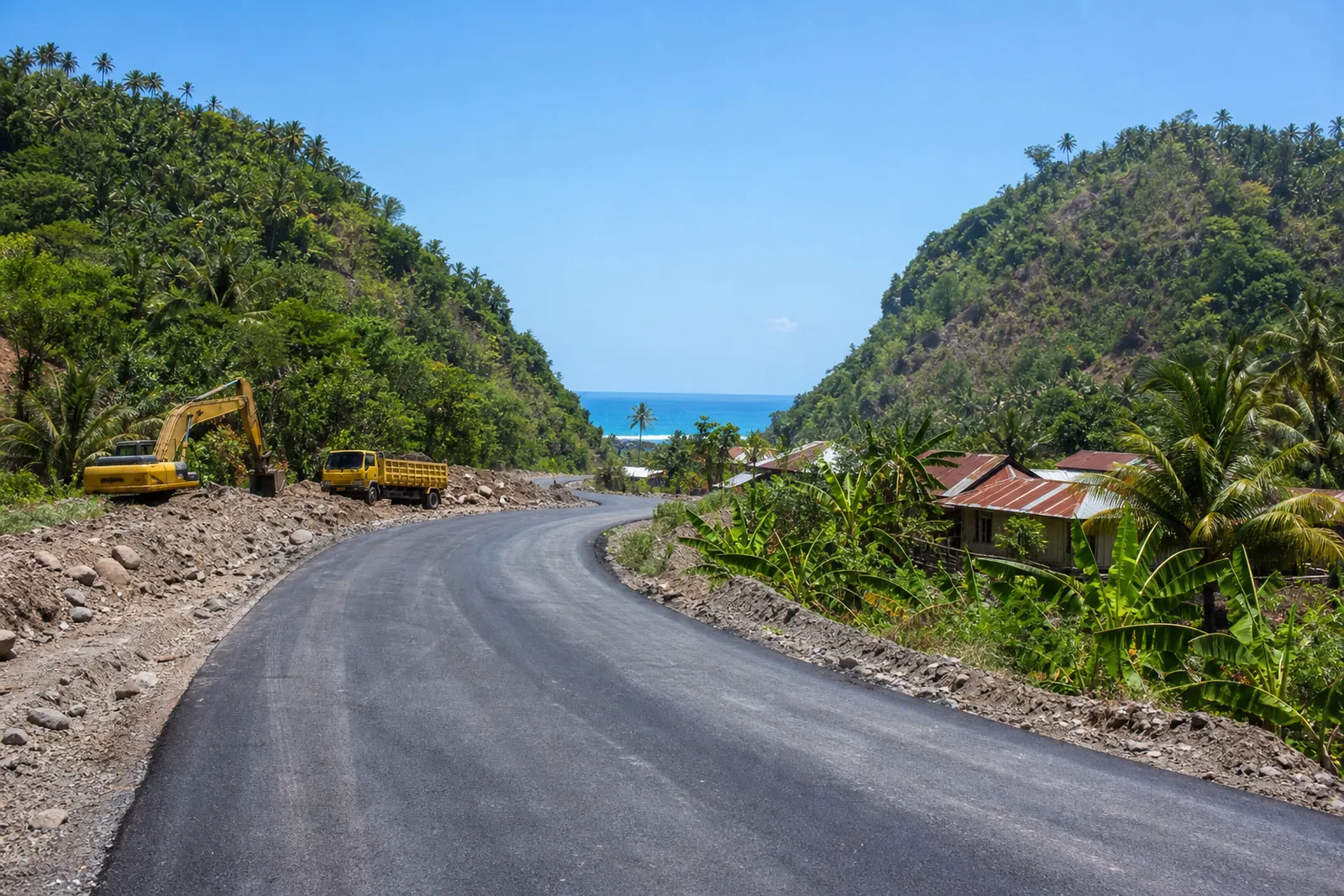
Public Works Minister Dody Hanggodo said restoring road access is the leading priority in post-earthquake recovery in Sikka District, East Nusa Tenggara Province. The magnitude 7.7 Flores earthquake triggered landslides and severely damaged several road sections, creating an immediate logistical problem alongside the human consequences of the event.
The minister said several national roads that had been cut off were cleared and reopened to support mobility and aid distribution. That distinction is important. A reopened route may restore a vital connection, yet the wider recovery still depends on the condition of road sections, bridges and slopes beyond the initial clearance work.
Authorities have repaired the Lianunu-Hepang, Krica-Nitung and Krica-Lidi routes, according to the minister. Other areas still require heavy equipment and further work. The Koro-Maumere section near Dagedama Bridge remains a particular concern because active landslides on nearby cliffs threaten both the road and the Ende-Maumere logistics route.
“Several national roads that were previously cut off have now been cleared and reopened to facilitate mobility and aid distribution,” Hanggodo said.
For investors following eastern Indonesian tourism and infrastructure, the message is more useful than a broad assurance that recovery is under way. Access is being restored selectively, and risk remains concentrated where terrain is unstable or a single connection carries wider logistical importance.
Roads Reopen, but Bridge and Slope Risks Remain
The response described by the minister has two tracks: restore movement as quickly as possible, then strengthen the infrastructure so that recovery is not merely temporary. In practice, the difference can be seen in the treatment of roads, retaining works and bridge damage.
The immediate priorities reported by Antara Business are:
- clearing and reopening previously cut-off national roads;
- repairing damaged sections including Lianunu-Hepang, Krica-Nitung and Krica-Lidi;
- addressing active landslides near Dagedama Bridge on the Koro-Maumere section;
- considering retaining walls to stabilise the threatened area; and
- closing the severely damaged Wolowiro Bridge while a temporary route and permanent replacement are planned.
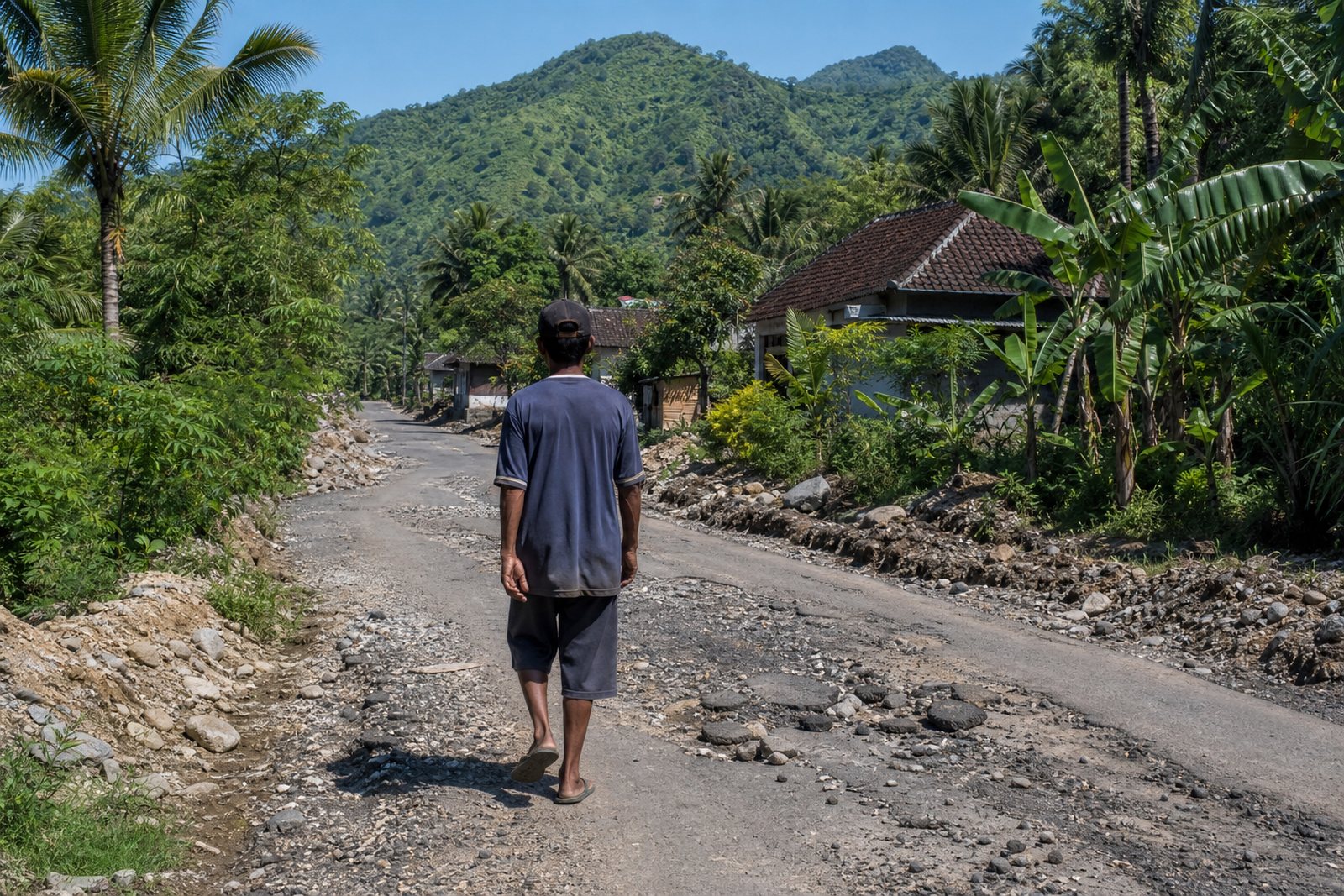
The Wolowiro Bridge illustrates why a disaster-recovery announcement should be read as an operational update, rather than as a simple all-clear. The bridge suffered severe structural damage, disrupting access to schools, health facilities, agricultural routes and tourism areas. Authorities have recommended its closure, a temporary route and a permanent replacement plan.
Hanggodo said several bridges would need one or two more days to become fully functional, while expressing an expectation that they would soon operate at full capacity. That is a short horizon for certain bridge functions, but it should not be treated as a timetable for the whole recovery. The same official account identifies locations where further work and heavy equipment are still required.
The minister also said reconstruction should make infrastructure more resilient, in line with President Prabowo’s direction. That ambition matters because the investment value of transport infrastructure lies not only in its existence, but in whether it remains serviceable when conditions are most demanding.
| Recovery issue | Status described by the minister | | --- | --- | | Previously cut-off national roads | Cleared and reopened | | Several named road sections | Repaired | | Koro-Maumere near Dagedama Bridge | Still threatened by active landslides | | Wolowiro Bridge | Severe damage; closure and temporary route recommended | | Several bridges | Expected to need one or two more days to become fully functional |
 Flores Quake Recovery Puts Road Access First in East Nusa Tenggara · Illustration: HubLombok (AI-generated)
A Regional Test of Resilient Connectivity
There is no basis in the minister’s statement to suggest a direct disruption to Lombok property, tourism operations or transport infrastructure. Investors should resist drawing one. Flores and Lombok are distinct markets, and a regional event should not be converted into a local claim without evidence.
Yet the recovery offers a relevant regional lens. Tourism areas, agricultural routes, health facilities and schools are all named as affected by disrupted access around the Wolowiro Bridge. In a destination economy, transport links serve several functions at once: they move visitors, staff, supplies, emergency assistance and local economic activity. When a road section or bridge fails, those functions do not separate neatly.
The official focus on retaining walls near Dagedama Bridge is also instructive. The issue is not solely the road surface; it is the stability of the surrounding terrain and the security of the logistics route it supports. Investors assessing property or operating businesses in Indonesia’s archipelagic markets should therefore distinguish between a completed transport link and a resilient one.
That is especially relevant when evaluating any asset that depends on road access for construction, staffing, maintenance, guest transfers or supply delivery. A glossy destination narrative can describe proximity and scenery. A more durable investment assessment asks what route enables that proximity, whether there are alternatives, and how the responsible authorities are responding when infrastructure is disrupted.
The Flores response is still moving. Road access has been reopened in several places, while landslide risks, bridge repair and longer-term reconstruction continue to shape the recovery picture. The appropriate investor posture is neither alarm nor complacency: follow verified operational updates, separate restored access from completed resilience work, and avoid treating early recovery statements as a final condition report.
What This Means for Investors
For investors with an interest in Lombok and the wider eastern Indonesian region, the immediate implications are practical.
- Do not overstate local exposure. This report concerns Sikka District in East Nusa Tenggara, not Lombok. It does not establish a direct impact on Lombok assets or visitor flows.
- Treat access as an investment variable. Roads and bridges support daily operations as well as emergency response. Due diligence should consider the routes an asset relies upon, not only the asset itself.
- Read recovery in stages. Cleared roads, repaired sections, temporary routes and permanent replacements describe different levels of restoration. They should not be collapsed into a single conclusion.
- Watch resilience measures. The recommendation for retaining walls near Dagedama Bridge and plans for a permanent Wolowiro replacement show where authorities see continuing vulnerability.
- Prioritise verified updates. The minister’s statement identifies real progress and unresolved constraints. That is more useful than generalised regional narratives during a live recovery.
For HubLombok readers, the broader lesson is simple: infrastructure is not background scenery to an investment thesis. It is part of the operating environment, particularly when a destination relies on roads, bridges and logistics corridors to connect communities, tourism areas and essential services. Flores is now demonstrating that point in real time, through the unglamorous but decisive work of reopening routes and rebuilding what failed.
Stay informed, subscribe to the free Lombok Briefing for market intelligence like this, published twice a month.
Does the Flores earthquake directly affect Lombok investments?
The reported recovery concerns Sikka District in East Nusa Tenggara, not Lombok. The minister’s statement does not establish a direct effect on Lombok property, tourism or transport. It does, however, highlight why investors should assess road access, bridge reliability and recovery capability across Indonesian destination markets.
Which infrastructure remains a concern after the Flores earthquake?
The Koro-Maumere section near Dagedama Bridge remains exposed to active landslides that threaten the road and the Ende-Maumere logistics route. The Wolowiro Bridge suffered severe structural damage, and authorities have recommended closing it while establishing a temporary route and planning a permanent replacement.
What progress has the government reported in Sikka recovery?
Public Works Minister Dody Hanggodo said several national roads previously cut off had been cleared and reopened. He also said the Lianunu-Hepang, Krica-Nitung and Krica-Lidi routes had been repaired, while other areas still required heavy equipment and further work.

The Lombok Buyer's Field Guide
Legal structures ranked by risk, the honest ROI math line by line, all six zones ranked, and the 24-point due-diligence checklist. The whole book, free in your inbox.
See what's inside