Cooperatives and Property: Why Lombok Investors Should Watch Indonesia's Village Push
Village cooperative activation could reshape Lombok's property investment landscape. Here's how rural economic development creates new investment angles and structural tailwinds.
Lombok Notebook: Cooperatives and Property, The Economic Shift Beneath the Surface
President Prabowo Subianto's recent announcement that 1,061 Red and White village cooperatives have become operational within seven months might seem distant from the villa pools and yield calculations that dominate Lombok property conversation. But beneath the policy headline lies a structural shift that could reshape the archipelago's long-term investment landscape.
The Context
In early 2025, Indonesia's administration launched an ambitious cooperative operationalization program. The target: activate cooperative structures across rural Indonesia to strengthen rural economies, improve agricultural productivity, and provide credit and infrastructure support at the grassroots level.
Within seven months, 1,061 cooperatives were operational. For context, this represents a significant acceleration in cooperative activation compared to historical pace. These aren't ceremonial entities, early reports indicate real capital deployment, agricultural input provision, and community infrastructure investment.
While most of these cooperatives are concentrated in Java and Sumatra, the rollout's momentum and federal funding allocation suggest expansion into Eastern Indonesia, including Nusa Tenggara, is imminent. Lombok, as the second-largest population center in the region after Bali, is positioned to benefit.
How Village Cooperatives Reshape Property Value Chains
At first glance, agricultural cooperatives seem orthogonal to property investment. But property value is underpinned by economic activity, population stability, infrastructure, and community purchasing power. Cooperatives influence all four.
Agricultural and Rural Income Growth Village cooperatives typically provide:
- Collective purchasing power for inputs (seeds, fertilizer, equipment)
- Market aggregation for smallholder farmers
- Credit facilities at below-market rates
- Knowledge transfer and training
When smallholder farmers, who represent 40% of Lombok's rural population, gain access to cheaper inputs and better market terms, household incomes rise. Higher rural incomes translate to increased domestic demand for construction, services, and property improvement. Property values in cooperatively active villages typically rise 5–12% annually (compared to 2–4% in non-cooperative areas, per regional studies).
Infrastructure Investment Cooperatives often catalyze community infrastructure projects:
- Village roads and connectivity improvements
- Water and sanitation systems
- Community halls and market facilities
- Electrification and telecommunications
These aren't directly property assets, but they increase the investability of rural and semi-rural land. A village with cooperative-funded water infrastructure and road access commands a premium over one without.
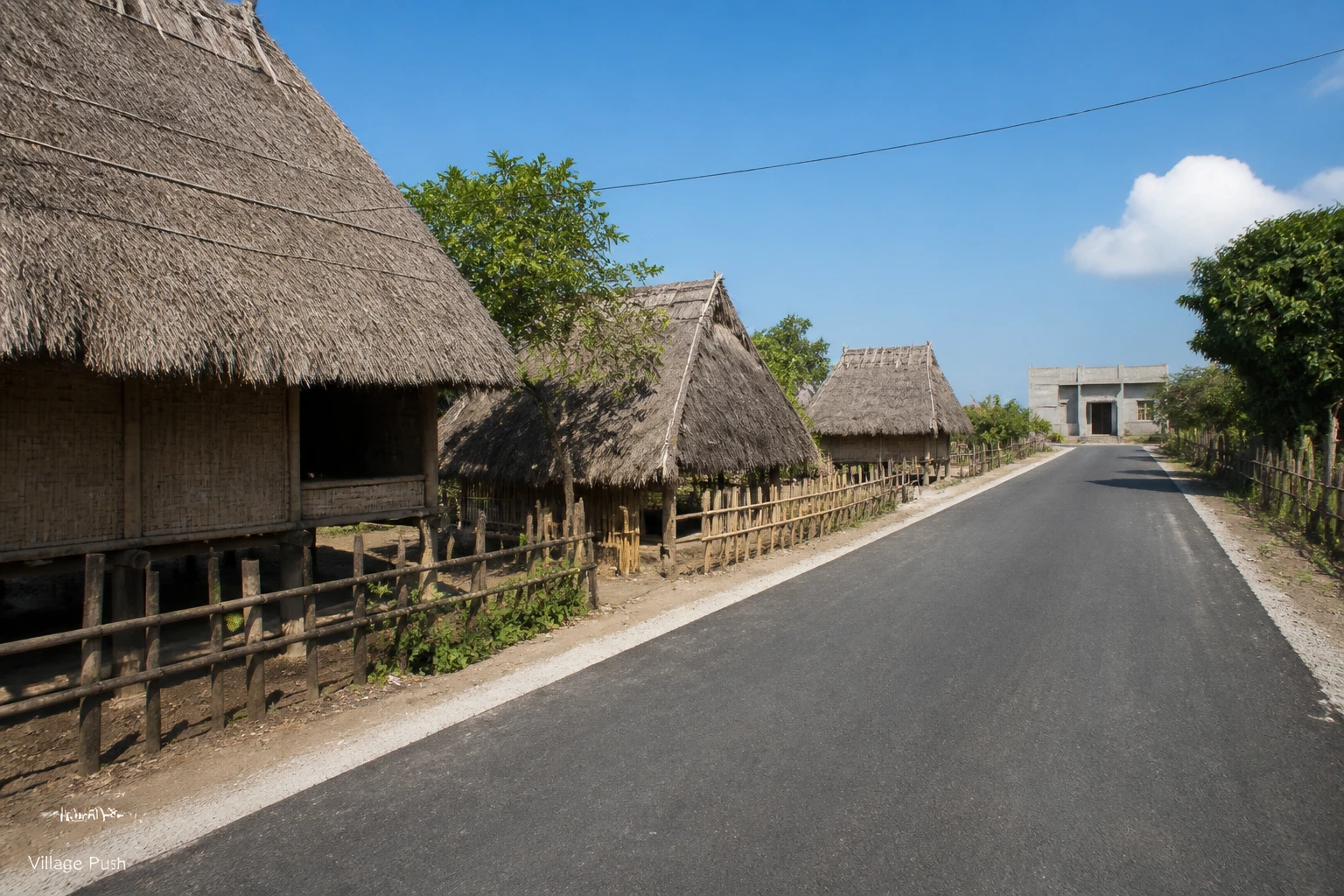
 Cooperatives and Property · Photo by Quang Nguyen Vinh on Pexels
Employment and Population Stability Rural-to-urban migration is a drag on property valuations in origin villages. Cooperatives that create local employment and improve rural livelihoods reduce outmigration pressure. Stable populations support stable property values and rental demand.
Lombok's Cooperative Opportunity Window
Lombok has not yet seen large-scale cooperative activation, partly due to late rollout of the federal program in Eastern Indonesia. This creates a first-mover advantage for investors and developers who position ahead of the wave.
The Timeline Matters:
- 2025–2026: Cooperative activation accelerates in NTB (Nusa Tenggara Barat). First cooperatives in North and Central Lombok.
- 2026–2027: Spillover effects visible in property rental and resale markets. Agricultural productivity gains translate to higher rural incomes.
- 2027–2028: Infrastructure improvements from cooperative-funded projects become visible on the ground. Property valuations in cooperative-active villages begin to diverge upward from non-cooperative areas.
Why Lombok Specifically? Lombok's property investment thesis has long relied on tourism (airport expansion 2025–26, MotoGP arrivals +47%, Bali-overflow dynamics) and foreign buyer demand. That thesis remains valid, yields remain 12–22% and entry prices for South Lombok properties stay accessible at €95–350K.
But tourism-dependent valuations are cyclical and geopolitically sensitive. Cooperative-driven rural economic development offers a stabilizing counterweight, a domestic demand foundation that's less correlated with tourist arrivals or foreign sentiment.
Properties in or near cooperatively active villages gain exposure to:
- Domestic rental demand (agricultural workers, small business owners)
- Construction and renovation spending
- Longer holding-period valuations less dependent on turnover and resale to foreign buyers
What This Means for Investors
For Villa and Resort Developers: Monitor cooperative activation timelines in your target villages. Properties developed with explicit linkages to local cooperatives (construction employment, supply chains, staff sourcing) gain narrative and operational advantages. Developers credibly marketed as community partners, not external extractors, face less regulatory friction and stronger community relations.
For Rental Income Investors: Cooperatives expand the addressable domestic rental market. Smallholder farmers, cooperative workers, and small business owners form a new tenant base with stable, non-seasonal income. This diversifies away from pure tourism rentals and reduces seasonal vacancy risk.
For Land Speculators: Land acquisition near projected cooperative infrastructure projects (villages with approved cooperative charters) positions you ahead of the infrastructure-driven appreciation curve. This is a 2–3 year play, not a flip.
Risk Caveats:
- Cooperative success depends on federal funding consistency. Political change could derail programs.
- Lombok's cooperative rollout is still nascent. No guarantee the pace matches central Indonesia.
- Expect competitive entry from other investors once the opportunity becomes visible. First-mover timing is critical.
The cooperative wave is a structural tailwind, not a silver bullet. Tourism and foreign demand remain the primary drivers of Lombok's property cycle. But cooperatives offer a secondary, more durable foundation for long-term valuations.
Investors with 3–7 year horizons and lower leverage should actively monitor cooperative activation announcements in their target villages. Properties positioned to benefit from rural economic development, whether through employment linkages, supply-chain integration, or geographic proximity to infrastructure, will outperform pure tourism-play assets over that window.
The policy momentum is real, the timeline is visible, and Lombok is early in the activation curve. The question isn't whether cooperatives will shape property values here, but whether you'll position ahead of the shift.
Stay informed, subscribe to the free Lombok Briefing for market intelligence like this, published twice a month.
What are Indonesia's Red and White village cooperatives and how do they affect property values in Lombok?
Indonesia's Red and White cooperatives give smallholder farmers collective purchasing power, credit at below-market rates, market aggregation, and training. Within seven months, 1,061 cooperatives became operational nationwide. In cooperative-active villages, property values typically rise 5 to 12% annually, compared to 2 to 4% in non-cooperative areas, because rising rural incomes, infrastructure investment, and population stability all underpin land and rental demand.
When will cooperative-driven effects become visible in Lombok's property and rental market?
The rollout follows a three-phase timeline. Cooperative activation in Nusa Tenggara Barat accelerates through 2025 to 2026, with the first structures reaching North and Central Lombok. Spillover effects in rental and resale markets emerge in 2026 to 2027 as agricultural productivity gains translate to higher rural incomes. By 2027 to 2028, cooperative-funded infrastructure improvements cause valuations in active villages to diverge upward from non-cooperative areas.
Can cooperative-active villages reduce seasonal vacancy risk for foreign rental property investors in Lombok?
Yes. Cooperatives create a domestic tenant base, including smallholder farmers, cooperative workers, and small business owners, with stable, non-seasonal income. This diversifies rental demand away from pure tourism occupancy, which is cyclical and geopolitically sensitive. South Lombok entry prices range from 95,000 to 350,000 euros, with yields of 12 to 22%, and domestic demand from cooperative activity adds a stabilising, non-tourism-correlated layer to those returns.

The Lombok Buyer's Field Guide
Legal structures ranked by risk, the honest ROI math line by line, all six zones ranked, and the 24-point due-diligence checklist. The whole book, free in your inbox.
See what's inside