Has South Lombok Property Actually Appreciated? An Honest Look
South Lombok land prices have risen meaningfully, particularly around Kuta and the newer frontier zones, with some operators citing year-on-year momentum of 38-47% in the most active markets. However, independent transaction registries are limited, so those figures should be treated as indicative ra
Quick answer: South Lombok land prices have risen meaningfully, particularly around Kuta and the newer frontier zones, with some operators citing year-on-year momentum of 38-47% in the most active markets. However, independent transaction registries are limited, so those figures should be treated as indicative rather than audited benchmarks.
Why the question is harder than it looks
Unlike property markets in Europe or Australia, South Lombok has no publicly accessible, registry-based transaction database. There is no local equivalent of a Land Registry or Multiple Listing Service feeding into a national price index. What exists instead is a patchwork of developer-quoted asking prices, notary-recorded deed values (which are frequently understated for tax purposes), and agent estimates. That context matters before reading any headline number.
This does not mean appreciation is fictional. It does mean anyone citing a precise compound annual growth rate for "Lombok property" is almost certainly working from a small, unaudited sample.
What the available signals actually suggest
Within those caveats, the directional picture is reasonably clear. The strongest signal comes from rental rates and tourism demand, which are the upstream driver of villa values in emerging resort markets.
Foreign arrivals to South Lombok have grown at roughly 40-50% year on year, underpinned by Indonesia's post-pandemic reopening and the sustained MotoGP circuit effect from Mandalika. Kuta-area villa rental rates have moved approximately 38% higher year on year. Are Guling, the frontier zone east of Kuta, has seen the steepest momentum of the six tracked zones at around 47% on the same basis.
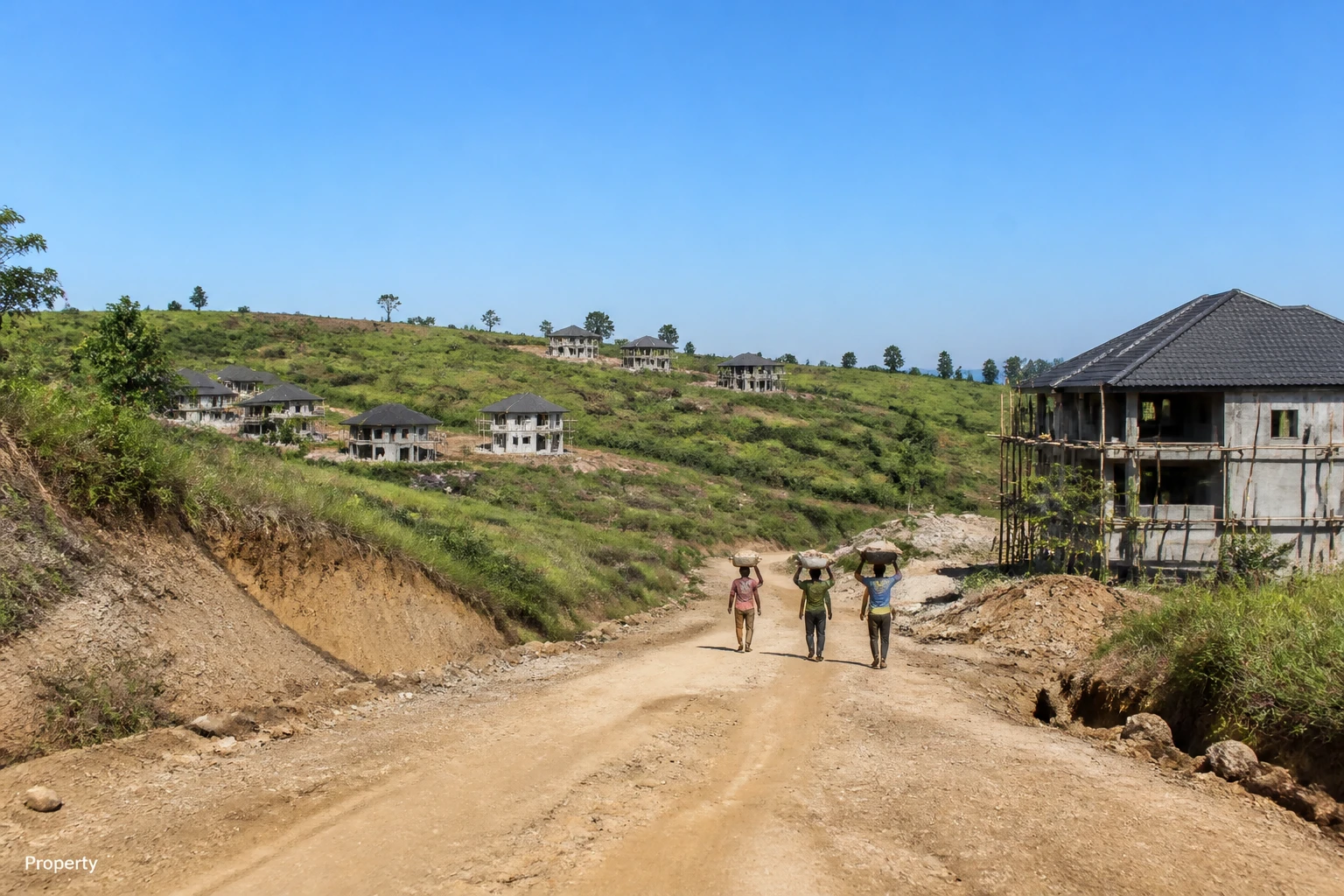
Land prices reflect this unevenly across zones. Prime Kuta land, the demand-and-liquidity leader, sits at roughly Rp 300-400 million per are (approximately USD 18,200-24,200 per are, where one are equals 100 square metres). Are Guling, earlier in its cycle, trades at around Rp 120-180 million per are (approximately USD 7,300-10,900 per are). The gap between those two zones illustrates the classic early-versus-established dynamic: Kuta has already repriced; Are Guling is where repricing may still be occurring. You can compare all six zones side by side on the market data page.
The data gaps you should know about
Three honest gaps deserve flagging before you anchor on any figure.
First, deed values versus market values. Indonesian property deeds are often recorded at assessed (NJOP) values, which can differ materially from actual transaction prices. This makes it difficult to construct a reliable time series from public filings alone.
Second, sample size. Transaction volume in individual zones, Mawun or Bumbang for instance, is low enough that a handful of sales can swing apparent average prices considerably. A zone showing strong momentum may have seen two or three transactions, not two or three hundred.
Third, time horizon. Robust appreciation data requires at least a five-to-ten year price series across multiple buyers and sellers. South Lombok's current wave of sustained foreign interest is, in most zones, under five years old as a coherent phenomenon. Historical comparisons are therefore fragile.
See Lombok ROI Math for a worked example of how to stress-test yield and appreciation assumptions across different entry prices and holding periods.
How to think about appreciation realistically
The honest framework for a foreign buyer is this: South Lombok is in an early-cycle market where capital appreciation is plausible and directionally supported, but not yet confirmed at the asset level by long-run, independently audited data.
What is more measurable is rental yield. Honest net yields in South Lombok, after management fees of 18-22% and realistic stabilised occupancy of 55-70%, sit in the 7-12% range. For buyers who underwrite the investment on rental income alone and treat any capital gain as a bonus rather than a base case, entry pricing still compares favourably to Bali, where comparable turnkey assets run USD 400,000-800,000 versus South Lombok entry from EUR 95,000.
The "Bali-overflow" thesis, which holds that rising Bali prices and congestion redirect demand toward earlier-cycle Lombok, is intellectually coherent and supported by visitor data. But a thesis is not the same as a proven return series.
As a disclosure: HubLombok is the editorial arm of Samudra Villas, an active developer in Are Guling. That relationship means we are not a neutral data source on pricing, and we do not claim to be.
Practical guidance for buyers
If appreciation is part of your investment case, apply these checks before committing.
Ask any seller or developer for the original land acquisition price and the purchase date. If they cannot or will not share it, that itself is informative.
Commission an independent appraisal from a licensed KJPP appraiser (Indonesia's certified public appraisers), not from the selling agent. The gap between appraisal and asking price is your first due-diligence signal.
Build your financial model around yield, not capital gain. If the deal works on yield alone, any appreciation becomes upside. If the deal only works assuming 30% annual land appreciation, treat that as a red flag, not a target.
Finally, factor in liquidity. South Lombok is not a market where you can exit quickly if conditions change. A five-to-ten year time horizon is realistic. For a fuller framework covering legal structures, zones and entry strategies, see Investing in South Lombok.
The appreciation story here is credible. It is not, yet, fully proven.
Is there hard evidence that South Lombok land prices have increased?
Directional evidence is positive, supported by rising rental rates (Kuta villa rates up around 38% year on year) and strong foreign-arrival growth of 40-50% year on year. However, a verifiable long-run price series backed by public registry data does not yet exist. Figures quoted by developers and agents reflect asking prices or small transaction samples, not a broad-market index.
What is driving property values higher in South Lombok?
Three overlapping forces are at work: the MotoGP Mandalika circuit has raised international visibility and brought infrastructure investment; post-pandemic tourism recovery has pushed occupancy and villa rates upward; and rising land costs in Bali are redirecting buyers toward earlier-cycle alternatives. All three increase both rental demand and the pool of potential future buyers.
How long should I expect to hold a South Lombok property to benefit from capital appreciation?
A five-to-ten year horizon is realistic. Transaction volume per zone is currently low, liquidity is limited, and price discovery takes time. Buyers who underwrite on yield alone, targeting the honest 7-12% net range, put themselves in a position where any appreciation becomes a bonus rather than a prerequisite for the investment to work.

The Lombok Buyer's Field Guide
Legal structures ranked by risk, the honest ROI math line by line, all six zones ranked, and the 24-point due-diligence checklist. The whole book, free in your inbox.
See what's inside