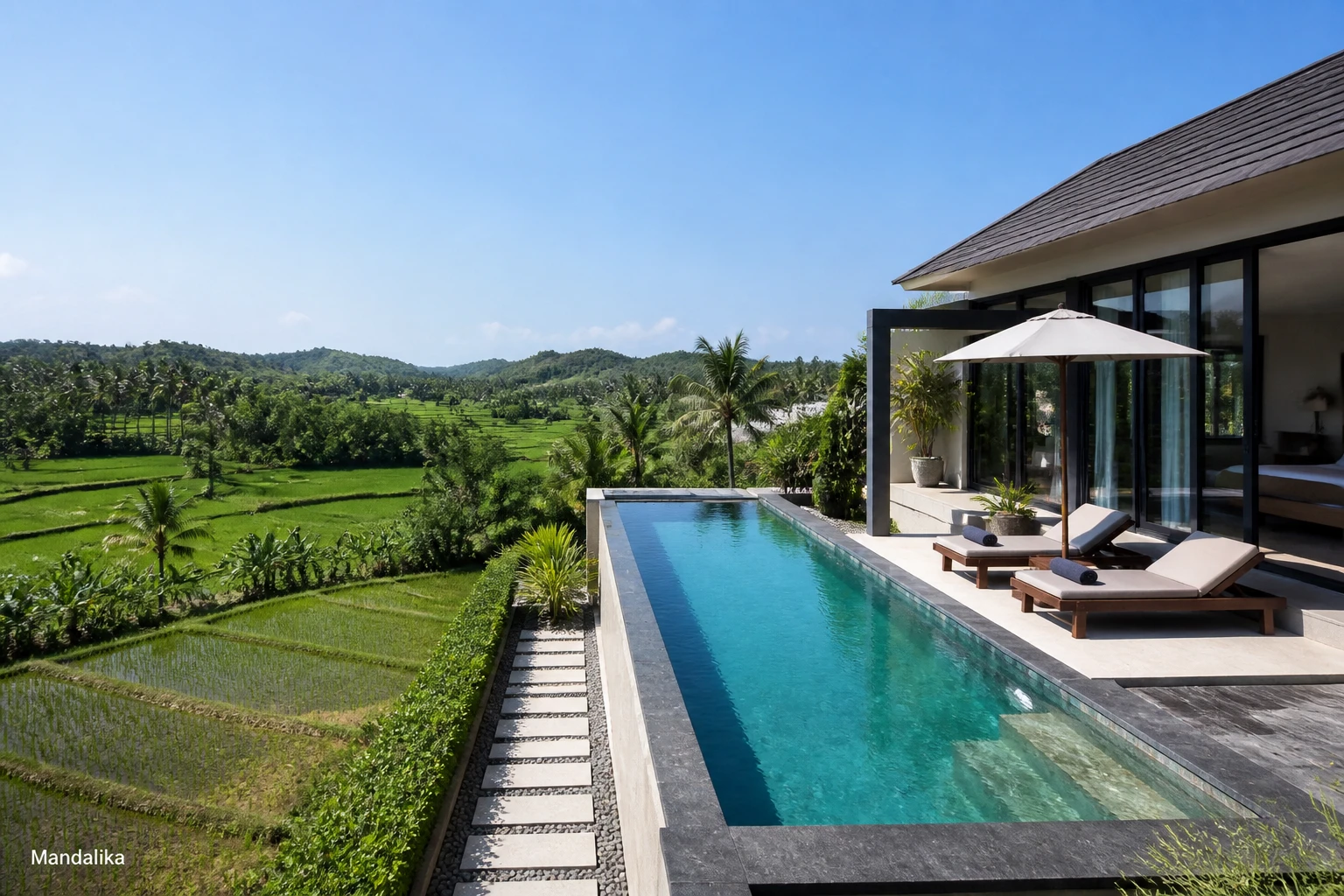
Why Bali's Crowded Tourism Boom Is Driving Investors to Lombok
Bali's tourism infrastructure is now complete, and expensive. Lombok, meanwhile, is in its growth phase: foreign arrivals up 40-50% YoY, villas at 1/3 Bali's price, yields 7-12% net. Smart investors ar
Quick answer: Bali's established tourism infrastructure, exemplified by attractions like Waterbom, marks a mature, expensive market. Lombok, by contrast, is in its growth phase: foreign arrivals are up 40-50% year-on-year, villa entry prices start at €95,000 (versus USD 400,000-800,000 in Bali), and net yields reach 7-12%. For investors seeking earlier-cycle opportunities, Lombok represents the asymmetric risk-reward profile that makes for compelling portfolio diversification.
The Waterbom Effect: Reading Bali's Market Maturity
Waterbom Bali has just cemented its status as one of South-East Asia's premier family attractions. The waterpark's dominance in Bali's tourist calendar, drawing hundreds of thousands annually, tells a deeper story that should interest property investors. It signals the completion of Bali's tourism infrastructure. The island has, over the past two decades, built out its attractions, hotels, restaurants and entertainment with such thoroughness that the market has become consolidated, expensive and, frankly, crowded.
For the property investor, this maturity brings both advantage and constraint. Advantage: Bali's tourism machine is proven, reliable and generates consistent visitor flows. Constraint: you're buying into a saturated market where land trades at USD 200–500/m², turnkey villas sell for USD 400,000–800,000, and operational occupancy stabilises around 70–85%. The yields are solid, typically 12–22% gross, or 7–12% net after management fees and realistic booking friction, but you're paying for certainty. You're paying for a market where the growth story is mostly written.
This is where Lombok enters the conversation.
Lombok: The Earlier-Cycle Play
Whilst Bali has built out its waterpark and entertainment infrastructure to near-completion, Lombok remains in the earlier stages of its tourism ramp. The numbers tell a vivid story. Foreign tourist arrivals to South Lombok are climbing 40–50% year-on-year. Occupancy rates for investment-grade villas hover at 55–70%, healthy enough to prove demand, but with meaningful room to run as the market builds out its own attractions and infrastructure. Entry-level turnkey villas start at around €95,000–350,000. Prime land trades at Rp 150–400 million per are.
Put plainly: Lombok today resembles Bali circa 2005–2010. That is not hyperbole. It is opportunity.
The MotoGP effect has accelerated this. Since the announcement of the Mandalika International Street Circuit, Are Guling, the zone where active developers operate, has seen villa values appreciate approximately 47% year-on-year. Kuta Mandalika, the prime coastal zone, is up 38%. Selong Belanak, a family-tourism anchor, is up 22%. These are early-cycle compounding returns driven by infrastructure anticipation and genuine tourism growth.
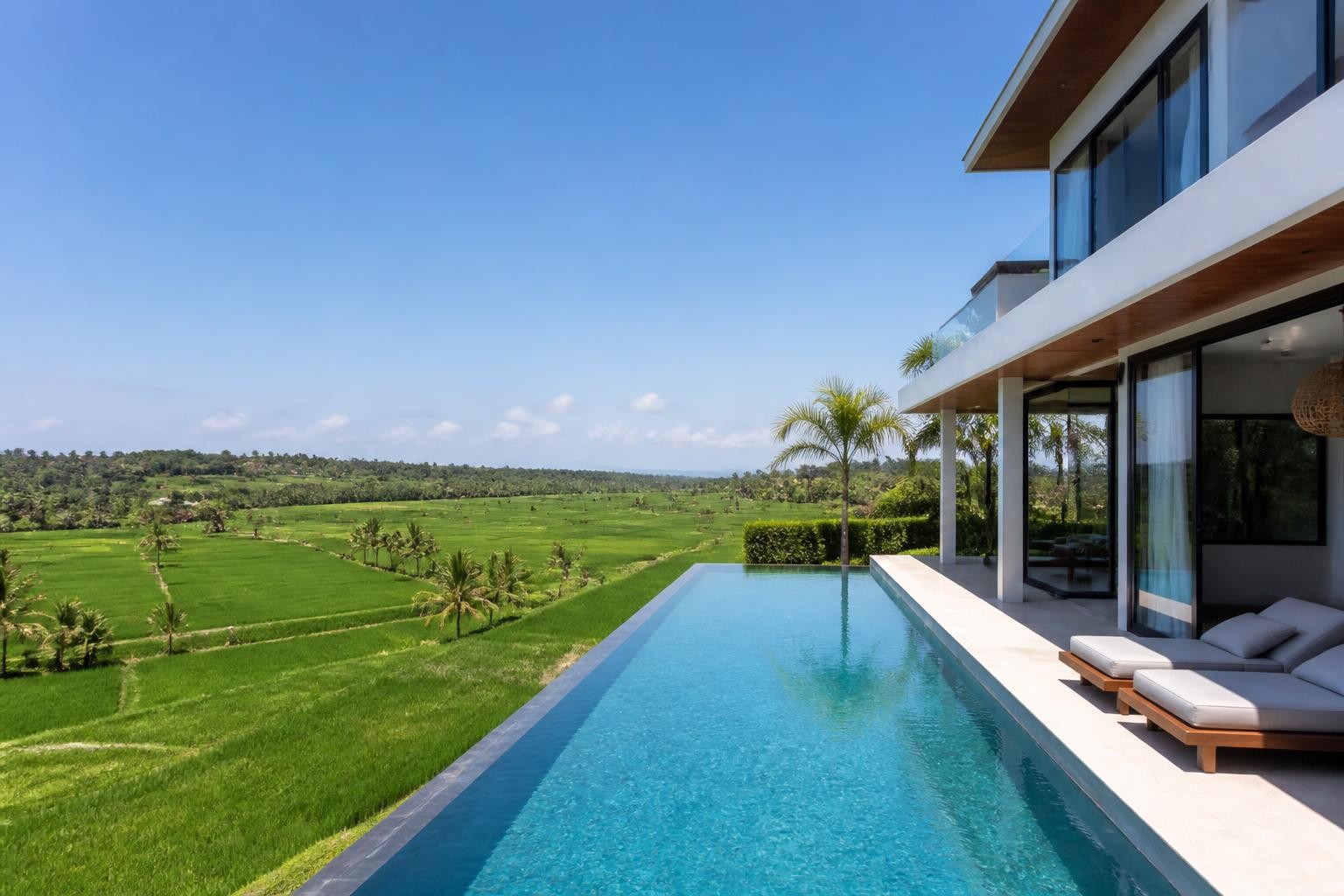 Why Bali's Crowded Tourism Boom Is Driving Investors to Lombok · Illustration: HubLombok (AI-generated)
Why Smart Money Is Watching Lombok
The investor thesis here is straightforward. Capital migrates from saturated to emerging markets when saturation spreads to price. Bali has reached that point. A family buying a villa in Bali today is buying into a proven but expensive market; they're competing with thousands of other operators for a finite pool of tourists, all of whom have countless accommodation choices at every price point.
A family, or a seasoned portfolio investor, buying in Lombok is riding three tailwinds simultaneously:
1. Tourist growth acceleration. Lombok's 40–50% year-on-year foreign-arrival growth will eventually plateau, but we're nowhere near that ceiling yet. As the MotoGP circuit beds in and regional awareness spreads, occupancy rates will migrate toward the Bali benchmark of 70–85%, pushing both nightly rates and portfolio returns.
2. Land-price appreciation. In early-cycle markets, land values tend to compound faster than rental yields. A villa purchased today at €150,000–250,000 in Are Guling or Selong Belanak has both rental yield (7–12% net is achievable) and capital appreciation as the zone's land-price trajectory steepens. In Bali, you're mostly buying yield; in Lombok, you're buying yield plus foundational capital growth.
3. Favourable foreign-investment access. Lombok's legal frameworks for foreign buyers, leasehold (Hak Sewa) structures, PT PMA company ownership, and licensed notary support, are clear and battle-tested. Professional advisory firms have professionalised the due-diligence and legal chain for foreign investors, removing friction that existed five years ago. You can now acquire, legally structure and operationalise a villa in Lombok with the same professional rigour you'd expect in Bali, but at earlier-cycle pricing.
What This Means for Investors
Timing asymmetry. Bali's attractions (Waterbom, cultural sites, beaches, restaurants) are already built. Lombok's are still emerging. This favours the early-stage investor who can tolerate 2–3 years of sub-optimal occupancy in exchange for 5–10 years of compounding growth.
Yield hunting in a rate environment. With Bali yielding 7–12% net but commanding USD 400,000+ entry prices, the capital requirement per unit of yield is steep. Lombok offers 7–12% net yields on villas costing €95,000–350,000, a far better capital efficiency ratio.
Portfolio diversification. A property investor with exposure to Bali benefits from geographic and cycle diversification by adding Lombok exposure. You're not doubling down on a mature market; you're hedging it with exposure to an earlier-cycle, faster-growing neighbour.
The Waterbom phenomenon, a symbol of Bali's comprehensive tourism infrastructure, is, paradoxically, a signal that the island's high-growth days are behind it. That's not a criticism; it's a fact of market maturity. But it's precisely this maturity that is catalysing capital reallocation to Lombok, where the same infrastructure play is years away from completion and valuations remain compressive.
For investors with a 5–10 year horizon, this window is real. It won't last forever.
Stay informed, subscribe to the free Lombok Briefing for market intelligence like this, published twice a month.
Why is Lombok yield (7-12% net) better than Bali if both are tropical?
Bali is mature, land costs USD 200–500/m², villas USD 400-800K. Lombok is earlier-cycle: land costs Rp 150–400 million per are, villas cost €95-350K. Same yields on cheaper entry = better capital efficiency and appreciation upside.
Isn't 55-70% occupancy too risky compared to Bali's 70-85%?
Not for a 5-10 year investor. Lombok occupancy will likely migrate toward Bali levels as tourism grows 40-50% YoY. You're buying during the ramp phase, capturing both yield and capital appreciation.
How do I legally own property as a foreigner in Lombok?
Three main routes: leasehold (Hak Sewa, 25-30 years), Hak Pakai (requires residency), or PT PMA (foreign-owned company holding). Licensed notaries guide due-diligence and deed processes. Nominee structures (using Indonesian frontmen) are illegal and void in court.
The Lombok Buyer's Field Guide
Legal structures ranked by risk, the honest ROI math line by line, all six zones ranked, and the 24-point due-diligence checklist. The whole book, free in your inbox.
See what's inside