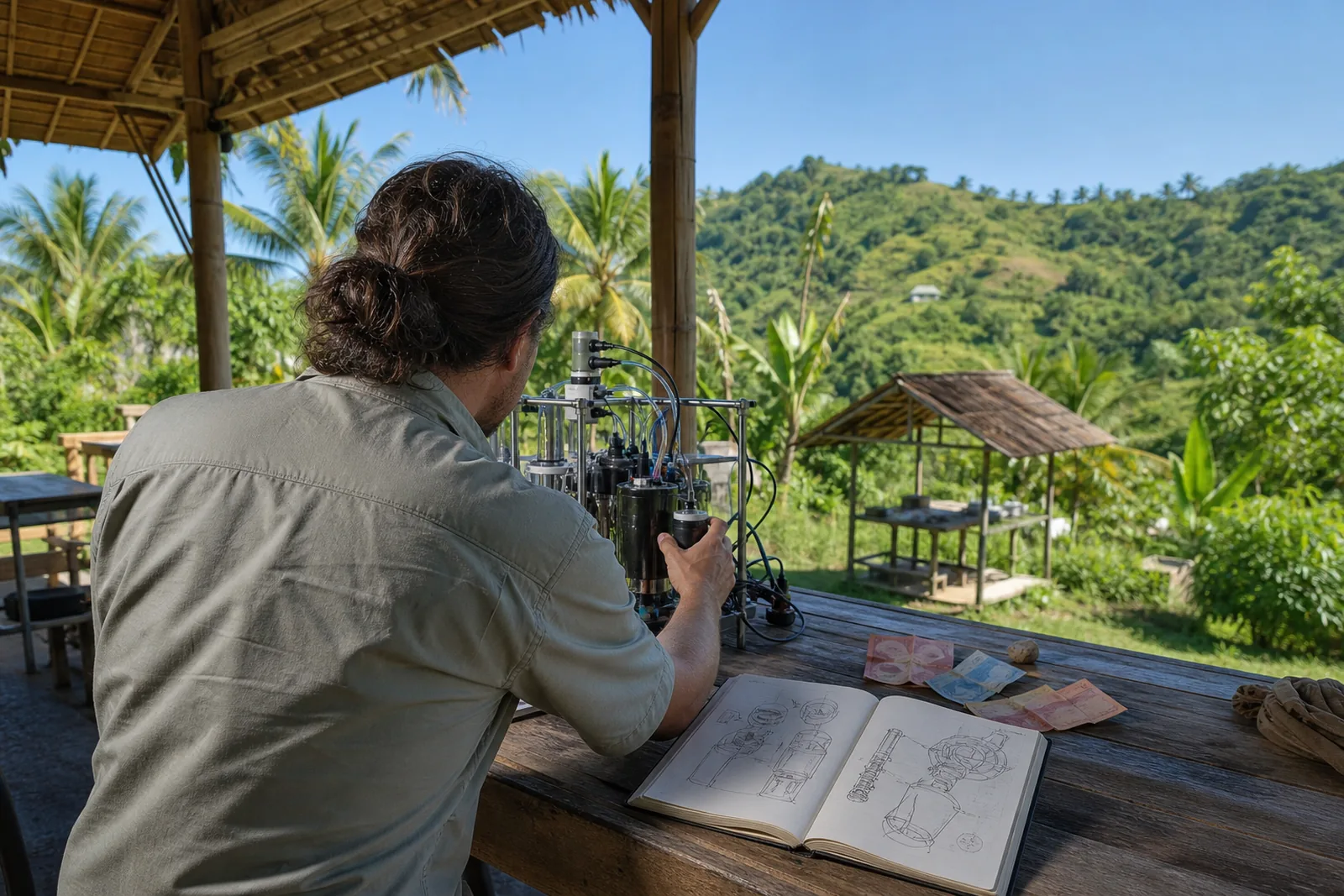
Lombok Notebook: What BRIN’s Nuclear Pitch Signals for Long-Horizon Investors
BRIN’s nuclear pitch to President Prabowo is not a Lombok investment catalyst, but it clarifies how Indonesia is preparing strategic technology capacity.
Quick answer: BRIN’s presentation to President Prabowo Subianto signals preparation for a possible Indonesian nuclear-power era, rather than a confirmed project or investment timetable. For Lombok investors, the immediate impact is therefore contextual: it shows a national emphasis on strategic capability, but offers no direct basis for repricing local property, tourism or infrastructure assets.
A meeting at the State Palace can be easy to overread. Around 150 researchers from Indonesia’s National Research and Innovation Agency, BRIN, were called to present work spanning food, health care, water treatment, energy and aerospace; nuclear technology was one part of that wider portfolio.
The more useful interpretation is neither that a nuclear programme is imminent nor that the discussion is immaterial. It is that Indonesia’s research establishment is making a case for preparedness: building domestic competence before a national decision requires it.
The Context
The source material describes a meeting between President Prabowo and BRIN researchers in which the agency set out work on technologies it considers strategic to national development. The agenda was deliberately broad. BRIN head Arif Satria identified critical-minerals processing, nuclear power, modular housing systems, the Giant Sea Wall coastal-protection initiative, waste management and seawater desalination among the agency’s areas of work.
That breadth matters. Nuclear should not be read in isolation, as though the meeting announced a single-sector pivot. Rather, BRIN presented it alongside systems that speak to industrial capacity, water, housing, coastal resilience and resource management. The common thread is institutional readiness: the ability to develop, assess and operate complex technologies rather than simply procure them.
“BRIN must prepare nuclear technology capabilities from now on,” Arif said, arguing that Indonesia should not enter a nuclear-power-plant era from a standing start or merely become a technology buyer.
The phrase “prepare” carries more analytical weight than it may initially appear to. A research agency can develop knowledge, technical processes and specialist capability before a country has committed itself to a particular deployment. That distinction keeps the story grounded. The reported discussion concerns capability-building and strategic options, not an announced reactor, site, construction programme or investment instrument.
For investors, this is a familiar distinction between direction of travel and an investable event. Direction can shape the questions worth monitoring. It does not, by itself, establish cash flows, approvals, timelines, counterparties or local economic effects.
The source also places nuclear within a resource and technical context. According to BRIN, Indonesia has potential reserves of 89,000 tonnes of uranium and 143,000 tonnes of thorium. The agency says its researchers have demonstrated an ability to purify uranium to 60 percent. These figures are presented by BRIN as part of the case for developing national capability.
They should be treated accordingly: as agency-provided evidence of potential and research capacity, not as a forecast of commercial output or a declaration that a nuclear project has been approved. The difference is consequential. Resource potential, purification capability and a complete operating ecosystem are related, but they are not interchangeable.
From Research Capacity to a National Ecosystem
BRIN’s stated ambition is notably comprehensive. Arif said the agency would focus on mastering the technology chain from uranium and thorium mining and purification to fuel fabrication, reactor technology, safety radiation metrology and waste processing.
This is the substantive idea within the presentation. A nuclear programme, in BRIN’s framing, is not simply a question of acquiring a reactor. It implies competence across interlocking technical, safety and materials disciplines. The agency’s language places particular emphasis on avoiding a position in which Indonesia is dependent only on external technology purchases.
That ambition is strategically legible even without extrapolating beyond the source. Technologies with long operational lives and demanding safety requirements reward institutional continuity. BRIN’s presentation suggests it wants the relevant expertise to be developed as a national asset before any eventual entry into the PLTN, or nuclear power plant, era.
A disciplined reading separates several layers that are often compressed in public discussion:
- Research capability: the knowledge and technical work BRIN says it is developing, including uranium purification.
- Resource potential: the uranium and thorium reserves cited by the agency.
- National ecosystem: BRIN’s stated objective of covering mining, purification, fuel, reactor technology, metrology and waste processing.
- Deployment decision: a separate matter, not announced in the supplied report.
The last category is especially important for capital allocation. A national research presentation can be relevant to long-term policy capacity while remaining far from a local investment trigger. It is not prudent to convert a statement of scientific preparation into assumptions about contracts, sites, energy prices, planning outcomes or property values.
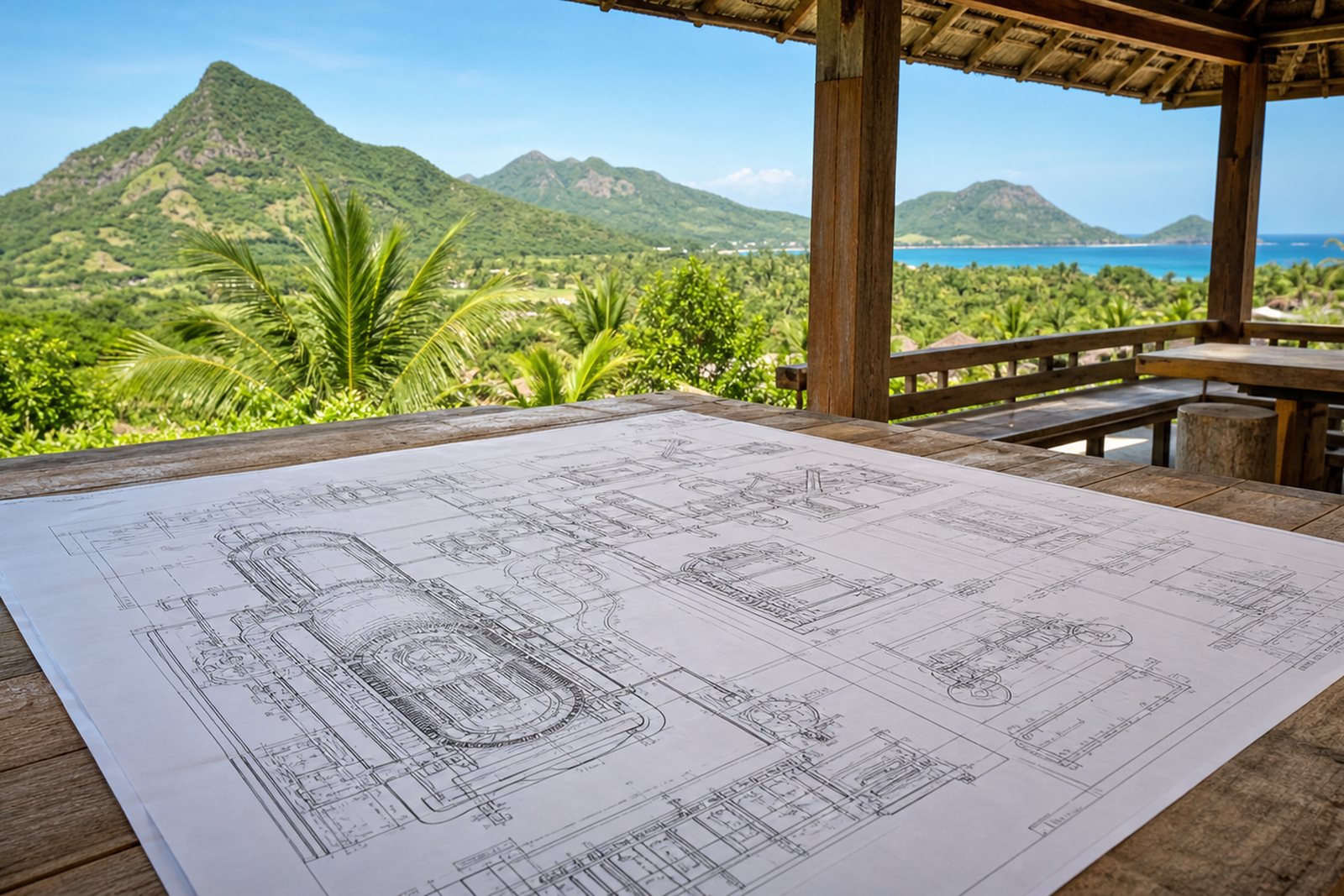 Lombok Notebook · Illustration: HubLombok (AI-generated)
The source does, however, show why nuclear has entered a broader strategic-technology conversation. BRIN has positioned the field beside critical minerals, desalination, waste management and coastal protection. The agency is plainly arguing for a domestic base of capabilities that can support national development choices across multiple sectors.
For an investor audience, the lesson is one of analytical hygiene. The right question is not whether every strategic-technology presentation will create an immediate investable opportunity. It is whether the institutional work being described changes the quality of future options. In this case, BRIN’s own answer is yes: it is seeking to ensure that, if Indonesia makes a future nuclear decision, the country has more than the role of buyer.
That remains a long-horizon proposition. It calls for attention to subsequent decisions and implementation evidence, not premature certainty.
Why the Lombok Connection Is Indirect
Lombok investors should resist the temptation to force a local angle where the report provides none. The supplied source contains no announcement of a Lombok nuclear facility, no identified site, no local infrastructure programme and no change to South Lombok’s property or tourism market conditions.
That absence is not a minor caveat; it is the central conclusion. There is no direct, source-supported case to revise a Lombok investment thesis because of this meeting alone.
Still, the national context is worth understanding. Investment in an island market does not take place outside national institutions. Research capacity, strategic technology policy and the state’s approach to complex infrastructure can influence the environment in which future decisions are made. But influence is not the same as causation, and future relevance is not present value.
The clearest way to think about the story is through three horizons:
| Horizon | What the report supports | What it does not support | |---|---|---| | Immediate | BRIN has presented strategic technologies, including nuclear, to the President | A direct Lombok market change | | Medium-term | BRIN intends to develop a comprehensive nuclear technology ecosystem | A confirmed project, site or transaction | | Long-term | Indonesia may be better prepared if it chooses to enter a PLTN era | Assumptions about local returns or asset prices |
This framework is deliberately conservative. It preserves the value of the report without assigning it consequences that have not been stated. For sophisticated investors, that is often the more valuable service. In markets shaped by long development cycles, the noise usually arrives before the evidence.
The discussion of modular housing, water treatment, desalination, waste management and coastal protection may also invite broad conclusions about island development. Yet the source offers no project detail connecting those workstreams to Lombok. They should therefore remain national research themes in an investor’s notebook, not evidence of a local pipeline.
The same restraint applies to nuclear resources. The potential reserves cited by BRIN and its reported purification work may be significant to the agency’s argument for capability. They do not establish where future activity would occur, how it would be financed or what beneficiaries might emerge. Any stronger conclusion would be speculation.
What This Means for Investors
The sensible response is watchful, not reactive. BRIN’s presentation gives investors a clearer sense of the Indonesian state’s interest in developing strategic technology capacity. It does not alter the basic requirement to underwrite Lombok assets on their own merits, using evidence specific to the asset, location, legal structure and operating assumptions.
For those building a long-term Indonesia view, several practical conclusions follow:
- Treat BRIN’s nuclear comments as a capability signal, not a project announcement.
- Keep national strategic-technology policy separate from local market underwriting.
- Look for subsequent evidence of decisions, implementation arrangements and clearly defined locations before assigning local economic effects.
- Distinguish carefully between first-party institutional ambition and independently established investment outcomes.
There is also a more general discipline here. Large national themes can be compelling because they appear to explain everything at once: energy security, industrial development, materials, infrastructure and regional opportunity. Good investment analysis narrows the claim. What has actually happened? Who has said what? Which link in the chain has been confirmed? Which link remains an aspiration?
On the available record, BRIN has made a serious case for preparing the national expertise needed for a possible future nuclear-power era. It has described a broad technology chain and cited uranium and thorium potential alongside a reported uranium-purification capability. President Prabowo’s meeting with the researchers gives that conversation political visibility.
But visibility is not deployment, and preparedness is not a local catalyst. Lombok investors should keep the development in view as part of Indonesia’s evolving strategic context while continuing to demand direct evidence before changing a property, tourism or infrastructure thesis.
Stay informed, subscribe to the free Lombok Briefing for market intelligence like this, published twice a month.
Did BRIN announce a nuclear power project in Lombok?
No. The supplied report says BRIN presented strategic technologies, including nuclear, to President Prabowo Subianto. It does not announce a Lombok project, identify a site or provide a local investment timetable.
What nuclear capability does BRIN say Indonesia has?
BRIN says Indonesia has potential reserves of 89,000 tonnes of uranium and 143,000 tonnes of thorium, and that its researchers have demonstrated uranium purification to 60 percent. These are agency-provided statements about potential and capability.
Should Lombok investors change their investment assumptions now?
Not on this report alone. BRIN’s presentation is evidence of national strategic preparation, not a confirmed local project or market change. Lombok assets should continue to be assessed using evidence specific to their location, legal structure and operating assumptions.

The Lombok Buyer's Field Guide
Legal structures ranked by risk, the honest ROI math line by line, all six zones ranked, and the 24-point due-diligence checklist. The whole book, free in your inbox.
See what's inside