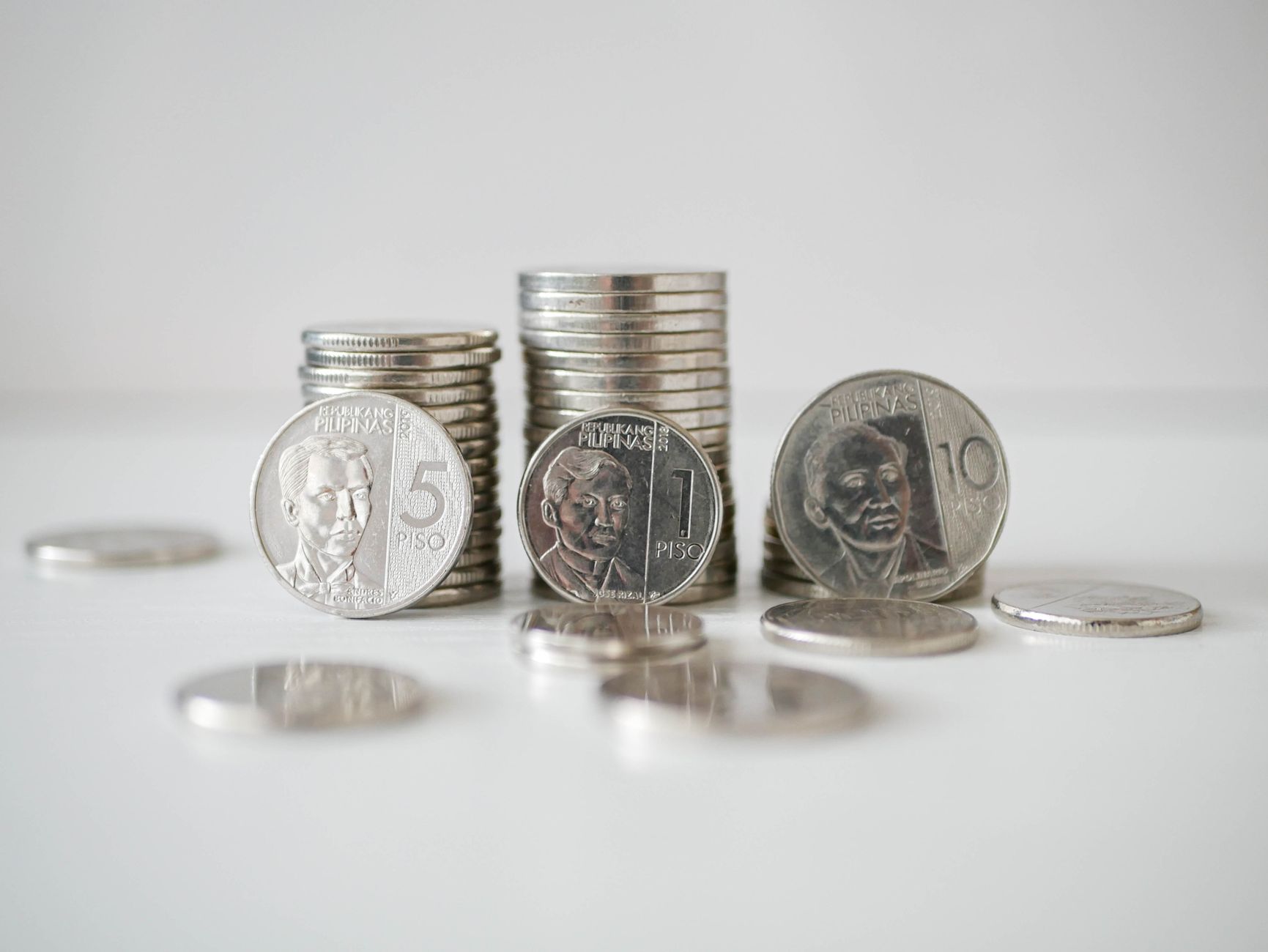
BI Holds at 5.75%: What a Steady Rate Means for Lombok Investors
Bank Indonesia held its benchmark rate at 5.75% and projects 2026 growth of 4.9-5.7%. A Lombok Notebook on what a steady policy stance does, and does not, change for villa and land buyers.
Quick answer: Bank Indonesia held its benchmark rate at 5.75 percent on 23 September and projects 2026 growth of 4.9-5.7 percent. For Lombok investors, the hold signals monetary stability rather than a shift: it aims to steady the rupiah, which matters for rupiah-denominated land, but it does not itself change villa yields.
Central bank decisions rarely make headlines in property circles, and a decision to change nothing makes even fewer. Yet for a foreign investor holding assets in a rupiah economy, the quiet meetings are often the ones that matter most, because they define the backdrop against which every other assumption is tested. This Lombok Notebook reads the September decision closely and asks what it tells us, and what it leaves unanswered.
The Context
At the conclusion of its Board of Governors Meeting on 22-23 September, Bank Indonesia (BI) kept its policy settings unchanged. According to Antara Business, the BI-Rate stays at 5.75 percent, the deposit facility rate at 4.75 percent, and the lending facility rate at 6.50 percent. Those three numbers form the corridor within which Indonesian short-term money markets operate.
Governor Destry Damayanti described the growth picture as solid. Speaking after the meeting in Jakarta, she said Indonesia's growth is projected to reach between 4.9 percent and 5.7 percent in 2026. The width of that range is itself informative: a central bank offering a band of roughly 0.8 percentage points is signalling real uncertainty about how the year finishes, even while the tone remains constructive.
The Governor's reasoning, as reported by Antara, rests on several supports:
- Household consumption remains stable, backed by substantial government fiscal stimulus, rising consumer confidence and positive income expectations.
- Investment activity has grown steadily, primarily driven by government projects, although she said private sector involvement needs to be further encouraged.
- Non-oil and gas exports improved markedly on rising global demand, though she called for stronger efforts to capture the benefit of favourable commodity prices.
The stated purpose of holding rates is twofold, according to the source: to stabilise the rupiah against persistent external volatility, and to keep inflation within the target range of 2.5 percent, plus or minus 1 percentage point, for both 2026 and 2027.
Two details deserve attention. First, the Governor explicitly framed private investment as the lagging element. Government projects are doing the heavy lifting, and the central bank would like more private capital to join. Second, the rate decision is framed around the currency as much as around growth. That ordering of priorities is the key to reading this meeting.
Why Currency Stability Is the Real Story for Foreign Buyers
For a European, Australian or American buyer, a Lombok purchase involves two distinct bets. The first is on the asset: the land, the villa, the location, the rental economics. The second, often unstated, is on the currency in which much of the underlying economy is priced. Our verified market figures illustrate the point. Prime tourist-zone land in South Lombok is quoted at roughly Rp 150-400 million per are (one are equals 100 m²), and the conversion to dollars in our own published ranges assumes about Rp 16,500 to the US dollar. Change that assumption and every dollar figure shifts, even if the rupiah price on the ground has not moved.
This is why a central bank that names rupiah stability as an explicit objective is relevant to an offshore investor. A steady policy rate does not fix an exchange rate, and nothing in the source suggests it can. What it signals is that BI is prioritising the currency over any impulse to stimulate through easing. The phrase used in the source, persistent external volatility, is an acknowledgement that the pressures are coming from outside Indonesia's borders and are not, for now, receding.
Investors should hold two thoughts together. A hold is reassuring compared with a surprise move in either direction. But it is also a reminder that the currency risk in a rupiah asset has not gone away; the central bank is defending against it, which implies it is a live concern.
What the Growth Range Does and Does Not Tell Us
A national growth projection of 4.9-5.7 percent describes Indonesia as a whole. It says nothing directly about South Lombok, and we should resist the temptation to stretch it. The source contains no regional breakdown, no tourism data and no property data. Anything we say about Lombok has to come from our own verified figures, and the two should be read side by side rather than merged.
What we can say from our verified facts is that South Lombok's tourism recovery has been strong: foreign arrivals are running at +40-50 percent year on year, helped by both the wider recovery and the MotoGP effect. Villa rates in Kuta and Mandalika are up about 38 percent year on year, and Are Guling shows the strongest momentum of the six zones at about 47 percent. Those are local, tourism-driven dynamics. A solid national economy is a supportive background, but the rental case for any individual villa still rests on occupancy, pricing and costs.
The comparison below separates the two layers clearly.
| Layer | What the data says | Source | |---|---|---| | National growth, 2026 | 4.9-5.7 percent projected | Bank Indonesia Governor, via Antara | | Policy rate | 5.75 percent, held | Bank Indonesia, via Antara | | Inflation target, 2026-2027 | 2.5 percent, plus or minus 1 point | Bank Indonesia, via Antara | | South Lombok foreign arrivals | +40-50 percent YoY | HubLombok verified facts | | Honest net rental yield | 7-12 percent | HubLombok verified facts |
 BI Holds at 5.75% · Photo by Quang Nguyen Vinh on Pexels
Notice what the table does not contain: any link between the top three rows and the bottom two. We are not claiming that a 5.75 percent policy rate raises or lowers rental yields, and we have no data in this piece on how BI's decisions feed through to Lombok villa prices or to financing costs for buyers. Readers who see a causal chain drawn confidently between a central bank meeting and a specific villa return should ask for the evidence.
The Private Investment Question
The most interesting sentence in the Governor's remarks, from an investor's perspective, is the one about private participation. She said investment has grown steadily, primarily driven by government projects, and that private sector involvement needs to be further encouraged. That is a candid admission that the current growth engine leans on the state.
For Lombok, this connects to a familiar theme. Much of the island's recent momentum has been associated with public infrastructure and the Mandalika circuit, and the question every serious investor eventually asks is how much of the value being created is durable once the initial public push matures. The source does not answer that for Lombok, and we will not pretend it does. But the Governor's framing is a useful prompt: growth that depends on government projects is stronger when private capital follows, and private capital follows when returns are clear, rules are predictable and currency risk is manageable.
The legal side of that predictability matters as much as the monetary side. Foreigners cannot hold freehold title in Indonesia; the available routes are leasehold (Hak Sewa, typically 25-30 years with extensions), Hak Pakai, or a PT PMA holding Hak Guna Bangunan. A stable macro backdrop does nothing to change those structures, and it is worth remembering that the most consequential risks for a foreign buyer are often legal and structural rather than macroeconomic.
What This Means for Investors
The practical reading of the September decision is measured rather than dramatic.
- Treat the hold as continuity, not a signal to act. Nothing in the announcement changes the honest return picture. Our published net rental yield range remains 7-12 percent after management fees and realistic occupancy, against developer-quoted gross figures of 12-22 percent that exclude those costs. Always check which of the two you are being shown.
- Keep the currency assumption explicit. If your underwriting converts rupiah costs and income at a single exchange rate, test it. A central bank working to stabilise the rupiah against persistent volatility is telling you the risk exists.
- Separate national and local evidence. A projected national growth band of 4.9-5.7 percent is context. Zone-level momentum, occupancy and costs are what determine a specific asset's performance.
- Watch for private-sector signals. The Governor's call for more private involvement suggests the policy focus over the coming period. Whether that translates into changes affecting Lombok is something we will follow, not something we can assume.
- Do not confuse stability with a guarantee of outcomes. Steady policy lowers one category of uncertainty. It leaves occupancy, execution, title and management risks exactly where they were.
The broader lesson of a quiet central bank meeting is that good investing in frontier markets is largely about disciplined assumptions. A rate hold at 5.75 percent, inflation held to a 2.5 percent target with a one-point tolerance, and a growth range that the Governor calls solid are all reasonable foundations. They are foundations, though, not returns.
HubLombok is the editorial arm of Samudra Villas, an active developer in South Lombok. That relationship is disclosed here because it shapes what we cover, not what we conclude.
Stay informed: subscribe to the free Lombok Briefing, published twice a month (the 1st and 15th), for market intelligence like this.
What did Bank Indonesia decide at its September meeting?
Bank Indonesia held its benchmark BI-Rate at 5.75 percent, with the deposit facility rate at 4.75 percent and the lending facility rate at 6.50 percent. It said the decision supports rupiah stability and keeps inflation within its 2.5 percent, plus or minus 1 point, target for 2026 and 2027.
What growth does Bank Indonesia expect for Indonesia in 2026?
Governor Destry Damayanti projects Indonesian economic growth of 4.9 to 5.7 percent in 2026, citing stable household consumption, government stimulus and improving exports. This is a national projection and does not directly measure South Lombok property performance or rental yields.
Does a steady BI rate change Lombok villa yields?
Not directly. Our honest net rental yield range for South Lombok remains 7-12 percent after management fees and realistic occupancy. A steady policy rate supports currency stability, but yields depend on occupancy, pricing and costs at the individual property.

The Lombok Buyer's Field Guide
Legal structures ranked by risk, the honest ROI math line by line, all six zones ranked, and the 24-point due-diligence checklist. The whole book, free in your inbox.
See what's inside