BI Reassures on Forex Reserves: What Declining Cushion Means for Lombok Buyers
Bank Indonesia reassures markets on forex reserves despite declines from rupiah defense. For Lombok property investors, this statement defines your entry window, and time is running short.
Bank Indonesia is reassuring markets that its foreign exchange reserves remain at adequate levels despite recent declines caused by rupiah defense operations. For Lombok property investors, this statement answers the critical question haunting recent market volatility: for how long can the central bank sustain its currency defense efforts? The answer determines whether your entry window is months wide or weeks, and it's far narrower than most investors realize.
The Context
Foreign exchange reserves are the ammunition central banks use to defend their currency. When the rupiah comes under pressure, BI sells USD from its reserves and buys rupiah, reducing dollar supply and increasing rupiah demand, mechanically supporting the exchange rate. This works until reserves run low, at which point the central bank loses its primary tool and the currency must float to market-clearing levels.
Indonesia's forex reserves have been declining for several interconnected reasons:
- Capital outflows from emerging markets (broader EM weakness, not Indonesia-specific)
- Rupiah defense operations consuming reserves as BI intervenes to prevent acceleration of depreciation
- Government bond market intervention (announced yesterday) also requires dollar resources to sterilize domestic purchases and prevent imported inflation
- Trade dynamics where import payments exceed export revenues in specific months
BI's statement that reserves remain "adequate" is both reassurance and a subtle signal. Adequate doesn't mean abundant, it means sufficient to sustain current defense operations without triggering panic or forcing policy capitulation. In central banking language, this is code for: we have a defined timeline, and we're operating within it.
According to standard IMF metrics, adequate forex reserves for emerging markets typically mean 3-6 months of import cover. Indonesia's current reserve position likely sits comfortably within this range, but the direction of travel (declining) matters more than the current level (adequate). Markets care about trajectories and depletion rates far more than absolute positions. A reserve stock of $115B is only meaningful if it's not burning $2B monthly.
The Reserve Burn Rate: How Long Until Critical Thresholds?
Here's what's crucial for property investors: BI's reserve adequacy statement implies a defined timeline for stabilization. If reserves are adequate but declining, the central bank has implicitly told us they have X months to succeed with their rupiah defense before reserves approach critical thresholds that force policy shifts.
This timeline changes everything about entry strategy. Consider three distinct scenarios:
Scenario 1: Stabilization succeeds within 8 weeks
- Bond intervention + rate hikes + capital flow reversal
- Rupiah stabilizes, reserve drain stops
- Foreign buyers return, confidence returns, Lombok property sales accelerate
- Entry window: NOW (maximum discount, maximum confidence)
Scenario 2: Stabilization takes 12-16 weeks
- BI's reserves decline but remain adequate for this extended duration
- Mounting uncertainty but policy credibility holds
- Entry window: Still open, but narrowing as reserve adequacy concerns grow
- Risk: By week 10-12, reserve decline becomes public conversation and creates doubt
Scenario 3: Stabilization fails by week 12-16
- Reserves approach critical thresholds
- Market confidence shifts from "BI is defending" to "BI is running out of ammo"
- Central bank faces forced choice: abandon rupiah defense or introduce capital controls
- Entry window: Closed, replaced by currency crisis and buyer paralysis
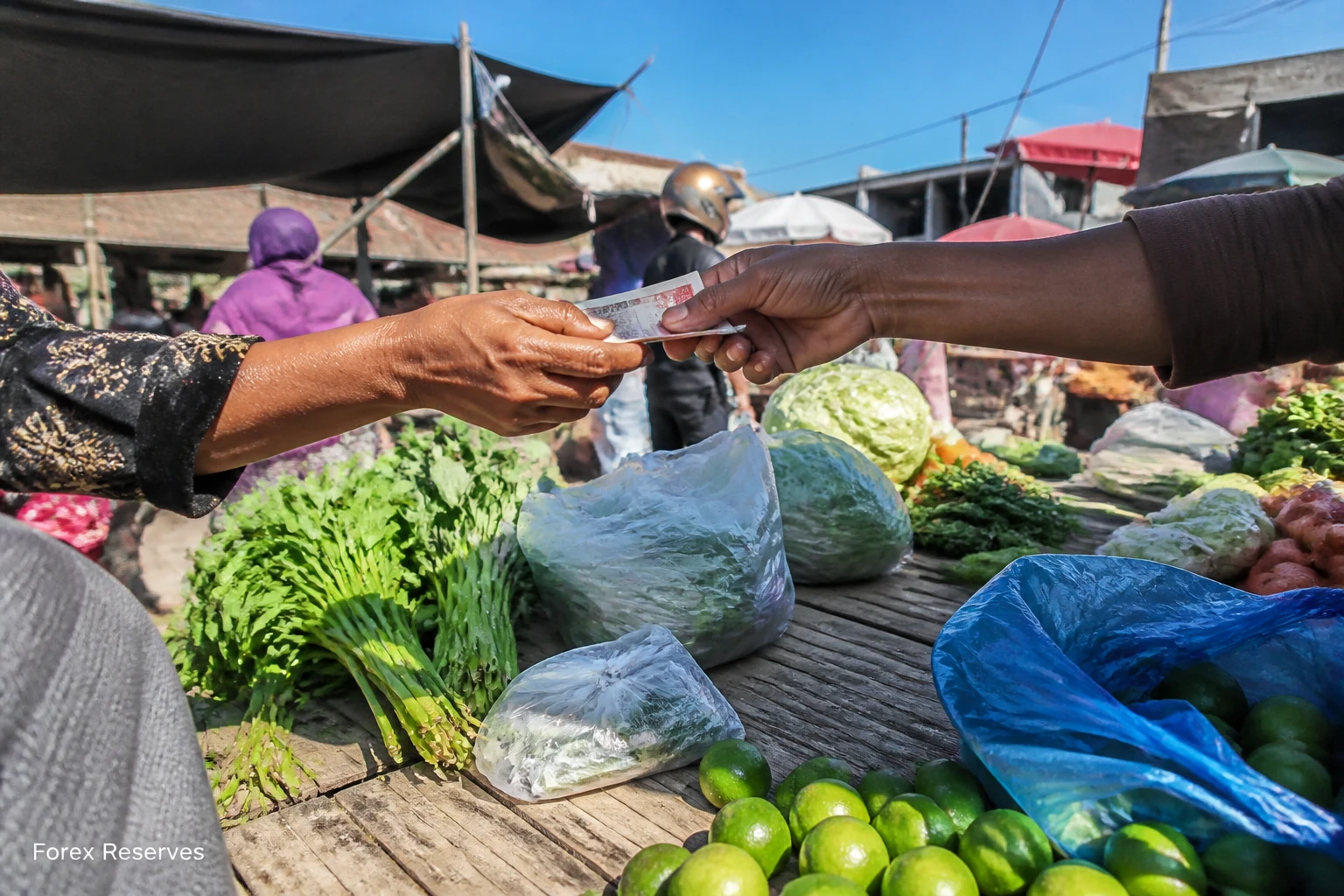
 BI Reassures on Forex Reserves · Photo by Alifia Harina on Pexels
BI's "adequate" statement is essentially saying: we're operating in scenario 1 or 2, and we're confident in our timeline. If they thought scenario 3 was real, they wouldn't issue reassurance, they'd prepare markets for policy shifts or capital account restrictions.
What matters for property investors is understanding which scenario the mechanical data supports. BI's word is one input, but reserve burn rate is deterministic:
- If reserves are declining at $500M-$1B per month, an "adequate" cushion of $100-$120B provides 8-24 weeks of operational runway.
- If stabilization happens faster (weeks 4-8, driven by bond intervention success and rate hike transmission through the economy), reserves never approach critical thresholds and BI's reassurance proves justified.
- If stabilization stalls beyond week 12, reserve decline becomes the market conversation, and BI's reassurance becomes retroactively unconvincing as credibility erodes.
Lombok Property Entry Strategy: Racing Against Reserve Depletion
Here's the uncomfortable truth: your entry window is defined by BI's reserve burn rate, not by when stabilization logically "should" happen.
Empirical history of emerging market currency stabilizations shows they succeed or fail within 8-16 weeks of policy escalation. BI's rate hikes began roughly 4 weeks ago; government bond intervention began 24 hours ago. We're at week 4-5 of the escalation cycle. If BI's reserves are adequate but declining, we're likely operating on a 12-16 week outer boundary before reserve adequacy questions become market-moving and force deeper policy conversations.
For Lombok property investors, this compresses the entry window with surprising urgency:
Weeks 1-8 (NOW through early July):
- BI's reserve reassurance is fresh and credible
- Bond intervention is signaling real commitment
- Buyer confidence still depressed by recent volatility (fear discount active)
- Optimal entry window: Maximum discount + maximum confidence in BI success
- South Lombok entry: €95-350K depending on location and finish
- MotoGP +47%, airport expansion 2025-26, tourism +40-50% YoY fundamentals intact
- Risk profile: Low (BI has demonstrated firepower, clear timeline, adequate reserves)
Weeks 9-12:
- Reserve decline becomes visible in monthly published reports
- Market starts asking: "How much reserve depletion can BI sustain?"
- Confidence plateaus; fear discount narrows as stabilization becomes likely
- Entry still possible but risk premium rising
- South Lombok pricing: Rising (stabilization confidence lifting, but not yet complete)
- Risk profile: Moderate (forward guidance and reserve communication become critical)
Weeks 13-16:
- Reserve adequacy no longer assumed by markets
- Capital flow volatility returns as confidence questions emerge
- BI forced to make explicit forward commitments ("defend to [specific level]" statements)
- Entry window closing; buyer confidence fragile and uncertain
- Risk profile: High (currency direction ambiguous, policy fragility apparent)
This timeline isn't arbitrary, it's mechanical and defined by reserve depletion rates. BI's reserve reassurance buys you confidence for this specific window, not indefinitely. The bank is essentially saying: we have runway, and we're using it purposefully.
What This Means for Investors
For new buyers actively considering entry: BI's reserve reassurance is credible, but it's time-bound. The first 8 weeks (now through early July) represent the highest-confidence entry window because BI has demonstrated a trifecta:
✓ Hawkish rate policy (Bank Indonesia raising costs of capital outflows) ✓ Aggressive bond market intervention (government backing central bank) ✓ Adequate reserves with defined runway (explicit reassurance on ammunition) ✓ Mutual commitment from two institutions (monetary + fiscal coordination)
This configuration suggests stabilization is likely within the reserve runway. After week 8, the conversation shifts from "BI is defending" to "how much longer can BI defend?", a fundamentally different psychology. For property entry decisions, that's the inflection point where buyer confidence inverts from rising to fragile.
For portfolio timing: The Lombok market fundamentals (12-22% yields, +47% MotoGP arrivals, +40-50% YoY tourism growth, airport expansion 2025-26, Bali-overflow thesis, South Lombok entry €95-350K) are durable and real. They don't change if stabilization takes 8 weeks vs. 12 weeks. What changes is buyer confidence, and confidence is a 8-16 week variable in emerging markets. Enter while confidence is returning but the discount is still priced in (now), not after confidence is universal but the discount has vanished (weeks 12+).
For existing Lombok property holders: BI's reserve statement is good news for your exit optionality. It signals the central bank expects to sustain rupiah defense through the near term. Your property's rupiah-denominated yield is unaffected by reserves, but your ability to exit into stable or strengthening rupiah (rather than continued depreciation) improves significantly if BI's timeline holds. The reassurance buys you patience to hold for appreciation rather than forced selling into weakness.
The critical insight: Markets often wait for certainty before acting. But in emerging markets, certainty arrives after the window closes. Investors who act on BI's reserve adequacy statement now, while it's fresh data, capture the discount that investors waiting for "more clarity" will never see.
The clock is running. BI has just set the agenda clearly: adequate reserves, stabilization timeline measured in weeks not months, commitment to defense. Your entry window is defined by their reserve burn rate, not by sentiment. That window is 8-16 weeks wide. It's open now. After week 8, the conversation changes fundamentally.
Stay informed, subscribe to the free Lombok Briefing for market intelligence like this, published twice a month.
What does Bank Indonesia mean when it says forex reserves are 'adequate'?
In central banking language, 'adequate' means sufficient to sustain current defense operations without forcing policy changes, not that reserves are abundant. By standard IMF metrics, adequate for an emerging market means 3 to 6 months of import cover. Indonesia's reserves likely sit within this range, but the direction of travel, declining, matters more than the current level.
How long can Bank Indonesia defend the rupiah before reserves become a problem?
The article estimates that if reserves are declining at $500M to $1B per month against an adequate cushion of $100 to $120B, BI has roughly 8 to 24 weeks of operational runway. Historical emerging market stabilizations succeed or fail within 8 to 16 weeks of policy escalation. BI's rate hikes began around week 4 to 5 of the current cycle.
What is the property entry window for foreign buyers in South Lombok during rupiah volatility?
The article identifies weeks 1 to 8 from the current escalation cycle as the optimal window, when BI's reserve reassurance is fresh, bond intervention signals real commitment, and buyer fear keeps prices depressed. South Lombok entry prices range from roughly 95,000 to 350,000 euros depending on location and finish. Beyond week 12 to 16, reserve concerns risk narrowing or closing the window.

The Lombok Buyer's Field Guide
Legal structures ranked by risk, the honest ROI math line by line, all six zones ranked, and the 24-point due-diligence checklist. The whole book, free in your inbox.
See what's inside