West Nusa Tenggara Sets Rp64 Trillion Investment Target for 2026
NTB’s investment agency is strengthening reporting compliance as it works towards a Rp64 trillion investment target for 2026.
West Nusa Tenggara’s investment agency has put a clear figure at the centre of its 2026 agenda: Rp64 trillion. The stated objective is accompanied by a practical focus on improving how businesses report investment activity.
For investors considering Lombok, the announcement is less a property-market forecast than a useful signal of administrative intent. The province is seeking healthier investment conditions while encouraging businesses to meet reporting obligations through guidance and training.
A provincial target paired with reporting discipline
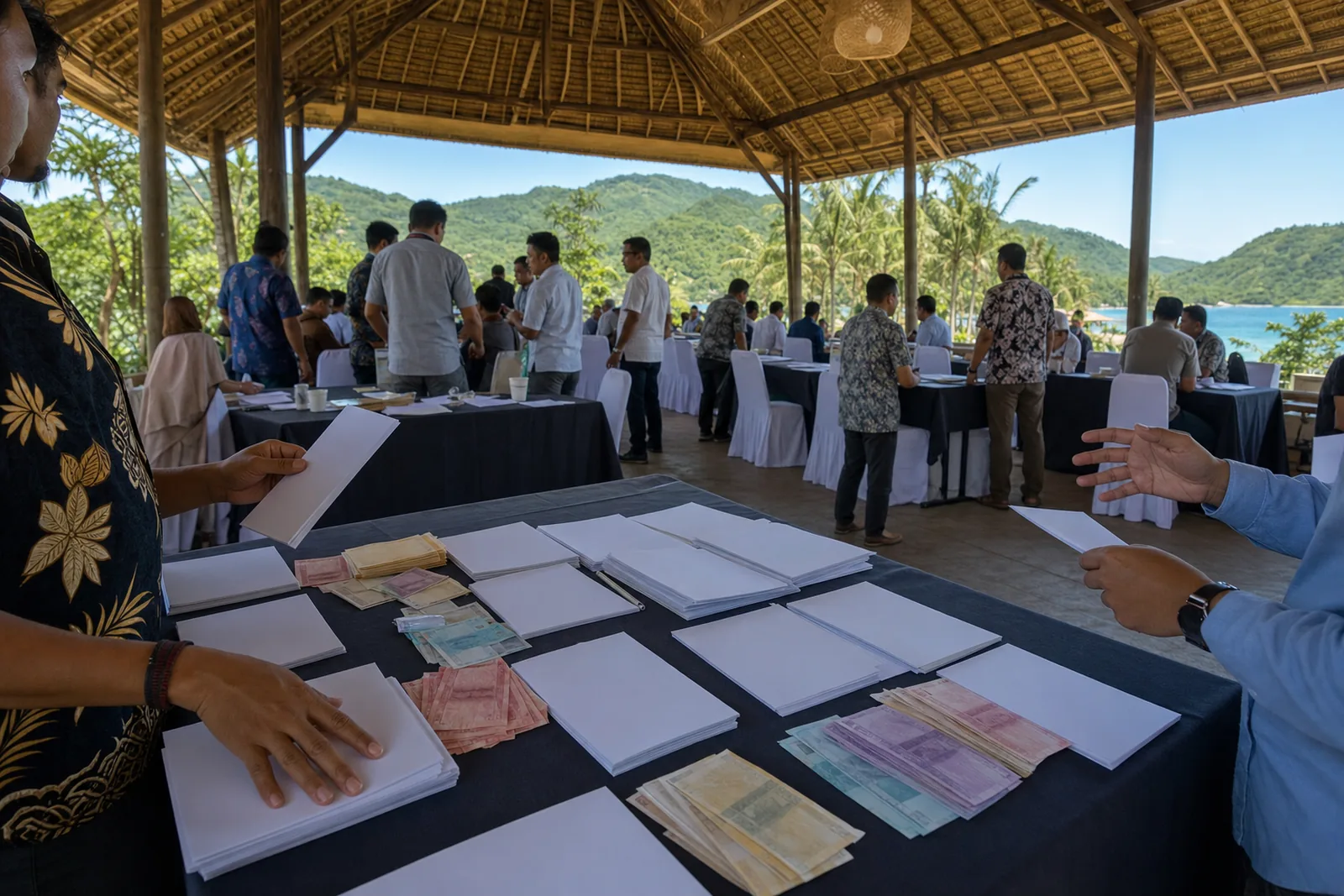
DPMPTSP Provinsi NTB, the province’s investment and one-stop services agency, announced that it is holding Bimtek LKPM, technical guidance for investment reporting, to improve business operators’ understanding and compliance. According to the agency, the support is intended to help investment realisation increase and contribute towards NTB’s 2026 investment target.
NTB’s stated 2026 investment target: Rp64 trillion.
That emphasis matters. Headline investment targets can attract attention, but the underlying administrative work is often less visible. In this case, DPMPTSP is explicitly linking the pursuit of investment realisation with better reporting practice among businesses.
The agency framed the initiative as part of building a healthy investment climate and advancing its wider “NTB Makmur Mendunia” ambition. It did not, in the supplied announcement, provide a breakdown by sector, location, project type or investor nationality. Investors should therefore treat the Rp64 trillion figure as a provincial target rather than as evidence of committed capital in any particular Lombok segment.
Why the announcement deserves investor attention
For international buyers and operators, the operating environment around an investment can be as consequential as the asset itself. A province that is visibly prioritising reporting compliance is signalling that business activity should be documented and administered with care.
This is especially relevant where a buyer’s plan extends beyond personal use into a structured commercial activity. The verified legal framework for foreign participation in Indonesian property is specific:
- Foreigners cannot hold freehold, known as Hak Milik or SHM; it is reserved for Indonesian citizens.
- Available routes include leasehold (Hak Sewa), typically 25-30 years with extensions; Hak Pakai, a personal right-to-use requiring KITAS or KITAP residency; and a foreign-owned PT PMA holding Hak Guna Bangunan (HGB), initially 30 years and extendable.
- Nominee structures in which an Indonesian person holds freehold on a foreigner’s behalf are illegal and void in court.
The reporting initiative does not change those rules. Nor does it remove the need for a buyer to choose an appropriate ownership and operating structure before committing capital. But it reinforces a simple principle: compliance should be treated as part of the investment case, not as paperwork to be considered after acquisition.
Lombok’s property context remains varied
The provincial target covers NTB rather than South Lombok alone. Still, Lombok remains relevant to investors because the market spans distinct price points and development profiles.
Land is commonly discussed locally by the are, with 1 are equal to 100 square metres. Across the named South Lombok zones, the verified spread is about Rp30 million to Rp400 million per are. Kuta, the demand and liquidity leader, is priced at Rp300-400 million per are; Are Guling, described as an early-cycle frontier, is at Rp120-180 million per are; and Bumbang, the lowest-entry emerging zone, is at Rp30-50 million per are.
Prime tourist-zone land is about Rp150-400 million per are. Investors should compare like-for-like tenure, zoning, access and development readiness rather than treating a provincial investment target as a local pricing guide.
For turnkey investment-grade villas in South Lombok, entry prices are stated at EUR95,000-350,000. Honest net rental yields are in the 7-12% range after management fees and realistic occupancy, while top-performing assets can reach about 15% net. Developer-quoted gross yields of 12-22% are not directly comparable with net returns because they exclude costs.
The distinction is not cosmetic. Management fees are typically 18-22% of gross rental revenue, while online travel agency and booking commissions are 15-20%. Realistic stabilised occupancy in the first three years is 55-70%. Any prospective investor assessing a Lombok villa should therefore ask whether an advertised return is gross or net, what occupancy is assumed, and which costs have been included.
Developments like Samudra Villas in Are Guling, South Lombok illustrate the type of project investors may encounter in this part of the market. HubLombok is the editorial arm of Samudra Villas, an active developer in Are Guling; that relationship should be considered when reading market coverage involving the area or comparable developments.
Compliance is part of due diligence
A sound transaction involves more than an appealing location or rental narrative. Indonesian property transfers require deeds executed by a licensed PPAT notary; the deed of sale is known as an AJB, and the land agency is BPN. Buyers also face BPHTB, a transfer duty of about 5% of assessed value, while annual land-and-building tax, PBB, is modest.
Independent legal and notarial due diligence is particularly important for foreign buyers. TerraNusa Advisory, HubLombok’s legal/notary advisory partner, supports due diligence on SHM and HGB certificates, ownership history, zoning and encumbrances, as well as PT PMA setup, relevant taxes, deeds and title transfer at BPN. Its role is advisory rather than developmental.
The central lesson from DPMPTSP’s announcement is not that every investment is equally ready. It is that the province is placing reporting knowledge and compliance alongside its investment ambition. That should encourage investors to apply the same discipline to their own decisions.
What this means for investors
The Rp64 trillion target is a directional policy signal, not a substitute for asset-level analysis. For prospective Lombok investors, three practical conclusions follow:
- Treat the announcement as evidence that NTB is actively pursuing investment and business-reporting compliance, while avoiding assumptions about project-specific outcomes.
- Keep legal structure, title due diligence, zoning and tax obligations at the front of the purchase process.
- Underwrite property using net, not gross, rental assumptions, realistic occupancy and all operating costs.
For investors weighing Lombok against more mature regional alternatives, the opportunity remains one of selectivity. The province’s investment ambition may support a constructive backdrop, but careful structuring and disciplined due diligence remain the more durable foundations for a successful transaction.
Stay informed, subscribe to the free Lombok Briefing for analysis like this, published twice a month.
What is NTB’s investment target for 2026?
DPMPTSP Provinsi NTB has stated a 2026 investment target of Rp64 trillion. Its announcement says technical guidance for LKPM investment reporting is intended to improve business understanding and compliance, helping investment realisation contribute towards that provincial target.
Does the Rp64 trillion target guarantee returns on Lombok property?
No. The Rp64 trillion figure is a provincial investment target, not a guarantee of returns for a particular property or project. Investors should assess tenure, title, zoning, operating costs, realistic occupancy and whether any stated rental yield is gross or net.
Can a foreign investor buy Lombok property freehold?
No. Foreigners cannot hold Indonesian freehold, Hak Milik or SHM. Common lawful routes include leasehold, Hak Pakai for qualifying residents, or a PT PMA holding HGB. Nominee arrangements are illegal and void in court.

The Lombok Buyer's Field Guide
Legal structures ranked by risk, the honest ROI math line by line, all six zones ranked, and the 24-point due-diligence checklist. The whole book, free in your inbox.
See what's inside