Bank Indonesia Widens Rupiah Defences: What Lombok Investors Should Note
Bank Indonesia is expanding incentives to steady the rupiah at Rp17,855 per dollar. A notebook on what that means for Lombok buyers who price land in rupiah and fund in hard currency.
Quick answer: Bank Indonesia is deploying all its monetary tools to steady the rupiah, which traded at Rp17,855 per US dollar on 22 September, a 0.7 percent depreciation from late August. For Lombok investors, land is quoted in rupiah per are, so currency moves change what a purchase costs in euros or dollars.
A central bank statement is rarely the stuff of villa brochures. Yet on Wednesday Bank Indonesia's Board of Governors chose to widen its toolkit for supporting the rupiah, and for anyone who prices Lombok land in rupiah but funds in another currency, that deserves an unhurried read. This notebook sets out what was announced, what it does not tell us, and how to fold it into a sober underwriting file.
The Context
According to Antara Business, Governor Destry Damayanti said after the meeting that the central bank is optimising all of its monetary instruments. The stated aims are to expand incentive policies that draw in foreign portfolio investment, to strengthen rupiah stability, and to speed up the deepening of the money and foreign exchange markets.
The most concrete change concerns premium-reduction incentives for foreign funding. These apply to two instruments named in the report: Hedging Sell Swaps and Domestic Non-Deliverable Forwards (DNDFs). Previously the incentives covered portfolio inflow transactions. Bank Indonesia has now widened the scope of eligible underlying transactions to include foreign direct investment and foreign bank loans.
Our reading, and it is only a reading, is that the policy makes it cheaper for foreign money of several kinds to protect itself against currency swings. The source does not spell out the mechanics, so we do not extend the claim further.
The backdrop is a market that has been choppy. Antara reports that monetary intervention helped the rupiah recover from August through mid-September 2026, but global market headwinds have since renewed short-term selling pressure. As of 22 September the rupiah traded at Rp17,855 per US dollar, a modest 0.7 percent point-to-point depreciation from late-August levels.
The governor was upbeat about the direction of travel:
"Looking ahead, Bank Indonesia projects that the rupiah exchange rate will remain stable, supported by Bank Indonesia's commitment, attractive yields, inflation controlled within the target range, and a positive domestic economic outlook." (Destry Damayanti, Bank Indonesia Governor, as reported by Antara)
That is the central bank's own projection. It is a statement of intent and confidence, not an independent forecast, and it should be weighed accordingly.
Why a Currency Note Belongs in a Land File
Most foreign investors in South Lombok think in euros, dollars or Australian dollars. The local market thinks in rupiah, and land is quoted per are (1 are = 100 m²). The authoritative ranges we publish for 2026 are set out below, all in rupiah per are.
| Zone | Land price (Rp million per are) | |---|---| | Kuta | 300-400 | | Selong Belanak | 150-250 | | Are Guling | 120-180 | | Mandalika | 100-150 | | Mawun | 50-80 | | Bumbang | 30-50 |
Overall, land in South Lombok spans roughly Rp30-400 million per are, with Kuta at the top of that range.
Here is the subtlety. Our published dollar equivalents for these ranges use a reference rate of about Rp16,500 per US dollar. The rate quoted by Antara for 22 September, Rp17,855, is weaker for the rupiah than that reference. A buyer converting dollars on the day would therefore see a different dollar figure from the one in any static table, ours included. Treat every dollar conversion in a brochure, a portal or this article as approximate, and recompute it at the rate on the day you actually transfer funds.
The same logic applies in the other direction. Turnkey investment-grade villas in South Lombok are typically priced from EUR 95,000 to 350,000, a euro-denominated entry range. Whether a particular seller quotes in euros, dollars or rupiah, and at what conversion date, is a contract term rather than a market fact. It can move your effective price by more than a negotiated discount would.
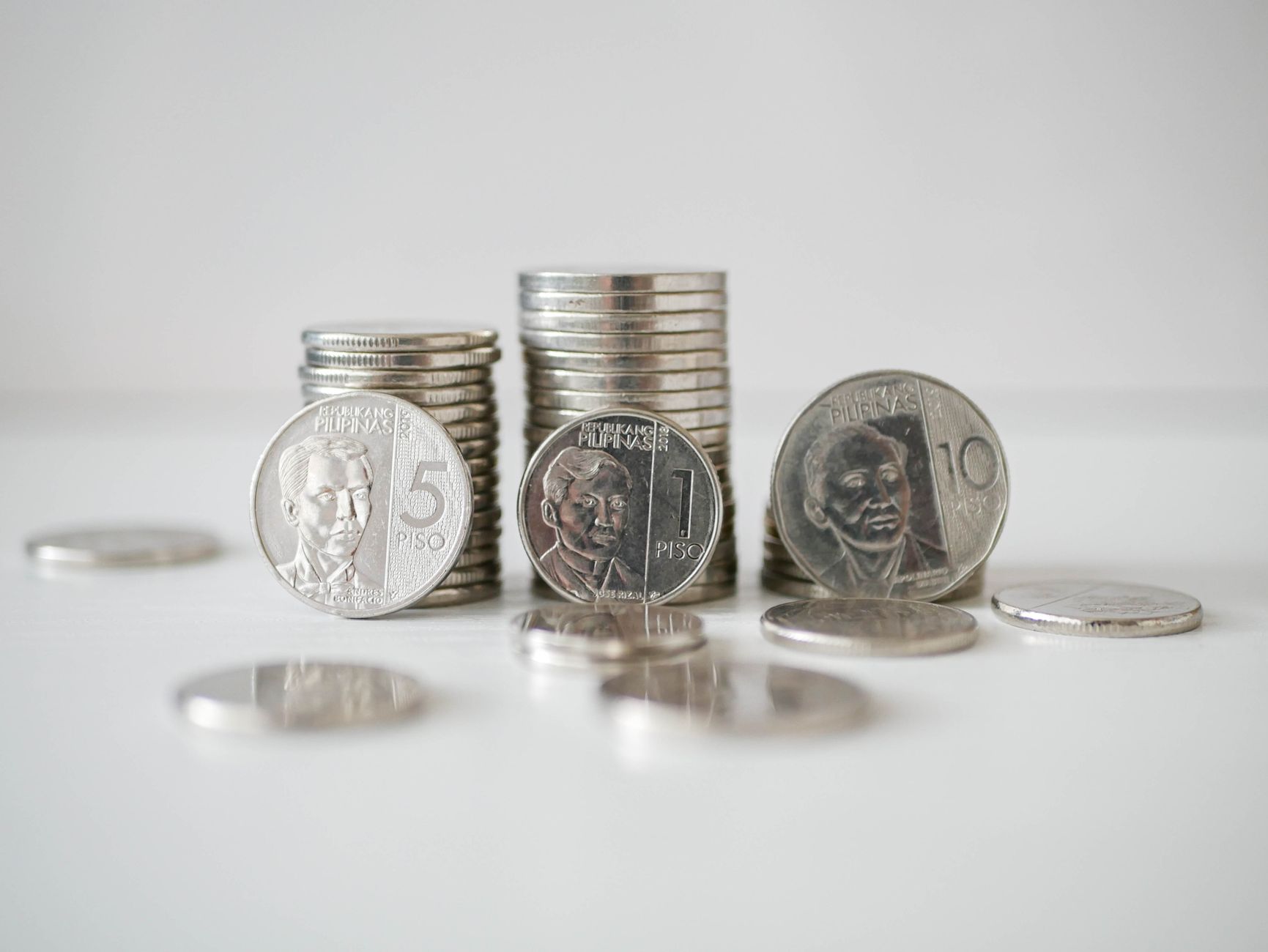
 Bank Indonesia Widens Rupiah Defences · Photo by Try Putro Utomo on Pexels
Reading the Signals Without Over-Reading Them
The temptation with a headline like "all monetary tools" is to read either alarm or reassurance into it. The evidence supports neither strongly.
On the reassuring side, a 0.7 percent point-to-point move since late August is modest, and the report says intervention helped the rupiah recover between August and mid-September. On the cautious side, the same report acknowledges renewed short-term selling pressure and continued external turbulence. A central bank that widens its incentive scheme while describing the outlook as stable is doing two things at once: expressing confidence and buying insurance.
The widening to include foreign direct investment is the detail most relevant to property. Foreign direct investment is the category into which many foreign-owned structures naturally fall. We would not, however, claim that the change applies to any individual purchase or company structure. The source does not say so, and eligibility will turn on the specific transaction and the financial institutions involved.
Three cautions follow for anyone building a model:
- A projection is not a peg. Bank Indonesia expects stability, citing yields, inflation within its target range and a positive domestic outlook. Each of those is a condition, not a certainty.
- Short-term pressure and long-term holds differ. A currency wobble over weeks matters greatly to someone converting a deposit this month, and much less to a holder measuring returns over a decade.
- Currency sits on top of every other risk. It does not replace the ordinary discipline of checking title, structure and costs.
What This Means for Investors
None of this changes the fundamentals of the Lombok thesis: demand displaced from a more expensive, more congested Bali towards an earlier-cycle market. It does sharpen the questions a careful buyer should ask before wiring money.
- Fix the currency of the contract. Establish which currency the price is set in, which conversion rate applies, and on which date. Ambiguity here is a hidden cost.
- Stage exposure deliberately. If a purchase involves several payments, decide in advance whether you convert once or in tranches, and document the reasoning.
- Keep the honest yield range in view. Our estimate for realistic net rental yield is 7-12% after management fees (18-22% of gross rental revenue) and booking commissions (15-20%), at stabilised occupancy of 55-70% in years one to three. Developer-quoted gross yields of 12-22% exclude those costs. A currency move is a further layer on either figure, not a substitute for the deductions.
- Ask how rental income is priced. A villa let in one currency and held in another carries a translation effect whichever way the rupiah moves. Understand it before you buy.
- Watch the policy, not the headline. The next Bank Indonesia announcements, and the rupiah's path against the Rp17,855 level, are more informative than any single day's reporting.
Returns in this market are estimates and depend on occupancy, costs and execution. Nothing in a central bank statement removes that uncertainty.
The measured conclusion is that the rupiah is being actively defended and, on the central bank's own account, is expected to hold steady. Prudent investors will welcome that while still pricing in the possibility that it does not.
Stay informed: subscribe to the free Lombok Briefing, published twice a month (the 1st and 15th), for market intelligence like this.
What did Bank Indonesia announce to support the rupiah?
Bank Indonesia widened premium-reduction incentives for foreign funding via Hedging Sell Swaps and Domestic Non-Deliverable Forwards. Eligible transactions now include foreign direct investment and foreign bank loans, alongside portfolio inflows. The governor said the bank is optimising all monetary instruments to support rupiah stability.
Does the rupiah's level affect Lombok land prices for foreign buyers?
Yes. Lombok land is quoted in rupiah per are, so the euro or dollar cost of a purchase shifts with the exchange rate. Any dollar conversion in a listing is approximate, so recompute it at the rate on the day you transfer funds.
Should currency risk change my expected rental yield?
Currency does not change the estimated net yield range of 7-12% after management fees and commissions, but it adds a separate layer of risk. Check the currency of the contract and of rental pricing, because translation effects can raise or reduce returns measured in your home currency.

The Lombok Buyer's Field Guide
Legal structures ranked by risk, the honest ROI math line by line, all six zones ranked, and the 24-point due-diligence checklist. The whole book, free in your inbox.
See what's inside