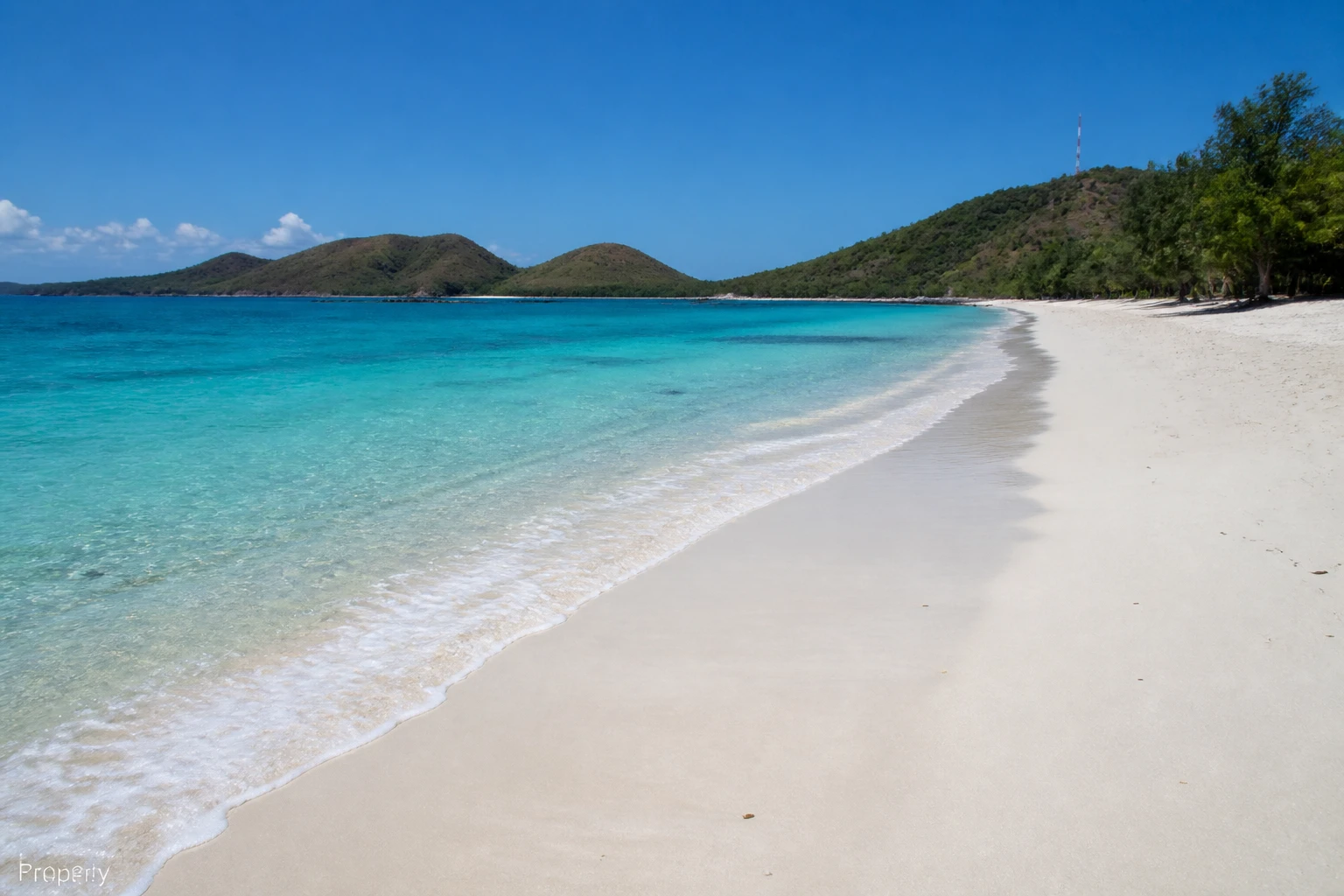
Bali's Wave Warning: Why Investors Are Looking South to Lombok
High wave warnings disrupt Bali tourism. How Bali's congestion and weather volatility are driving investor interest toward Lombok's younger, less crowded, higher-yielding market.
This week, Bali's busiest beaches are contending with high waves and unseasonable rainfall, forcing tourists to reschedule activities and rethink their itineraries. For many, it's an inconvenience. For property investors, it's a reminder of a deeper shift: the fracturing of Bali's once-monopolistic appeal.
When Bali's Weather Turns: The Luxury Market Feels It First
High-season disruptions in Bali are not new. But the cumulative pressure is mounting. Rising tourist congestion, ageing infrastructure, and traffic have turned what was once a seller's market into a market with friction. Now, when a week of rough seas and rain hits the beaches, tourists don't simply wait it out, they pivot.
Some go deeper into Bali's countryside. Many look further east.
For villa operators and investors with properties in Bali's crowded tourist zones, weather disruptions are a familiar sting: occupancy dips, nightly rates soften, and revenue forecasts slip. Developers and fund managers have begun modelling these interruptions as structural risk. That recalculation is reshaping where foreign capital is flowing.
Lombok's Emergence as the Overflow Play
Three years ago, Lombok was a frontier. Today, it's becoming the obvious next move.
The numbers tell the story. Foreign tourist arrivals to South Lombok have risen 40–50% year-on-year, a rate that outpaces Bali's recovery. The MotoGP effect, the 2021 debut of the Mandalika Circuit, has anchored international brand awareness and attracted tier-one tourism infrastructure investment. More critically, entry-level investment prices remain compelling: turnkey, income-generating villas start at around €95,000–350,000, whilst comparable properties in Bali command USD 400,000–800,000.
The yield gap is where the real story emerges. Lombok's established zones deliver net annual yields of 7–12% after all management and platform fees, with top-performing assets reaching ~15% net. This stands in sharp contrast to Bali's mature, increasingly congested comparable zones.
This is the "Bali-overflow" thesis in action: rising prices, rising congestion, and rising regulatory friction in Bali push capital down the supply curve. Lombok, cheaper, less crowded, and earlier in its tourism cycle, becomes the natural alternative.
The Zones Taking Shape
The best-performing zones underline this pivot. Are Guling, in South Lombok, has seen property appreciation of roughly 47% year-on-year, the highest of all six main zones, because it combines the advantages: land prices still below Rp 150–180 million per are (roughly USD 90–135 per square metre), early-cycle momentum, and direct proximity to emerging Mandalika tourism infrastructure. Developments like Samudra Villas in Are Guling exemplify the turnkey model: a reference villa from around EUR 255,000, with no yield published by HubLombok.
Nearby Kuta Mandalika, the capital-appreciation leader, trades at Rp 250–400 million per are and commands entry prices of USD 194–344K, reflecting its proximity to the MotoGP circuit and accelerating resort and hospitality investment. Tanjung Aan (trophy beachfront) and Selong Belanak (family tourism growth) round out the momentum quartet.
These are not speculative pockets. They are informed, data-led allocations reflecting structural tourism growth and the exhaustion of Bali's geographic capacity.
Infrastructure and Risk Mitigation
Lombok's airport is undergoing a significant upgrade to handle higher passenger volumes. The Mandalika Economic Zone is attracting industrial and logistics investment. Roads are improving. These are not glamorous headlines, but they are the bones of sustainable tourism and property economics.
For property investors, the implication is clear: Lombok's infrastructure is moving from "adequate for tourists" to "competitive with Bali," whilst Bali's infrastructure is straining under demand. A traveller inconvenienced by high waves and rain in Bali can now reasonably pivot to Lombok with confidence that beaches, accommodation, and on-ground services will be competitive.
What This Means for Investors
Short term: Bali's weather-driven disruptions, along with broader congestion and cost pressures, will continue to shift enquiries and capital southward. Investors with capital earmarked for Bali "because that's where tourism is" are beginning to reframe their thesis.
Longer term: Lombok's combination of 7–12% net yields, appreciation momentum of 22–47% year-on-year across key zones, and a tourism-growth runway that likely extends 5–10 years offers a profile more similar to Bali in 2010 than Bali in 2026. For investors aged 30–60 seeking capital growth, reliable income, and exposure to Indonesia's tourism boom, that positioning has become strategically difficult to ignore.
The question is no longer "Should I invest in Lombok?" It is "How long until Lombok's premium shrinks?"
Stay informed, subscribe to the free Lombok Briefing for analysis like this, published twice a month.
Does a single week of weather in Bali really shift investor capital to Lombok?
Not alone. But disruptions combined with Bali's rising costs, congestion, and regulatory friction create cumulative pressure. Lombok's lower entry (€95–350K vs. USD 400–800K), higher net yields (7–12%), and +40–50% YoY tourism growth make it an increasingly rational alternative.
What's the realistic net yield I should expect from a Lombok villa?
Established zones deliver 7–12% net annual yield after management fees (18–22% of revenue) and realistic occupancy of 55–70% in years 1–3. Top-performing assets reach ~15% net. Always verify the operator's historical track record before committing capital.
Is the MotoGP circuit the only reason Lombok is growing?
No. MotoGP anchored brand awareness and infrastructure investment, but growth is structural: Bali-overflow demand (rising Bali prices and congestion), +40–50% YoY foreign arrivals, airport upgrades, and capital migration to earlier-cycle zones like Are Guling (+47% YoY appreciation).

The Lombok Buyer's Field Guide
Legal structures ranked by risk, the honest ROI math line by line, all six zones ranked, and the 24-point due-diligence checklist. The whole book, free in your inbox.
See what's inside