Bali’s Tourism FX Dominance and What It Means for Lombok
Bali still dominates Indonesia’s tourism earnings. For Lombok investors, that concentration is less a threat than a signal of spillover opportunity.
Bali’s role in Indonesia’s tourism economy remains extraordinary. According to Antara Business, the island generated 55% of the country’s tourism foreign exchange in 2025, a concentration that tells investors two things at once: Bali is still the national anchor, and every serious nearby destination is increasingly priced as part of the same regional story.
For Lombok, that matters more than it first appears. The island is no longer just a quieter alternative; it is becoming a beneficiary of Bali’s scale, congestion, and premium demand spillover, with the best-located projects now attracting investors who want yield, land scarcity, and a narrower entry point than Bali’s most established corridors.
The Context
Bali’s dominance in tourism receipts is not new, but the scale remains striking. When one island contributes more than half of national tourism FX, it functions less like a destination and more like an economic system. Airlines, hospitality operators, villa owners, transport services, and real estate developers all cluster around the same gravity well.
That gravity has a second-order effect. As Bali matures, investors increasingly ask where the next layer of growth will come from. The answer is not a single replacement destination. It is a constellation of nearby markets that can absorb overflow demand, serve different traveller profiles, and offer a better risk-return profile for buyers willing to think regionally.
Lombok sits squarely in that conversation. It benefits from a clear comparative advantage: it is close enough to Bali to inherit demand, but distinct enough to offer lower land prices, a less saturated development landscape, and a stronger sense of scarcity in carefully selected coastal pockets.
This is why the market often gets discussed through a simple but powerful framework: the Bali-overflow thesis. In essence, as Bali becomes more expensive, more crowded, and more regulation-sensitive, some share of both tourism and capital naturally migrates east.
Bali accounted for 55% of Indonesia’s tourism foreign exchange earnings in 2025, underscoring both its scale and the opportunity set around it.
Several adjacent trends reinforce that logic:
- Tourism flows into Lombok have been reported at 40-50% year on year in stronger periods, a pace that suggests a market still moving from discovery to consolidation.
- The MotoGP effect has been material, with arrivals linked to the event rising by 47% in related reporting, demonstrating how marquee events can reframe destination awareness.
- The airport expansion scheduled for 2025-26 remains one of the more important structural catalysts, because access upgrades tend to matter as much as marketing in island property markets.
The central point is not that Lombok should imitate Bali. It should not. The investment case is stronger when Lombok remains differentiated: quieter, more development-friendly in selected zones, and still early enough for disciplined capital to find attractive entry prices.
| Factor | Bali | Lombok | |---|---:|---:| | Tourism scale | National leader | Smaller, growing complement | | Foreign exchange role | 55% of Indonesia’s tourism FX in 2025 | Spillover beneficiary | | Market maturity | Highly established | Earlier-cycle, selective | | Typical entry point | Higher in prime areas | South Lombok often €95K-350K | | Investor thesis | Yield plus liquidity | Yield plus upside |
Why Lombok Is Gaining Attention
The strongest Lombok cases are not broad-market bets. They are location-specific, infrastructure-aware, and operationally disciplined. In South Lombok in particular, the entry range of roughly €95,000 to €350,000 keeps the market accessible to a wider set of international investors than Bali’s premium coastal strips, while still allowing for meaningful quality differentiation.
That matters because the best villa economics depend on more than headline tourism growth. Investors need a combination of purchase price, occupancy potential, management quality, and exit optionality. A market can be fashionable and still be poor value. Lombok is interesting because, in the right sub-markets, it offers the possibility of both price efficiency and lifestyle appeal.
The question investors should ask is not whether Lombok can become the next Bali. It is whether Lombok can produce better marginal returns for a more selective kind of capital.
The return profile
In current market conversations, gross rental yields in well-positioned Lombok assets are often discussed in the 12-22% range. That is a broad band, not a guarantee, and the upper end generally depends on strong design, effective operator selection, and a genuinely marketable location. Yet even allowing for conservatism, the yields remain materially higher than what many mainstream holiday markets can sustain.
The reason is straightforward. Lombok is still in the phase where exceptional assets can outperform average ones by a wide margin. In mature destinations, that spread narrows as competition intensifies and pricing converges. Here, it remains wide enough to reward judgement.
The distinction between a speculative purchase and an investment-grade acquisition is usually found in a few practical questions:
- Is the asset positioned for both leisure demand and event-led spikes?
- Does it sit within a realistic driving distance of beaches, surf, or airport access?
- Is the operator credible enough to convert interest into occupancy?
- Can the project appeal to both end-users and rental investors at exit?
Those questions matter more than glossy branding. In an emerging destination, execution quality becomes part of the moat.
The infrastructure angle
Infrastructure is often the hidden variable in island markets. New roads, airport upgrades, route expansions, and improved last-mile access can do more to reprice a district than any marketing campaign.
Lombok’s airport expansion in 2025-26 is important for that reason. Even when timelines slip, the market tends to re-rate on the expectation of better connectivity well before the physical works are fully complete. Investors who buy after the catalyst is obvious usually pay for the story rather than the transition.
That is why the most interesting Lombok opportunities are often found ahead of the broader consensus. They are not necessarily the cheapest. They are the assets that look inexpensive relative to what the market may become once connectivity improves, tourism depth broadens, and Bali’s premium overhang continues to push some demand outward.
There is also a subtle but crucial point about destination hierarchy. Bali’s success creates trust in the wider region. International buyers who would never start their research in Lombok often arrive there indirectly, after first understanding Bali. Once they are looking nearby, Lombok benefits from comparison shopping.
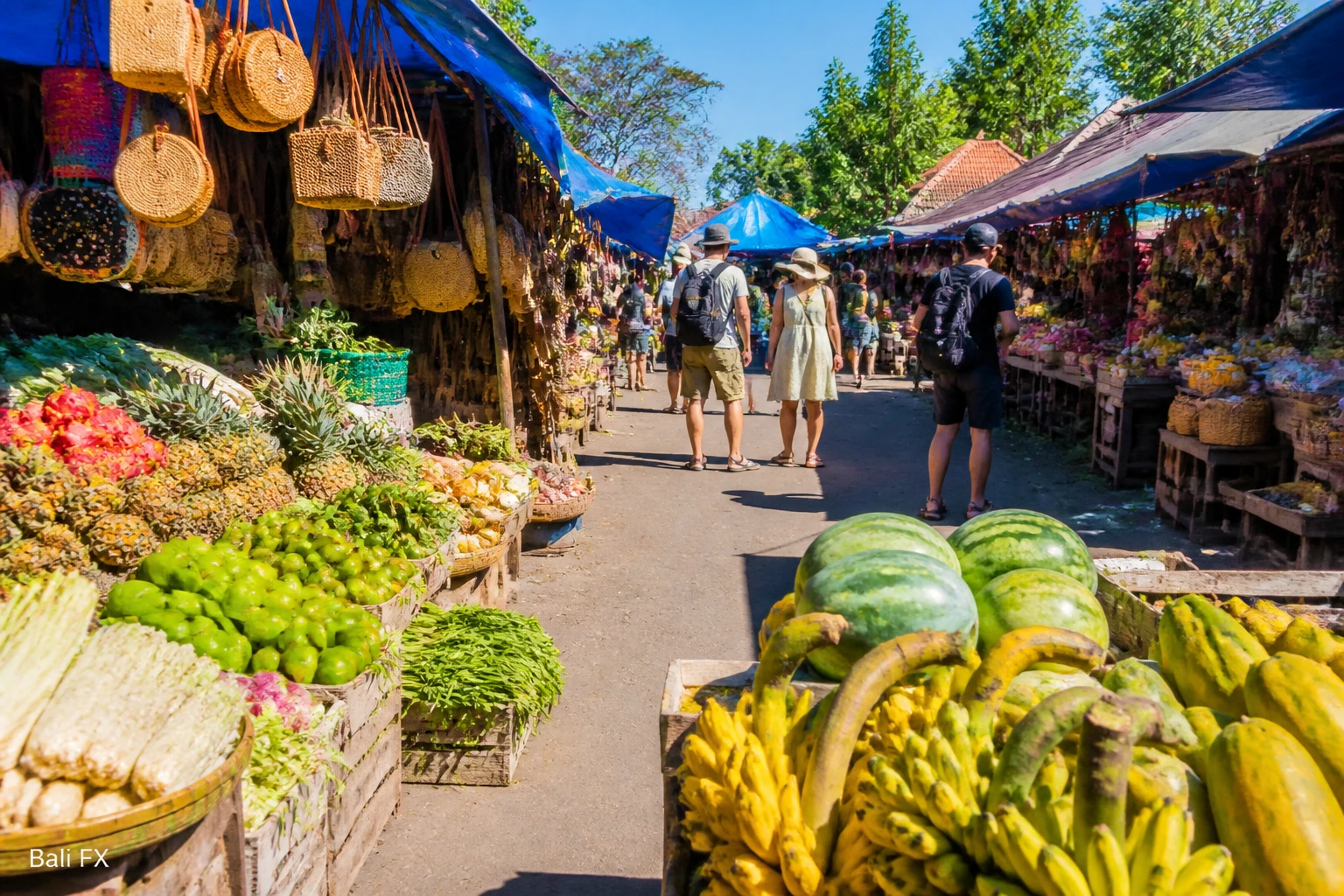
 Bali’s Tourism FX Dominance and What It Means for Lombok · Photo by Quang Nguyen Vinh on Pexels
What This Means for Investors
For investors, the lesson is not to chase tourism headlines but to interpret them. Bali’s 55% share of Indonesia’s tourism foreign exchange is a sign of concentration, and concentration creates both resilience and leakage. It supports the region, yet it also pushes capital toward the next layer of opportunity.
Lombok’s investment logic is strongest when viewed through three lenses.
First, it is a yield market, not just a capital appreciation play. The reported 12-22% yield range in selective assets is the core attraction, especially for buyers who can tolerate operational risk in exchange for stronger cash generation.
Second, it is an accessibility market. South Lombok’s €95,000-350,000 entry range lowers the threshold for participation without necessarily forcing buyers into the most fragile parts of the market. That range is wide enough to accommodate both first-time international purchasers and more experienced investors seeking diversification.
Third, it is an infrastructure-and-flow market. The airport expansion, the ongoing tourism uplift, and event-driven awareness gains such as MotoGP-linked arrivals of 47% all point to an island that is still forming its institutional and commercial identity. In markets like this, the winners are usually not the most exuberant speculators. They are the investors who buy early, but not blindly.
A sober Lombok allocation today should therefore be based on discipline rather than enthusiasm:
- Prioritise proven tourism corridors over speculative inland land banking.
- Underwrite conservative occupancy assumptions, even if marketing materials suggest stronger numbers.
- Treat management quality as a core asset, not an afterthought.
- Prefer projects with clear resale narratives to buyers from Europe, Australia, and the United States.
The broader regional picture is favourable, but the best returns will still be made by those who choose selectively. Bali will remain the anchor. Yet in investment terms, anchors also cast shadows, and it is often in those shadows that the next opportunity forms.
For Lombok, that means the current moment is less about replacing Bali than about learning to profit from Bali’s scale. The island’s advantage is not imitation. It is adjacency, affordability, and timing. If tourism continues to grow, infrastructure improves as expected, and developers maintain discipline, the next cycle may reward the investors who recognised Lombok not as a secondary market, but as a market with its own logic.
Stay informed, subscribe to the free Lombok Briefing for market intelligence like this, published twice a month.
What share of Indonesia's tourism foreign exchange does Bali generate, and why does it matter for Lombok investors?
Bali generated 55% of Indonesia's tourism foreign exchange earnings in 2025, making it function as a regional economic system rather than a single destination. As Bali becomes more expensive, more crowded, and more regulation-sensitive, some share of both tourism and capital naturally migrates east, positioning Lombok as a direct spillover beneficiary with lower entry prices and a less saturated development landscape.
What is the typical property entry price range in South Lombok?
South Lombok properties are typically discussed in the range of roughly €95,000 to €350,000. This keeps the market accessible to a wider set of international investors than Bali's premium coastal strips, while still allowing for meaningful quality differentiation. The lower entry point, combined with genuine land scarcity in selected coastal pockets, is a central part of the investment case.
What gross rental yields are reported for well-positioned Lombok villas?
Gross rental yields in well-positioned Lombok assets are often discussed in the 12 to 22% range. This is a broad band, not a guarantee. The upper end generally depends on strong design, effective operator selection, and a genuinely marketable location. Yields remain materially higher than many mainstream holiday markets because Lombok is still in the phase where exceptional assets can outperform average ones by a wide margin.

The Lombok Buyer's Field Guide
Legal structures ranked by risk, the honest ROI math line by line, all six zones ranked, and the 24-point due-diligence checklist. The whole book, free in your inbox.
See what's inside