
Security Concerns in Bali Accelerate Investor Flight to Lombok
Crime incidents in Bali spur investor flight to Lombok, where 40–50% YoY tourism growth, 47% villa appreciation, and €95–350K entry costs offer compelling risk-adjusted yields for diversified internat
Quick answer: Security incidents in Bali are accelerating investor interest in South Lombok, where foreign arrivals are climbing 40–50% YoY and villa rates have appreciated 47%. South Lombok's lower entry costs (€95–350K) and early-cycle positioning make it an increasingly attractive diversification for yield-focused international buyers seeking safer, more affordable alternatives.
The Context
Last weekend, CCTV footage of opportunistic theft targeting international tourists in Bali's Uluwatu neighbourhood catalysed renewed scrutiny of the island's security posture during peak travel season. Security teams have ramped patrols and surveillance, yet the incident underscores a creeping anxiety among affluent travellers and property investors: Bali's golden-goose status, high occupancy, reliable rental yields, established brand, now comes with congestion, infrastructure strain, and intermittent security incidents that corrode its premium positioning.
This is not a crisis. Bali remains a formidable tourism and investment hub. But the marginal tourist, the risk-aware, mobility-rich international buyer, is increasingly asking a crucial question: Is Bali still the best risk-adjusted entry point, or is the cycle rolling elsewhere?
For property investors with 3–7 year horizons and capital to deploy, that question has a clear answer: Lombok.
The Redirect
South Lombok's tourism economy is in explosive acceleration:
- Foreign arrivals: +40–50% YoY, more than double Bali's stabilisation rate, driven by airport modernisation (2025–26 completion), MotoGP's Mandalika venue (debut 2026), and a new generation of digital-savvy investors seeking alpha exits from saturated markets.
- Villa-rate appreciation across zones: +22% to +47% YoY, with Are Guling (early-cycle frontier) and Kuta (liquidity hub) leading. These are transaction prices, not developer-quoted fantasy numbers.
- Rental demand sustaining 7–12% net yields, after realistic occupancy (55–70%) and management fees (18–22%), competitive with Bali's higher occupancy but increasingly compressed margin from rate discounting.
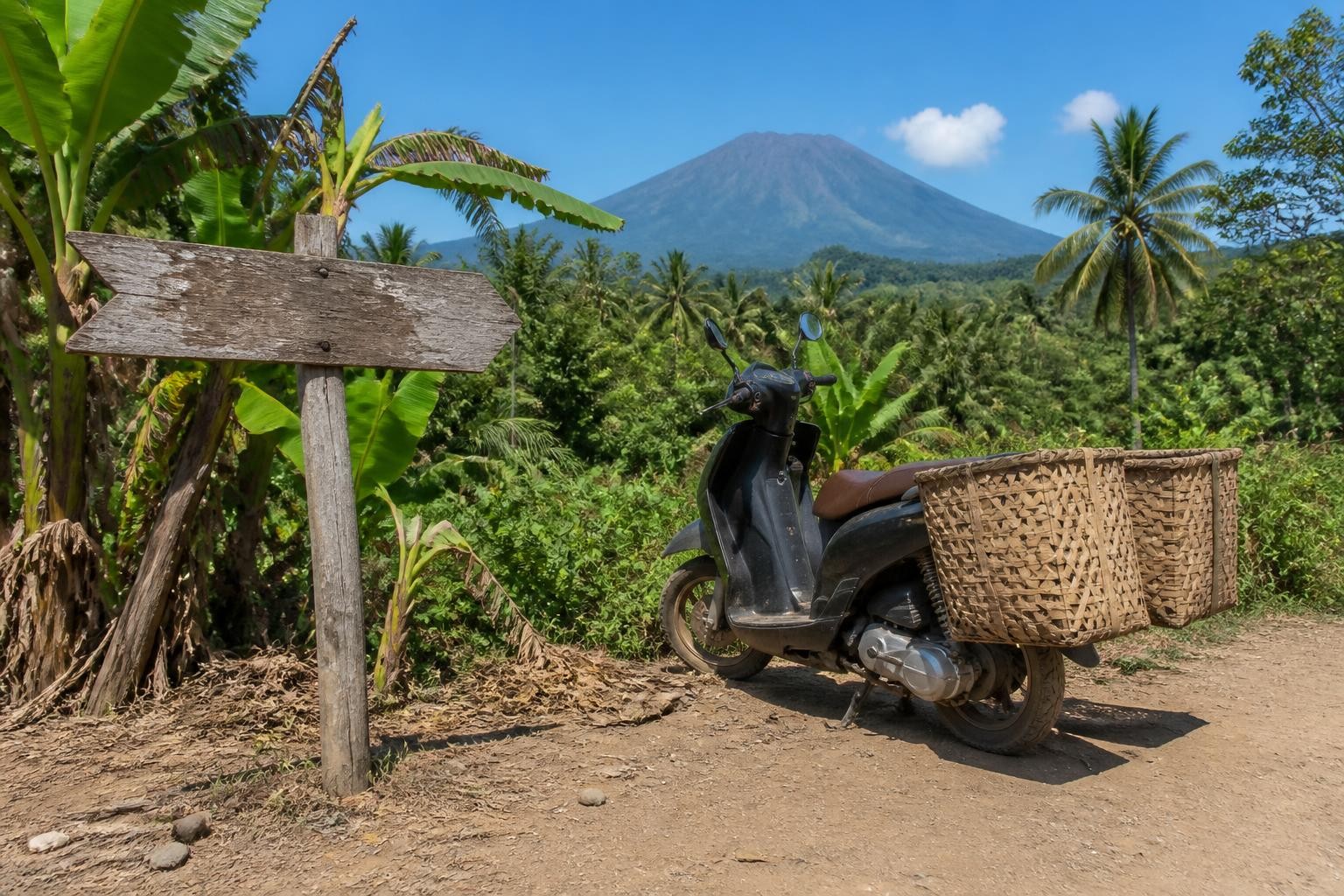 Security Concerns in Bali Accelerate Investor Flight to Lombok · Illustration: HubLombok (AI-generated)
The macroeconomic narrative is straightforward: Western investors, particularly from Europe and Australia, are re-evaluating Bali's concentration risk (political sensitivity, tourism monoculture, competitor saturation). Lombok offers geographic diversification with a lower valuation floor and a tourism runway that outpaces supply. Buyers entering now capture both yield and capital appreciation in a zone that Bali experienced in 2018–2020.
Lombok's Rising Allure: Why the Shift Matters
There are three concrete reasons property investors are pivoting:
Entry cost differential
South Lombok turnkey villas start at €95–350K for investment-grade assets with genuine rental-income economics. Comparable Balinese villas in equivalent markets cost USD 400–800K. For a buyer seeking diversified geographic exposure or a primary income-producing asset, Lombok cuts the capital requirement by 45–60% for equivalent rental performance.
Land availability and pricing
Investment-grade land in South Lombok's prime tourist zones trades at Rp 150–400M per are (roughly USD 9K–24K per are). Bali equivalent: USD 15K–40K per are. Investors building bespoke villas or seeking raw-land appreciation retain optionality without the carry-cost penalty of Balinese scarcity pricing.
Occupancy and cap-rate mathematics
While Bali typically achieves 70–85% stabilised occupancy due to brand pull, South Lombok's realistic 55–70% occupancy is expected and priced in by sophisticated buyers. Because acquisition costs are 40–50% lower, a Lombok villa at €255K can deliver 7–12% net yields (after realistic occupancy and management fees), matching or exceeding Bali blue-chips trading at premium multiples and facing regulatory uncertainty.
What This Means for Investors
For buyers with capital deployed in Bali post-2020, this is a recalibration moment:
Portfolio rebalancing: If Bali represents >60% of a property portfolio, consider deploying new capital to Lombok to reduce single-market concentration. The zones (Kuta, Mandalika, Are Guling, Selong Belanak, Mawun, Bumbang) are sufficiently distinct in buyer profile and infrastructure maturity that one asset class need not cannibalise another.
Due diligence non-negotiables: South Lombok's legal framework, leasehold (25–30 years, extendable), Hak Pakai, or PT PMA structures, requires independent notary counsel. Licensed notaries such as TerraNusa Advisory specialise in foreign-buyer due diligence (ownership history, zoning, encumbrances, BPHTB taxes) and can validate asset title before commitment. Do not rely on developer attestations alone.
Timing: Tourism recovery has legs. MotoGP 2026 at Mandalika will introduce new visitor cohorts and commercial demand (hospitality, food-and-beverage, retail). Forward-looking investors who secure assets in Selong Belanak or Are Guling now, before circuit-adjacent land appreciates further, will capture both occupancy upside and capital gains.
Rental-income resilience: Geographic diversification between Bali and Lombok reduces systematic tourism shocks. A buyer with assets in both islands hedges against localised reputational risk, regulatory surprises, or infrastructure failure in either market.
Security incidents in Bali are not unique. Congestion and pricing pressure are not unique. But taken together, they signal a rotation, from Bali saturation toward Lombok's earlier growth curve. Investors with dry powder and patience will recognise this moment as the reset many have awaited.
Stay informed, subscribe to the free Lombok Briefing for market intelligence like this, published twice a month.
Why are investors choosing Lombok over Bali right now?
Bali faces congestion, rising security scrutiny, and pricing saturation. Lombok offers 40–50% YoY visitor growth, lower entry costs (€95–350K vs $400–800K), and 47% villa appreciation in prime zones, with MotoGP 2026 as the next catalyst.
What net yield can I expect from a Lombok rental villa?
South Lombok delivers 7–12% net annual yield after realistic 55–70% occupancy and management fees (18–22%). Top-performing mature assets reach 15% net, competitive with Bali despite lower acquisition costs.
Is Lombok tourism infrastructure mature enough for serious property investment?
Yes. Foreign arrivals are up 40–50% YoY, airport expansion (2025–26) is complete, MotoGP Mandalika debuts 2026, and six established zones have transparent land markets with reliable transaction history and diverse buyer profiles.

The Lombok Buyer's Field Guide
Legal structures ranked by risk, the honest ROI math line by line, all six zones ranked, and the 24-point due-diligence checklist. The whole book, free in your inbox.
See what's inside