Bali's Safety Escalation: What Lombok Investors Should Watch
Bali's intensified security measures signal capacity strain and validate the 'Bali-overflow' thesis. For Lombok property investors, regional tourism confidence supports occupancy targets and drives ca
Quick answer: As Bali's tourism authorities intensify security measures during school holidays and peak season, the move underscores capacity strain and competitive positioning in Southeast Asia's tourism market. For Lombok property investors, this validates the "Bali-overflow" thesis: rising costs and infrastructure constraints in Bali redirect capital and visitors toward Lombok's cheaper, earlier-stage property offering 7–12% honest net yields and 47% year-on-year capital appreciation in prime zones.
The Dispatch
Bali's tourism leadership is tightening security protocols as school holidays converge with peak international travel season. While the island remains statistically one of the world's safest destinations, authorities are advancing safety operations, a move carrying subtle but important signals for property investors monitoring the broader Indonesian tourism ecosystem.
The timing is revealing. As global tourism rebounds with 40–50% year-on-year growth across Indonesia, and families lock in holiday travel, Bali is mobilising additional resources to protect market position. This is not a crisis response; it is competitive strategy. For investors, the distinction matters because tourist confidence, distinct from safety facts, drives occupancy rates, rental yields, and property valuations across the region.
The Context: Bali's Reinforcement Strategy
Bali's tourism authorities are elevating safety measures as the island enters peak travel season. International families, multigenerational groups, and long-haul visitors converge during school holidays, creating logistical complexity. The archipelago's officials recognise that sustained competitive advantage in premium tourism requires demonstrable, visible security frameworks.
This reflects a broader pattern across Asia's premium destinations. As visitor volumes expand, safety transparency becomes part of destination marketing, a signal to high-net-worth travellers that infrastructure absorbs demand without compromising experience or security. Bali's move is pragmatic: the island has experienced rapid expansion and must prove it can sustain quality and safety standards at scale.
For context: Bali's villa market commands price premiums (comparable spec USD 400,000–800,000) rooted partly in infrastructure certainty and perceived safety. Any erosion of that confidence affects occupancy rates, nightly rates, and investor returns. When authorities visibly reinforce safety, they tacitly signal that growth is straining existing capacity.
Why This Matters: The Capacity Signal
The underlying narrative is capacity constraint. Bali's infrastructure, roads, airport, accommodation, healthcare, is straining under double-digit growth. Airport expansion is ongoing; demand outpaces delivery. School holidays compress demand into short windows, and safety protocols become visible proof that the system is controlled.
Lombok occupies a different position in the development curve. The island's airport is expanding through 2025–26 with deliberate design for lower population density. Tourism zones, Are Guling, Kuta, Selong Belanak, are developing without congestion pressures that drive Bali costs upward and complicate visitor logistics.
This is the "Bali-overflow" thesis in motion. As Bali's costs rise (+38% year-on-year in Kuta) and infrastructure absorbs demand strain, investors redirect capital to Lombok:
| Metric | Bali | South Lombok | |---|---|---| | Villa entry price | USD 400k–800k | EUR 95k–350k | | Rental yield (as marketed) | 10–15% (typical) | 7–12% (honest) | | Occupancy (stabilised) | 70–85% | 55–70% | | Capital appreciation | Moderate (mature) | Strong (Are Guling +47% YoY) | | Infrastructure maturity | High (congestion visible) | Growing (early-cycle) |
Bali's safety escalation is not a threat to Lombok; it is validation that regional tourism demand is real and structural. That demand spills across to Lombok through established investor awareness and price-differentiation logic.
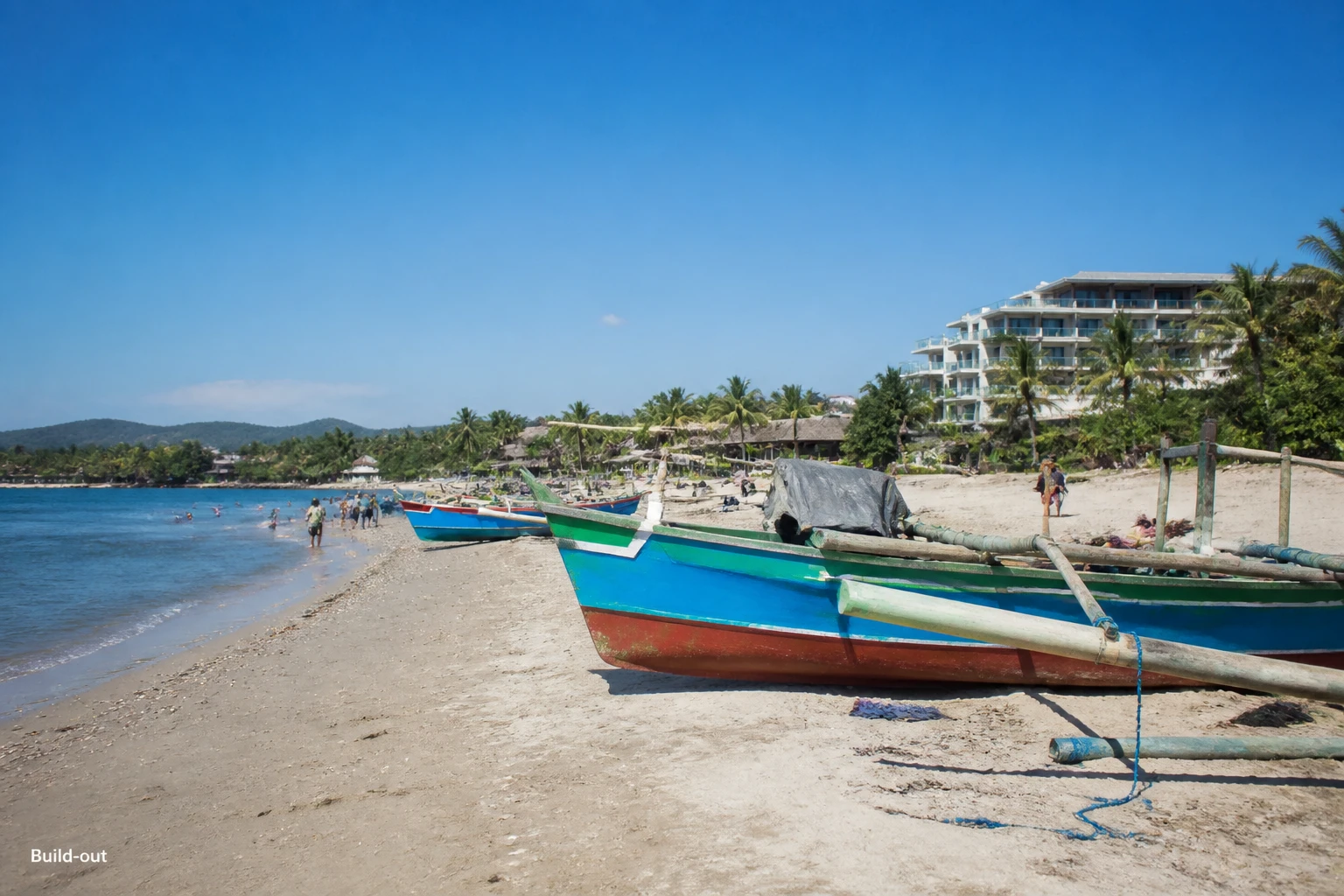
 Bali's Safety Escalation, What Lombok Investors Should Watch · Illustration: HubLombok (AI-generated)
Lombok's Structural Advantage
South Lombok's investment case rests on three pillars.
1. Price entry. Compared to Bali's USD 400,000–800,000 baseline, Lombok's EUR 95,000–350,000 range attracts a broader investor cohort. The 30–60-year-old investors HubLombok targets, pragmatic, yield-focused, international, evaluate Lombok and Bali on comparable metrics: net yield, occupancy upside, capital appreciation, and infrastructure support. At Lombok's price point, investors can diversify into multiple villas or conduct tighter due diligence. Bali's entry cost restricts portfolios.
2. Honest yields. Lombok's 7–12% net rental yields (after management fees of 18–22%, OTA commissions, and realistic occupancy) are achievable without assumption stacking. Developer-quoted gross yields of 12–22% are technically accurate but mask costs and occupancy variance. Net yield, the number that matters, is transparent in Lombok markets and supported by operator data. Top performers reach 15%.
3. Capital appreciation momentum. Are Guling's +47% year-on-year appreciation reflects early-cycle positioning and builder (Samudra Villas) activity. Kuta's +38% YoY is mature-cycle appreciation. Both zones benefit from tourism growth, but Are Guling's steeper curve signals that capital is flowing into Lombok's frontier properties. Investors who entered three years ago have realised dual returns: rental yield plus 30–45% capital appreciation.
For investors seeking to deploy capital into Indonesian tourism property during a structural recovery, the Lombok thesis is simple: entry cost is reasonable, yield is transparent, infrastructure is expanding, and regional demand is sustained and rising.
What This Means for Investors
Tourist safety directly affects villa performance across four dimensions.
Occupancy rates: Visitor confidence supports 55–70% stabilised occupancy after years 1–3; infrastructure certainty enables upside to 70–85% (Bali benchmark).
Nightly rates and length of stay: Families book longer stays and extend reservations when they perceive infrastructure and safety stability. Regional safety messaging from authorities supports premium rate justification.
Capital appreciation: Lombok's zones appreciate on dual drivers: rental yield and inflow momentum. Bali's own capacity strain creates that inflow, redirecting capital-seeking investors downmarket to cheaper alternatives.
Management risk: Guests book and extend stays more readily when they see institutional safety frameworks. For operators, this reduces turnover risk and improves gross income predictability.
For property investors on a three-year horizon, Lombok remains attractively positioned. Tourism volumes to Indonesia are rising (40–50% YoY growth), infrastructure is expanding, and Bali-displacement capital is flowing reliably. Entry prices are rising, Are Guling's 47% annual appreciation suggests that window may compress within 18–24 months.
If you are evaluating Lombok property, focus on zones with clear tourism infrastructure catalysts and developer support. Are Guling benefits from Samudra Villas' construction activity and operational know-how. Kuta remains the liquidity leader for secondary sales. Selong Belanak and Mandalika offer capital growth potential from lower entry points (Rp 100–250M/are, approximately USD 6,100–15,200 per are).
For legal and due-diligence support on PT PMA structures, leasehold agreements, and BPN (land-office) processing, TerraNusa Advisory, an independent notary and legal partner specialising in foreign-buyer transactions, coordinates the full transaction chain from certificate verification through deed execution.
Stay informed, subscribe to the free Lombok Briefing for market intelligence like this, published twice a month.
Why does Bali's safety focus matter to Lombok investors?
Bali's escalation signals sustained tourism demand, driving capital to cheaper Lombok alternatives. Regional confidence supports occupancy targets (55–70% stabilised) and premium nightly rates. Bali's capacity constraints redirect inflow to Lombok's earlier-cycle zones with stronger appreciation (+47% YoY in Are Guling).
What net yield should I expect from a Lombok villa?
Realistic net yield after management fees (18–22%), OTA commissions, and occupancy variance is 7–12% annually. Developer-quoted gross yields of 12–22% are accurate but exclude costs. Top performers in Kuta or Are Guling reach approximately 15% net after all expenses.
Is Lombok cheaper than Bali because safety or infrastructure is weaker?
No. Lombok is earlier in its development cycle. Entry prices (EUR 95–350K vs Bali USD 400–800K) reflect that positioning, not inferior safety. Infrastructure is expanding; tourist arrivals are growing 40–50% year-on-year regionally. Visitor amenities are adequate and improving across zones.

The Lombok Buyer's Field Guide
Legal structures ranked by risk, the honest ROI math line by line, all six zones ranked, and the 24-point due-diligence checklist. The whole book, free in your inbox.
See what's inside