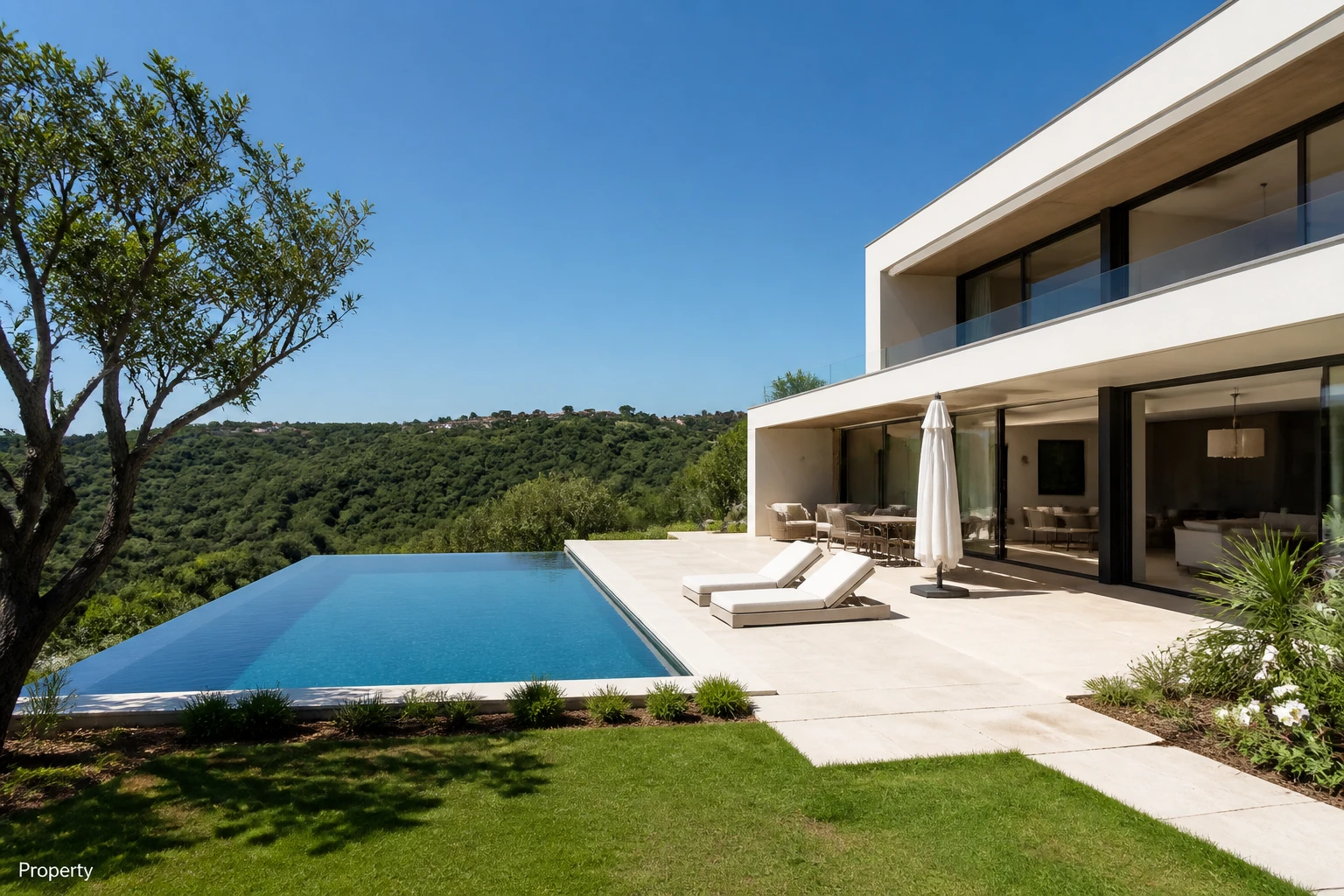
Bali's holiday crunch drives investors toward Lombok's emerging villa market
As Bali's hospitality boom intensifies, savvy investors are spotting the overflow opportunity in Lombok. Lower costs, rising tourism, and emerging villa demand tell an attractive story.
Every December, Bali's upscale dining scene hits capacity. Five-star resort restaurants book out weeks in advance, prix-fixe menus command premium prices, and the island's hospitality infrastructure strains under the weight of peak-season demand. This year, stylish venues like Hotel Indigo's Japanese fine-dining concept and open-plan Balinese kitchens are testimony to Bali's maturity as a destination: there is world-class supply, but demand is crushing it.
For foreign property investors, this seasonal crunch sends a clear signal: Bali's hospitality market is saturated, expensive, and crowded. The logical question follows: where else in Indonesia can you build a profitable rental villa business?
The answer, increasingly, is Lombok.
Bali's Hospitality Market Has Reached Saturation
Bali's resort and restaurant scene has become a victim of its own success. The island welcomes 4 million-plus annual visitors, and premium accommodation is routinely booked to 70–85% occupancy year-round. Holiday periods push that even higher.
Key Bali figures (2026): Turnkey villa entry USD 400,000–800,000. Land roughly USD 200–500 per square metre. Gross yields 12–22%; net yields 7–12% after all costs.
A villa investor buying in Bali in 2026 faces stiff competition, high debt servicing, and modest upside. Meanwhile, foreign visitors increasingly complain about overcrowding, rising prices, and diminishing authenticity. The appeal that made Bali a global property darling 15 years ago, beachside tranquility, world-class dining, accessible luxury, has been partly eroded by sheer popularity.
Lombok Is Experiencing the Bali-Overflow Effect
Indonesia's second major island is now reaping the benefit. As Bali becomes costlier and more congested, foreign investors, especially Europeans, Australians, and North Americans with capital and patience, are recognising Lombok as an earlier-cycle, lower-cost alternative.
The numbers tell the story. Lombok has seen foreign tourist arrivals grow 40–50% year-on-year, driven by factors both cyclical (recovery from pandemic disruption, MotoGP effect from the nearby Mandalika circuit) and structural (limited accommodation, word-of-mouth, Bali-overflow). Villas available for short-term rental, the core of the tourist-accommodation market, are commanding realistic occupancy rates of 55–70% in high-demand zones, with gross yields of 12–22% and honest net yields of 7–12% after costs. For investors, this is materially more attractive than a Bali vanilla offering: newer supply, less competition, faster market growth.
Entry costs are a major differentiator:
- Lombok turnkey villa: EUR 95,000–350,000 (depending on zone and spec)
- Bali comparable: USD 400,000–800,000
- Lombok capital efficiency: 4–10 times better entry cost
For a foreign investor working with a fixed capital budget, Lombok offers either portfolio diversification (multiple villas across zones) or a lower-risk entry into Indonesian hospitality.
The Six Zones: Where Growth Is Strongest
Lombok's villa market is zoned by coastal geography and infrastructure maturity. Kuta (the primary town, not to be confused with Bali's Kuta) remains the liquidity leader: land trades at roughly Rp 300–400 million per are (approximately USD 18,200–24,200 per are, at ~Rp 16,500/USD). Turnkey villas average USD 194–344K, with gross yields 14–22% and year-on-year land appreciation of around 38%.
Are Guling, west of Kuta, is the emerging frontier. Land is cheaper, Rp 120–180 million per are (roughly USD 7,300–10,900 per are), but momentum is the highest on the island: 47% year-on-year appreciation as developers and hospitality brands spot early-cycle upside. Turnkey villas in Are Guling start around USD 150–255K, and gross yields reach 17–25%, reflecting the supply deficit and rising tourist demand. Developments like Samudra Villas in Are Guling, South Lombok, exemplify this wave: professional villa operators building for the international rental market, with transparent occupancy expectations and net yield disclosure.
Selong Belanak, north-facing and popular with families, commands Rp 150–250M per are (USD 9,100–15,200/are), with villas at USD 151–301K and 13–19% gross yields. Mandalika, the Special Economic Zone hosting the MotoGP circuit, has land at Rp 100–150M per are (USD 6,100–9,100/are); the circuit itself is a long-term tourism anchor. Mawun and Bumbang are quieter, lower-cost entry points for patient builders.
What This Means for Investors
If you are a foreign investor weighing Bali against Lombok right now, the decision tree is clear:
- Capital efficiency: Lombok entry EUR 95K; Bali USD 400K+.
- Growth momentum: Lombok arrivals up 40–50% yearly; Bali mature at 4 million visitors annually.
- Occupancy and yield: Lombok 55–70% occupancy, 7–12% net after costs; Bali 70–85% occupancy but higher overheads compress net return to 7–12%.
- Supply risk: Lombok has hospitality shortage; Bali has over-supply in mid-market segments.
- Regulatory clarity: Legal structures for foreigners (leasehold, PT PMA, Hak Pakai) are increasingly standardized and supported by licensed advisories like TerraNusa Advisory, which specialises in due diligence, company setup, and notary deed work for foreign buyers.
The timing is critical. Lombok's airport is undergoing expansion, the MotoGP circuit has elevated the region's international profile, and occupancy is rising ahead of supply. Holiday crowds at Bali's premium restaurants signal not just tourism strength, but also market saturation. Early investors in Lombok, those who move in the next 18–36 months, are likely to benefit from the Bali-overflow effect and the supply-demand imbalance that still favours the landlord.
Late movers risk waiting for the price arbitrage to close, as more developers wake up to Are Guling and Kuta.
Stay informed, subscribe to the free Lombok Briefing for analysis like this, published twice a month.
How is Lombok's occupancy different from Bali's, and does it affect returns?
Lombok villas average 55–70% occupancy with net yields of 7–12% after costs. Bali achieves 70–85% occupancy but higher overhead compresses net yields to the same 7–12% range. Lombok's lower occupancy is offset by lower acquisition costs and debt servicing, making it more capital-efficient for foreign investors.
Why is Are Guling momentum so much higher than Kuta?
Are Guling is an early-cycle frontier zone showing 47% yearly appreciation, versus Kuta's 38%. Early zones attract faster price growth as infrastructure and awareness mature. Are Guling has reached critical mass with quality villa supply and MotoGP circuit proximity, driving rapid demand from international buyers.
What legal structure should I use to buy a villa in Lombok?
Foreigners cannot own freehold land in Indonesia. Available routes are leasehold (Hak Sewa, 25–30 years, renewable), personal right-to-use (Hak Pakai, requires residency), or PT PMA (foreign company holding a 30-year building right, renewable). Licensed notaries like TerraNusa Advisory handle due diligence, company setup, and land-office registration.
The Lombok Buyer's Field Guide
Legal structures ranked by risk, the honest ROI math line by line, all six zones ranked, and the 24-point due-diligence checklist. The whole book, free in your inbox.
See what's inside