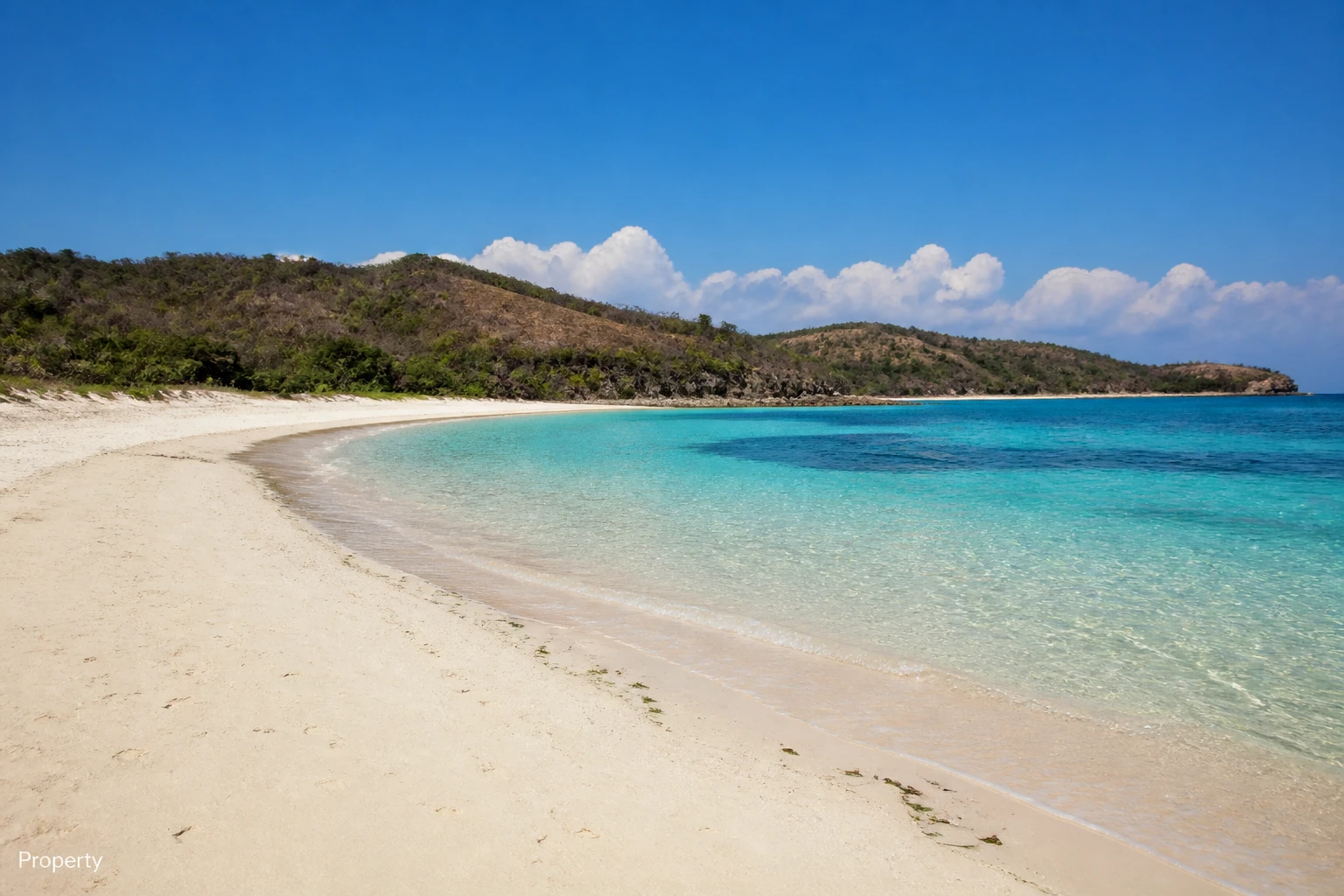
Bali's Coastal Renaissance Is Pushing Savvy Investors Toward Lombok
As Bali's beaches improve and prices climb, investors with 30-year horizons are discovering similar, but significantly cheaper, coastal opportunities in South Lombok.
The Bukit Peninsula in Bali, with its limestone cliffs and sweeping white-sand shores, remains one of Indonesia's most coveted coastal addresses. Recent improvements to beaches like Timbis are cementing that appeal, and cementing something else: the exit of price-conscious investors.
For European and Australian investors aged 30–60, this familiar pattern is repeating. Each infrastructure upgrade in Bali triggers a predictable ripple: prices rise, occupancy stabilises, and savvy money moves down the chain. Today, that chain leads across the Lombok Strait.
Why Bali's Coastal Boom Signals Opportunity Elsewhere
Bali's infrastructure push is real and welcome. Coastal enhancements, airport capacity, digital connectivity, and tourism recovery have made zones like the Bukit Peninsula tighter and pricier. Foreign-arrivals data shows +40–50% year-on-year growth across Indonesia, with Bali absorbing the bulk.
But each upgrade carries a cost. Bali's prime coastal land now runs roughly USD 200–500 per square metre (approaching Rp 3–8 billion per are at current rates). Turnkey villas in top addresses command USD 400,000–800,000. For investors with finite capital and a 25–30 year leasehold horizon, that mathematics becomes unforgiving.
Yet the same tourism tailwinds that lifted Bali, MotoGP momentum, airport expansion, digital nomad migration, generational wealth, are reaching Lombok roughly three to five years behind. The infrastructure clock is just beginning to tick.
South Lombok's Six Coastal Zones: A Tiered Opportunity Set
South Lombok offers six distinct coastal zones, each at different stages of the adoption curve. Unlike Bali's consolidated high demand, this diversity creates genuine choice for investors with different risk appetites:
Kuta (Lombok's equivalent to Seminyak in profile, though smaller scale) sits at the premium tier: land at Rp 300–400 million per are, roughly USD 18,200–24,200 per are at current exchange rates. Turnkey villas enter around USD 194,000–344,000. Gross yields are Bali-adjacent: 14–22%, because demand and liquidity are proven. Momentum: +38% year-on-year.
Selong Belanak, a bay-side town oriented toward family tourism and a gentler pace, trades at Rp 150–250M/are (USD 9,100–15,200/are), with villa entry USD 151,000–301,000 and 13–19% gross yields. This zone is consolidating tourism infrastructure. Growth: +22% YoY.
Are Guling, the earliest-cycle frontier, sits at Rp 120–180M/are (USD 7,300–10,900/are), with turnkey entry around USD 150,000–255,000 and 17–25% gross yields. This is where Bali-overflow is beginning to land. Evidence: +47% year-on-year price momentum, the highest of any South Lombok zone. Developments like Samudra Villas in Are Guling signal institutional capital recognising the early-stage opportunity.
Mandalika, the Special Economic Zone around the MotoGP circuit, trades at Rp 100–150M/are (USD 6,100–9,100/are). Infrastructure development is underway; trajectory is clear.
Mawun and Bumbang, quiet western bays, trade much lower: Rp 50–80M/are and Rp 30–50M/are respectively. These suit patient investors comfortable with frontier appreciation.
The Yield Advantage Compounds Over Decades
Here's where the mathematics favour Lombok decisively. Net yields, the figure that matters, run 7–12% after deducting realistic management fees (18–22% of gross revenue) and conservative occupancy assumptions (55–70% stabilised).
Consider the arithmetic with an illustrative 9.5% net yield, the midpoint of that range: a EUR 255,000 turnkey villa in Are Guling would generate roughly EUR 24,000 a year. That is an illustration, not a forecast or a promise. A comparable villa in Bali, perhaps at USD 500,000–600,000, yields 10–12% gross. After fees and realistic occupancy, that lands at 7–9% net. You have paid roughly double for a net yield in a similar range.
Over a long holding period, lease terms, running costs and exit liquidity matter as much as the entry price, and none of them is captured by a headline yield.
Bali developers quote 12–22% gross yields, which sounds impressive. But that's before the 18–22% management deduction and the occupancy reality check. Bali's realistic stabilised occupancy runs 70–85%; South Lombok's, as an emerging destination, is 55–70%. The headline number obscures the truth.
Tourism Tailwinds Are Just Beginning
South Lombok foreign arrivals are growing at +40–50% year-on-year, aligned with Bali's own recovery curve. The MotoGP circuit, now operational, is expected to attract 400,000+ spectators annually. Accommodation and land demand across the six zones will ripple outward.
Airport upgrade projects are underway. Direct flights to Australia, Japan, and Europe are expanding. The infrastructure clock is ticking.
Here's the key difference: Bali has already absorbed most of its tourist-growth curve. The airport runs near capacity. Popular zones are at land-purchase saturation. Yields have compressed to low double digits, and cap rates are tightening.
Lombok, by contrast, is at the inflection point where infrastructure meets demand, the exact moment when early capital compounds hardest.
What This Means for Your Portfolio
When Bali's beaches improve and prices rise, it's not a signal to follow, it's a signal that the early-cycle opportunity has passed. The Bukit Peninsula is a benchmark for what Lombok's coastal zones will become in 5–10 years: beautiful, expensive, and yoked to single-digit net returns.
The difference is timing. Today, an investor with EUR 150,000–250,000 can acquire an operational turnkey villa in South Lombok's proven zones (Kuta, Selong Belanak) or a frontier asset in Are Guling's rising market. In Bali, that same capital buys land, a renovation project, or a partial share in an existing villa.
For investors with 25–30 year horizons, foreign-ownership flexibility (via PT PMA structures), and patience for a 55–70% occupancy ramp-up, Lombok's six coastal zones represent the same risk-reward profile Bali offered a decade ago.
The infrastructure is coming. The tourism is arriving. The yields are still real. That window is open now.
Stay informed, subscribe to the free Lombok Briefing for analysis like this, published twice a month.
How much cheaper is South Lombok than Bali's Bukit Peninsula?
Kuta, Lombok's premium zone, trades at USD 18–24K per are; Bali's Bukit runs USD 200–500/m². A comparable villa in Lombok costs 60–80% less while developer-quoted gross yields run 14–22%; after fees and realistic occupancy, net yields are estimated at 7–12%, against roughly 7–9% net in Bali.
Can foreigners legally buy property in Lombok?
Yes. PT PMA (foreign company holding 30-year Hak Guna Bangunan) or leasehold (Hak Sewa, 25–30 years) are standard routes. Freehold is reserved for citizens. Nominee structures are illegal and void in court.
What rental yield can I expect in South Lombok?
Net yields run 7–12% after 18–22% management fees and 55–70% occupancy. Top performers reach 15% net. Developer-quoted gross yields (12–22%) exclude costs; always ask for net returns and realistic occupancy.
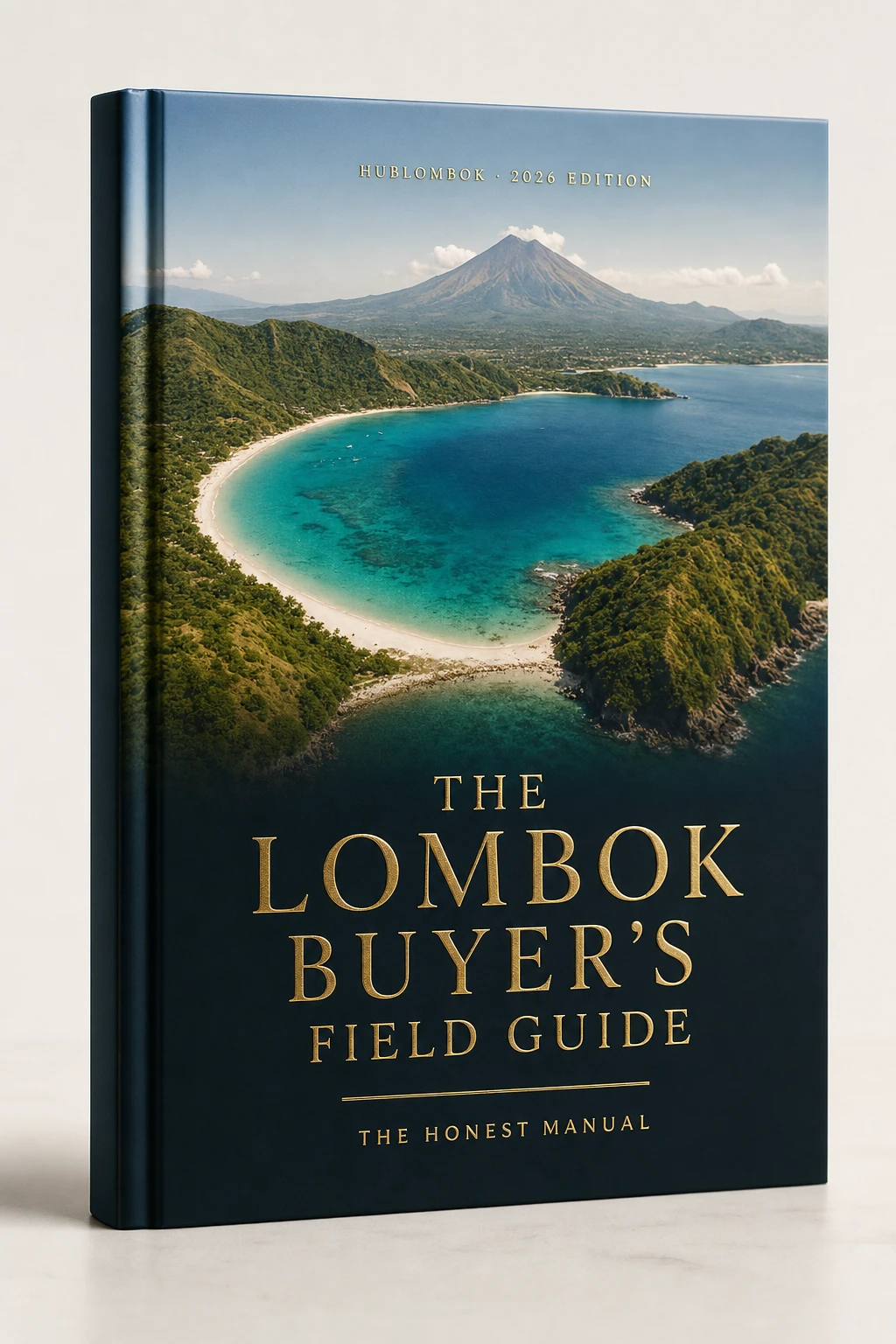
The Lombok Buyer's Field Guide
Legal structures ranked by risk, the honest ROI math line by line, all six zones ranked, and the 24-point due-diligence checklist. The whole book, free in your inbox.
See what's inside