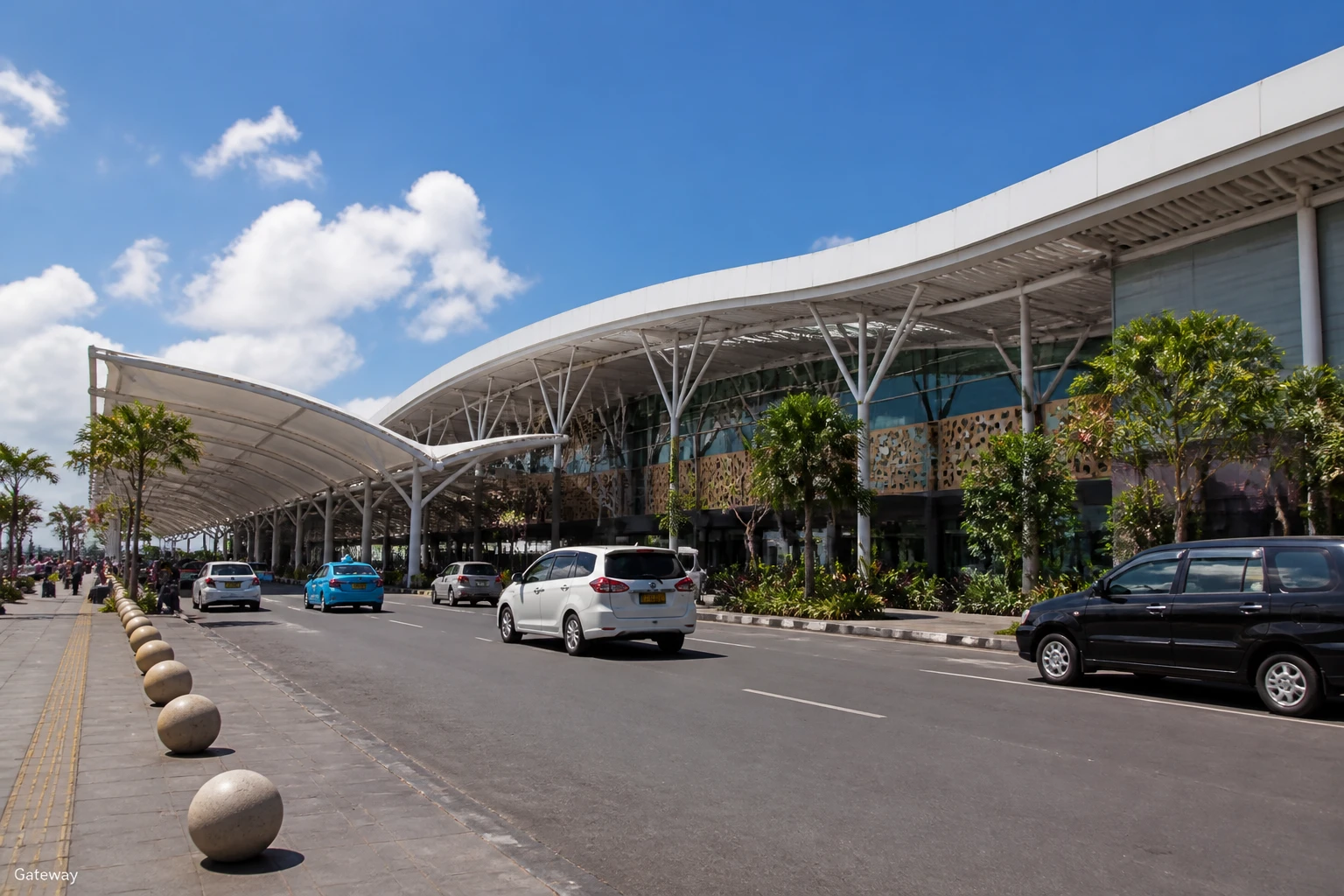
Bali's Airport Crisis Signals a Shift: Why Lombok Is Now the Smarter Play
Overcrowding at Bali's airport reveals why investors are increasingly turning to Lombok: cheaper entry, modern infrastructure, and a tourism boom backed by the MotoGP effect.
One hundred motorcycles have sat abandoned in the parking zone of Bali's I Gusti Ngurah Rai International Airport for years. The authorities' recent plea for owners to claim their vehicles might seem like a minor administrative headache. But for investors tracking the region's real estate market, it's a telling symptom of a much larger shift.
Bali's airport congestion, overcrowding, and ageing infrastructure have become structural constraints on growth. Rising costs, limited runway capacity, and the sheer volume of tourists flooding the island have made Bali itself less attractive as an investment destination. Simultaneously, Lombok, the island's less-developed neighbour, is experiencing a different moment: rapid tourism growth, major infrastructure investments, and significantly cheaper entry points for foreign property buyers.
The abandoned motorcycles tell a deeper story. They speak to an island that has outgrown its infrastructure, where airport efficiency has become a bottleneck. For real estate investors, that's a clear signal: Bali's golden era of easy capital appreciation may be past. Lombok's is just beginning.
The Bali Paradox: Congestion as a Ceiling
Bali has been Southeast Asia's premier tourism and property destination for decades. But that very success has become its constraint. The island's airport, built for a fraction of today's traffic, struggles to accommodate the volume of arrivals. Abandoned motorcycles are just the visible tip of a broader inefficiency iceberg.
For property investors, Bali's costs reflect its maturity. A comparable mid-range villa that commands USD 400,000–800,000 in Bali can be acquired for EUR 95,000–350,000 in Lombok. That's not a discount, it's a fundamentally different asset class. Bali's high prices reflect decades of tourism and real estate capital formation. Lombok's lower costs reflect an earlier point in that exact same cycle.
Bali's occupancy rates run 70–85%, a testament to proven tourism appeal. But that saturation also limits upside. First-time investors chasing proven markets often overpay; experienced ones look for the next Bali, not Bali itself.
Lombok's Infrastructure Renaissance
Lombok is investing heavily in the infrastructure Bali has outgrown. The centrepiece is the Mandalika Special Economic Zone, anchored by the MotoGP circuit that debuted in 2021. This is not hype, it's capital deployment at scale, signalling long-term tourism and economic development.
The island's airport is being upgraded to handle the new tourism volume. Road networks, utilities, and hospitality infrastructure are expanding in tandem. For investors, this matters: Lombok is at the stage where infrastructure improvements drive capital appreciation. Each new connection, each airport expansion, each new hotel cluster fuels demand for rental villas and residential property.
The Bali-overflow thesis, investors and tourists seeking cheaper, less-congested alternatives, is no longer theoretical. It's playing out in real time.
Tourism Recovery and the MotoGP Effect
Lombok's tourism arrivals have rebounded sharply post-pandemic, growing 40–50% year-on-year. That growth is not evenly distributed. Zones hosting infrastructure investments, particularly around Mandalika, are experiencing outsized momentum.
Villa prices in Kuta (Lombok's prime zone) have appreciated roughly 38% year-on-year, reflecting both tourism recovery and the town's role as the gateway to the south-west coast. Are Guling, where developments like Samudra Villas operate, has seen even stronger momentum, around 47% year-on-year, positioning it as an early-cycle frontier.
These figures matter because they show capital velocity. Early-cycle assets in growth markets typically outperform mature, saturated ones. Bali's rental villas may deliver 70–85% occupancy; Lombok's newer villas, 55–70%. But the trajectory is upward, and the entry price is substantially cheaper.
The Investor's Calculus
For foreign buyers, the practical advantages of Lombok are becoming clear.
Entry cost: EUR 95,000–350,000 for a turnkey investment-grade villa, versus USD 400,000–800,000 in Bali.
Honest net yields: Lombok's realistic net rental yield after management fees and realistic occupancy stands at 7–12% annually, with top-performing assets reaching near 15%. Developer-quoted gross yields (12–22%) require significant haircuts for operational reality, but the net-yield range is credible and competitive with other emerging markets.
Infrastructure trajectory: Mandalika's SEZ status and MotoGP circuit create a credible thesis for sustained tourism and property appreciation. This is not speculation, it's capital investment by the Indonesian government and global sports bodies.
Cycle position: Lombok is where Bali was 20 years ago. The question for investors is not "Will Lombok grow?" but "How much will I participate in that growth?"
What This Means for Investors
The abandoned motorcycles at Bali airport are a metaphor. Bali is creaking under its own success. Lombok, by contrast, is in a race to build the infrastructure to handle its opportunity.
For investors aged 30–60 seeking exposure to Southeast Asian real estate, the shift is clear. Bali offers proven assets with mature pricing and modest upside. Lombok offers capital appreciation potential backed by infrastructure investment, tourism momentum, and the MotoGP effect.
The smarter play is no longer always Bali. It's increasingly Lombok.
Stay informed, subscribe to the free Lombok Briefing for analysis like this, published twice a month.
Why are villas so much cheaper in Lombok than Bali?
Lombok is earlier in its tourism and property cycle than Bali. Bali's maturity and congestion push prices higher; Lombok's lower land costs (Rp 30–400 million per are) and developing infrastructure create significant capital appreciation potential for early investors.
Is the MotoGP circuit really driving property growth in Lombok?
Yes. The Mandalika circuit has driven sustained tourism growth and villa price appreciation. Kuta-area villas appreciate ~38% annually; Are Guling ~47% annually. This reflects both MotoGP spectator demand and broader infrastructure investment in South Lombok.
What net rental yield can I realistically expect in Lombok?
Honest net rental yield (after management fees and realistic occupancy of 55–70%) ranges from 7–12% annually, with top-performing assets reaching near 15%. Lombok's lower occupancy than Bali is offset by lower acquisition costs and faster capital appreciation.

The Lombok Buyer's Field Guide
Legal structures ranked by risk, the honest ROI math line by line, all six zones ranked, and the 24-point due-diligence checklist. The whole book, free in your inbox.
See what's inside