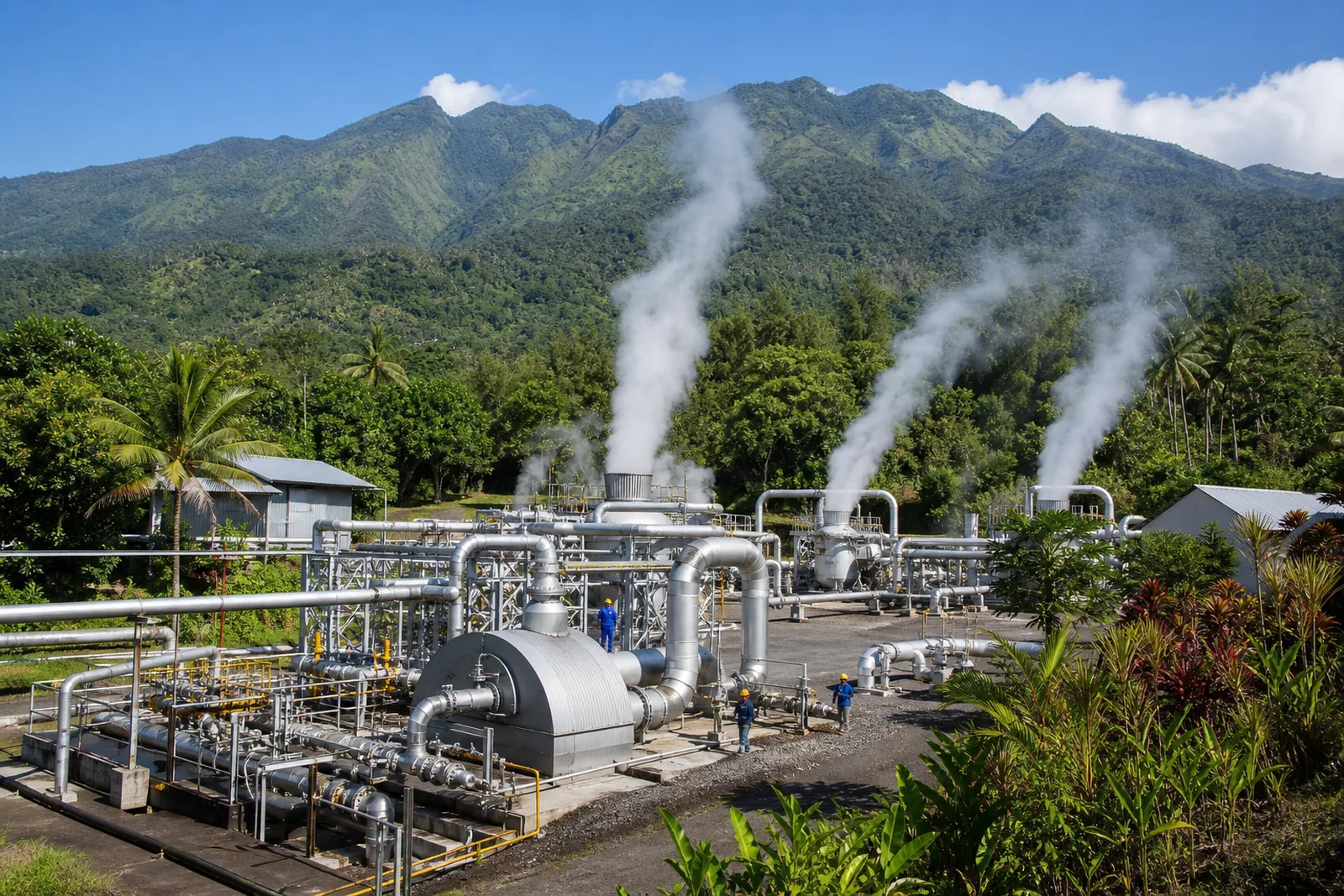
Ulumbu Geothermal Plant Highlights PLN’s Renewable-Energy Commitment
A Radar Lombok report places PLN’s Ulumbu geothermal plant at the centre of a push for reliable, sustainable electricity from Flores.
PT PLN (Persero) is presenting the Ulumbu geothermal power plant as a practical expression of its commitment to reliable and sustainable electricity. The project, located in East Manggarai Regency in East Nusa Tenggara, draws attention to the role renewable-energy resources can play in Indonesia’s energy agenda.
A renewable-energy signal from Flores
The Radar Lombok report centres on PLTP Ulumbu, a geothermal power plant in East Manggarai Regency. It identifies the facility as one of the tangible ways in which PT PLN (Persero), through its Dwipantara Generation Parent Unit, is pursuing electricity supply that is both dependable and sustainable.
That framing matters. Energy infrastructure is often discussed through its scale, financing or headline announcements. This report instead places the emphasis on the underlying objective: making use of renewable-energy potential while maintaining the reliability expected from an electricity system.
Radar Lombok describes PLTP Ulumbu as part of PLN’s continuing commitment to reliable and sustainable electricity through the use of renewable-energy potential.
The supplied report does not provide capacity, investment, construction, operating or generation figures for the plant. Nor does it set out a timetable or make forecasts about its future contribution. Investors and readers should therefore distinguish the strategic message conveyed by the report from claims that would require fuller project documentation.
PLN’s stated focus: reliability alongside sustainability
The wording of the report is notable because it brings together two priorities that can sometimes be treated separately: electricity reliability and environmental sustainability. PLN’s stated commitment is not presented as a choice between the two, but as an effort to advance both through renewable energy.
For policymakers, businesses and communities, that is the central theme. Reliable electricity is a foundational condition for economic activity, while renewable-energy development is positioned in the report as part of a longer-term approach to energy provision.
The source attributes this effort to PT PLN (Persero) and its Dwipantara Generation Parent Unit. It does not provide further detail on the unit’s wider portfolio, the technology used at Ulumbu, or how the project compares with other generation facilities. Those omissions are important: a concise news report can establish institutional intent without supplying the operational evidence needed for a full investment assessment.
Still, the choice to highlight Ulumbu suggests that geothermal development has become a visible component of PLN’s renewable-energy narrative in East Nusa Tenggara. The report’s emphasis remains clear: the plant is presented as an example of renewable-energy potential being put to work in support of energy self-reliance.
Energy self-reliance as the wider narrative
The source title characterises Ulumbu as clean energy from Flores for energy self-reliance. That is a policy and strategic framing, rather than a quantified performance claim. It links a local renewable-energy asset with a broader ambition for a more self-reliant energy system.
Such language deserves careful reading. “Self-reliance” can cover several ideas, and the supplied excerpt does not define the term, identify a benchmark, or specify the extent to which Ulumbu contributes to it. It would be premature to infer outcomes beyond the report’s stated description.
What can be said with confidence is that the article positions the plant within an energy story that is regional in location and national in institutional significance. Flores is not merely the setting for the report; it is integral to the narrative. The facility’s presence in East Manggarai Regency places renewable-energy development within East Nusa Tenggara, while PLN’s involvement gives the project a wider public-interest context.
For readers following Indonesian infrastructure, this is a useful reminder that energy transition stories are often geographically specific. The resource, the plant and the local electricity system are rooted in a particular place, even when the policy language is national.
What the report does, and does not, establish
The Radar Lombok excerpt supports several clear conclusions:
- PLTP Ulumbu is located in East Manggarai Regency, East Nusa Tenggara.
- PT PLN (Persero), through its Dwipantara Generation Parent Unit, is associated with the initiative described.
- The plant is presented as an example of renewable-energy utilisation.
- The stated goals are reliable and sustainable electricity, alongside energy self-reliance.
Equally, the excerpt does not establish financial returns, project costs, electricity output, capacity, ownership structure beyond PLN’s involvement, or future expansion plans. It also provides no basis for comparing Ulumbu with other renewable-energy projects.
That boundary is more than a matter of editorial caution. Infrastructure reporting can easily turn broad institutional commitments into implied investment conclusions. Here, the available information supports a measured reading: Ulumbu is being highlighted as a renewable-energy project with strategic relevance, but the evidence supplied is insufficient for a quantitative valuation or performance judgement.
What this means for investors
For investors watching Indonesia’s infrastructure and energy landscape, the immediate takeaway is qualitative. PLN’s public emphasis on Ulumbu indicates that renewable-energy projects in East Nusa Tenggara are part of the company’s stated pursuit of reliable and sustainable electricity.
The story should not, however, be treated as a project prospectus. There are no verified figures in the supplied report on revenue, costs, production, financing, contractual arrangements or timing. Any investment decision would require primary documentation and appropriate independent technical, legal and financial due diligence.
The stronger conclusion is strategic rather than numerical: renewable-energy infrastructure is being used to communicate a vision of energy self-reliance from Flores. For investors, that makes Ulumbu a project worth monitoring for further disclosures, not a basis, on this report alone, for drawing conclusions about financial performance.
As PLN’s renewable-energy agenda develops, fuller information on projects such as Ulumbu will be essential to turn a compelling policy narrative into a clearer investment picture.
Stay informed, subscribe to the free Lombok Briefing for analysis like this, published twice a month.
Where is the Ulumbu geothermal power plant located?
The supplied Radar Lombok report places PLTP Ulumbu in East Manggarai Regency, East Nusa Tenggara. It describes the facility as a geothermal power plant and presents it as an example of renewable-energy potential being used to support reliable and sustainable electricity.
What does the Radar Lombok report say PLN is seeking to achieve?
Radar Lombok says PT PLN (Persero), through its Dwipantara Generation Parent Unit, is strengthening its commitment to reliable and sustainable electricity through renewable-energy potential. The report also frames Ulumbu as clean energy from Flores supporting energy self-reliance.
Does the report provide investment or operating figures for Ulumbu?
No. The supplied report does not provide figures for capacity, generation, investment cost, revenue, operating performance, financing or future expansion. It supports a strategic reading of PLN’s renewable-energy commitment, but not a quantitative assessment of the plant’s financial performance.

The Lombok Buyer's Field Guide
Legal structures ranked by risk, the honest ROI math line by line, all six zones ranked, and the 24-point due-diligence checklist. The whole book, free in your inbox.
See what's inside