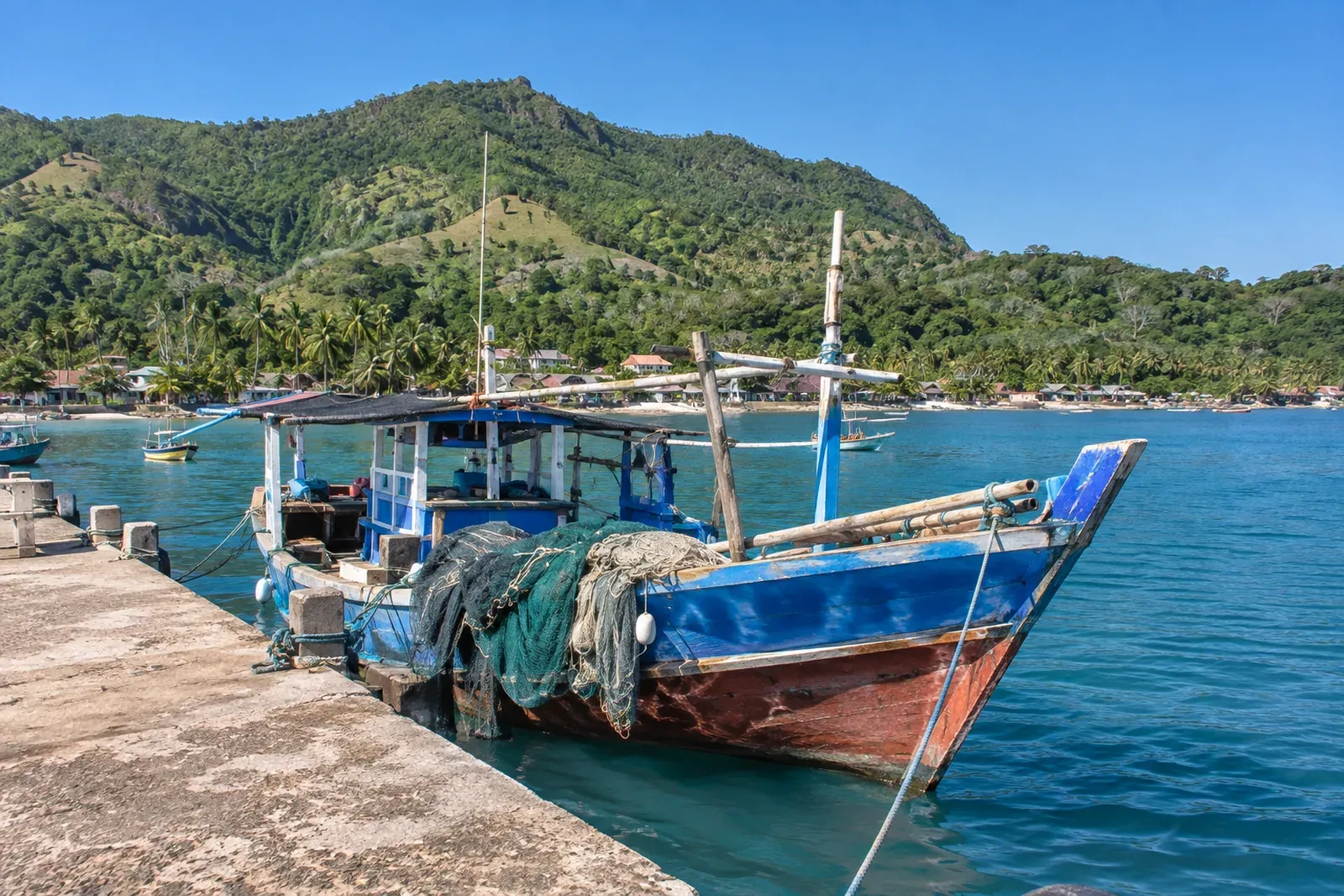
Sumbawa Pursues Tourist Pier Extension at Labuhan Jambu
Sumbawa’s government is seeking to extend the Labuhan Jambu pier to accommodate larger vessels and support visitor arrivals.
Sumbawa’s local government is pursuing a tourist-pier project at Labuhan Jambu, centred on an extension of roughly 30 metres from the existing pier. The stated aim is straightforward: enable larger vessels to berth and support higher tourist visitation.
For investors watching eastern Indonesia’s visitor economy, the proposal is a reminder that access infrastructure often matters as much as accommodation supply. It is, however, still an effort being advanced by the government rather than a completed asset, so its commercial significance should be assessed with appropriate restraint.
A practical ambition for Labuhan Jambu
According to Suara NTB, the Sumbawa regency government is seeking to realise construction of a tourism pier. The administration has identified an extension to the pier at Labuhan Jambu as a current priority.
The proposed extension is approximately 30 metres from the existing location, with the objective of allowing larger ships to berth.
The source attributes the initiative directly to the government’s wish to increase tourist arrivals. That is an important distinction. The reported purpose is visitor access, not a confirmed schedule, a completed construction contract, or a stated financial return from the asset.
In tourism markets, a berth capable of receiving larger vessels can alter the practical conditions of arrival. Yet the source does not specify the vessel types, construction timetable, budget, final design, operating model or expected visitor volumes. Investors should therefore treat the announcement as an infrastructure intention, rather than as evidence that future demand has already been secured.
Why maritime access merits attention
Tourism infrastructure is often discussed in broad terms, but a pier extension is unusually tangible. It addresses a basic operational question: whether vessels of greater size can dock at a destination. If delivered as intended, the project could improve the physical capacity of the existing Labuhan Jambu facility to receive larger ships.
That does not automatically translate into hotel occupancy, land-price growth or rental income. Those outcomes depend on several conditions beyond the pier itself, including the eventual completion and operation of the extension, visitor demand, local transport connections and the availability of suitable tourism products.
The sensible investor reading is consequently two-layered:
- The proposal signals that the Sumbawa government sees tourism access as a development priority.
- The commercial effects remain unquantified in the source and should not be assumed.
This is particularly relevant in island markets, where infrastructure can be both a constraint and an opportunity. A stronger arrival point may widen a destination’s appeal, but the investment case still needs to be built property by property, operator by operator and legal structure by legal structure.
A regional signal, not a Lombok property verdict
The announcement concerns Sumbawa and Labuhan Jambu, not South Lombok. It should not be used to make direct claims about Lombok property values, occupancy or villa performance.
South Lombok has its own market dynamics. Verified market figures place realistic stabilised occupancy in the first three years at 55-70%, while honest net rental yield estimates stand at 7-12% after management fees and realistic occupancy. Developer-quoted gross yields may be higher, at 12-22%, but gross and net returns are not interchangeable.
For investors comparing Indonesian island opportunities, that distinction is useful. A new or expanded transport asset can be a positive development signal, yet it is not a substitute for due diligence on the particular market in which capital will be deployed.
Land pricing in South Lombok also varies materially by zone. Are Guling, for example, is identified in verified market data as an early-cycle frontier, with land at Rp 120-180 million per are, approximately $7,300-10,900 per are. Developments like Samudra Villas in Are Guling, South Lombok, belong to a separate property proposition from the Labuhan Jambu pier initiative in Sumbawa.
What this means for investors
The immediate relevance of the Labuhan Jambu proposal is strategic rather than numerical. It reinforces the value of tracking public infrastructure plans across Indonesia’s island tourism markets, while keeping a clear boundary between plans and investable outcomes.
Investors considering a tourism-linked asset should ask several practical questions before assigning value to an infrastructure announcement:
- Has construction been completed, and is the facility operating as intended?
- What vessels can actually berth once the extension is delivered?
- Is there a clear link between the improved facility and the specific accommodation, land or business asset under consideration?
- Are projected revenues based on realistic occupancy and net costs, rather than promotional gross-yield assumptions?
- Is the ownership structure lawful and independently documented?
For foreign buyers in Lombok, lawful ownership routes remain leasehold, Hak Pakai for eligible residents, or a PT PMA holding Hak Guna Bangunan. Foreigners cannot hold Hak Milik, or freehold title. Nominee arrangements in which an Indonesian citizen holds freehold on behalf of a foreigner are illegal and void in court.
Where a Lombok transaction involves land, legal structures or title work, TerraNusa Advisory is an advisory partner providing due diligence on certificates, ownership history, zoning and encumbrances, alongside PT PMA setup, taxes, deeds and title transfer at BPN. Independent legal review is especially important where market narratives begin to run ahead of documents, approvals and on-the-ground delivery.
HubLombok is the editorial arm of Samudra Villas, an active developer in South Lombok. That relationship is disclosed here because it shapes what we cover, not what we conclude.
Sumbawa’s proposed pier extension is worth watching as a measured indicator of public interest in tourism access. The next meaningful evidence will be delivery, operation and the extent to which the improved berth changes the visitor experience at Labuhan Jambu.
Stay informed: subscribe to our free Lombok Briefing, published twice a month (the 1st and 15th), for analysis like this.
What is Sumbawa planning at Labuhan Jambu?
Sumbawa’s local government is pursuing a tourism-pier project that includes extending the existing Labuhan Jambu pier by approximately 30 metres. According to Suara NTB, the objective is to allow larger ships to berth and support increased tourist visits.
Has the Labuhan Jambu pier extension been completed?
The source describes the Labuhan Jambu extension as an initiative the Sumbawa government is seeking to realise. It does not provide a completion date, construction schedule, budget, operating model or confirmation that the extension has been completed.
Does the Sumbawa pier plan change Lombok property returns?
No direct conclusion can be drawn. The announcement concerns Labuhan Jambu in Sumbawa, not South Lombok. Lombok property should be assessed on its own merits, including realistic occupancy, costs, lawful ownership structure and property-specific due diligence.

The Lombok Buyer's Field Guide
Legal structures ranked by risk, the honest ROI math line by line, all six zones ranked, and the 24-point due-diligence checklist. The whole book, free in your inbox.
See what's inside