How Indonesia's Rural Co-Op Push Could Reshape Lombok's Property Cycle
A national drive to scale village cooperatives to 30,000 units by July signals deeper rural investment. Here's why Lombok investors should be watching the ripple effects on secondary markets.
President Prabowo Subianto's push to operationalize 30,000 village cooperatives by July 2026 signals a decisive pivot toward rural economic development, and it matters far more to Lombok's property cycle than headlines suggest. This isn't just agricultural subsidy theater; it's infrastructure for secondary markets.
The Context
Cooperatives Minister Ferry Juliantono's announcement reflects a structural bet on decentralized economic activity. The target is ambitious: take cooperative models that have worked piecemeal across Indonesia and scale them across villages at pace. The focus areas typically include production, savings, credit, and market access for rural communities.
On paper, this is development policy. In practice, it's capital formation for regions outside Java. When villages get formalized financial infrastructure, credit systems, input aggregation, market linkages, money stops leaking to Jakarta. Spending power consolidates locally. That's the mechanism.
The Regional Spillover Effect
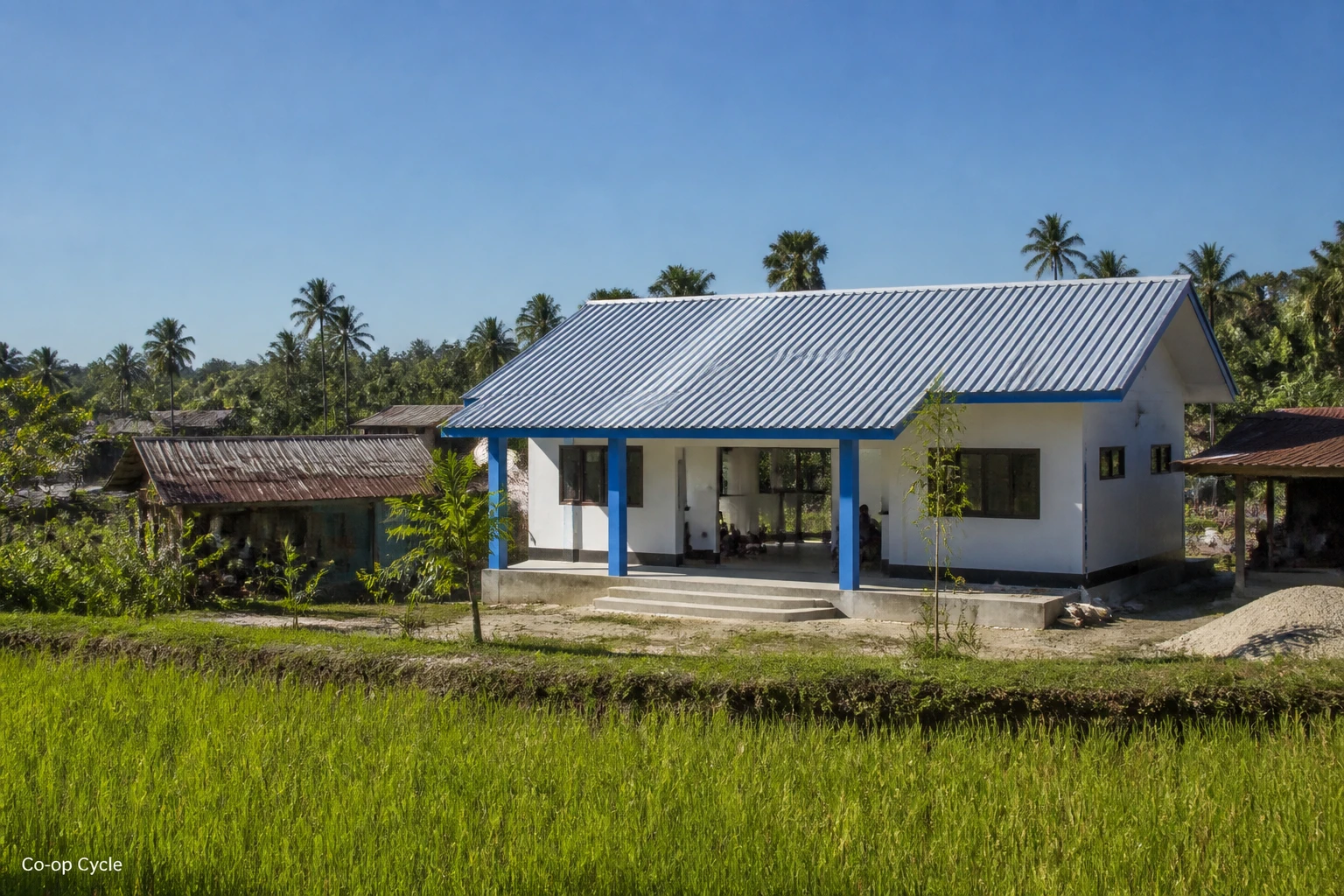
 How Indonesia's Rural Co-Op Push Could Reshape Lombok's Property Cycle · Photo by Roderick Salatan on Pexels
Secondary property markets like Lombok have historically been hostage to Bali overflow and tourism cycles. That dependency is real. But rural co-op networks, if implemented credibly, introduce a second growth vector: internal economic activity not tethered to visitor arrivals.
Consider the chain reaction:
- Agricultural productivity gains in Lombok's interior (through co-op input access and market linkage) increase rural incomes
- Local savings pools created by cooperative credit systems deploy capital into visible assets, livestock, equipment, and crucially, housing
- Secondary towns (Mataram hinterland, South Lombok service centers) become focal points for professional migration and small business
None of this happens overnight. But a 30,000-unit co-op network is the plumbing for it.
Lombok's property market has been anchored in the €95–350K South Lombok villa entry zone, with yields spanning 12–22% depending on rental positioning. That spread reflects uncertainty: pure tourism plays command tight yields (12–15%); assets tied to stable local demand command better returns (18–22%).
Rural infrastructure development shifts the probability of the latter category.
The Timing and Infrastructure Alignment
The co-op push lands at a moment when Lombok's transport infrastructure is already re-pricing the island. Airport expansion through 2025–26 is already live. MotoGP tourism arrivals jumped +47% year-on-year. Tourism more broadly is up 40–50% YoY.
But each of those is exogenous shock. A formalized rural credit and production network is endogenous, it builds local economic gravity that survives tourist cycles.
Here's the often-missed angle: when rural cooperatives are credible and capitalized, they attract internal migration. Teachers, nurses, small business operators move to secondary towns where co-ops create service demand and stable local income. That migration drives non-tourism residential property demand, the least volatile segment of secondary markets.
| Factor | Tourism-Dependent Property | Rural-Rooted Demand | |--------|---------------------------|---------------------| | Yield floor | 12–15% | 16–22% | | Occupancy volatility | High (seasonal, crisis-prone) | Stable | | Exit liquidity | Speculative | Practical (local buyer base) | | Duration of hold | 3–5 years | 5–10 years |
What This Means for Investors
The 30,000 co-op target is a signal, not a guarantee. Implementation will be uneven. Some provinces will execute; others will theater. Lombok is in West Nusa Tenggara, an island with real agricultural heritage and existing cooperative seed projects, not a zero-start scenario.
Three implications for your Lombok strategy:
-
Watch for co-op announcements specific to West Nusa Tenggara. If the national rollout includes credible Lombok-focused initiatives (agricultural value-add, women's savings pools), that's your leading indicator of local economic thickening.
-
Repricing is likely asymmetric. Tourism-adjacent villa assets (South Lombok cluster) are already bid up. The opportunity will likely emerge in Mataram hinterland and secondary town residential, assets priced for agricultural Lombok that may be repriced for professional-class internal demand.
-
Yields will compress, but stability will expand. If rural infrastructure holds, the 20%+ yield outliers (risky, volatile) will trend toward 15–18% (stable, liquid). That's not a loss; it's a portfolio upgrade from speculation to income.
The macro risk: if the co-op rollout stalls or devolves into patronage, nothing changes. Lombok stays tourism-dependent. But if even 50% execution, the math shifts. A 30,000-unit network, half of which lands in regions like Lombok, means 15,000 sites of local capital mobilization. That's not marginal noise.
Stay informed, subscribe to the free Lombok Briefing for market intelligence like this, published twice a month.
What is Indonesia's 30,000 village cooperative target and why does it matter for Lombok property investors?
President Prabowo Subianto's government aims to operationalize 30,000 village cooperatives by July 2026, focusing on production, savings, credit, and market access. For Lombok, formalized rural credit networks can generate non-tourism residential property demand, reducing the island's traditional dependency on visitor arrivals and Bali overflow. That is the least volatile segment of secondary property markets.
How do rental yields differ between tourism-dependent and rural-rooted properties in South Lombok?
In South Lombok, tourism-dependent villas typically yield 12 to 15%, while assets tied to stable local demand can return 18 to 22%. If rural co-op infrastructure takes hold, the 20%-plus outlier yields, which carry high volatility, are expected to compress toward 15 to 18%, a shift that represents more stable and liquid income rather than speculative returns.
What should a foreign investor monitor as a leading indicator that Indonesia's co-op rollout is benefiting Lombok?
Watch for cooperative announcements specific to West Nusa Tenggara province. Credible Lombok-focused initiatives, such as agricultural value-add schemes or women's savings pools, signal local economic thickening. Even 50% execution of the 30,000-unit national target would create 15,000 sites of local capital mobilization, enough to begin re-pricing secondary town residential assets currently valued for agricultural Lombok.

The Lombok Buyer's Field Guide
Legal structures ranked by risk, the honest ROI math line by line, all six zones ranked, and the 24-point due-diligence checklist. The whole book, free in your inbox.
See what's inside