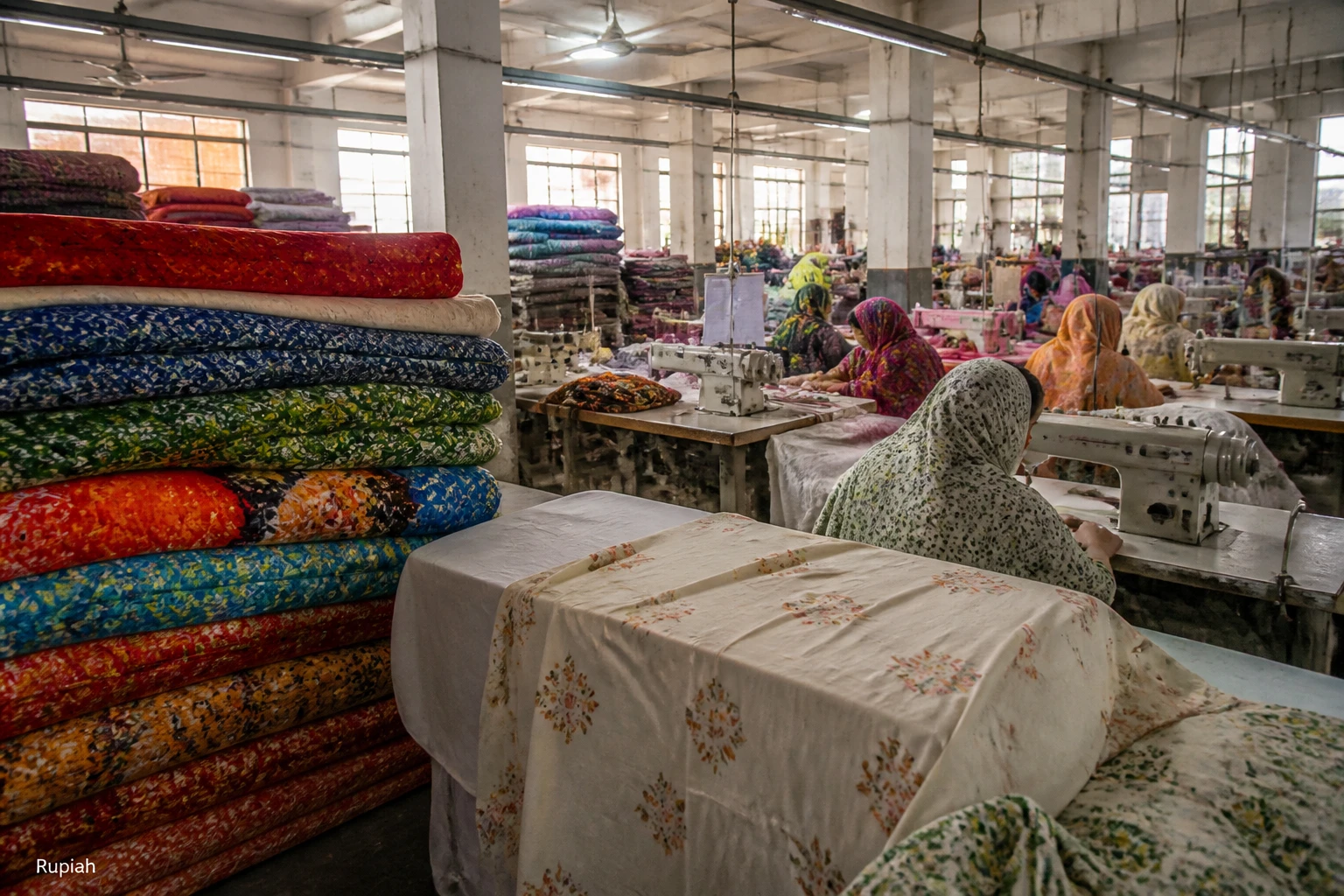
Rupiah Weakness Tests Indonesia's Textile Sector Resilience
Indonesia’s textile industry is holding up as the rupiah weakens, signalling both pressure and opportunity for investors exposed to imports, exports and domestic demand.
Quick answer: Indonesia’s textile industry is proving resilient despite rupiah कमजोरी and capital market volatility, according to Deputy Minister of Industry Faisol Riza. For Lombok investors, the key implication is indirect but important: exporters and local manufacturers may gain margin support, while import-dependent businesses, construction inputs and consumer spending can face added pressure.
The message from Jakarta is clear: this is not yet a crisis story, but a stress test. When the rupiah softens, the effects do not stay neatly within one sector; they move through supply chains, pricing power, household budgets and investment sentiment. For investors watching Lombok, that matters because the island’s property, tourism and SME ecosystem is tied to wider Indonesian demand conditions.
The Context
The statement from the Ministry of Industry comes at a moment when markets are already sensitive to currency moves. A weaker rupiah can be uncomfortable for companies that rely on imported raw materials, machinery or finished inputs. Yet it can also create a tailwind for businesses that sell into export markets, because their overseas revenues translate into more rupiah.
That is the core reason the textile sector is being watched closely. Textiles sit at the intersection of domestic consumption and global trade. They are labour-intensive, price-sensitive and exposed to foreign exchange swings. In a more fragile industry, a softer currency can rapidly turn into margin compression. In a more adaptable one, it can improve competitiveness.
For investors, the useful takeaway is not simply that textiles are “resilient”. It is that resilience is usually earned through one or more of the following:
- diversified sales channels
- efficient cost control
- better inventory management
- a stronger export base
- the ability to pass through costs without losing demand
That matters beyond factories. Lombok’s own investment story, especially in hospitality and residential development, is shaped by the same macro forces. If the rupiah remains under pressure, imported fixtures, imported food ingredients, construction materials and equipment can become costlier, even if local tourism demand stays firm.
| Channel | Likely effect of weaker rupiah | Investor implication | |---|---:|---| | Export-oriented manufacturers | Positive to neutral | Better translated revenues, possible margin support | | Import-dependent producers | Negative | Higher input costs, pressure on pricing | | Tourism operators | Mixed | Potentially stronger domestic travel, cost inflation on imports | | Property developers | Mixed to negative | Imported materials become more expensive |
The Ministry’s confidence therefore reads as a signal of relative strength, not immunity. The sector may be absorbing the shock for now, but investors should treat this as an early warning about cost transmission across the wider economy.
Why It Matters Now
Currency volatility rarely affects all asset classes equally. It tends to reward businesses with pricing power and punish those that operate on thin margins. In the current environment, that distinction is particularly relevant for South-East Asian investors who are balancing yield, growth and capital preservation.
A few near-term implications stand out:
“Depreciation of the rupiah and volatility in the capital market” have not derailed the textile sector’s resilience, said Deputy Minister Faisol Riza.
That comment matters because it suggests policymakers are still comfortable describing the sector as fundamentally stable, even under macro pressure. For market participants, that is helpful but not sufficient. Stability in one industrial segment does not automatically mean broad-based strength in consumer demand.
The second point is sentiment. When traders and businesses see the currency weaken, they often reprice future costs before they appear on income statements. That can lead to cautious hiring, delayed procurement or more conservative inventory decisions. In other words, the economic impact can spread before official data catches up.
For Lombok specifically, investors should read the signal through three lenses:
- Tourism-linked businesses may remain supported by stronger domestic travel, but imported operating costs can rise.
- Property projects with foreign-sourced materials may face margin pressure unless they have pre-hedged procurement.
- Export-linked or import-substitution businesses could benefit from a more competitive rupiah if demand holds.
This is where the island’s broader narrative still matters. Lombok has been drawing attention from investors because of its tourism expansion, infrastructure upgrade cycle and the Bali-overflow thesis. Those themes remain intact. But a softer rupiah changes the pricing dynamics around new supply and operating costs, especially for premium developments and hospitality assets that depend on imported finishes or equipment.
 Rupiah Weakness Tests Indonesia's Textile Sector Resilience · Illustration: HubLombok (AI-generated)
The practical question is whether this weakness becomes temporary background noise or a longer trend that forces businesses to rework budgets. At present, the source report points to resilience rather than disruption. That is encouraging, but it is not the same as saying the environment is benign.
What This Means for Investors
For investors, the opportunity is to separate macro noise from structural change. A weaker rupiah can create winners and losers at the same time, which is why a one-size-fits-all view is usually wrong.
If you are allocating capital with Lombok in mind, the most sensible response is to emphasise balance sheet discipline and cost structure visibility. The businesses best placed to handle this environment are those that can either earn in foreign currency or keep their input base largely domestic.
In practical terms, this favours:
- exporters and supplier businesses with regional reach
- hospitality assets with strong occupancy and local sourcing power
- developers that can lock in procurement terms early
- operators that can raise prices without damaging demand
It also argues for caution around highly imported cost structures, especially where revenues are in rupiah and pricing power is limited. That is particularly relevant for new-build property and hospitality concepts that rely on premium imported materials, decorative finishes or complex equipment packages.
The broader investor implication is that Indonesia’s macro story remains workable, but more selective. Currency weakness does not automatically mean flight from local assets; it means scrutiny. Assets with genuine demand, clear cash flow and local operating leverage become more attractive than those that depend on smooth import conditions and optimistic absorption rates.
For Lombok, that is not a bearish message. It is a disciplined one. The island’s long-term investment case still rests on tourism growth, infrastructure progress and the continuing spillover from Bali. But in the short term, investors should expect a more exacting environment where currency moves can influence project costs, margins and timing.
Stay informed, subscribe to the free Lombok Briefing for market intelligence like this, published twice a month.
How does a weaker rupiah affect property developers in Lombok?
Property developers in Lombok face a mixed to negative impact when the rupiah weakens. Imported materials, fixtures and equipment become more expensive, which can compress margins. Projects with foreign-sourced inputs are most exposed, unless developers have pre-hedged their procurement. The effect is indirect but real, since imported finishes and construction inputs are common in premium developments.
What did Indonesia's Deputy Minister of Industry say about the textile sector and the rupiah?
Deputy Minister Faisol Riza stated that depreciation of the rupiah and volatility in the capital market have not derailed the textile sector's resilience. His comment signals that policymakers consider the sector fundamentally stable under current macro pressure. Analysts note this reflects relative strength, not immunity, and that stability in one segment does not guarantee broad consumer demand strength.
Does rupiah weakness help or hurt tourism businesses in Lombok?
The effect is mixed. A weaker rupiah can support domestic travel by making Lombok more affordable for Indonesian tourists, which may sustain demand. At the same time, tourism operators who rely on imported food ingredients, equipment or supplies face higher input costs. Businesses with strong pricing power are better placed to absorb the pressure than those on thin margins.

The Lombok Buyer's Field Guide
Legal structures ranked by risk, the honest ROI math line by line, all six zones ranked, and the 24-point due-diligence checklist. The whole book, free in your inbox.
See what's inside