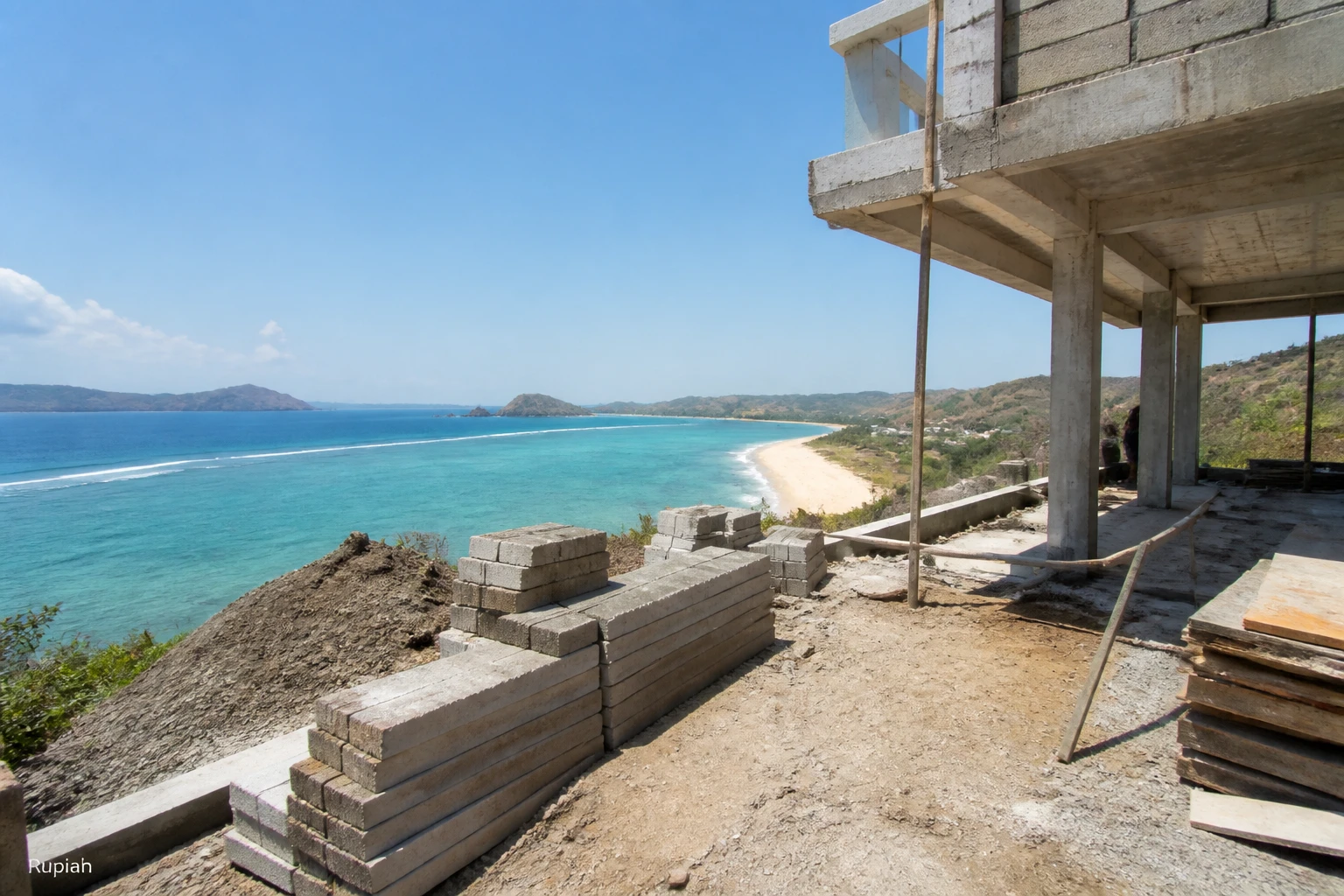
How Rupiah Weakness Is Redirecting Investors from Bali to Lombok
As the Indonesian Rupiah weakens against the dollar, Bali's rising costs are creating unexpected advantages for property investors eyeing South Lombok's emerging alternative.
The weakening Indonesian Rupiah against the US dollar has created a peculiar paradox across Southeast Asia's most popular tourist destinations. While Bali's world-class resorts and restaurants now command premium prices in foreign currency terms, a quieter alternative is emerging just a short ferry ride away: South Lombok. The shift is subtle but significant, as Bali becomes costlier for international visitors, property investors are discovering that Lombok's combination of rising tourism demand and lower entry prices offers compelling value that currency headwinds actually enhance.
The Rupiah Pressure and Bali's Rising Bills
The Indonesian Rupiah's recent weakness against the US dollar has created a mechanical disadvantage for international visitors and property investors alike. When the dollar strengthens, foreign buyers face higher absolute costs when converted back to their home currencies. Bali, having enjoyed three decades as Asia's tourism flagship, has seen prices drift upward, package holidays, villa purchases, and land parcels all command premiums reflecting its scarcity and maturity.
For a European or Australian investor, Bali's entry price for a turnkey investment-grade villa now sits in the range of USD 400,000–800,000. The mathematics become unforgiving: currency volatility amplifies already-high prices, making it harder to justify the investment thesis. Land in prime Bali zones trades at USD 200–500/m², pricing in decades of scarcity and brand value. When the Rupiah softens, these dollar-denominated prices remain sticky, international benchmarking sees to that.
Lombok Enters the Conversation
What many investors overlook is that currency weakness affects Lombok differently. While Bali's prices are sticky and internationally benchmarked, Lombok's market remains more tightly linked to Indonesian economic fundamentals. The result: Lombok's opportunity set actually widens when the Rupiah softens.
A turnkey investment-grade villa in South Lombok's prime zones, Kuta Mandalika, Tanjung Aan, or Are Guling, enters at EUR 95,000–350,000, a fraction of Bali's asking prices. Prime tourist-zone land trades at Rp 150–400 million per are, roughly half Bali's rate. This is not a temporary discount; it reflects Lombok's earlier stage in the tourism-development cycle.
The "Bali-overflow thesis" that drives much of Lombok's recent momentum gains fresh credibility as Bali becomes costlier. When a European investor faces a choice between a USD 600,000 villa in congested Bali and a EUR 250,000 turnkey property in Lombok offering comparable rental yields, the mathematics shift decisively. Currency weakness, paradoxically, sharpens this advantage.
Tourism Growth as the Underlying Driver
The headline about exchange rates obscures a more durable story: Lombok's tourism is accelerating. Foreign arrivals are growing at 40–50% year-over-year, creating genuine demand for quality rental accommodation. Kuta Mandalika (Lombok's flagship tourist zone, transformed by the MotoGP effect) has seen villa prices rise approximately 38% year-on-year. The emerging frontier of Are Guling is posting even steeper momentum at 47% annually.
This growth is not ephemeral. It reflects structural improvements: upgraded airport infrastructure, improved road connectivity, and Lombok's maturation as a serious alternative to overcrowded Bali. When currency headwinds push international tourists to seek value, Lombok's combination of authentic beauty, lower crowds, and competitive pricing becomes irresistible.
A realistic stabilised occupancy rate for rental villas sits at 55–70% (Bali achieves 70–85%, reflecting its longer track record). But here lies the opportunity: early investors in maturing tourism zones have historically captured margin as occupancy climbs. The honest net rental yield across South Lombok's prime zones ranges from 7–12% after all realistic costs, management fees of 18–22% of gross revenue and OTA commissions of 15–20%. Top-performing assets in hot zones can reach near 15% net.
What This Means for Your Investment
For a European or Australian investor monitoring macro headwinds, Lombok offers three structural advantages.
First: entry price. You cannot replicate the USD 150,000–250,000 villa-with-yield proposition in Bali or Thailand at anything like that valuation.
Second: tourism tailwinds. The 40–50% YoY foreign-arrival growth is creating genuine rental demand. Unlike Bali, where occupancy growth is marginal, Lombok still has room to climb toward international averages.
Third: currency diversification. An Indonesian property denominated in Rupiah, with rental revenue also in local currency, acts as a natural hedge against further Rupiah weakness. Rising local costs typically drive corresponding increases in rental prices, protecting your yield.
The legal framework for foreign ownership is clear: foreigners cannot hold freehold title, but leasehold structures (Hak Sewa, typically 25–30 years) and the PT PMA vehicle (foreign-owned company structure, 30 years extendable) are well-established, transparent, and supported by specialist local law firms. Due diligence is non-negotiable, but the path is well-trodden.
Developments like Samudra Villas in Are Guling exemplify the model: turnkey villas from around EUR 255,000, a disclosed commercial interest of HubLombok, for which any net yield should be treated as an estimate within the 7-12% range. This entry pricing simply does not exist in Bali.
The Takeaway
Exchange rate volatility is a feature of emerging-market investing, not a flaw. The current Rupiah weakness is simply making Bali less attractive, and Lombok more so. As international visitors trade Bali's crowds and premium pricing for Lombok's authentic charm and value, property investors are following. The currency headwind is clarifying the spread between overpriced mature destinations and early-cycle opportunities with genuine upside.
The next wave of Southeast Asian property investing will not be fought in Bali's saturated, dollar-denominated market. It will be in places like Lombok, where currency weakness is a feature, not a flaw.
Stay informed, subscribe to the free Lombok Briefing for analysis like this, published twice a month.
How does Rupiah weakness affect my rental income if I own Lombok property?
Your rental revenue is denominated in Rupiah, rental prices typically rise to offset currency weakness, protecting your yield. Your initial investment appreciates if the Rupiah weakens further, creating a natural hedge against currency volatility.
What's the realistic net yield for a villa purchase in Lombok today?
Net yields across South Lombok's prime zones range 7–12% after management fees (18–22%) and OTA commissions (15–20%). Top assets in hot zones like Are Guling can reach ~15% net. Never rely on developer-quoted gross yields, always subtract all costs.
Can a foreigner legally own property in Lombok?
Foreigners cannot hold freehold title, but leasehold (Hak Sewa, 25–30 years) and PT PMA structures (30 years extendable) are legal, transparent, and well-established. Proper legal structuring through specialist firms is essential but straightforward.
The Lombok Buyer's Field Guide
Legal structures ranked by risk, the honest ROI math line by line, all six zones ranked, and the 24-point due-diligence checklist. The whole book, free in your inbox.
See what's inside