Prabowo Warns Plantation and Forestry Firms to Enforce Fire Rules
President Prabowo says concession holders must meet existing fire-prevention duties, while rural communities are to receive support for alternatives to slash-and-burn clearing.
Indonesian President Prabowo Subianto has told plantation and forestry companies to comply strictly with fire-prevention rules on their concessions, saying statutory duties will be enforced. His remarks set out a clear distinction: companies must meet obligations already required by law, while rural communities are to receive government support to discourage slash-and-burn clearing.
The message matters beyond the companies directly addressed. It places implementation of existing safeguards at the centre of Indonesia’s fire mitigation effort, while underscoring that enforcement and assistance are being treated as separate parts of the response.
A warning grounded in existing rules
Speaking during a discussion on peatland management with academics at the State Palace in Jakarta, Prabowo said companies had no excuse for neglecting their responsibilities to prevent and extinguish fires. The Presidential Secretariat released his remarks in a video.
“Some companies comply, others do not. We have to bring them into line,” he said. The warning was directed at concession holders in the plantation and forestry sectors, whose requirements include both preventive infrastructure and the capacity to respond when fires occur.
The president’s emphasis was on enforcement of current mandates. The source report does not describe a new regulation; it reports a demand that firms follow rules already in place. That distinction makes implementation the key question for the companies concerned.
What concession holders are required to maintain
Under the regulations described by Antara, concession holders must install watchtowers and water-retention basins at specified intervals across their land. They must also maintain trained response units on site.
The stated corporate duties cover prevention and response: monitoring infrastructure, water retention, and trained personnel based on the concession.
Prabowo said companies and local farmers should not be treated alike in this respect. He described corporate requirements as clear and already established, while acknowledging a role for state support to rural communities. The report gives no detail on inspection schedules, penalties, or how compliance will be assessed, so the practical reach of the warning remains to be seen.
For concession holders, the immediate signal is that fire preparedness is being framed as a statutory obligation, rather than a voluntary contribution to public mitigation. The report does not identify particular firms or concessions as non-compliant.
Support for rural communities
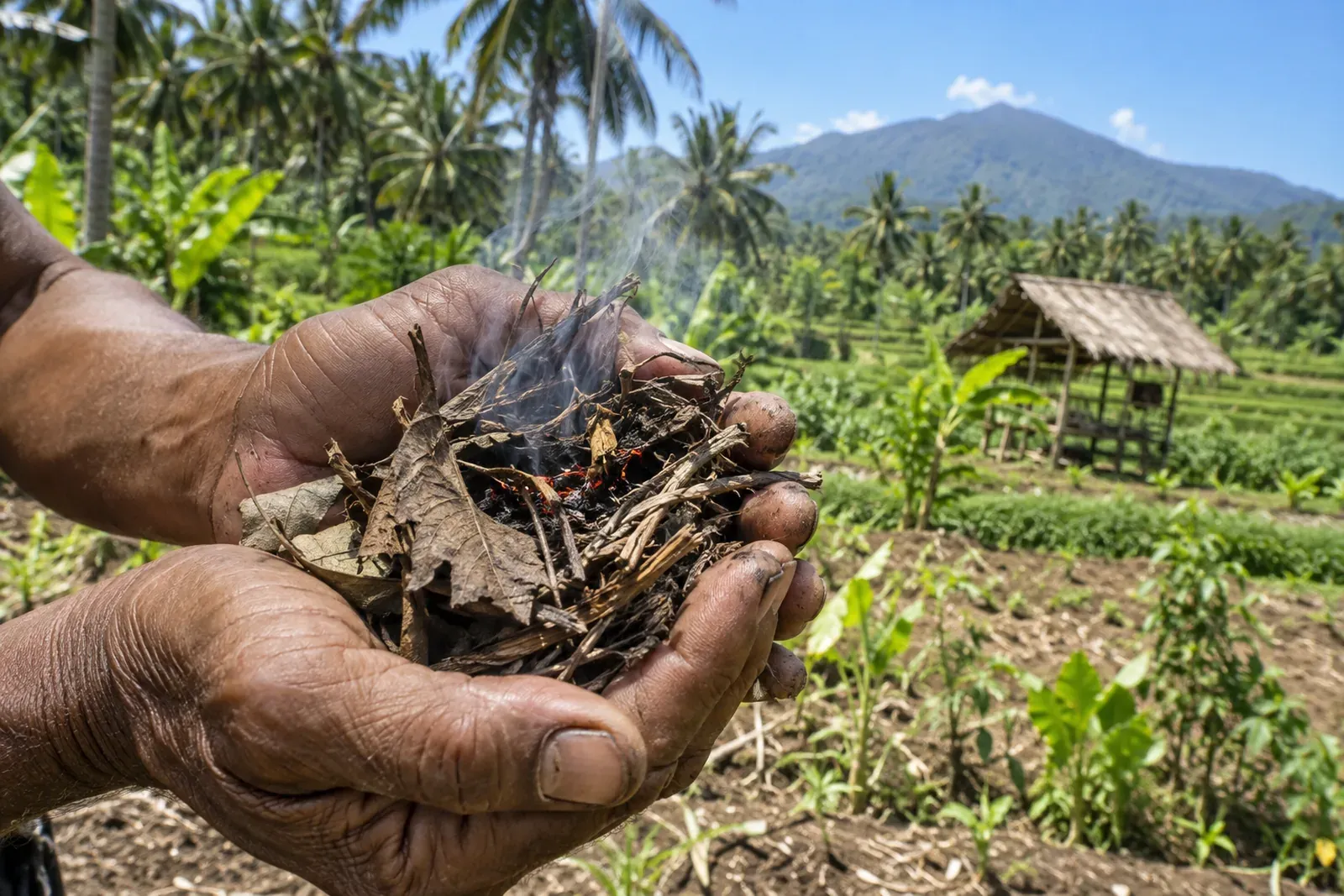
Prabowo also said the government would assist rural communities with land-preparation infrastructure and water pumps. The stated purpose is to discourage slash-and-burn clearing practices. He framed this support as part of an effort to help people prosper, while arguing that companies face a different standard because their obligations are already specified in regulations.
That division is central to the policy message. For communities, the approach described combines assistance with an effort to reduce reliance on fire for land preparation. For companies, the emphasis is on compliance with existing safeguards and maintaining the equipment and personnel required for prevention and response.
The report does not set out the scale, timing, or distribution of the promised assistance. Nor does it say how the government will measure whether the infrastructure and pumps change land-clearing practices. Those details will shape how the community-support strand is carried out.
Fire-prone provinces remain a priority
Indonesia’s mitigation efforts are focused heavily on six priority provinces across Sumatra and Kalimantan: Central Kalimantan, West Kalimantan, South Kalimantan, Riau, South Sumatra, and Jambi.
The report places the enforcement warning against the backdrop of fires that have affected Sumatra, Kalimantan, and Papua. It attributes past fires to severe El Niño-induced drought and widespread slash-and-burn agricultural clearing, and says they burned hundreds of thousands of hectares. The resulting hazardous haze was associated with respiratory illness, school closures, and regional air pollution.
The account highlights why prevention has consequences beyond concession boundaries: smoke can affect communities and public services across a wider area. It also records calls for stricter enforcement against corporate land clearers. Prabowo’s remarks answer those calls at the level of principle, though the report does not provide a new enforcement timetable or provincial breakdown of compliance.
What this means for investors
For investors with exposure to plantation or forestry businesses in Indonesia, the remarks reinforce the importance of understanding how fire-prevention duties apply to a concession and whether the required systems are maintained. The report describes watchtowers, water-retention basins, and trained on-site response units as obligations under current regulations. It does not provide company-specific compliance findings, so it cannot establish the position of any individual operator.
The policy distinction also bears watching. Government assistance to rural communities is intended to discourage burning, while companies are being told that their established duties will be enforced. The effectiveness of the wider mitigation effort will depend on how these two strands are implemented, but the source provides no basis for projecting outcomes.
Prabowo’s warning makes clear that his administration wants corporate fire preparedness treated as a matter of compliance. The next evidence to watch is how that stated priority translates into enforcement across the named provinces and support on the ground for rural communities.
Stay informed: subscribe to our free Lombok Briefing, published twice a month (the 1st and 15th), for analysis like this.
What fire-prevention duties did Prabowo say companies must meet?
The report says concession holders must install watchtowers and water-retention basins at specified intervals across their land, and maintain trained response units on site. Prabowo said companies must comply with these existing requirements to prevent and extinguish fires.
Which provinces are named as priorities for fire mitigation?
The six priority provinces named in the report are Central Kalimantan, West Kalimantan, South Kalimantan, Riau, South Sumatra, and Jambi. They are in Sumatra and Kalimantan, where Indonesia is focusing heavily on mitigation efforts.
What support is the government offering rural communities?
Prabowo said rural communities would receive state assistance, including land-preparation infrastructure and water pumps. The stated aim is to discourage slash-and-burn clearing practices. The report does not specify the support’s timing, scale, or distribution.

The Lombok Buyer's Field Guide
Legal structures ranked by risk, the honest ROI math line by line, all six zones ranked, and the 24-point due-diligence checklist. The whole book, free in your inbox.
See what's inside