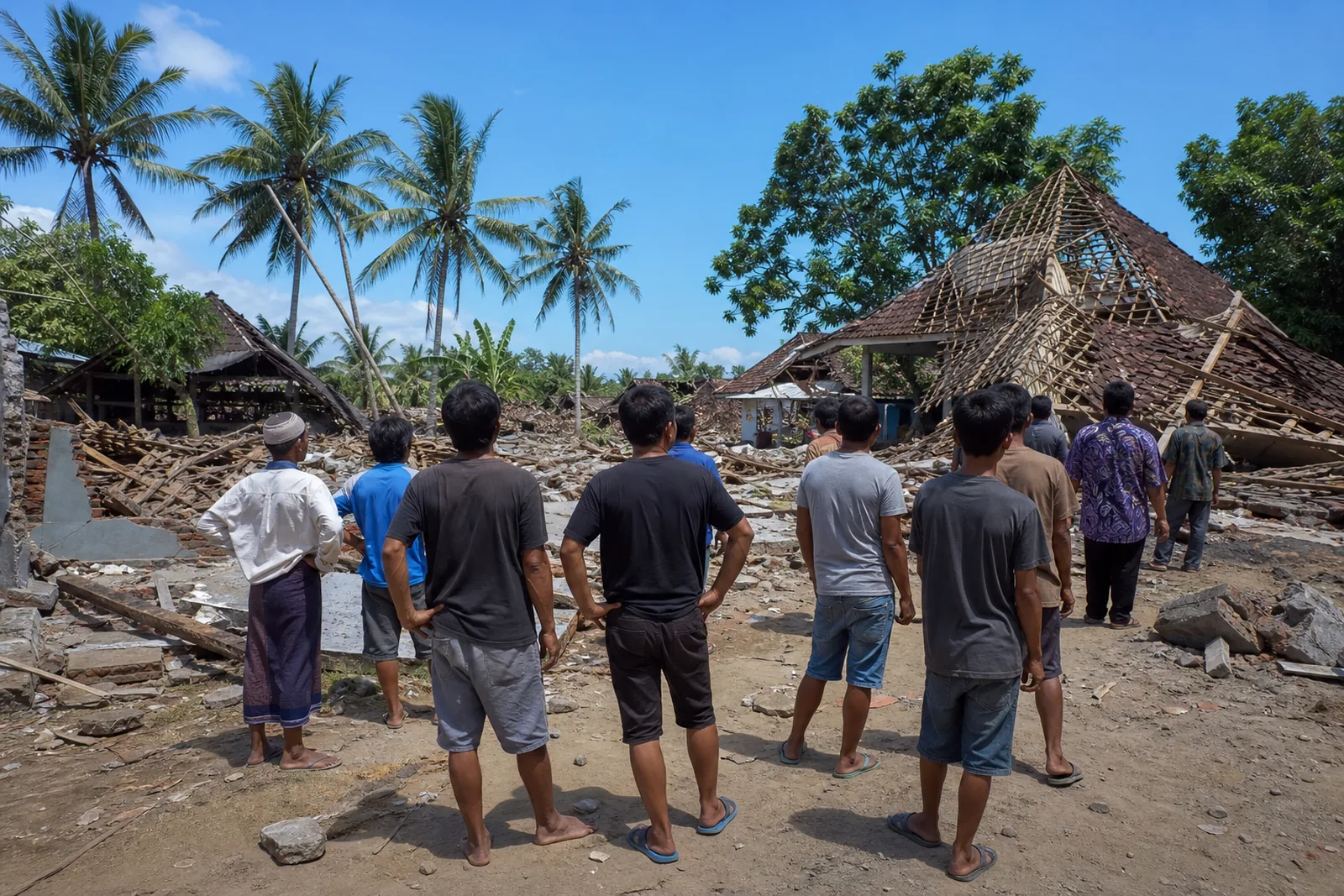
Prabowo Visits Nagekeo as Flores Earthquake Response Intensifies
President Prabowo Subianto visited Nagekeo after the 7.7-magnitude Flores earthquake, as authorities continued to update casualty figures and coordinate relief.
President Prabowo Subianto has visited residents affected by the 7.7-magnitude earthquake in Nagekeo District, East Nusa Tenggara, pledging that the government will provide an optimal response and assistance.
The visit puts national attention on the humanitarian consequences of the Flores earthquake, while underscoring the importance of coordinated disaster management across central and regional authorities.
A presidential visit to affected communities
President Prabowo arrived at Komodo International Airport in Labuan Bajo on Wednesday before travelling directly to Nagekeo District to inspect conditions in the earthquake-affected area.
According to Minister of State Secretary Prasetyo Hadi, the purpose was not merely symbolic. The President was expected to observe conditions directly, ensure appropriate disaster management and confirm that residents’ needs were being addressed.
The government’s stated priority is effective coordination and the fulfilment of affected residents’ needs.
The presidential party included several senior officials: Public Works Minister Dody Hanggodo, Energy and Mineral Resources Minister Bahlil Lahadalia, Home Affairs Minister Muhammad Tito Karnavian, and National Police Chief General Listyo Sigit. NTT Governor Melki Laka Lena and several regional heads were also present.
For households and businesses in affected areas, the presence of national leaders is a signal that the response is being managed at the highest level of government. Yet the ultimate test will be the delivery of practical assistance, the flow of verified information and the ability of institutions to respond as conditions evolve.
Coordination at the disaster command post
During the visit, President Prabowo led a coordination meeting at the NTT Natural Disaster Management Command Post of the IX/Udayana Military Command in Nagekeo.
Prasetyo Hadi said the visit formed part of an effort to ensure effective cooperation between the central government, regional governments, the military, the police and other relevant agencies responding to the earthquake on Flores Island.
That coordination matters because earthquake emergencies require several functions to move in parallel: assessment of damage and casualties, delivery of aid, public safety, support for injured residents and clear communication as new reports emerge. The government has framed its response around aligning those institutions rather than leaving affected districts to manage alone.
The source also noted that some tourism sites in NTT were partly closed following the earthquake. This is a reminder that the consequences of a major natural disaster extend beyond immediate physical damage. Communities, local services and visitor-facing activity can all be affected while safety assessments and emergency operations continue.
The latest confirmed casualty picture
The National Disaster Mitigation Agency, BNPB, said that as of Tuesday, August 25, the death toll had risen to 103. The agency continued to update its figures as further reports arrived from affected areas.
The fatalities recorded by district were:
- 41 in Manggarai
- 34 in East Manggarai
- 13 in Nagekeo
- 6 in Sikka
- 5 in Ngada
- 3 in Ende
- 1 in West Manggarai
BNPB reported that men accounted for 45% of those who died and women for the remaining 55%. By age group, 45% of fatalities were elderly people, 37% were adults and 12% were children and adolescents; the remainder were infants and toddlers.
The number of injured residents had also increased to 1,666 as of Tuesday, from 1,603 recorded on Monday, August 24. East Manggarai recorded the highest injury count, including 239 people with serious injuries and 404 with minor injuries.
BNPB has said casualty figures remain subject to update as new information is received from earthquake-affected areas.
These figures convey both the scale of the emergency and the need for caution when interpreting early disaster reporting. In fast-moving situations, official totals can change as authorities reach communities, consolidate reports and verify individual cases.
Information and practical support remain central
BNPB has launched a Media Center for verified NTT earthquake updates. That function is especially important when affected residents, families elsewhere in Indonesia and international observers are seeking reliable information amid a rapidly changing situation.
The disaster response has also included public kitchens intended to serve 3,000 meals daily, according to a related report referenced by Antara. Alongside official coordination, such practical support can be central to helping displaced and affected households meet immediate needs.
For readers monitoring Indonesia from abroad, the most responsible approach is to distinguish confirmed official updates from unverified reports. BNPB’s continuing revisions show why casualty figures, site conditions and operational information should be treated as current snapshots rather than settled conclusions.
What this means for investors
This is first and foremost a humanitarian story, not a property-market event. Investors with interests in Indonesia should keep the immediate focus on affected communities and follow verified official updates.
There are nevertheless a few prudent implications for those assessing exposure to the wider region:
- Operational conditions may change quickly. Tourism sites in NTT were partly closed after the earthquake, according to the source.
- Official information is essential. BNPB is continuing to update casualty figures and has launched a Media Center for verified updates.
- Resilience should be part of due diligence. Any long-term assessment of property, hospitality or operating exposure should consider disaster-response readiness, access to official information and the practical continuity of local services.
None of these points warrants speculation about property values, tourism demand or future commercial outcomes. The available information is about an active disaster response, and the relevant indicators will be the safety and welfare of residents, the effectiveness of relief efforts and the clarity of verified public reporting.
President Prabowo’s visit places the response under close national scrutiny; the next meaningful developments will be measured in the quality and reach of support delivered to communities across the affected districts.
Stay informed, subscribe to the free Lombok Briefing for analysis like this, published twice a month.
Why did President Prabowo visit Nagekeo after the Flores earthquake?
President Prabowo Subianto travelled to Nagekeo to inspect conditions after the 7.7-magnitude Flores earthquake, assess the needs of affected residents and support coordination between central and regional authorities, the military, police and other relevant agencies.
What were the latest reported casualties from the NTT earthquake?
As of Tuesday, August 25, BNPB recorded 103 deaths and 1,666 injured people following the 7.7-magnitude earthquake. BNPB said it would continue updating casualty figures as new reports were received from the affected areas.
What should investors monitor following the earthquake in NTT?
Investors should rely on verified BNPB and government updates, monitor any operational changes such as partial tourism-site closures, and avoid drawing market conclusions while the emergency response remains active. The immediate priority is assistance and safety for affected communities.

The Lombok Buyer's Field Guide
Legal structures ranked by risk, the honest ROI math line by line, all six zones ranked, and the 24-point due-diligence checklist. The whole book, free in your inbox.
See what's inside