Prabowo Convenes Security Chiefs: Institutional Stability in Focus
President Prabowo Subianto meets ten former National Police chiefs in Hambalang. For foreign investors, the high-level consultation signals institutional continuity and security cohesion.
Quick answer: President Prabowo Subianto has convened ten former National Police chiefs alongside current leadership to reinforce institutional continuity and national security. Occurring alongside an active investigation into unauthorised wiretapping targeting senior state officials, the Hambalang consultation signals firm executive control, institutional alignment, and policy predictability for foreign investors assessing sovereign risk in Indonesia.
High-level security consultations in Indonesia rarely occur without profound strategic calculation. When President Prabowo Subianto summoned ten former National Police chiefs to his private residence in Hambalang, the signal sent across domestic institutions and international capital markets was unmistakable. For foreign investors deploying capital into emerging Indonesian destinations such as Lombok, executive cohesion and security governance represent the foundation upon which long-term investment viability rests.
The Context
The consultation, held on Sunday at the presidential residence in Hambalang, Bogor, brought together a generation of policing leadership. According to Indonesian Defence Minister Sjafrie Sjamsoeddin, the objective was explicit: to reinforce national security and ensure institutional leadership continuity across generational lines. Sjamsoeddin noted that the operational insight and historical experience of former commanders represent a vital strategic asset to bolster professional law enforcement under the current administration.
Alongside current National Police Chief General Suyudi Ario Seto, the Hambalang meeting included former police chiefs who collectively headed the force between 1998 and 2019: Roesmanhadi, Roesdihardjo, Suroyo Bimantoro, Da'i Bachtiar, Sutanto, Bambang Hendarso Danuri, Timur Pradopo, Sutarman, Badrodin Haiti, and Tito Karnavian. This roster spans the entire modern democratic era of Indonesia, encompassing periods of economic restructuring, security transformation, and decentralisation.
The gathering coincided with an active, high-stakes investigation conducted by the National Police's Criminal Investigation Department. The probe centres on an unauthorised wiretapping operation allegedly orchestrated by a four-star police general, identified by investigators as LSP, alongside several senior officers. The surveillance operation reportedly targeted the head of state, government officials, and civil society representatives. In bringing together every living predecessor of the police corps, the executive branch moved decisively to project unity and deter factional disruption within state apparatuses.
Institutional Cohesion and State Authority
For international observers who evaluate sovereign risk through an analytical lens, political spectacles in Indonesia carry deep systemic meaning. In emerging markets, security operations and inter-agency friction can create uncertainty if left unaddressed. By bringing former commanders into formal dialogue, the administration has demonstrated a deliberate strategy of institutional consensus-building.
Defence Minister Sjafrie Sjamsoeddin emphasised that the meeting was designed to consolidate ties and exchange strategic insights in response to evolving security dynamics. Rather than allowing internal departmental investigations to foster external speculation, the presidency chose to frame the moment around historical continuity and lawful accountability.
This deliberate consolidation serves three structural purposes:
- Mitigating factional volatility: Gathering respected historical commanders alongside current leadership neutralises factional disputes within the security architecture.
- Reinforcing legal procedures: Supporting the Criminal Investigation Department's ongoing probe into unauthorised wiretapping underscores that procedural governance applies across all ranks.
- Reassuring international capital: Demonstrating that executive authority remains cohesive guarantees regulatory and political predictability for domestic and cross-border commercial operations.
As Indonesia advances ambitious national development programmes, the integrity of state security institutions forms the bedrock of investor confidence.
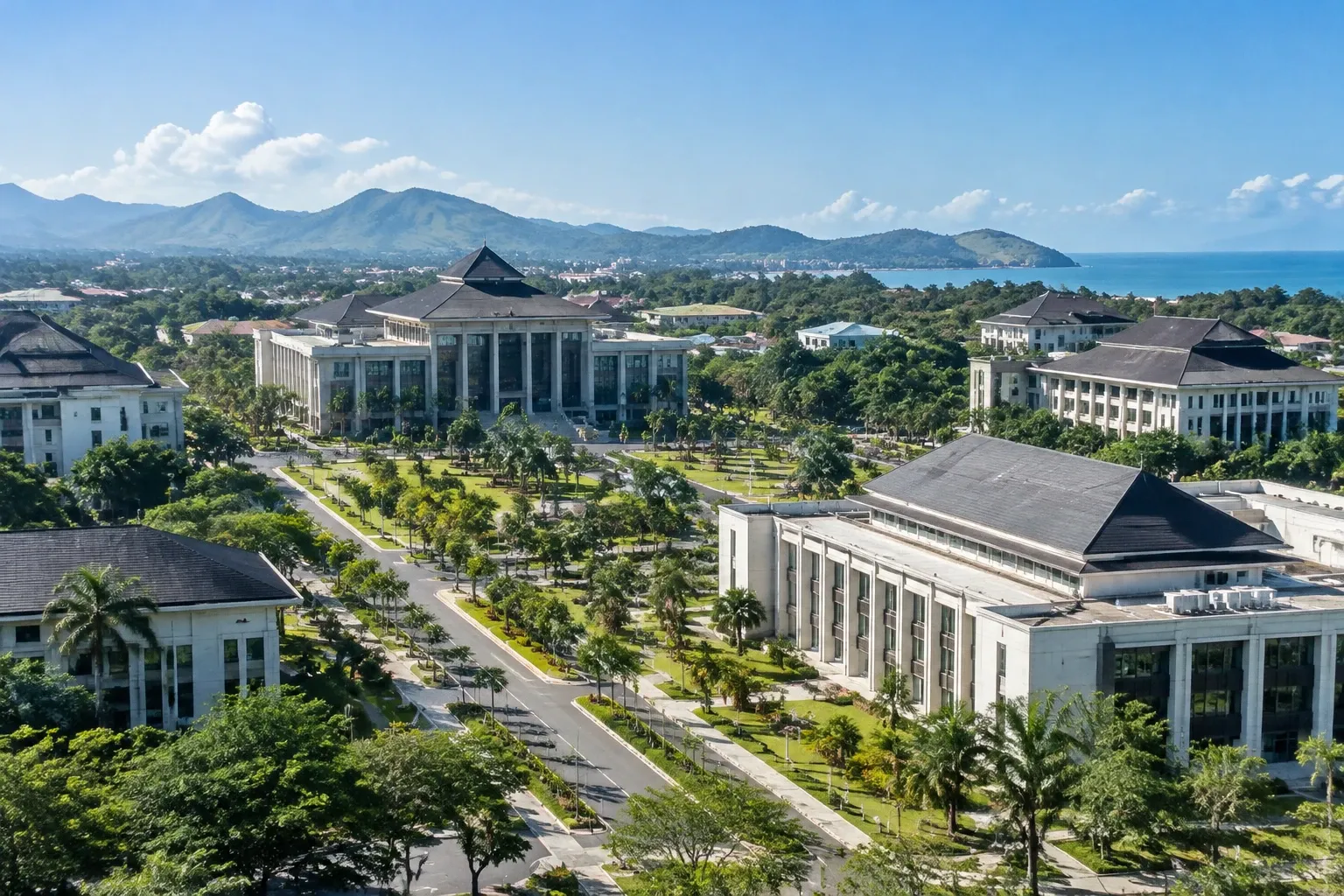
 Prabowo Convenes Security Chiefs · Photo by MART PRODUCTION on Pexels
Sovereign Stability and the Investment Horizon
Direct capital deployment, whether in hospitality, real estate, or infrastructure, requires steady political foundations. When international buyers examine emerging destinations in Southeast Asia, sovereign stability sits at the top of risk assessments. An economy cannot cultivate resilient regional markets if its central governance is perceived as fractured.
Indonesia has sustained notable economic momentum over the past decade, driven by prudent fiscal discipline and significant infrastructure spending. However, political transitions and leadership handovers inevitably invite scrutiny from foreign asset managers. The decisive management of the Hambalang meeting illustrates the administration's preference for proactive consolidation over reactive governance.
The inclusion of former police chiefs dating back to 1998 serves as a reminder of Indonesia's institutional resilience. Over the past twenty-eight years, the nation has navigated global financial shocks, domestic administrative decentralisation, and security reorganisations while preserving macroeconomic expansion. For institutional and private investors acquiring long-term assets, such generational continuity provides tangible reassurance.
| Governance Dimension | Strategic Action Observed | Relevance for Foreign Capital | | :--- | :--- | :--- | | Institutional Continuity | Assembly of chiefs from 1998 to 2019 | Ensures institutional memory and policy stability | | Security Governance | Support for active Criminal Investigation Department probe | Affirms rule of law and limits arbitrary surveillance risks | | Executive Authority | High-level consultation at Hambalang residence | Demonstrates central alignment across security branches | | Economic Environment | Predictable domestic operating conditions | Protects capital deployment and commercial assets |
When legal processes are permitted to address internal security breaches transparently, sovereign predictability improves. Capital flows toward jurisdictions where institutional mechanisms operate methodically under clear executive direction.
What This Means for Investors
For investors positioning capital across Indonesia, including priority regional destinations such as South Lombok, high-level political developments in Jakarta and West Java provide essential macro signals. Commercial real estate, tourism infrastructure, and land assets are multi-year commitments that depend fundamentally on stable governance and national security.
The swift containment of internal institutional friction provides three practical takeaways for foreign capital allocators:
- Policy continuity remains paramount: The presence of seasoned statesmen and former security leaders indicates that administrative governance will adhere to established frameworks rather than volatile policy swings.
- Security across regional corridors is protected: A unified national security command ensures that major regional growth zones, national tourism corridors, and Special Economic Zones maintain uninterrupted operational stability.
- Legal mechanisms are actively functioning: The ongoing investigation into unauthorized surveillance demonstrates that state checks and balances are actively enforced, strengthening systemic transparency for cross-border businesses.
Foreign investors entering the Indonesian market operate within clear legal structures, such as foreign-owned corporate entities (PT PMA) holding building rights (Hak Guna Bangunan / HGB), long-term registered leaseholds (Hak Sewa), or personal right-to-use titles (Hak Pakai). These instruments require dependable administrative registries, lawful oversight by the National Land Agency (BPN), and executed deeds through licensed notaries (PPAT). The stability of these legal mechanisms relies directly on the overarching authority of national law enforcement.
When executive leadership actively safeguards institutional discipline, commercial risk profiles compress. While urban political developments in West Java may seem geographically distant from regional property markets in the Sunda Islands, macroeconomic stability and central command integrity are directly linked to regional asset performance. In managing security challenges through institutional consensus, the Indonesian government confirms its commitment to an orderly, predictable investment landscape.
Stay informed: subscribe to the free Lombok Briefing, published twice a month (the 1st and 15th), for market intelligence like this.
Why is the Hambalang security meeting relevant to foreign investors?
High-level consultations between President Prabowo and ten former police chiefs demonstrate institutional cohesion and decisive executive oversight. For foreign investors, central security alignment ensures macro stability, regulatory predictability, and an orderly operating environment for capital deployed across Indonesian regions.
How does the wiretapping investigation affect Indonesia's sovereign risk?
The active probe into unauthorised wiretapping by the Criminal Investigation Department demonstrates that legal accountability and institutional checks function effectively. Transparent handling of internal security breaches reinforces the rule of law, which reduces long-term sovereign governance risk for cross-border businesses.
Does central security governance impact regional property and tourism investments?
Yes. Regional investment corridors, Special Economic Zones, and tourism hubs depend directly on national legal stability, professional policing, and consistent land administration. Cohesive security leadership at the central level safeguards domestic commercial activity and protects long-term asset valuations nationwide.

The Lombok Buyer's Field Guide
Legal structures ranked by risk, the honest ROI math line by line, all six zones ranked, and the 24-point due-diligence checklist. The whole book, free in your inbox.
See what's inside