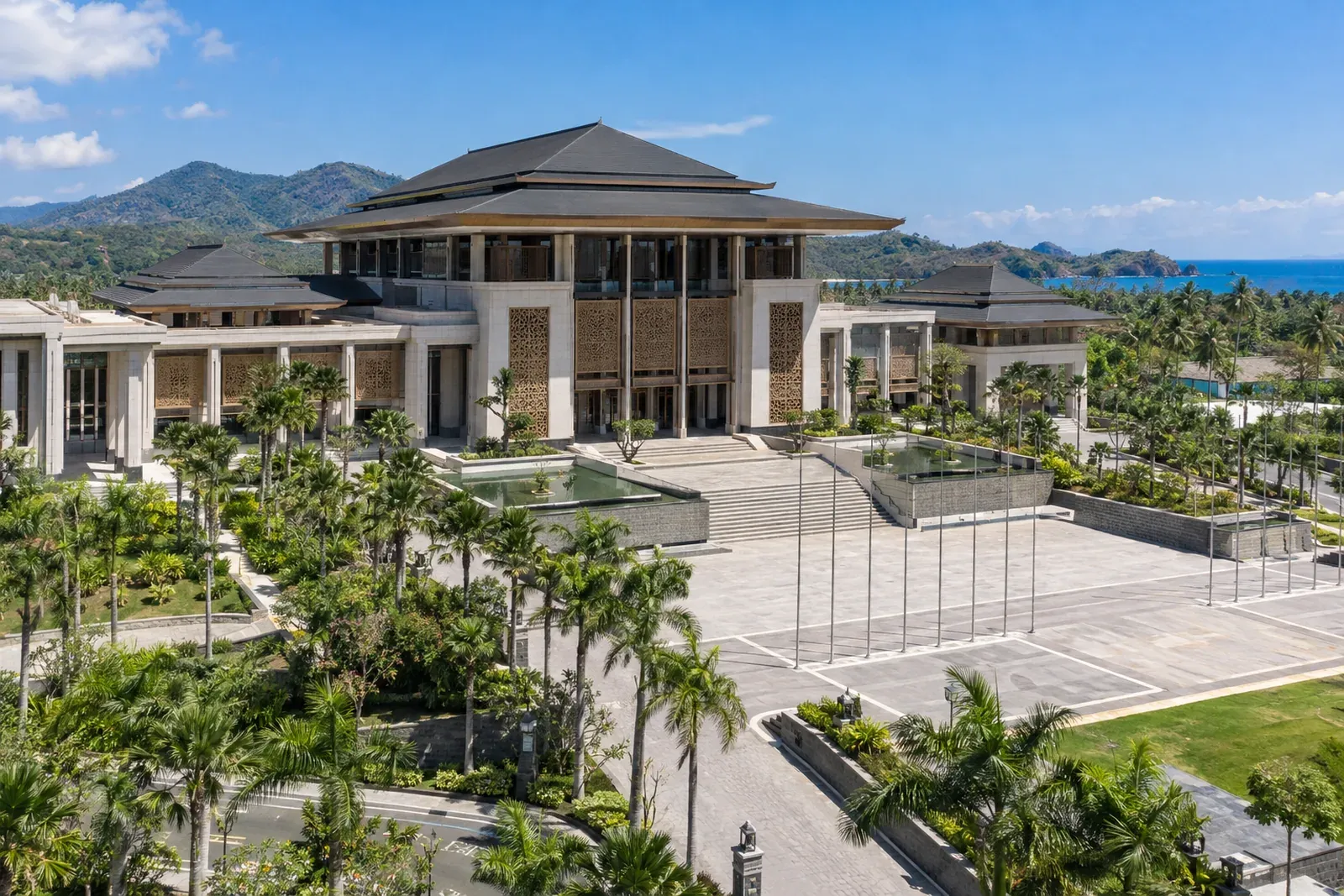
Prabowo’s Security Briefing Puts Institutional Readiness in Focus
Prabowo has urged Indonesia’s military and police to strengthen professionalism amid global risks. Investors should watch how the directives are implemented, not treat the briefing as a change in Lomb
Quick answer: President Prabowo Subianto has urged Indonesia’s armed forces and police to strengthen professionalism, training and merit-based recruitment as the country faces a more complex global security environment. For Lombok investors, the briefing is a national governance signal to monitor, not an announcement of a new property rule or a specific change to local investment conditions.
The message came at a briefing for senior military and police officers in Jakarta, where the president discussed national challenges ahead of the second anniversary of his administration. Its practical significance will depend on what the institutions do next. For investors, the distinction between a presidential directive and an implemented policy matters.
The Context
Prabowo addressed 800 senior officers from the Indonesian National Armed Forces, known as TNI, and the National Police, or Polri, at the Presidential Palace complex in Jakarta on Wednesday. Coordinating Minister for Political and Security Affairs Dudung Abdurachman described the briefing and its themes to Antara Current. The president said he had invited the senior officers to provide an overview of the national situation and the conditions facing the country and state.
The reported agenda was broad. Dudung said Prabowo called for greater professionalism in serving the nation and helping Indonesia navigate a complex global security environment. The president also emphasised personnel capacity building, with education and training aligned to emerging threats and changing security risks.
Among the examples named by the minister were hybrid warfare and the use of drones. The report does not describe a new operational doctrine, a procurement programme, or a timetable for institutional changes. It records a call to prepare personnel for emerging challenges through training and professional development. That is a meaningful distinction for anyone assessing what the briefing signals and what it does not yet establish.
“Equally important is responding to the current global situation by enhancing personnel professionalism through education and training,” Dudung said, summarising the president’s message.
The briefing also touched on recruitment. Dudung said the president called for merit-based systems that give equal opportunities to candidates with the required capabilities, including people with certain physical limitations. He cited candidates who wear glasses as an example, saying they should have opportunities to join if they are intelligent.
That statement frames recruitment as a question of ability and fair access. The report does not set out revised eligibility standards or say how selection rules will change. For now, investors can treat it as a stated direction from the president, rather than evidence that recruitment practices have already been amended.
A broader mandate for the security institutions
The president’s remarks, as reported, connect institutional professionalism with a wider government role. Dudung said Prabowo thanked the TNI and Polri for supporting government programmes, including efforts to strengthen food and energy security, as well as maintaining overall security. Both institutions’ leaders attended: TNI Commander General Agus Subiyanto and Polri Chief General Suyudi Ario Seto.
That combination of responsibilities gives the briefing a wider frame than personnel training alone. It links security institutions to national resilience priorities named by the government. Yet the source provides no new budget figures, programme details or assignments. It would therefore be premature to read the remarks as confirmation of a new project, spending decision or shift in the security institutions’ role.
For an investor, this is a prompt to follow the next stage of the story. A public directive establishes the administration’s stated priorities. Implementation would be visible through subsequent official decisions, revised training or recruitment arrangements, and concrete programme details. None of those follow-up measures is reported here. Until they are, the most defensible reading is that the government is emphasising readiness and institutional capability in response to a changing security environment.
 Prabowo’s Security Briefing Puts Institutional Readiness in Focus · Illustration: HubLombok (AI-generated)
The signals investors should separate
Three signals emerge from Antara’s report, each with a different level of practical certainty.
- Readiness is the central theme. The president called for professional service and better alignment between training and emerging risks, including hybrid warfare and drones. This indicates the administration’s stated concern, but the report does not establish how training will change.
- Recruitment fairness is part of the message. The president’s call, as relayed by Dudung, favours merit-based recruitment and opportunity for capable candidates, including some who wear glasses. Specific revised standards are not included in the report.
- The institutions are recognised as contributors to government priorities. Dudung said Prabowo acknowledged their support for food and energy security programmes and for maintaining security. The report does not detail new responsibilities or identify particular investments arising from that support.
For readers with exposure to Indonesian property, these distinctions are useful because political messaging can be easy to overread. A briefing about national security does not, on its own, describe conditions in a particular destination or investment sector. Antara’s account contains no Lombok-specific measure and no announcement affecting property ownership, development approvals, tourism, rental demand or investor taxes. It offers no basis for revising an individual investment case.
That does not make the story irrelevant to investors. National institutions and public priorities form part of the wider setting in which investment decisions are made. But an investor should distinguish that general context from information that directly changes the rules, operating environment or expected financial performance of an asset. This dispatch supports the first kind of awareness, not the second.
The source also leaves open the key questions that would determine whether the briefing develops into a practical policy shift: which training programmes will be adjusted, whether recruitment criteria will change, and how the stated priorities will be carried through. Antara reports none of those details. Further official announcements would be needed to answer them.
What This Means for Investors
For international investors considering Indonesia, the briefing is best read as a statement of executive priorities around professional standards, personnel development and institutional readiness. It is not a forecast of improved or deteriorating investment returns. The report does not offer evidence on security outcomes, investor sentiment or the performance of any market, so those conclusions should not be attached to it.
For Lombok specifically, the near-term implication is limited but clear: keep national governance developments on the watchlist, while seeking local evidence for local decisions. This report does not announce a policy change for South Lombok or provide a new data point on property values, tourism or yields. Investors weighing an asset still need information that speaks directly to its title, location, development status, demand and costs. Those matters cannot be answered by this briefing.
A useful follow-up is to look for official detail rather than infer it from the speech itself. Changes to training, eligibility or institutional responsibilities would carry more practical weight once formally specified. Until then, the investor’s conclusion should remain measured: Indonesia’s president has made readiness and professionalism a visible priority, while the report offers no immediate basis for changing a Lombok investment thesis.
HubLombok is the editorial arm of Samudra Villas, an active developer in South Lombok. That relationship is disclosed here because it shapes what we cover, not what we conclude.
Stay informed: subscribe to the free Lombok Briefing, published twice a month (the 1st and 15th), for market intelligence like this.
What did Prabowo ask Indonesia’s military and police to do?
According to Antara Current, Prabowo urged the TNI and Polri to strengthen professionalism, align education and training with emerging security risks, and use merit-based recruitment that gives capable candidates fair opportunities.
Does the briefing announce a change for Lombok property investors?
No Lombok-specific property measure is reported. The briefing concerns national security institutions, professional development and recruitment. It provides no announcement affecting property ownership, development approvals, tourism, rental demand or investor taxes.
What should investors watch after this briefing?
Investors can watch for official details on training, recruitment criteria or institutional responsibilities. Antara’s report records the president’s stated priorities, but does not describe follow-up measures or provide evidence of a change in investment conditions.

The Lombok Buyer's Field Guide
Legal structures ranked by risk, the honest ROI math line by line, all six zones ranked, and the 24-point due-diligence checklist. The whole book, free in your inbox.
See what's inside