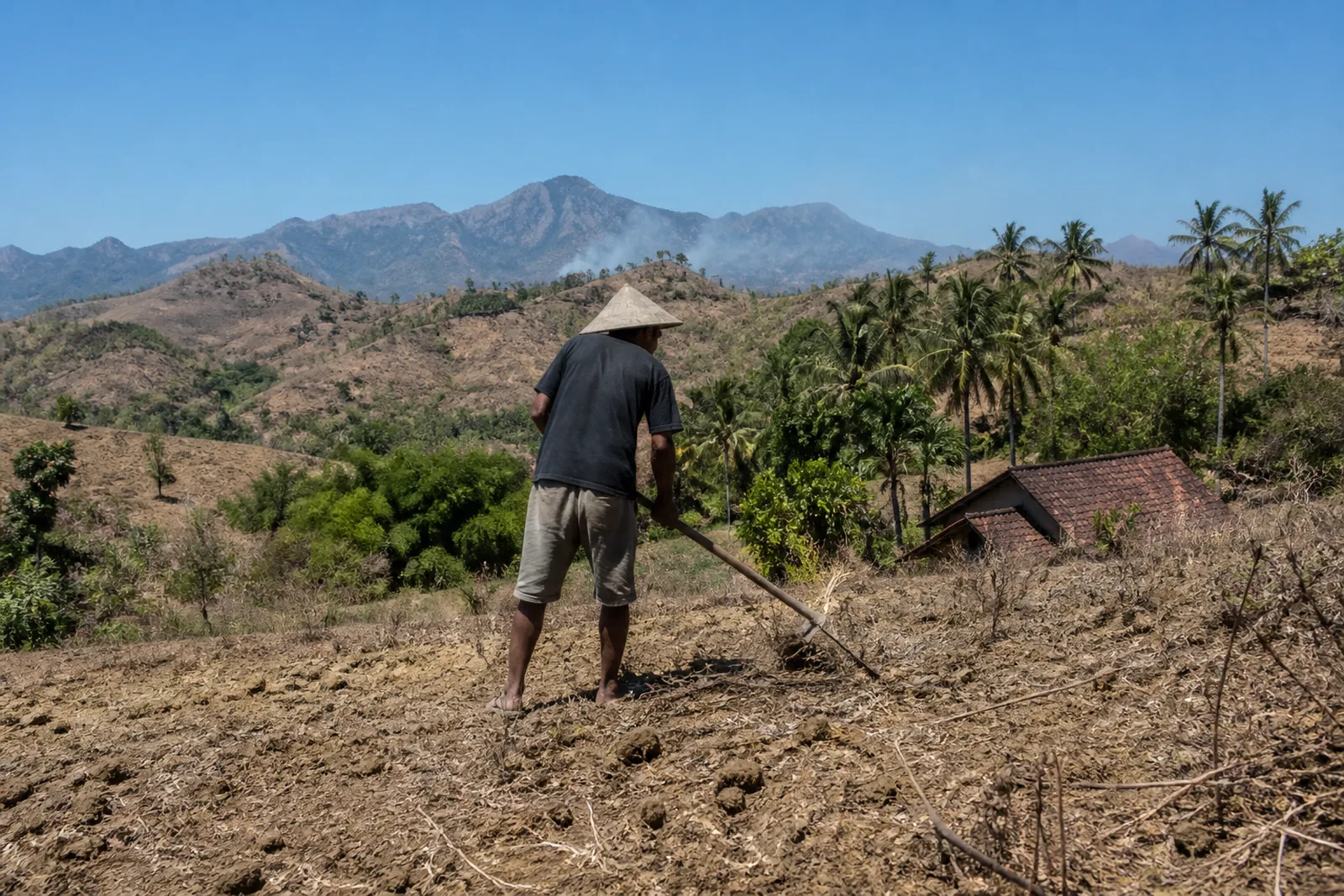
Prabowo Seeks Clearer Wildfire Strategy as West Kalimantan Hotspots Mount
President Prabowo Subianto requested comprehensive briefings in West Kalimantan as authorities assess wildfire containment options.
President Prabowo Subianto has sought detailed, on-the-ground briefings on widespread wildfires in West Kalimantan, signalling that the next phase of Indonesia’s response will be shaped by conditions rather than assumption.
At a meeting in Kubu Raya District, the President asked officials to establish a clear operational picture before determining the most feasible and effective containment strategy.
A fact-finding meeting in Kubu Raya
Prabowo chaired the wildfire-containment meeting after travelling to observe conditions directly, according to Antara. He said he wanted a presentation on the situation after being informed that representatives of central and regional institutions had assembled.
The meeting brought together senior representatives from ministries and state agencies, regional governments, military and police forces, and regional disaster-mitigation agencies. That breadth matters: wildfire containment is not simply a question of locating fires, but of coordinating the institutions responsible for monitoring, access, emergency response and local implementation.
The President’s request for comprehensive updates indicates a practical emphasis on deciding subsequent measures only after reviewing the available evidence. For investors following Indonesia, this is a reminder that environmental events can become governance tests, with the quality of coordination often as important as the headline scale of a disruption.
The hotspot picture is extensive
National Disaster Mitigation Agency (BNPB) expert staff member Asrianus Bulo presented the results of a 24-hour satellite observation during the meeting.
BNPB reported 198 high-confidence hotspots, 3,100 medium-confidence hotspots and 406 lower-confidence hotspots across West Kalimantan.
Bulo said most hotspots were concentrated in Ketapang, Kubu Raya and North Kayong districts in the province’s southern sector. Significant hotspots were also visible in Sanggau, Sintang and Sambas districts.
Satellite hotspot data is an important operational input, but the source did not characterise every observed point as an active fire of the same severity. The confidence classifications therefore matter. They offer authorities a way to prioritise attention while still preserving a wider view of the conditions across the province.
For markets, the immediate lesson is not to overread a single figure. The relevant question is how authorities translate monitoring into targeted containment, particularly when conditions vary between districts and weather may alter the available options.
Weather will shape the available response
Weather featured prominently in the briefing because it is crucial to suppression efforts. Prabowo was told that light rain was forecast in eastern West Kalimantan between August 21 and 27.
BNPB had conducted weather-modification operations from August 11 to 18, Bulo said, before halting them because cloud formations were unfavourable. Following consultation with the Meteorology, Climatology, and Geophysics Agency (BMKG), BNPB planned to resume such operations between August 23 and 27.
The operational timetable depends on weather conditions: earlier modification efforts were paused because cloud formations were unsuitable, while a resumption was planned after consultation with BMKG.
That sequence illustrates the constraints facing policymakers. Technology and institutional mobilisation can support a response, but they do not remove dependence on atmospheric conditions. Investors should treat official plans in such situations as contingent measures, not guaranteed outcomes, until their execution and effects are confirmed.
What this means for investors
The wildfire situation is primarily a public-safety and environmental issue. It also carries a broader investment relevance for those assessing Indonesian operating conditions, listed businesses, travel exposure or property-related activity.
Three considerations stand out:
- Execution risk: The President is seeking a strategy based on operational briefings from national and regional bodies. The effectiveness of coordination will be central to the response.
- Weather sensitivity: The planned resumption of weather-modification operations is tied to consultation with BMKG and to suitable cloud conditions.
- Information discipline: Hotspot counts are useful indicators, but the BNPB data includes different confidence levels. Investors should distinguish between official observations, operational plans and confirmed outcomes.
The source also noted related concern over haze effects on flights in Kalimantan and hazardous air quality in Palangka Raya. It did not establish a quantified economic impact, a timetable for containment, or a forecast for how the situation may develop. Those omissions are significant. In fast-moving environmental events, credible investment analysis should be led by verified developments rather than extrapolation.
The next signal will be implementation
Prabowo said the briefings were intended to provide a clearer picture of conditions and guide follow-up measures involving central and regional institutions. The next meaningful indicators will therefore be the actions taken under that framework, alongside subsequent monitoring and weather updates.
For now, the official response is defined by an extensive hotspot picture, a planned weather-dependent intervention window and a presidential push for a containment strategy grounded in current conditions.
Stay informed, subscribe to the free Lombok Briefing for analysis like this, published twice a month.
What did President Prabowo ask for in West Kalimantan?
President Prabowo Subianto requested comprehensive briefings on wildfire conditions in West Kalimantan during a meeting in Kubu Raya District. He said he wanted a clearer picture of the situation before deciding the most feasible and effective fire-containment strategy.
How many hotspots did BNPB report in West Kalimantan?
BNPB reported 198 high-confidence hotspots, 3,100 medium-confidence hotspots and 406 lower-confidence hotspots from a 24-hour satellite observation. Officials said most were in Ketapang, Kubu Raya and North Kayong, with significant hotspots also in Sanggau, Sintang and Sambas.
What weather-modification operations are planned?
BNPB said weather-modification operations had run from August 11 to 18 but were halted because cloud formations were unfavourable. Following consultation with BMKG, the agency planned to resume operations between August 23 and 27, subject to weather conditions.

The Lombok Buyer's Field Guide
Legal structures ranked by risk, the honest ROI math line by line, all six zones ranked, and the 24-point due-diligence checklist. The whole book, free in your inbox.
See what's inside