Prabowo Orders Permit Revocation for Firms Linked to Forest Fires
Indonesia’s president has ordered action against corporations suspected of ordering forest and land fires, signalling a tougher compliance environment.
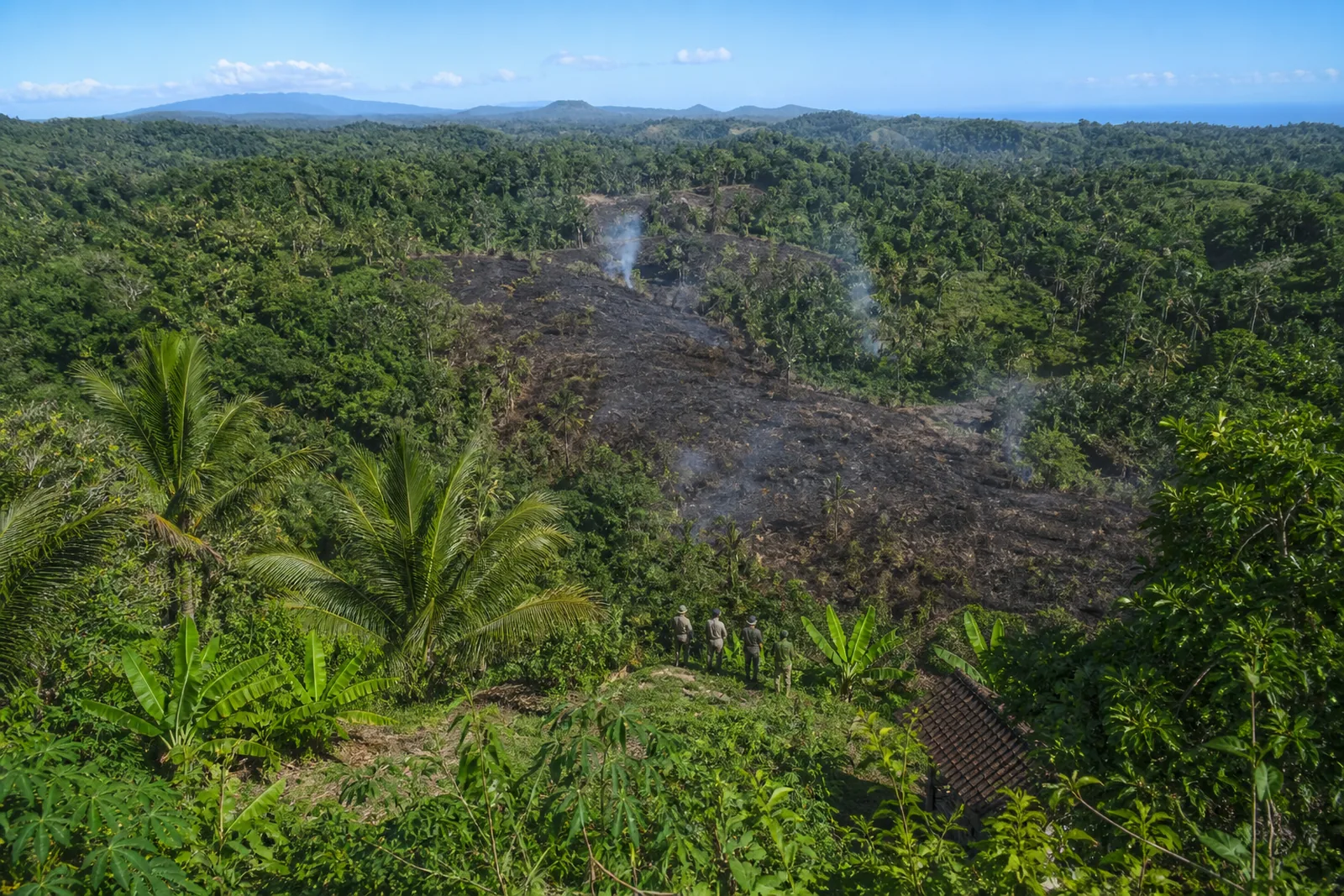
Indonesia’s President Prabowo Subianto has ordered authorities to revoke the business permits of corporations suspected of ordering forest and land fires. The instruction, delivered during a coordination meeting on fire management in Pekanbaru, Riau, signals a forceful official stance on corporate responsibility as fires affect parts of Sumatra and Kalimantan.
A direct warning to companies
Prabowo said that no corporation would be exempt if there were indications it had ordered burning. According to Antara’s report, he told the meeting that authorities would revoke all permits held by a corporation where such indications existed.
“Any corporation, whoever they are, if there is even the slightest indication they ordered the burning, we will revoke their licenses,” Prabowo said, according to Antara.
The language is unusually unequivocal. For investors and operators, the immediate point is not a new quantified penalty or a published enforcement timetable; neither was set out in the report. It is the stated readiness of the presidency to use permit revocation against companies alleged to have directed land or forest burning.
That matters because permits are central to the ability to operate in Indonesia. The report does not identify individual companies, particular licences, or any completed revocations. It instead records a presidential instruction to authorities in the context of a wider response to forest and land fires.
Fires remain a substantial official concern
The Ministry of Forestry monitoring system recorded 2,894 hotspots across 10 provinces in Sumatra, Antara reported. South Sumatra had the highest concentration, with 1,410 hotspots, followed by Riau with 480 and Jambi with 425.
The report also said the total area burned across those provinces reached 36,047.64 hectares in 2026.
Key figures reported by Antara
- 2,894 hotspots across 10 Sumatra provinces
- 1,410 hotspots in South Sumatra
- 480 hotspots in Riau
- 425 hotspots in Jambi
- 36,047.64 hectares burned in 2026
Prabowo has also inspected areas in Kalimantan in recent days, according to the report, to ensure that forest and land fire management was being undertaken swiftly, in an integrated manner and effectively. The source does not establish why fires occurred in every affected location, nor does it assign responsibility for the reported hotspots or burned area to particular companies or individuals.
That distinction is important. The president’s warning concerns corporations suspected of ordering burning; the hotspot and burned-area figures describe the scale of the challenge being monitored by the government.
Prevention, not only punishment
The meeting’s message extended beyond corporate enforcement. Prabowo called on authorities to prevent individuals from deliberately setting fires for any reason and said public education should be strengthened, especially in villages, so communities understand that land burning is prohibited.
His proposed alternative for people needing to clear land was to seek government assistance. Under the approach described in the report, local governments, the Indonesian Military (TNI) and the National Police (Polri) could help organise land clearing through farmer groups.
Funding could come through programmes including the People’s Business Credit, known as KUR, and cooperatives. Prabowo said people seeking help should report to the sub-district head or regent, after which government agencies could organise assistance.
For investors, this is a reminder that environmental compliance in Indonesia is not solely a matter of paperwork completed at acquisition. It touches operations, contractors, land preparation and the conduct of local counterparties. The report does not describe a new compliance code, but it does show senior political attention directed at both prevention and consequences.
What this means for investors
Foreign buyers considering Indonesian assets should read this as a governance and due-diligence issue rather than as a reason to make assumptions about any specific region, business or project.
- Treat environmental controls as a core diligence item. Ask how land is cleared, who undertakes the work and what procedures are used to prevent burning.
- Separate reported facts from allegations. The source reports a warning about corporations suspected of ordering fires; it does not name companies or establish responsibility for individual incidents.
- Review the full transaction chain. For property transactions, foreign buyers should independently verify title, ownership history, zoning and encumbrances, alongside operational and environmental risks.
- Use the lawful ownership route. Foreigners cannot hold freehold, or Hak Milik/SHM, which is reserved for Indonesian citizens. Available routes include leasehold, Hak Pakai for qualifying residents, and a PT PMA holding Hak Guna Bangunan.
Where a purchase involves legal structure or title transfer, HubLombok’s advisory partner TerraNusa Advisory provides due diligence on certificates, ownership history, zoning and encumbrances, as well as PT PMA setup and deed and title transfer at BPN. Investors should use independent professional advice suited to the specific asset and transaction.
Indonesia’s tougher rhetoric on land burning reinforces a simple investment principle: the quality of a transaction is inseparable from the quality of its compliance. As enforcement priorities develop, careful buyers will keep environmental diligence alongside title, structure and operating risk at the centre of their decision-making.
Stay informed, subscribe to the free Lombok Briefing for analysis like this, published twice a month.
What did President Prabowo order for companies linked to forest fires?
President Prabowo Subianto said authorities should revoke the permits of corporations where there is an indication they ordered forest or land burning. Antara’s report did not name companies, identify specific permits, or report completed revocations.
How extensive were the fires reported in Sumatra?
The Ministry of Forestry monitoring system recorded 2,894 hotspots across 10 provinces in Sumatra. Antara reported 36,047.64 hectares burned in 2026, with the highest reported hotspot concentration in South Sumatra.
What should foreign property investors check in response?
Foreign property investors should independently examine land-clearing practices, operational controls, title, zoning and encumbrances. Foreigners cannot hold Hak Milik/SHM freehold; lawful routes include leasehold, Hak Pakai for qualifying residents, and a PT PMA holding HGB.

The Lombok Buyer's Field Guide
Legal structures ranked by risk, the honest ROI math line by line, all six zones ranked, and the 24-point due-diligence checklist. The whole book, free in your inbox.
See what's inside