Prabowo’s nationalism pitch and what it signals for Lombok investors
Prabowo’s call for young entrepreneurs to build with nationalism points to a more assertive pro-domestic-growth mood, with implications for Lombok’s tourism, property and SME ecosystem.
Quick answer: Prabowo Subianto’s call for young entrepreneurs to build the economy with nationalism is best read by Lombok investors as a signal of policy tone, not a direct market event: Indonesia is likely to favour domestic capability, local participation and visible national benefit, which supports tourism, property management and SME-led growth on the island.
The immediate investment implication is subtle but important. Lombok’s opportunity set has always depended on imported demand and domestic execution at the same time. A more nationalist development narrative can improve licence-to-operate for locally anchored projects, while also raising the bar for how foreign capital structures partnerships, staffing and community contribution.
The Context
The source is a brief but telling one. According to Antara Business, President Prabowo urged young entrepreneurs to help build the economy with nationalism. That may sound like a political slogan, but in Indonesia it has practical meaning: investment is increasingly expected to be productive, locally rooted and visibly aligned with national development priorities.
For Lombok, that matters because the island’s growth story has never been only about beaches and villas. It is about the broader machinery around tourism, infrastructure, services, logistics, local labour and small business formation. Investors who understand that context tend to make better decisions than those who treat Lombok as a simple yield play.
There are three reasons this message resonates now:
- Domestic political rhetoric is leaning towards self-reliance, local value creation and visible economic inclusion.
- Lombok is still in a scaling phase, with tourism momentum creating spillovers into construction, hospitality and supporting services.
- Capital that arrives with jobs, training and community linkage is more likely to be welcomed than extractive capital that simply captures cashflow.
This does not mean the island is closing itself off. It means the investment thesis is shifting from “can foreign money enter?” to “how is foreign money embedded?” That distinction matters for deal structure, operational control and long-term resilience.
“The real premium in Lombok is no longer just location. It is alignment: with infrastructure, with local demand, and with the direction of national policy.”
One useful way to frame the moment is to compare the old and new investment logic.
| Lens | Older offshore mindset | Emerging Indonesia-first mindset | |---|---|---| | Project appeal | Scenic asset, quick exit | Productive asset, local integration | | Workforce | Imported management where convenient | Stronger local hiring and training | | Community stance | Minimal engagement | Visible contribution and compliance | | Capital story | Yield-led, often speculative | Yield plus economic spillover | | Political fit | Tolerated if profitable | Preferred if nationally useful |
For Lombok investors, the message is not to become ideological. It is to recognise that politics and market access are converging. The projects most likely to age well are those that can answer a simple question: what does this asset do for the island beyond generating returns for its owner?
Body Section 2: Why This Matters for Lombok’s Growth Model
Lombok’s investment narrative has been strengthened by a broader Bali-overflow thesis, improving transport links and the island’s own tourism appeal. Recent market conversations have also pointed to tourism growth of 40-50% year on year in some segments, with South Lombok villas often marketed on 12-22% gross yield claims and entry points spanning roughly €95,000 to €350,000 depending on size, location and fit-out.
Those numbers are attractive, but they do not exist in a vacuum. They sit inside a political economy that is increasingly sensitive to who benefits from growth. Nationalism, in the Indonesian context, often translates into a preference for domestic value capture, local participation and development that looks useful on the ground.
For the island, that has several practical consequences:
- Projects with real operating substance will look more credible than purely speculative land banking.
- Hospitality assets that employ and train local people can gain reputational and operational advantages.
- Developers and capital partners who work cleanly with permits, community stakeholders and local suppliers reduce execution risk.
This is especially relevant as Lombok continues to position itself as a second-node destination rather than a speculative satellite. The island’s next stage depends less on headline land appreciation and more on whether the operating ecosystem can mature: transport, guest services, maintenance, security, F&B, guiding, wellness, distribution and digital marketing.
That is where nationalism becomes an investment filter. A project that sources local materials, develops local talent and generates local tax and wage flows is easier to defend in both policy and community terms. In contrast, a foreign-branded asset with thin local linkages may still make money, but it will carry more social and regulatory friction.
The investor takeaway is straightforward: model Lombok not as an isolated villa market, but as an emerging regional platform. The stronger the domestic economic footprint, the more durable the asset.
Body Section 3: The Practical Signals Investors Should Watch
The most useful reading of Prabowo’s message is as a signal to watch for implementation, not slogans. Investors should look for changes in how the state and local authorities prioritise projects, partners and compliance standards.
Key signals to monitor include:
- Whether local partnership expectations become more explicit in licensing or procurement.
- Whether tourism and infrastructure projects are framed around employment and domestic supply chains.
- Whether incentives favour businesses that reinvest locally rather than only extracting cashflow.
- Whether public messaging increasingly rewards entrepreneurs who build visible national value.
There is also a timing angle. Lombok’s growth remains closely tied to infrastructure improvements and visitor access. The airport expansion window around 2025-26 is still part of the strategic backdrop, because better connectivity tends to reinforce the case for hospitality, serviced accommodation and supporting services. In that environment, projects that can scale with the island rather than against it are better positioned.
For investors, this changes due diligence priorities. Beyond location and yield, the questions become:
- Who is the operating partner, and how strong is their local execution capability?
- How much of the project’s value creation stays in Indonesia?
- Is the asset built to absorb seasonal volatility and policy shifts?
- Can the business adapt if compliance standards tighten or local expectations rise?
It is also worth separating marketing language from operating reality. High advertised yields can coexist with weak governance, inconsistent occupancy or over-optimistic exit assumptions. A nationalist policy tone does not automatically lower returns or raise them; it changes which risks matter most.
Policy tone matters most when it alters incentives, not when it merely sounds dramatic.
In practical terms, the winners in Lombok are likely to be the businesses that are already doing three things well: building trusted local relationships, creating employment and offering a product that fits the island’s premium-but-not-overbuilt market position. That applies to villas, boutique hospitality, food and beverage, wellness, mobility and service businesses tied to visitor flows.
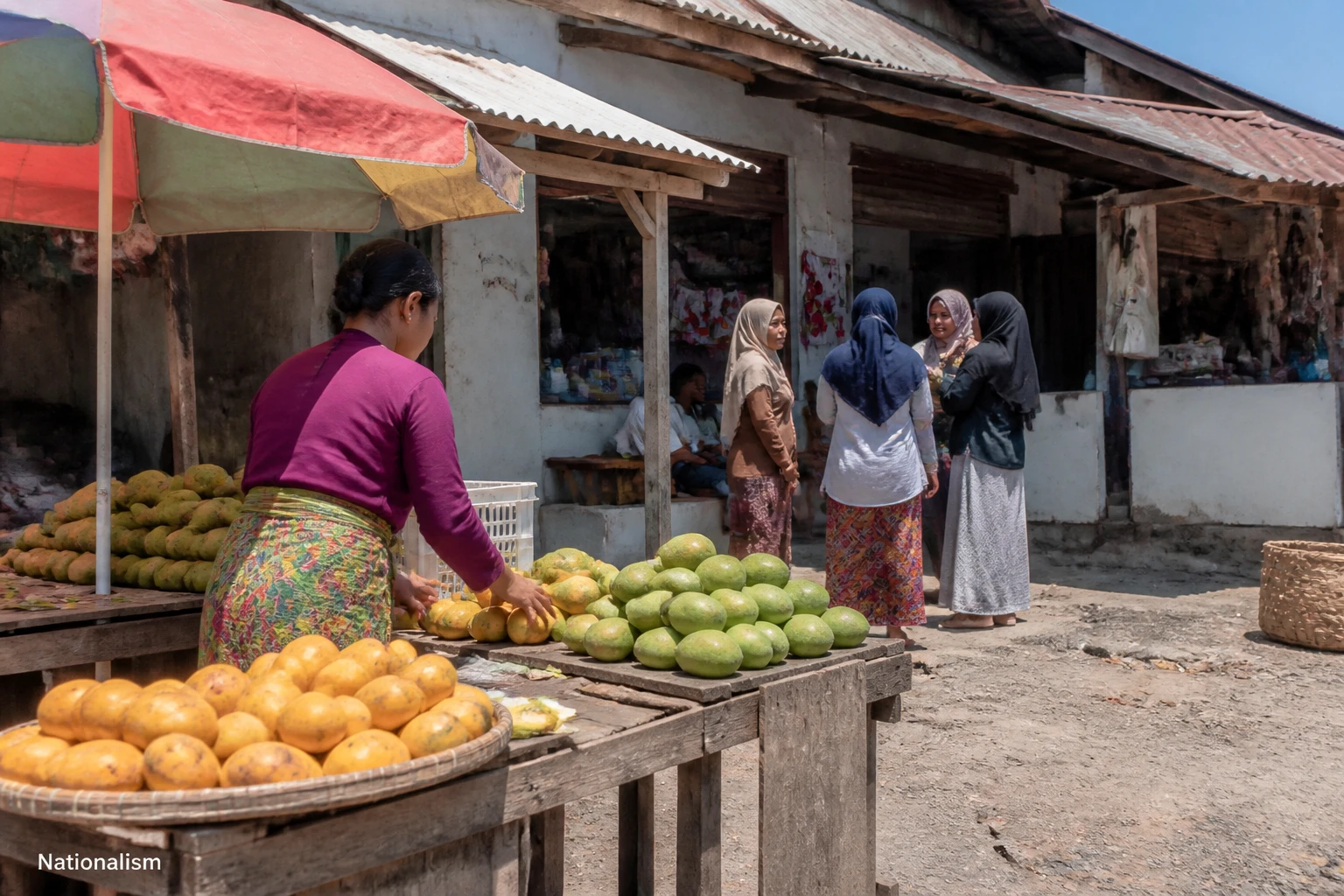
 Prabowo’s nationalism pitch and what it signals for Lombok investors · Photo by Tom Fisk on Pexels
What This Means for Investors
For European, Australian and American investors watching Lombok, the right interpretation is measured optimism. Prabowo’s comments do not rewrite the property cycle or tourism fundamentals overnight, but they do underline the kind of project Indonesia wants more of: locally useful, economically embedded and politically legible.
That favours investors who are prepared to think like operators, not just buyers.
The most resilient Lombok allocations are likely to share five traits:
- They are tied to a real operating business, not just land appreciation.
- They have local management depth and credible community linkage.
- They sit within areas of proven visitor demand rather than speculative frontiers.
- They assume realistic occupancy, cost inflation and maintenance needs.
- They can survive a more assertive policy environment without depending on shortcuts.
This is where the island’s premium case remains intact. Lombok still offers a rare combination of relative affordability, improving infrastructure, strong lifestyle appeal and room for institutionalising a still-early market. But the next phase of returns is more likely to come from disciplined execution than from narrative alone.
The deeper lesson in this Antara note is that the state is signalling expectations. Investors who respond by building cleaner, more local, more durable businesses should find that Lombok remains attractive. Those who mistake momentum for immunity may discover that nationalism, in practice, is simply a demand for better alignment.
Stay informed, subscribe to the free Lombok Briefing for market intelligence like this, published twice a month.
How does Prabowo's nationalist development policy affect foreign investors buying property in Lombok?
Prabowo Subianto's call for nationally useful investment shifts the question from whether foreign capital can enter Indonesia to how it is embedded locally. Projects that employ local staff, source local materials and generate local tax flows are more likely to gain regulatory and community acceptance, reducing execution risk for foreign buyers in Lombok.
What gross yields and entry prices are typical for South Lombok villas?
South Lombok villas are currently marketed on gross yield claims of 12 to 22 percent, with entry prices spanning roughly 95,000 euros to 350,000 euros depending on size, location and fit-out. Some tourism segments have also reported year-on-year growth of 40 to 50 percent, though gross yield figures do not account for operating costs or vacancy.
What investment model holds up best under Indonesia's current political direction?
According to the article, assets with real operating substance outperform speculative land banking under Indonesia's current nationalist framing. Hospitality projects that train local workers, comply cleanly with permits and generate visible economic spillovers, jobs, wages and local supplier contracts, carry less social and regulatory friction and are better positioned for long-term durability in Lombok.

The Lombok Buyer's Field Guide
Legal structures ranked by risk, the honest ROI math line by line, all six zones ranked, and the 24-point due-diligence checklist. The whole book, free in your inbox.
See what's inside