Prabowo’s MBG Drive Signals a New Rural Demand Engine in Indonesia
Indonesia’s Free Nutritious Meal programme is being framed as a capital investment, not just social policy, with implications for villages, food supply chains and investors.
Indonesia’s Free Nutritious Meal programme, known as MBG, is moving beyond social policy into the language of capital formation. President Prabowo Subianto has described it as a huge investment in human capital that also supports village economies, a framing that matters because it tells investors where Jakarta believes the next multipliers will come from.
For markets, the significance is not the meal itself but the supply chain behind it: farms, fisheries, logistics, packaging, kitchens, cold storage and distribution. If MBG is executed at scale and with discipline, it could become one of the clearest examples of domestic demand being engineered from the bottom of the income pyramid upwards.
The Context
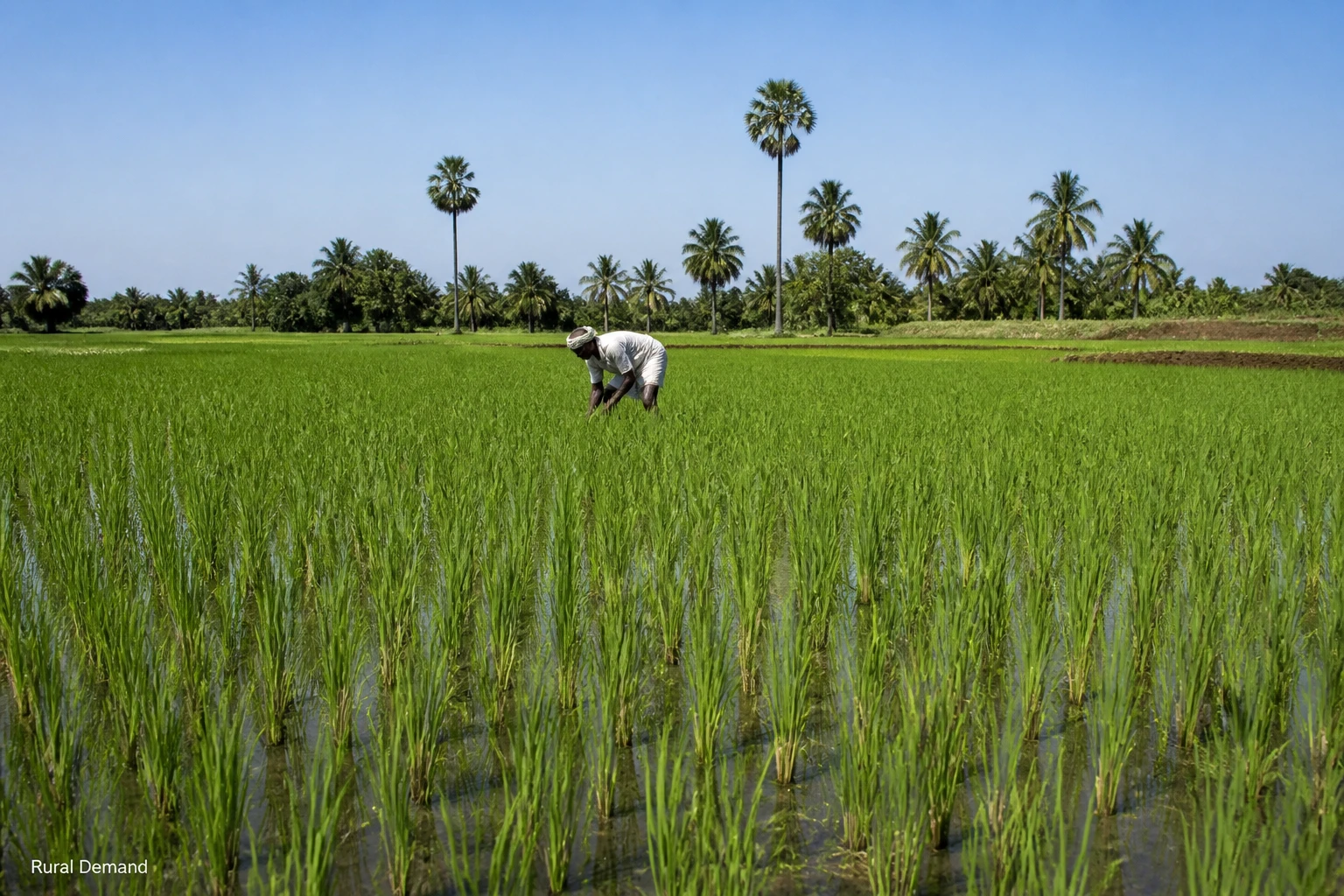
 Prabowo’s MBG Drive Signals a New Rural Demand Engine in Indonesia · Photo by Vladimir Srajber on Pexels
Indonesia has spent years trying to convert its demographic size into durable productivity gains. MBG sits directly inside that project. By positioning the programme as an investment in children’s health, learning outcomes and future labour quality, the administration is signalling that this is not a temporary welfare outlay, but a structural intervention in the country’s growth model.
That matters for investors because the policy direction is now more explicit. The government is not simply promising support; it is defining MBG as part of a wider attempt to strengthen the productive base of rural Indonesia. In practical terms, that means demand is likely to be redirected towards local producers rather than imported inputs where possible, especially in categories that can be sourced regionally.
“a huge investment in human capital”
That phrase is doing more work than it may appear to at first glance. It places education, nutrition and rural demand in the same strategic basket. For investors, that suggests the administration sees consumption not just as consumption, but as a transmission mechanism for productivity and social stability.
The policy logic is straightforward:
- Better nutrition can improve school attendance and learning outcomes.
- Regular procurement can create stable off-take for local farmers and food processors.
- Village-level participation can distribute spending more widely than urban-led consumption schemes.
- A large, recurring procurement programme can encourage investment in logistics and quality control.
The investment case is therefore less about one programme announcement and more about the operating system behind it. Any programme of this scale creates winners and bottlenecks. The winners are likely to be suppliers that can meet standards reliably; the bottlenecks will be the weak links in transportation, food safety, procurement and local coordination.
For a country as geographically fragmented as Indonesia, implementation quality will matter more than political rhetoric. A centralised idea can be powerful, but the economics will only work if villages can actually supply food consistently and cheaply without sacrificing quality.
How The Money May Flow
If MBG is rolled out effectively, the immediate economic effect should be seen in the domestic food economy rather than in headline GDP alone. That includes cash flow to local producers, steady demand for transport operators, and incremental capital expenditure on storage, handling and kitchen infrastructure.
The relevance for investors is that this is the kind of programme that can create a long tail of small but persistent demand. It does not need to produce a single spectacular quarter to matter. It matters if it generates repeat purchases, new procurement systems and more formal economic relationships in villages that previously traded in a more fragmented, informal way.
A useful way to think about the opportunity is to separate the programme into its economic layers:
| Layer | Likely economic effect | Investor relevance | |---|---|---| | Food sourcing | Higher demand for local agricultural and fisheries output | Beneficial for producers with scale and logistics access | | Distribution | More routes, more cold chain usage, more delivery coordination | Positive for logistics and transport operators | | Preparation | Investment in kitchens, equipment and staffing | Supports services and infrastructure suppliers | | Compliance | Greater need for testing, traceability and procurement control | Favourable for quality-control and systems providers | | Rural income | More predictable off-take and local spending | Supports village-level purchasing power |
This is where the policy begins to intersect with investment themes that are already familiar in Southeast Asia: supply chain formalisation, agribusiness modernisation and last-mile infrastructure. The question is not whether these sectors matter. The question is whether MBG can convert them into a repeatable, scalable procurement platform.
That distinction is important because many government programmes create one-off bursts of activity but fail to build durable commercial habits. MBG will be judged by whether it can do the opposite: creating routines, standards and local supplier relationships that persist even as political cycles move on.
For foreign investors, there is an additional nuance. Indonesia’s macro story often attracts attention for its consumer market and commodity exposure, but programmes like MBG reveal another layer: state-supported domestic demand creation. That can be appealing when global trade conditions are uncertain, because it anchors activity in local spending rather than export dependence.
The broader investment implications can be summarised as follows:
- Positive for rural suppliers with the capacity to meet volume and quality requirements.
- Positive for logistics if repeated delivery networks become embedded.
- Neutral to positive for listed consumer and food-related names if the programme helps stabilise demand.
- Potentially negative for inefficient intermediaries if procurement becomes more formal and transparent.
- Mixed for fiscal watchers if costs rise faster than delivery performance.
The programme also has a political economy dimension. Policies framed around children, nutrition and villages tend to have broad public appeal, but they also raise expectations. Once households see the state as a dependable buyer and provider, execution standards become politically sensitive. Any gap between promise and delivery can quickly turn into a credibility issue.
For that reason, investors should watch not just the rollout headline but the administrative plumbing: procurement rules, supplier accreditation, payment speed and local accountability. These are the factors that decide whether MBG becomes a growth catalyst or a costly subsidy with limited economic spillover.
Regional Signals And Investor Read-Through
Indonesia’s MBG push is also worth reading in a wider regional context. Across emerging markets, governments are increasingly trying to link social policy to productive capacity, particularly where demographics are favourable but incomes remain uneven. MBG fits that template. It is a demand-side intervention designed to generate supply-side benefits.
For investors with exposure to Indonesia or the wider ASEAN region, the key takeaway is that policy support is increasingly moving towards the real economy rather than financial engineering. That can improve visibility for sectors that sit close to households and local production networks.
The most relevant signals to watch over the coming weeks are:
- Whether procurement favours local sourcing over centralised imports.
- Whether implementation is concentrated in pilot regions or broadened quickly.
- Whether the programme develops stable contracts that justify private-sector investment.
- Whether village economies begin to see a measurable rise in formal transactions.
- Whether food inflation is contained as procurement scales.
The last point is especially important. A programme that boosts demand but also pushes up food prices too quickly could create political and macroeconomic friction. If MBG is to succeed as an investment in human capital, it must also remain affordable and operationally efficient.
That balance is what gives the story its market relevance. A well-run MBG programme could support domestic producers, deepen supply chains and improve productivity. A poorly run one could add cost without creating enough economic depth. In other words, the same policy can be either a growth platform or a budget burden, depending on execution.
This is why investors should not treat MBG as a narrowly domestic welfare story. It is better understood as a state-led attempt to rewire the relationship between public spending and private-sector opportunity. If that works, the effects could extend well beyond schools and kitchens into the wider architecture of Indonesia’s rural economy.
For Lombok watchers, the indirect relevance is clear. When Indonesian policy supports village incomes, local consumption and agrifood distribution, it strengthens the same bottom-up demand logic that has helped other regional markets benefit from the Bali-overflow thesis, rising tourism-linked spending and the search for productive real assets. Lombok’s longer-term story still depends on infrastructure, household income and dependable logistics, but broad-based rural policy can help improve the backdrop.
That is not a direct property trade signal, but it is a reminder that policy which reaches villages can shape capital flows far beyond Jakarta. In markets like Indonesia, the real edge often lies in understanding where public spending becomes private opportunity.
What This Means for Investors
The near-term implication is that MBG should be monitored as a policy with both social and commercial dimensions. If the programme is scaled with rigorous procurement and local sourcing, it could strengthen Indonesia’s rural demand base and create a more investable food and logistics ecosystem.
For investors, the most practical stance is selective optimism. The opportunity is real, but so is implementation risk. The programme could support companies and operators that are embedded in food supply, delivery, storage and quality assurance. It could also expose weaker operators that depend on opaque procurement or inconsistent execution.
In portfolio terms, MBG reinforces three broader themes:
- Domestic-demand policies can be powerful in large emerging markets when they are tied to repeat procurement.
- Infrastructure is not only roads and ports; it is also the systems that move food safely and efficiently.
- Social policy can become economic policy when it creates predictable demand for local producers.
The market should therefore watch for second-order effects rather than a one-day headline reaction. If the programme deepens rural purchasing power and formalises local supply chains, the benefits may show up first in microeconomic indicators before they appear in national aggregates.
That is the real investor story here. MBG may begin as a nutrition programme, but if the administration executes it well, it could end up being one of Indonesia’s more consequential demand engines for villages, producers and the companies that connect them.
Stay informed, subscribe to the free Lombok Briefing for market intelligence like this, published twice a month.
What is Indonesia's MBG programme and why does it matter for investors?
MBG is Indonesia's Free Nutritious Meal programme, described by President Prabowo Subianto as a huge investment in human capital that supports village economies. Its investment significance lies in the supply chain it creates: farms, fisheries, logistics, packaging, kitchens, cold storage and distribution. The government frames it as a structural intervention in the country's growth model, not a temporary welfare outlay.
Which sectors benefit most from Indonesia's Free Nutritious Meal supply chain?
The programme creates economic activity across five layers. Rural suppliers with scale and reliable logistics access stand to gain most from higher agricultural demand. Distribution and cold chain operators benefit from more routes and delivery coordination. Compliance and quality-control providers gain as procurement standards tighten. The article notes the programme is positive for logistics if repeated delivery networks become embedded.
How does the MBG programme fit into the broader investment case for Indonesia?
Indonesia's macro story typically attracts foreign investors through its consumer market and commodity exposure. MBG adds a third layer: state-supported domestic demand creation anchored in local spending rather than export dependence. That makes it relevant when global trade conditions are uncertain. The programme also advances supply chain formalisation, agribusiness modernisation and last-mile infrastructure, themes already familiar to investors across Southeast Asia.

The Lombok Buyer's Field Guide
Legal structures ranked by risk, the honest ROI math line by line, all six zones ranked, and the 24-point due-diligence checklist. The whole book, free in your inbox.
See what's inside