Prabowo Mandates Sports Overhaul: What National Ambition Signals for Indonesia
President Prabowo Subianto orders a nationwide sports facility overhaul, linking athletic excellence to national stature and international economic prestige.
Indonesia's top leadership has reframed athletic achievement not merely as recreational pride, but as an essential pillar of national stature and long-term statecraft. Following landmark performances at continental competitions, President Prabowo Subianto ordered an institutional overhaul of grassroots athletic development and educational sports facilities, signalling an ambitious push to elevate Southeast Asia's largest nation on the global stage.
Speaking at the Merdeka Palace in Jakarta, President Prabowo addressed returning medalists from the 2026 Aichi-Nagoya Asian Games and the 5th Asian Para Games. The address went well beyond ceremonial congratulations, outlining a state directive that bridges youth development, regional infrastructure, and Indonesia's broader international prestige.
A Mandate for National Stature and Global Recognition
Addressing athletes, sports officials, and cabinet members, President Prabowo underlined that sporting prowess directly mirrors national vitality. The President framed the pursuit of international athletic excellence as a matter of national honor, explicitly stating that a strong nation reflects the underlying strength and spirit of its populace.
During the ceremony, the President celebrated the contingent's record at the recent competitions. Indonesian athletes secured 39 medals at the Asian Games, comprising 5 gold, 11 silver, and 23 bronze medals. At the Asian Para Games, the national contingent collected 73 medals, taking 15 gold, 21 silver, and 37 bronze medals. Both delegations surpassed their official government targets.
Yet, while acknowledging these podium finishes, the President warned sports administrators against institutional complacency. Highlighting that Indonesia stands as the fourth most populous nation in the world, he stressed that current podium tallies must represent a starting baseline rather than a ceiling. The administration reiterated that government bonuses awarded to athletes represent genuine state recognition rather than transactional prizes, reflecting a broader policy commitment to rewarding excellence.
Modernising Grassroots Facilities Across Every Regency
To translate this presidential vision into sustained achievement, President Prabowo instructed Youth and Sports Minister Erick Thohir to construct an institutional training pipeline beginning at the primary school level. Rather than relying on sporadic talent discovery, the executive order mandates structured infrastructure upgrades across all administrative tiers.
Under this policy blueprint, two structural interventions will reshape regional facilities:
- Flagship Regional Schools: Every regency across Indonesia is directed to establish a dedicated flagship educational institution equipped to nurture athletic talent.
- Sub-District Facility Upgrades: Educational institutions at the sub-district tier will receive targeted facility modernisations to ensure adequate athletic training infrastructure at the community level.
This decentralised approach aims to eliminate regional disparities in training resources. By upgrading basic facilities at the sub-district level and creating premier regency academies, the state intends to build an integrated athletic pathway that feeds provincial and national teams systematically.
The Intersection of Sports and the Tourism Economy
For international observers and regional analysts, Indonesia's focus on athletic achievement and venue infrastructure aligns with a broader national economic strategy. Sports, major events, and specialised regional infrastructure have increasingly served as catalytic drivers for regional development, connectivity, and inbound global travel.
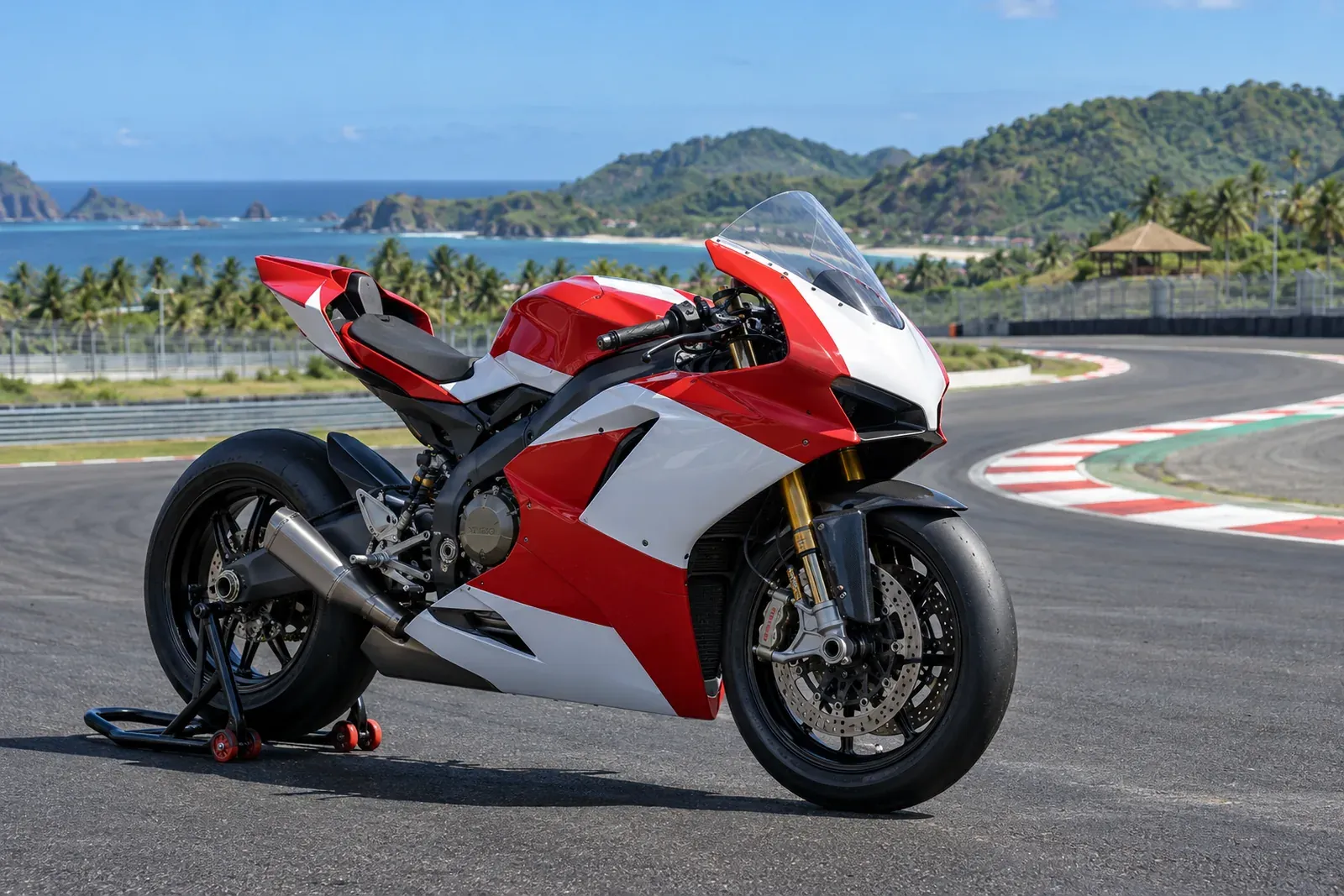
This convergence is already evident across high-profile regional projects in the archipelago. In West Nusa Tenggara, the development of the Mandalika Special Economic Zone and its international circuit has placed South Lombok on the global sports calendar. The recurring presence of high-profile international events, most notably the MotoGP round, has transformed South Lombok from a quiet coastal perimeter into an internationally recognised sports and leisure destination.
Foreign visitor trends in South Lombok illustrate this dynamic clearly, with foreign arrivals showing growth of +40-50% YoY, propelled by wider tourism recovery and the sustained MotoGP effect.
The state's deliberate institutional investment in sports excellence reinforces this trajectory. As regional centres gain modernised facilities and host more domestic and international competitions, the surrounding commercial ecosystems, hospitality assets, and transit links benefit from sustained public attention and capital allocation.
What this means for investors
For cross-border investors assessing Indonesia, presidential directives targeting national prestige and infrastructure provide critical signals regarding state priorities and regional execution:
- Policy Continuity and Regional Allocation: The explicit directive to upgrade facilities across all regencies indicates that central budget allocations will continue to support regional development rather than remaining concentrated solely in Jakarta. Infrastructure spending at the municipal and sub-district level directly enhances local land values and logistics networks.
- Expansion of Event-Driven Tourism: The national focus on sports excellence complements Indonesia's ongoing promotion of sports tourism. Venues capable of hosting competitive events stimulate demand for high-grade accommodation, dining, and recreational infrastructure, broadening the catchment area for regional hospitality investments.
- Sustained Inbound Momentum: With foreign arrivals expanding at +40-50% YoY in key tourism belts such as South Lombok, government backing for national prestige and high-profile sporting events creates durable tailwinds for premium commercial and residential leisure assets.
- Institutional Professionalism: The transition from ad-hoc sports management to structured, long-term talent pipelines under ministry oversight reflects a wider administrative emphasis on governance, accountability, and measurable performance standards across state-directed initiatives.
As the Indonesian government deploys capital into grassroots sports facilities and targets higher international rankings, the broader economic benefits will ripple through regional infrastructure, youth employment, and global destination branding.
Stay informed: subscribe to our free Lombok Briefing, published twice a month (the 1st and 15th), for analysis like this.
What did President Prabowo direct regarding sports infrastructure?
President Prabowo instructed the Ministry of Youth and Sports to build a nationwide training pipeline starting in elementary schools, requiring every regency to establish a flagship sports school and upgrading sub-district educational facilities.
How does national sports development affect Indonesia's tourism economy?
Sports infrastructure and major events attract international visitation and state capital. In destinations like South Lombok, the MotoGP effect and broader tourism recovery have supported foreign arrival growth of +40-50% YoY.
What were Indonesia's medal results at the 2026 Asian Games competitions?
Indonesia won 39 medals at the 2026 Aichi-Nagoya Asian Games (5 gold, 11 silver, 23 bronze) and 73 medals at the Asian Para Games (15 gold, 21 silver, 37 bronze), surpassing government targets.

The Lombok Buyer's Field Guide
Legal structures ranked by risk, the honest ROI math line by line, all six zones ranked, and the 24-point due-diligence checklist. The whole book, free in your inbox.
See what's inside