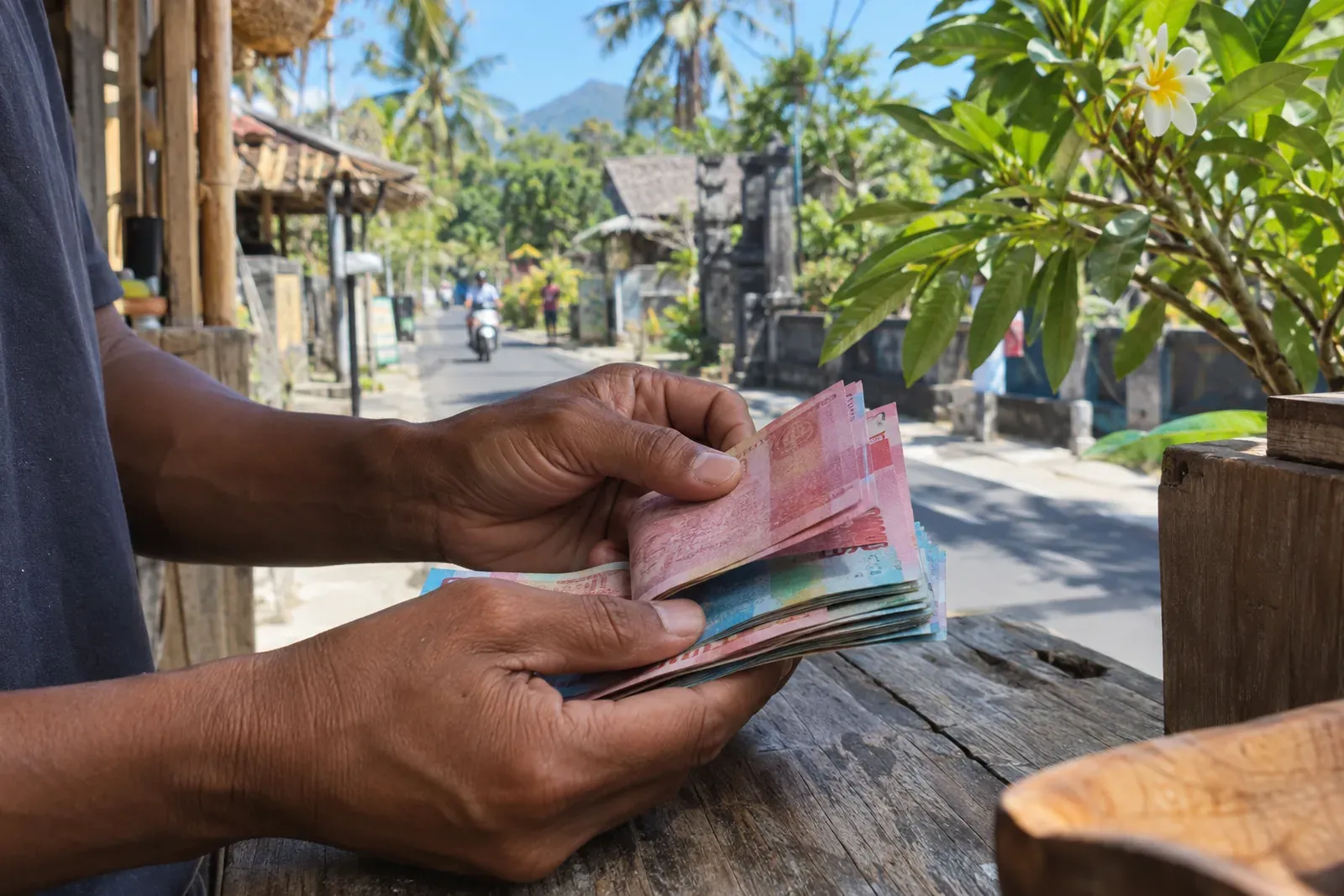
Prabowo Signals Wave of Large-Scale Investment as Indonesia Cites Half-Year Data
President Prabowo says large-scale investment is due in coming weeks, citing first-half realisation of Rp1,010.6 trillion. Here is what the data shows, and what it leaves out.
Indonesia expects a wave of large-scale investment in the coming weeks, according to President Prabowo Subianto. The claim rests on first-half realisation data that the government says already covers nearly half of this year's target.
What the president said
Speaking on the "President Prabowo Answers" programme, released by the Government Communications Agency on Wednesday and reported by ANTARA, Prabowo argued that Indonesia is drawing capital despite global economic uncertainty. He described the inflows as private-sector activity entering the country amid global volatility, rather than the product of a government programme.
In his account, investors are attracted by Indonesia's strong economic fundamentals and relatively stable macroeconomic conditions. He said the government intends to use those fundamentals to maintain growth momentum and attract further investment. These are the president's own characterisations, and they should be read as a first-party case for the country, not as an independent assessment.
The numbers behind the claim
The headline figures come from the Investment Ministry and the Investment Coordinating Board (BKPM), as cited in the official remarks.
Rp1,010.6 trillion (about US$57.2 billion) of investment was realised in the first half of 2026, equal to 49.5 percent of the full-year target of Rp2,041.3 trillion.
For context, the reported comparisons are:
- First half of 2026: Rp1,010.6 trillion, about US$57.2 billion, generating 1.45 million jobs.
- Full-year 2026 target: Rp2,041.3 trillion, of which 49.5 percent has been met.
- Full-year 2025: Rp1,931.2 trillion, about US$109.2 billion, generating more than 2.7 million jobs.
Two observations follow from the arithmetic. First, the 2026 target of Rp2,041.3 trillion sits above the 2025 outturn of Rp1,931.2 trillion, so the government has set itself a higher bar than last year's result. Second, with just under half of the target met at the midpoint of the year, the government's framing of "nearly half" is accurate on the numbers supplied.
What the reported figures do not include is any split by sector, region or investor origin. The source gives no breakdown of where the capital went, and it does not say which projects make up the wave Prabowo expects.
The stability argument
Prabowo pointed to three indicators to support his view of a steady macroeconomic backdrop: low inflation, a relatively low debt ratio, and a fiscal deficit below the government's three percent threshold. He put inflation at 2.92 percent, citing it as evidence of relative stability.
He also looked further ahead. The president cited a Goldman Sachs projection that Indonesia could rank among the world's largest economies by 2050, and said global analysts expect the country to place fourth, fifth or sixth, without specifying a single projection. That is a range of outcomes rather than a forecast, and it is attributed to the president's summary of third-party views, not to a figure we have independently verified.
The government has separately said that investment remains a key driver of economic growth, industrial development and job creation amid continued global uncertainty.
What is not yet known
The most important word in the president's remarks is "coming". The source gives no dates, no project names and no amounts for the anticipated wave. Until announcements are made and capital is actually realised, the expectation remains a statement of intent.
Investors should also keep the distinction between national and local evidence in view. The figures above describe Indonesia as a whole. Nothing in the reported remarks refers to Lombok, to tourism, or to property.
What this means for investors
A strong national investment headline is context, not a deal thesis. For anyone considering South Lombok, a few disciplines still apply.
- Keep the evidence local. Lombok's own case rests on separate indicators: foreign arrivals are trending up 40-50% year on year, helped by tourism recovery and the MotoGP effect, and the "Bali-overflow" thesis holds that rising prices and congestion in Bali push demand towards cheaper, earlier-cycle Lombok. National investment data does not prove either point.
- Do not extrapolate to returns. Honest net rental yields in South Lombok are 7-12% after management fees and realistic occupancy, with top-performing assets reaching around 15% net. Developer-quoted gross yields of 12-22% exclude those costs. A healthy national macro picture does not move those ranges.
- The legal position is unchanged. Foreigners cannot hold freehold (Hak Milik) in Indonesia. The available routes are leasehold (Hak Sewa), Hak Pakai for those with residency, or a PT PMA company holding HGB. Nominee structures are illegal and void in court.
- Verify before you commit. Independent due diligence on certificates, ownership history, zoning and encumbrances matters more, not less, when sentiment is buoyant. TerraNusa Advisory is an independent licensed-notary and legal desk that supports foreign buyers through that chain.
The practical reading is straightforward. If the wave Prabowo describes materialises, it will show up in announced projects and realised figures that can be checked. Until then, the sensible course is to watch the second-half data and let it, not the rhetoric, inform your view of the market.
Stay informed: subscribe to our free Lombok Briefing, published twice a month (the 1st and 15th), for analysis like this.
How much investment has Indonesia realised in 2026 so far?
According to figures cited by President Prabowo from BKPM data, first-half 2026 investment realisation reached Rp1,010.6 trillion, about US$57.2 billion. That equals 49.5 percent of the full-year target of Rp2,041.3 trillion, and it generated 1.45 million jobs.
Does this national investment data say anything about Lombok property?
No. The reported figures are national and carry no regional or sector breakdown. Lombok villa investors should rely on local evidence, such as honest net rental yields of 7-12% after fees and realistic occupancy, and on the legal structures actually available to foreign buyers.
What economic indicators did Prabowo cite to support his outlook?
He cited inflation of 2.92 percent, a relatively low debt ratio and a fiscal deficit below the government's three percent threshold, presenting them as evidence of relatively stable macroeconomic conditions. These are the president's characterisations, as reported by ANTARA.

The Lombok Buyer's Field Guide
Legal structures ranked by risk, the honest ROI math line by line, all six zones ranked, and the 24-point due-diligence checklist. The whole book, free in your inbox.
See what's inside