Prabowo Presses IUPK Holders on Downstreaming Compliance
Indonesia’s President has urged IUPK holders to comply with downstreaming policy. For Lombok investors, the signal is regulatory rather than local.
Quick answer: President Prabowo Subianto has urged companies holding special mining permits, known as IUPK, to comply with Indonesia’s downstreaming policy. For Lombok investors, this is not a local property announcement, but a timely reminder that national policy direction and regulatory compliance can shape the wider investment climate.
Daily Dispatch
Antara Business reports that President Prabowo Subianto has pressed companies holding IUPK permits to adhere to Indonesia’s downstreaming policy. The immediate message is directed at permit holders, yet its relevance travels beyond mining: investors assessing Indonesia must continually distinguish between a broad policy signal and a transaction-specific investment case.
The Context
The reported intervention is concise but consequential. A president urging compliance places the emphasis not on a new statistic, a new project or a new local incentive, but on the execution of an existing policy direction. That distinction matters. In emerging markets, investors often concentrate on headline opportunities while underweighting the practical importance of permissions, documentation, counterparties and regulatory alignment.
The source identifies the companies in focus as holders of special mining permits, or IUPK. It does not identify particular companies, commodities, projects, locations, deadlines or enforcement measures. Those absences should frame any investor reading. It would be premature to infer a specific commercial outcome from the report alone.
The live signal is clear: Indonesia’s leadership is publicly emphasising compliance with downstreaming policy among IUPK holders.
For investors outside mining, the significance is principally one of policy posture. A public statement of this kind can sharpen attention on how businesses interpret their obligations and how carefully investors test a project’s approvals and contractual foundations. It is not, by itself, evidence that a particular asset, region or sector will gain or lose value.
That restraint is especially useful for international capital. European, Australian and American investors commonly encounter Indonesia through a mixture of tourism, real estate, operating businesses and resource-linked macro narratives. These are connected by the national setting, but they are not interchangeable. A mining-policy report should not be converted into an unsupported conclusion about South Lombok villa demand, local land prices or tourism activity.
What the Report Says, and What It Does Not
Antara Business’s report is specific on one central point: President Prabowo urged IUPK holders to comply with downstreaming policy. That makes compliance the relevant lens for this dispatch.
The report does not establish the following:
- which permit holders may be affected;
- whether any individual company has failed to comply;
- whether any licence, project or investment decision has changed;
- whether there will be an immediate effect on a particular Indonesian region;
- whether the statement alters the outlook for Lombok property or tourism.
This is not pedantry. It is disciplined investment reading. Breaking news frequently delivers a signal before it supplies a complete operating picture. The first task is to preserve the signal accurately; the second is to wait for facts that demonstrate how, where and when it may matter.
For a prospective investor, the useful question is therefore not, “What return does this headline create?” It is, “Which exposure, if any, is directly connected to the policy, permit type and companies mentioned?” If there is no direct connection, the headline belongs in the background assessment of Indonesia rather than in an underwriting model.
The same principle applies to communications from developers, agents and operators. A national policy story can be relevant context, but it should never substitute for asset-level evidence. A real estate investment still depends on the rights being acquired, the contract, the build or operational plan, the management arrangement and the legal path available to the buyer.
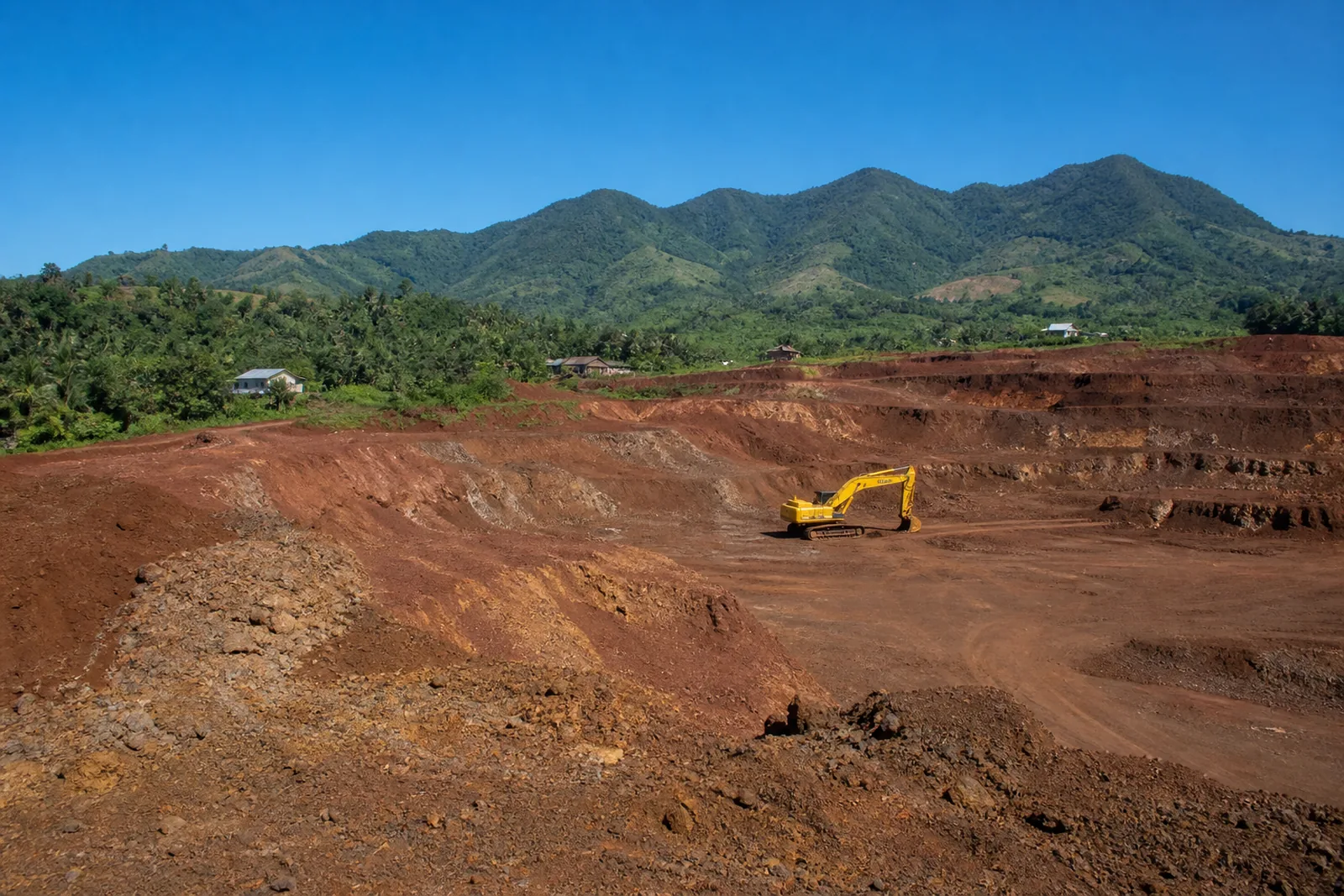
 Prabowo Presses IUPK Holders on Downstreaming Compliance · Illustration: HubLombok (AI-generated)
Why Compliance Is an Investor Issue
Compliance is often discussed as a legal or administrative matter. For investors, it is also a question of visibility. The more clearly a business’s permits, obligations and ownership arrangements can be understood, the easier it is to separate durable value from a persuasive narrative.
In the present report, the focus is IUPK holders and downstreaming policy. Investors considering other Indonesian sectors should avoid pretending that the same framework automatically applies to them. Yet the broader habit is transferable: identify the governing rules, establish whether they apply to the asset in question, and obtain independent advice before relying on a seller’s interpretation.
For foreign buyers of Indonesian real estate, that discipline has a direct legal expression. Foreigners cannot hold freehold, known as Hak Milik or SHM; it is reserved for citizens. Available routes include leasehold, Hak Pakai for eligible residents, and a foreign-owned PT PMA holding Hak Guna Bangunan, or HGB. The appropriate structure depends on the buyer and the transaction, and it should be assessed before capital is committed.
Nominee arrangements, in which an Indonesian holds freehold on a foreigner’s behalf, are illegal and void in court. That is why policy headlines should reinforce caution rather than encourage sweeping conclusions. A favourable national narrative does not cure a weak legal structure, incomplete due diligence or a poorly documented title transfer.
A disciplined buyer should insist on clarity around the following:
- the legal right being bought or leased;
- certificate and ownership history;
- zoning and any encumbrances;
- the correct deed and land-office process;
- taxes and transaction costs applicable to the structure.
Deeds are executed by a licensed PPAT notary; the deed of sale is known as an AJB, and the land agency is BPN. TerraNusa Advisory, HubLombok’s independent licensed-notary and legal advisory partner, supports foreign buyers across due diligence, PT PMA setup, relevant tax work, deeds and title transfer. Its role is advisory rather than promotional: independent verification is most valuable before a buyer becomes contractually committed.
What This Means for Investors
The prudent read-through is measured. The report reinforces that Indonesia’s policy environment deserves close attention, particularly for businesses holding the permits identified by Antara Business. It does not supply a reason to revise a Lombok investment thesis on its own.
For investors already exposed to mining or considering a business linked directly to IUPK permits, the immediate priority is to establish whether the specific company, permit and activity are within scope. That work requires company-level and legal evidence, not inference from a headline.
For investors considering Lombok real estate, the appropriate response is different. Keep the report in the country-risk file, but continue underwriting the asset on its own merits. Verify the foreign-ownership route, title position, zoning, contractual terms and management assumptions. Treat claimed returns as claims until the relevant costs, occupancy assumptions and operator responsibilities are made clear.
Indonesia can reward close local work, but it does not reward category errors. Mining policy, tourism demand and a villa purchase may share a national backdrop while demanding different evidence. The most useful outcome from today’s dispatch is not urgency for its own sake. It is a renewed preference for traceable facts, careful structures and decisions that can withstand a change in headlines.
The Antara Business report is therefore best read as a live policy signal: President Prabowo is urging IUPK holders to comply with downstreaming policy. Investors should watch for further verified detail, while resisting the temptation to assign local property or portfolio effects that the available report does not establish.
Stay informed, subscribe to the free Lombok Briefing for market intelligence like this, published twice a month.
What did President Prabowo urge IUPK holders to do?
Antara Business reports that President Prabowo Subianto urged companies holding special mining permits, known as IUPK, to comply with Indonesia’s downstreaming policy. The supplied report does not identify individual companies, commodities, projects, deadlines or specific enforcement measures.
Does this report change the outlook for Lombok property?
No direct Lombok property impact is established by the supplied report. The statement concerns IUPK holders and downstreaming policy, so Lombok buyers should treat it as national policy context while continuing to assess title, zoning, legal structure and transaction terms asset by asset.
What should foreign investors check before buying Indonesian property?
Foreign investors should verify the legal route, certificate and ownership history, zoning, encumbrances, deed process and applicable taxes. Foreigners cannot hold freehold Hak Milik or SHM; leasehold, eligible Hak Pakai and a PT PMA holding HGB are available routes.

The Lombok Buyer's Field Guide
Legal structures ranked by risk, the honest ROI math line by line, all six zones ranked, and the 24-point due-diligence checklist. The whole book, free in your inbox.
See what's inside