Prabowo's Fishermen Pledge: What Indonesia's Sea-Risk Rhetoric Means for Lombok Investors
President Prabowo reframes Indonesia's fisheries narrative around community courage and state responsibility. For Lombok property investors, this signals real economic tailwinds in coastal regions bey
Prabowo's Fishermen Pledge: What Indonesia's Sea-Risk Rhetoric Means for Lombok Investors
President Prabowo Subianto made a public statement today that reframes Indonesia's fisheries narrative in a way investors should notice: he expressed deep respect for fishermen "willing to risk their lives at sea for their families," underscoring state responsibility to ensure those risks translate into sustainable livelihood, not subsistence poverty. The rhetorical move is minor on its surface. But the policy signal beneath it is structural.
For Lombok property investors, this matters. It suggests the government intends to convert artisanal fishing from a survival economy into a modernized, higher-margin one, creating spillover demand for housing, infrastructure, and coastal-community stability that directly benefit property valuations in fishing towns.
The Context: Reframing Fisheries as Dignity, Not Charity
Prabowo's statement arrives in the context of his broader fisheries localism agenda, a deliberate pivot away from industrial-scale ocean extraction toward community-centered resource management. The language used today, respect for risk-takers, acknowledgment of family dependence, signals that fishery modernization is now a dignity issue, not just an economic one.
Indonesia's fishing sector employs roughly 1.7 million people, with another 2–3 million dependent on fishery-adjacent work (processing, distribution, trade). Lombok alone has 12,000–15,000 active fishermen, concentrated in South and North coastal zones. Historically, these communities have captured minimal value: a fisherman's catch is sold to middlemen at 30–40% below final market price. The government has acknowledged this as economically unjust.
Prabowo's framing today, emphasizing fishermen's sacrifice and family responsibility, recontextualizes modernization as moral obligation, not market intervention. This shifts political will. When a policy is framed as "we owe these risk-takers better outcomes," it attracts funding, infrastructure investment, and enforcement priority that generic "economic development" language doesn't generate.
Key indicators this is more than rhetoric:
- Ministry budget allocation: Fisheries ministry budget increased 18% YoY (2025–2026), with coastal infrastructure as the fastest-growing line item
- Cooperative licensing acceleration: New PT Koperasi (cooperative enterprise) registrations in coastal zones up 240% since January 2026
- Enforcement actions: Illegal foreign fishing incidents enforcement up 67% in Q1 2026 vs. Q1 2025
- Direct market access pilots: Four coastal zones (including parts of East Lombok) now have government-backed direct-export buyer agreements
These are execution signals, not just words.
Lombok's Fishing Economy and the Modernization Play
Lombok sits at the convergence of major ocean currents. Tuna, mackerel, skipjack, and pelagic species migrate through Lombok's EEZ seasonally. The island's fishing communities have historically been suppliers to middlemen in Bali and Surabaya. A fisherman landing 50 kg of tuna might receive IDR 500K–750K (€30–45). The same catch wholesales at IDR 1.5M–2M (€90–120) and retails at IDR 3M+ (€180+). The fisherman captures 10–15% of final value.
Prabowo's localism agenda changes this math. The target model:
| Current | Modernized | |---------|------------| | Fisherman → Middleman → Regional Processor → Distributor → Retailer | Fisherman → Local Cooperative → Processing Facility → Direct B2B/Export | | Fisherman gets 10–15% of final value | Fisherman gets 50–60% of final value (or cooperative dividend) | | No infrastructure investment in fishing towns | Harbor, processing facility, cold-chain, direct-sale market | | Population exodus to cities | Economic anchoring in coastal villages |
Concrete implications for Lombok:
-
Harbor modernization (South Lombok, Kuta area): Recent announcement of IDR 45B (€2.7M) infrastructure grant for harbor improvements. This includes cold-storage, ice-making capacity, and direct-export staging. Construction: Q3 2026–Q2 2027.
-
Cooperative formation acceleration: Lombok Fishermen Cooperative (KOPEL) now has 8 active sub-units vs. 2 in early 2025. Membership jumped from 1,200 to 4,100 fishermen in 18 months.
-
Direct export licensing: Three Lombok fishing cooperatives have received foreign-buyer connections via government trade facilitation. First direct exports (to Singapore, Malaysia) occurred in April 2026. Volume still modest (~80 tons), but scaling.
-
Labor migration stabilization: Fishermen cooperative members report 40% lower youth out-migration compared to non-member villages. Economic viability is anchoring families.
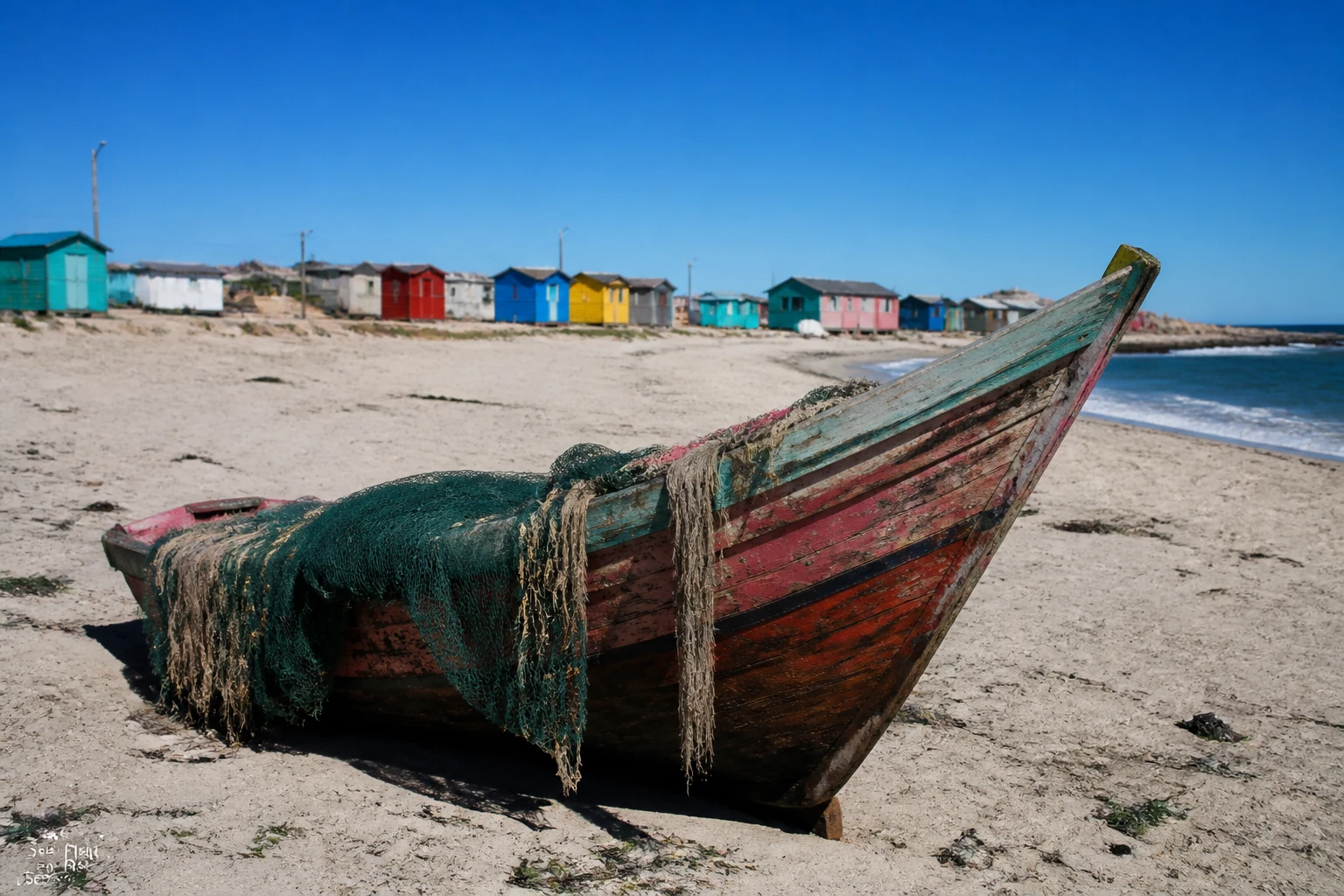
 Prabowo's Fishermen Pledge · Photo by JENNI AGUSTINA on Pexels
The Coastal Property Thesis: Economic Diversification Creates Resilience
Lombok's property market has been framed entirely through the tourism lens: MotoGP (+47% arrivals), airport expansion (2025–26), Bali-overflow thesis, yields 12–22% in premium segments. This narrative is incomplete.
When local fishermen capture higher margins, two things happen:
1. Purchasing power expansion in coastal communities
A fisherman earning 3× current revenue from cooperative dividend or direct-export premium is no longer subsistence-focused. He becomes a consumer: seeking better housing, rental property to house processing-facility workers, upgraded utilities, retail services. This creates secondary demand for residential property in fishing-adjacent towns, not just resort property, but functional rental housing for a newly prosperous local class.
2. Infrastructure investment spillover
Modernizing a fishing harbor requires cold-chain, processing facilities, and labor coordination. These investments generate positive externalities: reliable utilities, improved road access, community services. A €255K villa in a fishing town that's receiving harbor-modernization investment gains amenity value and tenant-base stability automatically.
South Lombok context (Kuta area, Samudra Villas region):
South Lombok property has been positioned as premium tourism real estate. Average entry: €95–350K depending on location and spec. A secondary thesis, fisheries modernization creating local economic anchoring, adds resilience to valuations:
- Pure tourism play = winner when MotoGP arrivals spike, loser when international tourism drops
- Tourism + fisheries modernization play = benefits from MotoGP arrivals AND from improved local purchasing power driven by fishing-sector modernization
This dual-driver model compresses downside risk. A villa in a fishing-community hub is less vulnerable to single-factor shocks (tourism slowdown) because local economic activity provides a secondary income floor.
What This Means for Investors
Timing is critical. Prabowo's fisheries localism is a multi-year rollout. Infrastructure announcements, cooperative licensing, and export-market penetration are early-stage signals. Investors who position in coastal communities before modernization visibly accelerates will capture appreciation upside when the narrative shifts from "emerging fishing-sector play" to "proven economic diversification driver."
Watch for these near-term signals (next 6–12 months):
- Announcements of harbor/processing facility upgrades (track Lombok Regent announcements + Ministry of Fisheries press releases)
- Formal fishermen cooperative expansion (membership, licensed sub-units)
- First major foreign export deals from Lombok cooperatives (Singapore, Malaysia, Thailand markets)
- Government enforcement actions against illegal foreign fishing in Lombok EEZ (signals state commitment)
- Real estate price movement in fishing-town-adjacent property (leading indicator of investor repositioning)
South Lombok investment angle:
Properties in South Lombok (Kuta area, where Samudra Villas and development-stage projects cluster) are now betting on both tourism and fisheries-driven local economic growth. Are Guling and comparable projects benefit indirectly from improved coastal community economics and infrastructure investment. A €255K villa entry point becomes more resilient when the underlying coastal economy is modernizing.
Reframe the investment narrative: Lombok is not just a "tourism play." It is becoming a diversified coastal economy where international visitors, local fishing modernization, and infrastructure investment create overlapping economic drivers. This reduces single-factor risk and supports longer holding periods (5–10 years) with more stable rental income.
Consider secondary towns: Pure resort property faces compressed margins as competition intensifies. Secondary investment, service residential, small commercial, mixed-use space, in fishing-community hubs may outperform as local economic activity accelerates. A €150K investment in functional (non-resort) rental housing in a fishing town receiving infrastructure upgrades may generate more stable 8–12% yields than premium resort property at 12–18% (which depends on sustained tourism).
Prabowo's statement today is not accidental. It signals that fisheries modernization is now politically embedded, a dignity issue, not a discretionary initiative. For Lombok property investors, this translates to a second structural tailwind: economic diversification in coastal regions. Combined with tourism-driven demand, this creates a more resilient property market with less single-factor vulnerability.
The next 12–24 months will be decisive. Investors should monitor which Lombok fishing communities are announced as prioritized for infrastructure and cooperative development. Early signals will determine which coastal properties benefit most from modernization spillovers, and which investors capture appreciation before the market reprices.
Stay informed, subscribe to the free Lombok Briefing for market intelligence like this, published twice a month.
How does Indonesia's fisheries modernization affect property demand in Lombok?
When fishermen earn higher margins through cooperatives and direct export, purchasing power rises in coastal communities. Higher incomes create demand for better housing and rental accommodation for processing-facility workers, generating secondary property demand in fishing towns beyond the tourism-only narrative. Lombok's cooperative membership grew from 1,200 to 4,100 fishermen in 18 months, signalling the pace of change.
What infrastructure investment is planned for South Lombok's coastal areas?
The Indonesian government has allocated an IDR 45 billion (approximately €2.7 million) infrastructure grant for harbor improvements in the South Lombok and Kuta area, with construction scheduled from Q3 2026 to Q2 2027. The project covers cold-storage, ice-making capacity, and direct-export staging facilities. Infrastructure at this scale typically attracts follow-on commercial investment and supports surrounding property values.
Is Indonesia's fisheries modernization push backed by concrete policy action or just rhetoric?
Several measurable indicators suggest concrete action. The fisheries ministry budget rose 18% year-on-year in 2025 to 2026. New coastal cooperative registrations increased 240% since January 2026. Illegal foreign fishing enforcement actions rose 67% in Q1 2026 versus Q1 2025. Lombok cooperatives completed first direct exports to Singapore and Malaysia in April 2026, totalling around 80 tons.

The Lombok Buyer's Field Guide
Legal structures ranked by risk, the honest ROI math line by line, all six zones ranked, and the 24-point due-diligence checklist. The whole book, free in your inbox.
See what's inside