Prabowo's Local Fishermen First Policy: A Stability Play for Lombok Coastal Investors
Prabowo prioritizes local fishermen in resource management. For Lombok investors, it signals community-led development, economic stability in coastal zones, and residential demand. A bullish macro for
Daily Dispatch: Local Fishermen First, What Prabowo's Seas Policy Means for Lombok Real Estate
President Prabowo Subianto has doubled down on a strategic priority: national fishery resources must be managed and utilized by local fishermen first. The commitment signals a fundamental shift in coastal economic policy, one that, for property investors in Lombok, translates into community stability, infrastructure investment, and a new demand profile for residential and mixed-use coastal assets.
The Context
Prabowo's fishermen-first mandate reverses decades of policy ambiguity. Under previous administrations, coastal resource management was fragmented, industrial trawlers, foreign licensing, and centralized quota systems competed with artisanal fleets. Prabowo's repositioning centralizes local benefit: prioritize subsistence and small-scale commercial fishermen in resource allocation, licensing, and infrastructure investment.
This isn't merely ideological. It's economic policy with real estate implications. When central government commits to supporting local fishing communities, three infrastructure and demand waves follow:
- Livelihood strengthening → higher local incomes → residential demand (housing, services)
- Port/supply-chain investment → job creation → young family in-migration
- Community facilities and connectivity → raised living standards → attraction of hospitality investment
Lombok, home to two significant fishing communities (Lombok Utara and South Lombok) and sitting at the nexus of the Bali-overflow tourism boom (+40–50% YoY growth), is positioned to capture all three waves simultaneously.
Why Local Management Matters for Property Markets
Central policy on fishery resource management shapes coastal settlement patterns. When local fishermen have guaranteed access and management authority, several dynamics unlock:
Economic Permanence. Industrial fishing is boom-bust; local artisanal fishing is generational. A fisherman-led system attracts family settlement, multi-generational investment in housing, and long-term community anchoring. For property investors, this means stable demand, not speculative tourism churn, but real roots-down residential growth.
Infrastructure Predictability. When government commits to local fishermen, it commits to port development, road connectivity, cold-chain logistics, and market facilities in specific coastal zones. Investors can now model where infrastructure will flow. In Lombok, South Lombok villages like Sekotong, Bangko-Bangko, and Ekas will see measurable government investment over 18–36 months.
Mixed-Use Opportunity. Fisherman-led communities + 40–50% tourism growth = natural market for integrated developments. A modest beachfront property can now function as (a) guest accommodation, (b) seafood supply hub for restaurants, (c) community facility space. This economic diversification is what transforms a €120K coastal plot into a €250K+ productive asset.
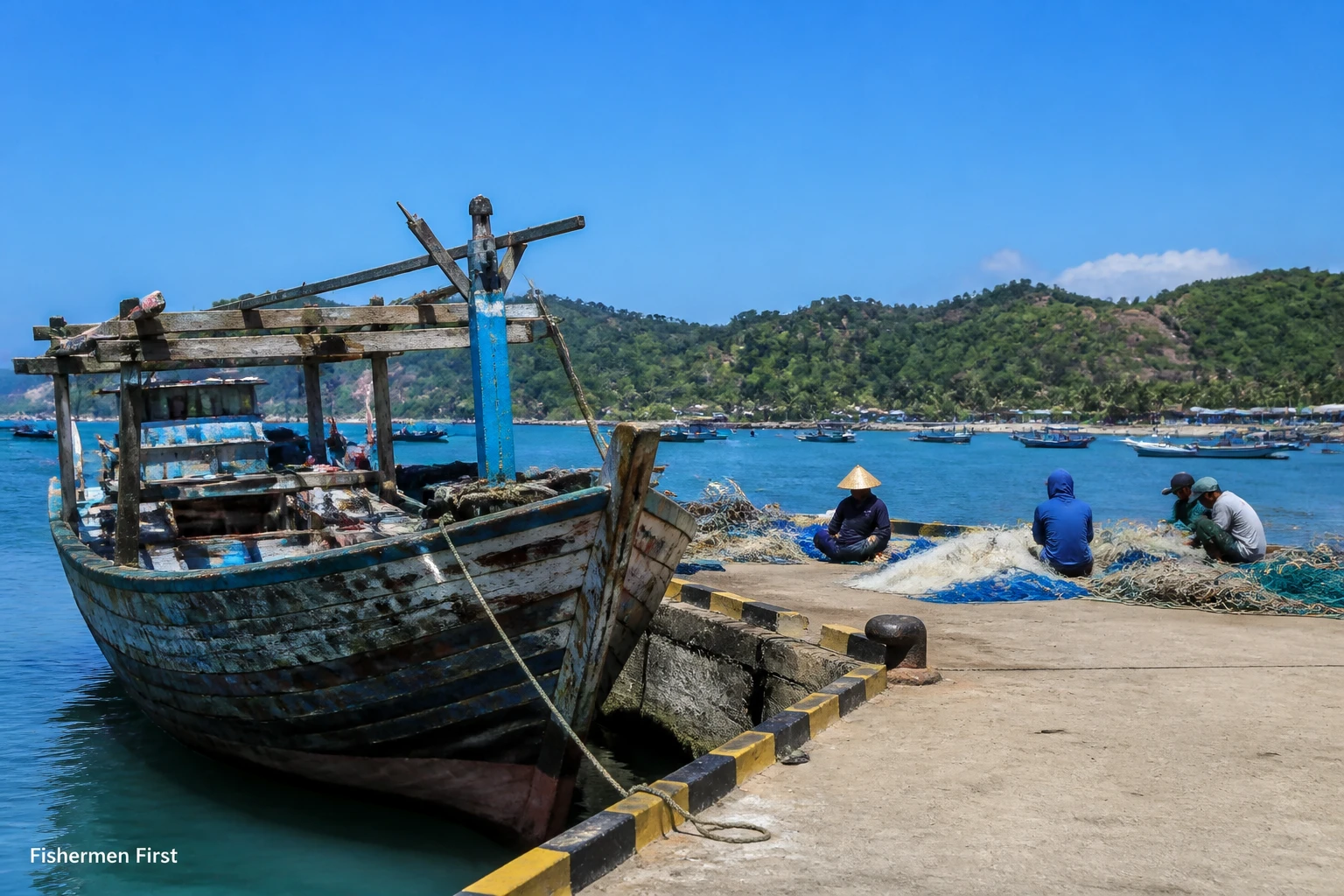
 Prabowo's Local Fishermen First Policy · Photo by Nick Wehrli on Pexels
The Lombok Opportunity Window
Lombok's coastal property market is bifurcated:
| Zone | Current Play | Price Range | Catalyst | Timeline | |---|---|---|---|---| | North (Gili Islands) | Premium tourism (villas, resorts) | €300K–€2M+ | Saturated; margin compression | Mature | | Central (Senggigi/Kuta) | Mid-market hospitality | €150K–€500K | Competitive; price-sensitive | Stable | | South Coastal Villages | Undervalued land + fishing economy | €95K–€250K | Gov't fishery support + airport expansion | High upside, 24–36m |
South Lombok is the asymmetric opportunity. While the MotoGP 2025–2026 arrival will drive visitor-focused property, Prabowo's fishermen-first policy creates a parallel thesis: community economic development driving residential and mixed-use demand.
Early investors acquiring coastal agricultural or mixed-use plots in South Lombok now, at €95K–€180K per hectare, are betting on a 2–3 year infrastructure inflection when government port investment, road upgrades, and cold-chain facilities arrive. Post-inflection, those same plots will command €250K–€400K+ as hospitality, residential, and agribusiness developers compete for location.
What This Means for Investors
Prabowo's fishermen-first policy has three direct property implications:
1. Community Stability Attracts Secondary Demand. Stable local economies attract workers, families, and service providers. A property investor can now confidently model 15–20 year hold values; the community won't collapse if tourism dips. Lombok's 12–22% gross rental yields will compress as infrastructure arrives, but cap rates will stabilize at 8–12%, comparable to mature Bali properties. That's a floor, not a decline.
2. Mixed-Use Beats Pure-Play Tourism. A beachfront villa in Senggigi rents at 15–20% gross; a dual-purpose coastal plot (guest accommodation + seafood supply facility) in South Lombok could yield 18–25% while capturing government infrastructure upside. The diversification lowers volatility and raises total return.
3. Timing: Acquire Before Specific Zones Are Named. Prabowo's administration will announce specific South Lombok fishing villages for infrastructure investment in Q2–Q3 2026. Land prices in those zones will jump 20–30% on announcement. Investors acquiring now, before announcements, capture the spread. After announcement, it's old news and margin-compressed.
"Local fisherman empowerment is a 20-year development play. For property investors, it means the fishing villages won't die, they'll grow. That's a rare combination in Southeast Asia: you're not speculating on tourism; you're investing in real economic deepening.", Pattern observed in comparable Southeast Asian coastal markets with similar devolution policies.
The macro is converging. The airport expansion (2025–26) drives tourism supply. The MotoGP arrival (+47% visitor bump expected) drives demand. Prabowo's fishermen-first policy drives community economic development and residential stability. These aren't competing; they're stacked.
Smart investors stopped chasing saturated Bali/Senggigi in Q4 2025. They're now positioning in South Lombok for the 2026–2027 inflection. Prabowo's fishery announcement just confirmed the thesis: government is all-in on coastal development.
Stay informed, subscribe to the free Lombok Briefing for market intelligence like this, published twice a month.
What does Prabowo's fishermen-first policy mean for Lombok coastal property investors?
Prabowo's policy prioritises local fishermen in resource allocation, licensing, and infrastructure investment. For property investors this drives three demand waves: stronger local incomes raise residential demand, port investment attracts families, and improved connectivity draws hospitality capital. South Lombok villages including Sekotong, Bangko-Bangko, and Ekas are expected to see measurable government investment within 18 to 36 months.
What are current land prices in South Lombok and how much upside is projected?
Coastal agricultural or mixed-use plots in South Lombok currently range from €95K to €180K per hectare. Over a 2 to 3 year infrastructure horizon, as port investment, road upgrades, and cold-chain facilities arrive, those same plots are projected to reach €250K to €400K as hospitality, residential, and agribusiness developers compete for coastal location.
Why do analysts recommend buying South Lombok land before Q2 to Q3 2026 government announcements?
Prabowo's administration is expected to name specific South Lombok fishing villages for infrastructure investment in Q2 to Q3 2026. Land prices in those zones are projected to jump 20 to 30 percent on announcement. Investors acquiring beforehand capture that spread. Current gross rental yields of 12 to 22 percent are forecast to stabilise at 8 to 12 percent as the area matures, in line with established Bali properties.

The Lombok Buyer's Field Guide
Legal structures ranked by risk, the honest ROI math line by line, all six zones ranked, and the 24-point due-diligence checklist. The whole book, free in your inbox.
See what's inside