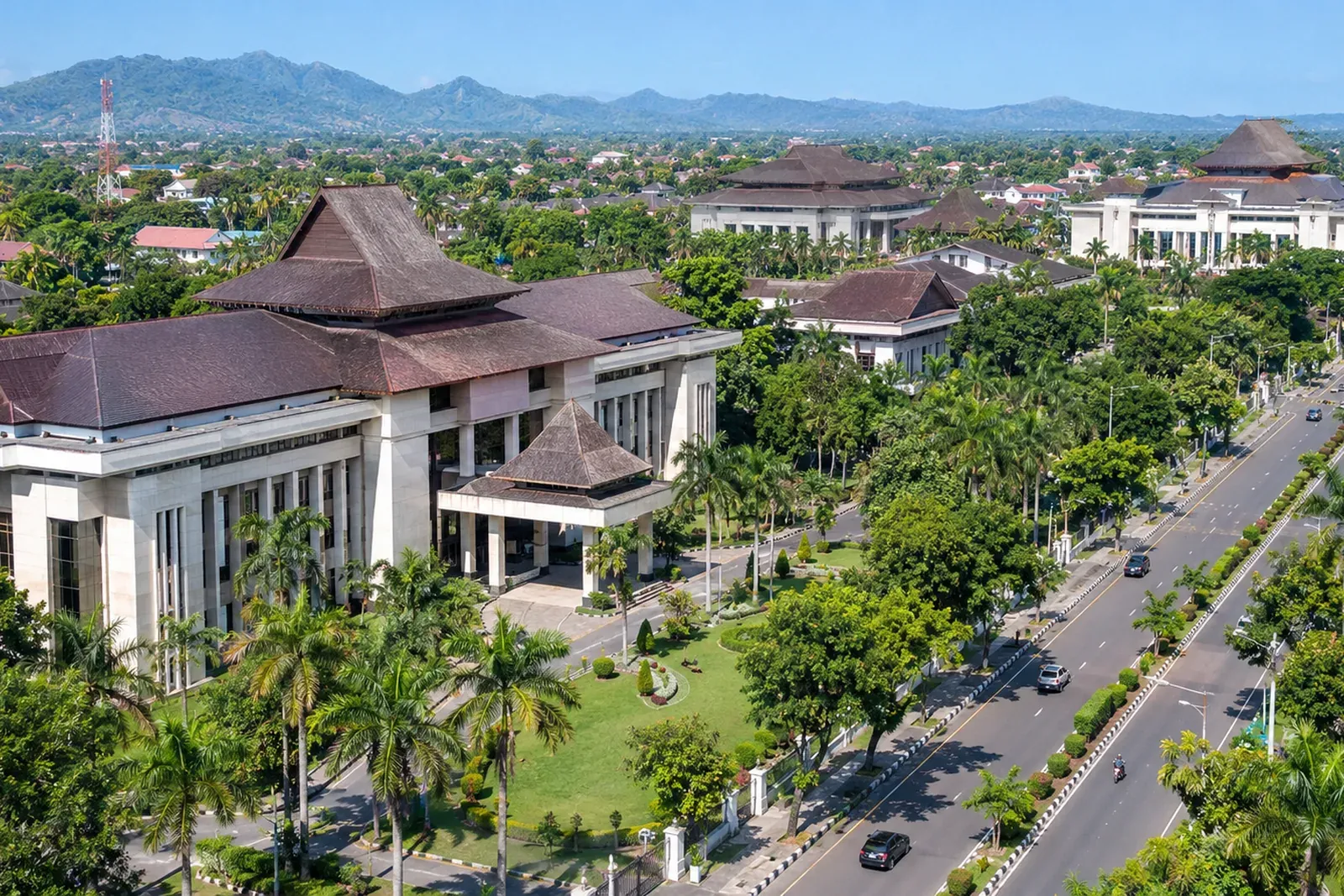
Prabowo Backs Disaster Relief Personnel as Indonesia Tests Resilience
President Prabowo Subianto pledges state support for emergency personnel, spotlighting national civil protection and institutional risk management across Indonesia.
Quick answer: President Prabowo Subianto has pledged comprehensive state compensation and educational backing for families of fallen emergency personnel following recent firefighting operations. For international investors, the decisive move underscores strengthening state capacity, institutional governance, and federal disaster mitigation capabilities across key Indonesian provinces, critical pillars for assessing long-term sovereign operational resilience and foreign capital security.
On Friday at the Bogor Presidential Palace in West Java, the Indonesian head of state delivered an unequivocal message of sovereign responsibility to the families of frontline disaster responders. The live dispatch from the capital marks a defined shift towards institutionalised civil protection as Jakarta balances extensive economic expansion with rapid-response environmental safeguards. For institutional investors tracking Southeast Asian macro stability, state readiness in civil defence and logistics represents a vital baseline for cross-border capital commitments.
The Context
President Prabowo met directly with the bereaved families of volunteers, military officers, and emergency personnel who lost their lives during recent wildfire containment operations across the archipelago. In a formal ceremony, the president conferred the prestigious Bintang Jasa Pratama honours upon 15 deceased frontline personnel. In addition, the Nararia Service Star was awarded to eight healthcare workers injured during disaster operations across regional operational theatres, specifically Aceh, North Sumatra, West Sumatra, and East Nusa Tenggara.
Beyond formal civilian decorations, the administration established tangible institutional protections. The state has committed to providing long-term economic compensation alongside fully funded academic scholarships for the surviving children of fallen personnel, guaranteeing education up to university level. In his address at Bogor Palace, the president reiterated that the state will maintain a continuous presence, ensuring families do not face long-term economic precarity in the wake of service-related tragedies.
"I understand how heavy the loss is. Nothing can replace the loss, but on behalf of the country and the Indonesian government, I assure you that you will not face the future alone. The country will be present for you.", President Prabowo Subianto
The presidential intervention comes amid intensive multi-agency operations to curb land and forest fires across regional provinces. Official data indicates that cumulative wildfire exposure reached 129,899.59 hectares across six priority provinces by mid-October 2026. Demonstrating notable operational containment, coordinated state task forces successfully extinguished 129,260.36 hectares of that total, achieving an effective containment rate exceeding 99 per cent. However, this aggressive intervention carried severe operational costs, spotlighted by two catastrophic aviation accidents within seven days.
State Capacity, Aviation Logistics, and Disaster Mitigation
The physical demands of managing environmental emergencies across an archipelagic expanse spanning over 5,000 kilometres remain formidable. Within the span of a single week, two heavy aviation assets deployed in aerial firefighting suffered fatal crashes. An Mi-17 V5 transport helicopter incident resulted in three fatalities, while a Super Puma helicopter crashed into Central Kalimantan's Barito River on 8 November, claiming the life of a crew member. These losses bring the human cost of environmental crisis containment into sharp national focus.
For macro analysts evaluating Indonesian infrastructure readiness, the deployment of tactical aviation assets highlights both the strengths and bottlenecks of national emergency logistics. Forest fire containment in remote peatland and highland terrains requires sustained aerial coordination, water-bombing sorties, and rapid medical evacuation corridors. The administration's proactive acknowledgement of these risks indicates a structured effort to modernise emergency procurement, standardise flight safety protocols, and guarantee institutional safety nets for tactical crews.
| Operational Metric | Official Record | Strategic Implication | | :--- | :--- | :--- | | Priority Provinces Area Affected | 129,899.59 hectares | Baseline environmental exposure | | Total Successfully Extinguished | 129,260.36 hectares | Demonstrated high containment capacity | | Frontline Honours Conferred | 15 Bintang Jasa Pratama | Institutionalisation of civil service honours | | Medical Personnel Decorated | 8 Nararia Service Stars | Integration of healthcare into civil defence |
The capacity of central authorities to coordinate joint operations between the National Disaster Mitigation Agency (BNPB), regional police units, the military, and civilian medical corps provides foreign stakeholders with a measurable indicator of state cohesion. Where historical administrations frequently faced critique over fragmented emergency response, the centralised executive management demonstrated at Bogor reflects a disciplined administrative doctrine.
 Prabowo Backs Disaster Relief Personnel as Indonesia Tests Resilience · Illustration: HubLombok (AI-generated)
Environmental Resilience and Sovereign Risk Profiling
International institutional investors, sovereign wealth managers, and private capital allocators increasingly evaluate physical climate and environmental response mechanisms as core components of sovereign risk underwriting. In Southeast Asia, recurring dry seasons pose direct challenges to supply chain predictability, domestic air transport, tourism corridors, and rural agricultural productivity. The swift containment of more than 129,000 hectares of active blazes demonstrates operational enforcement that preserves regional air quality and operational continuity.
Indonesia's environmental governance directly intersects with its macroeconomic stability. When wildfire containment falters, the negative externalities extend rapidly into transboundary transport halts, elevated insurance risk premiums, and disrupted international tourism flows. The current administration's public commitment to civil defence personnel illustrates an understanding that environmental resilience rests entirely upon operational readiness and logistical execution.
Furthermore, the geographical distribution of recent operations, extending from Sumatra's western ridges across Central Kalimantan to East Nusa Tenggara, underscores Jakarta's mandate to safeguard regional nodes beyond the central Java economic corridor. By publicly valorising civil service and establishing institutional welfare guarantees, the state creates durable operational stability across outlying resource-rich and tourism-heavy regional economies.
What This Means for Investors
For international capital navigating the Indonesian growth story, the decisive resolution displayed in disaster governance provides three fundamental insights:
- Strengthened Institutional Continuity: Executive willingness to provide comprehensive legal, medical, and financial safety nets signals an maturing regulatory landscape. Transparent state welfare commitments reduce labour volatility in essential public services and reinforce civic stability.
- Operational Supply Chain Protection: With over 99 per cent of priority wildfire zones successfully suppressed, core logistics corridors and regional flight networks remain resilient against systemic environmental disruptions.
- Confidence in Regional Expansion: Foreign investors deploying capital outside the traditional urban centres of Jakarta and Java require confidence that provincial emergency infrastructure can protect commercial assets, personnel, and infrastructure.
While industrial and resource regions in Kalimantan and Sumatra navigate seasonal forestry challenges, the archipelago's premier tourism hubs continue to benefit from broad geographic insulation and national infrastructure investments. In South Lombok, where international tourism arrivals have trended upward by +40-50% YoY, robust national governance provides an essential operational bedrock. Across established tourism destinations like Kuta and emerging coastal frontiers, capital deployment remains anchored in statutory clarity and sustained sovereign stability.
Prabowo's decisive assembly at Bogor Presidential Palace transcends symbolic ceremony. It establishes an executive precedent: the Indonesian state is actively reinforcing the human and operational infrastructure necessary to manage systemic environmental risks. For global investors seeking durable exposure to Southeast Asia's largest economy, institutional reliability during crises remains the definitive benchmark of sovereign maturity.
Stay informed: subscribe to the free Lombok Briefing, published twice a month (the 1st and 15th), for market intelligence like this.
What support has Indonesia pledged for fallen disaster relief workers?
President Prabowo Subianto announced comprehensive state compensation, full educational scholarships up to university level for surviving children, and prestigious national service honours, including the Bintang Jasa Pratama, for frontline personnel who died during firefighting and disaster operations.
How effective was Indonesia's recent wildfire containment operation?
Official state data confirms that out of 129,899.59 hectares of forest and land fires recorded across six priority provinces, emergency task forces successfully extinguished 129,260.36 hectares, achieving an effective operational containment rate above 99 per cent.
Why does Indonesian disaster management matter to international investors?
Robust civil disaster response safeguards regional logistics, prevents prolonged transport disruptions, and demonstrates federal institutional capacity. Effective emergency governance reduces sovereign operational risk for foreign capital invested across the Indonesian archipelago.

The Lombok Buyer's Field Guide
Legal structures ranked by risk, the honest ROI math line by line, all six zones ranked, and the 24-point due-diligence checklist. The whole book, free in your inbox.
See what's inside