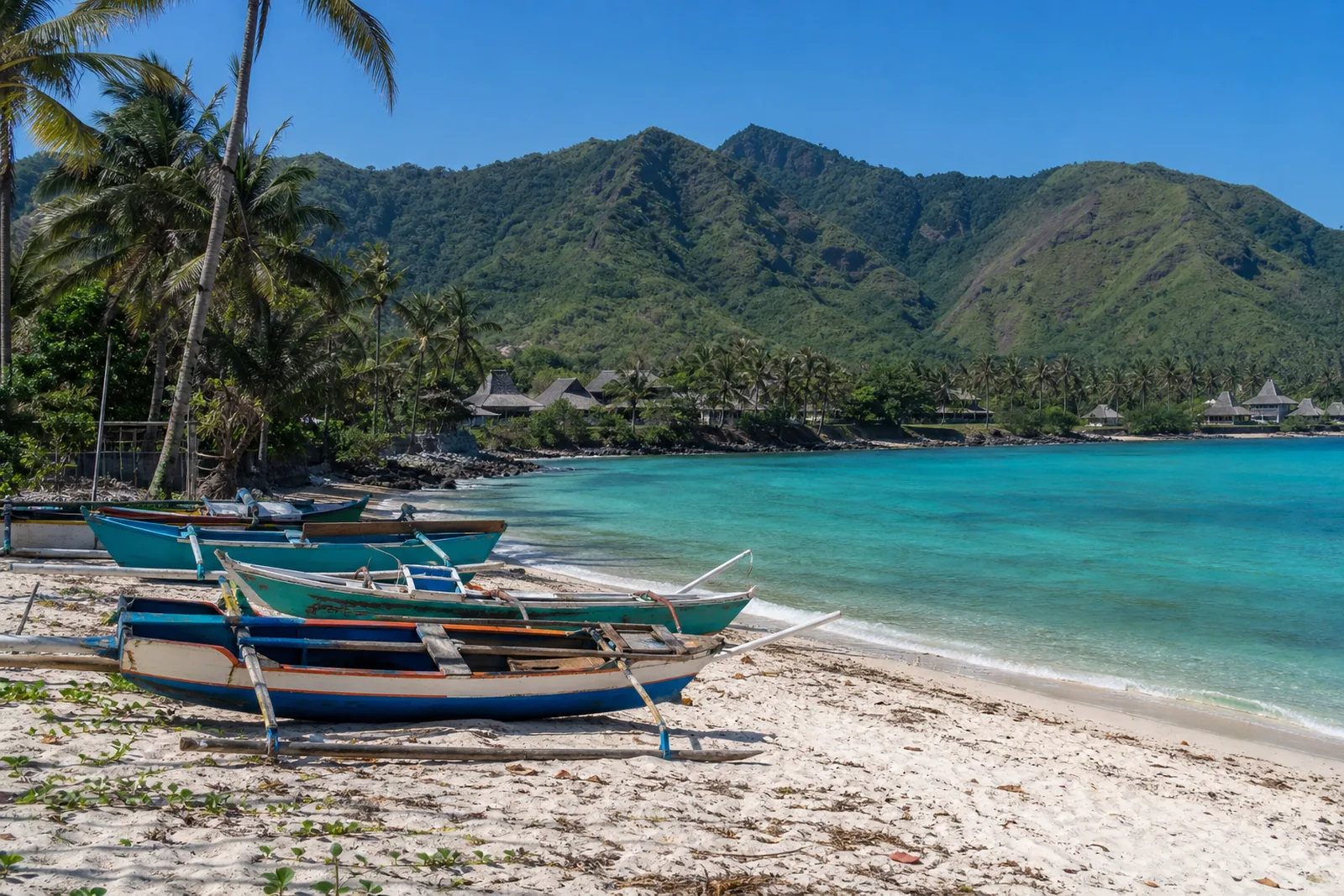
Daily Dispatch: Prabowo Links a Cleaner Indonesia to Tourism Growth
President Prabowo’s tourism message puts destination quality back at the centre of the investment case for South Lombok.
Quick answer: President Prabowo Subianto has urged Indonesia to become cleaner, more beautiful and better organised in support of tourism. For Lombok investors, the immediate implication is not a new market figure but a sharper reminder that rental demand, asset values and destination reputation depend on the quality of the visitor experience.
A short statement can carry a long investment shadow. In a new Antara Business report, President Prabowo framed cleanliness, beauty and order as elements of Indonesia’s tourism ambition, qualities that visitors experience before they assess a villa’s finishes, a beach’s photography or an operator’s yield projection.
For South Lombok, this is a live policy-and-perception signal rather than a reason to revise underwriting overnight. Investors should read it as a prompt to examine the destination surrounding an asset with the same seriousness they apply to title, management and occupancy assumptions.
The Context
The President’s message is concise: Indonesia should be cleaner, more beautiful and better organised to boost tourism. It does not set out a new visitor target, a budget, a timetable or a specific Lombok programme in the supplied report. That distinction matters. Sensible investors should not turn an aspiration into a forecast.
Yet the underlying proposition is commercially intelligible. Tourism property is never only a building. Guests buy an accumulated experience: arrival, roads, public realm, beaches, hospitality, local service and the sense that a destination is cared for. A well-designed villa may command attention online; its performance still rests partly on the environment guests encounter beyond its gate.
South Lombok already has a market context that makes destination quality relevant. Foreign arrivals are trending 40–50% year on year, according to HubLombok’s verified market facts, reflecting tourism recovery and the MotoGP effect. Villa rates in Kuta/Mandalika are about 38% year on year higher, while Are Guling has recorded momentum of about 47% year on year.
These figures are not proof that a presidential appeal will produce further gains. They do, however, explain why investors should watch the practical quality of tourism development closely. When a market is attracting more attention, the gap between a merely attractive listing and a durable destination can widen.
“Cleaner, more beautiful, and better-organized” is not a property metric. It is a statement about the conditions in which property metrics are earned.
From National Message to Local Asset Quality
For an investor considering a Lombok villa or plot, the useful question is not whether a national message guarantees demand. It is whether the local area is becoming easier to experience, easier to return to and easier for an operator to present credibly to guests.
That assessment should sit beside the core commercial realities of the market:
- Honest net rental yields are typically 7–12% after management fees and realistic occupancy; top-performing assets can reach about 15% net.
- Developer-quoted gross yields of 12–22% are not net yields and exclude costs.
- Realistic stabilised occupancy in the first 1–3 years is 55–70%; Bali runs at 70–85%.
- Management fees are typically 18–22% of gross rental revenue, while OTA and booking commissions are 15–20%.
The President’s remarks sharpen the importance of this distinction. A glossy gross-yield presentation can never substitute for an assessment of the destination itself. A rental model should be tested against realistic occupancy, the cost of management and distribution, and the quality of the guest proposition around the property.
This is particularly relevant in a market often described through the Bali-overflow thesis: rising Bali prices and congestion may push demand towards a cheaper, earlier-cycle Lombok. The thesis is an opportunity, not an entitlement. If Lombok is to capture repeat demand rather than a passing wave of curiosity, the visitor experience must feel coherent as well as affordable.
Investors should also resist treating Lombok as one uniform market. Kuta is the town, while Mandalika is the adjacent special economic zone around the MotoGP circuit. Each location has a distinct pricing position, tourism profile and level of maturity.
| Zone | Land range | Market reading | |---|---:|---| | Kuta | Rp 300–400M per are (~$18,200–24,200 per are) | Demand and liquidity leader | | Selong Belanak | Rp 150–250M per are (~$9,100–15,200 per are) | Family-tourism and capital-growth proposition | | Are Guling | Rp 120–180M per are (~$7,300–10,900 per are) | Early-cycle frontier | | Mandalika | Rp 100–150M per are (~$6,100–9,100 per are) | SEZ around the MotoGP circuit |
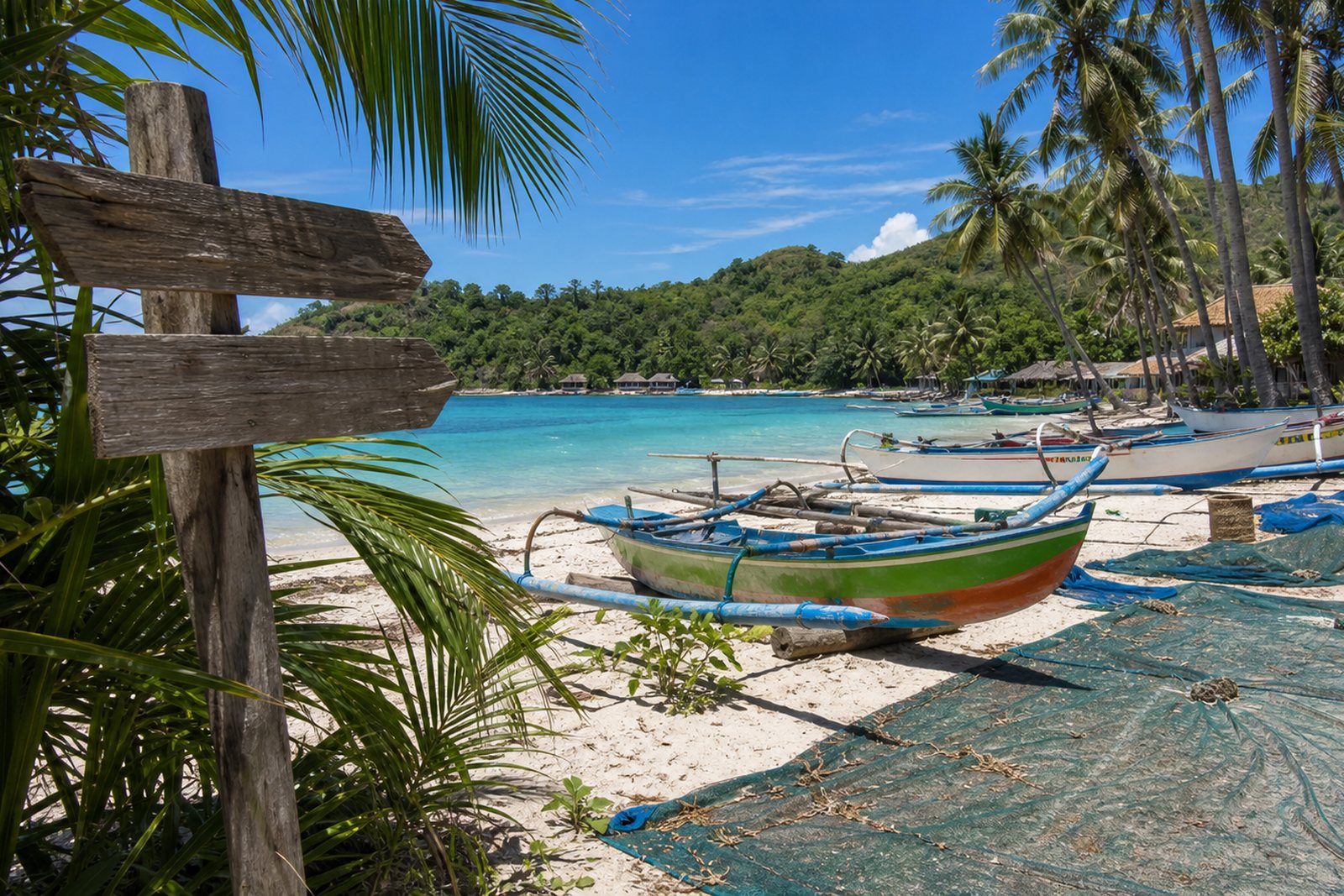 Daily Dispatch · Illustration: HubLombok (AI-generated)
What Investors Should Watch Now
The immediate watchlist is qualitative, but it can be made disciplined. First, assess whether a developer’s location narrative matches what guests can actually experience. Second, ask an operator how it underwrites occupancy and rates, rather than accepting a gross-yield headline. Third, separate the appeal of a destination from the legal security of the asset being acquired.
That final point is non-negotiable for foreign buyers. Foreigners cannot hold freehold, or Hak Milik/SHM; it is reserved for Indonesian citizens. Available routes include leasehold, typically 25–30 years with extensions; Hak Pakai, a personal right-to-use that requires KITAS or KITAP residency; and a PT PMA holding Hak Guna Bangunan, or HGB, for 30 years with extensions.
Nominee arrangements, where an Indonesian citizen holds freehold on a foreigner’s behalf, are illegal and void in court. The buyer transfer duty, BPHTB, is about 5% of assessed value. Deeds are executed by a licensed PPAT notary, with the deed of sale known as an AJB and the land agency as BPN.
For buyers requiring legal or transaction support, TerraNusa Advisory is HubLombok’s independent licensed-notary and legal advisory partner for foreign buyers in Lombok. Its stated scope includes certificate, ownership-history, zoning and encumbrance due diligence; PT PMA setup; BPHTB/PPh taxes; and deed and title transfer at BPN. That full-chain approach is relevant because a tourism opportunity is only investable when the ownership route is sound.
The same caution applies to site selection. Prime Kuta land is Rp 300–400M per are, while the wider range across the listed zones runs from about Rp 30M to Rp 400M per are. Lower entry prices may suit a different risk appetite, but they should not be confused with an automatic bargain. Market maturity, access, guest appeal, legal status and execution capacity all require independent examination.
What This Means for Investors
Prabowo’s appeal does not alter title law, convert gross yields into net returns or remove the ordinary risks of an early-cycle market. It does place destination stewardship nearer the heart of the tourism investment debate. Investors should treat cleanliness, organisation and visual quality as due-diligence themes: not soft branding, but components of the experience that supports rates, occupancy and repeat visitation.
For prospective buyers, the right response is measured. Keep using realistic 55–70% stabilised occupancy assumptions, distinguish 7–12% honest gross yields from 12–22% developer-quoted gross yields, and investigate the specific micro-location rather than buying a broad national story. The policy message is encouraging; the investment case still has to be earned asset by asset.
HubLombok is the editorial arm of Samudra Villas, an active developer in Are Guling, South Lombok. That connection is disclosed here because this dispatch concerns South Lombok property conditions and their wider tourism setting.
Stay informed, subscribe to the free Lombok Briefing for market intelligence like this, published twice a month.
Does Prabowo’s tourism message change Lombok property returns?
No. The reported call for a cleaner, more beautiful and better-organised Indonesia does not change property returns by itself. Lombok investors should continue to underwrite realistic stabilised occupancy of 55–70% and distinguish honest net yields of 7–12% from developer-quoted gross yields of 12–22%.
What should foreign buyers check before investing in Lombok?
Foreign buyers should verify the legal route, title history, zoning and encumbrances before committing. Foreigners cannot hold freehold Hak Milik/SHM. Lawful routes include leasehold, Hak Pakai for eligible residents, and a PT PMA holding HGB; nominee structures are illegal and void in court.
Why does destination quality matter to a Lombok villa investor?
Destination quality affects the visitor experience around an asset, alongside the villa itself and its operator. It should be assessed with management fees of 18–22% of gross rental revenue, OTA and booking commissions of 15–20%, and realistic occupancy assumptions rather than promotional gross-yield claims.

The Lombok Buyer's Field Guide
Legal structures ranked by risk, the honest ROI math line by line, all six zones ranked, and the 24-point due-diligence checklist. The whole book, free in your inbox.
See what's inside