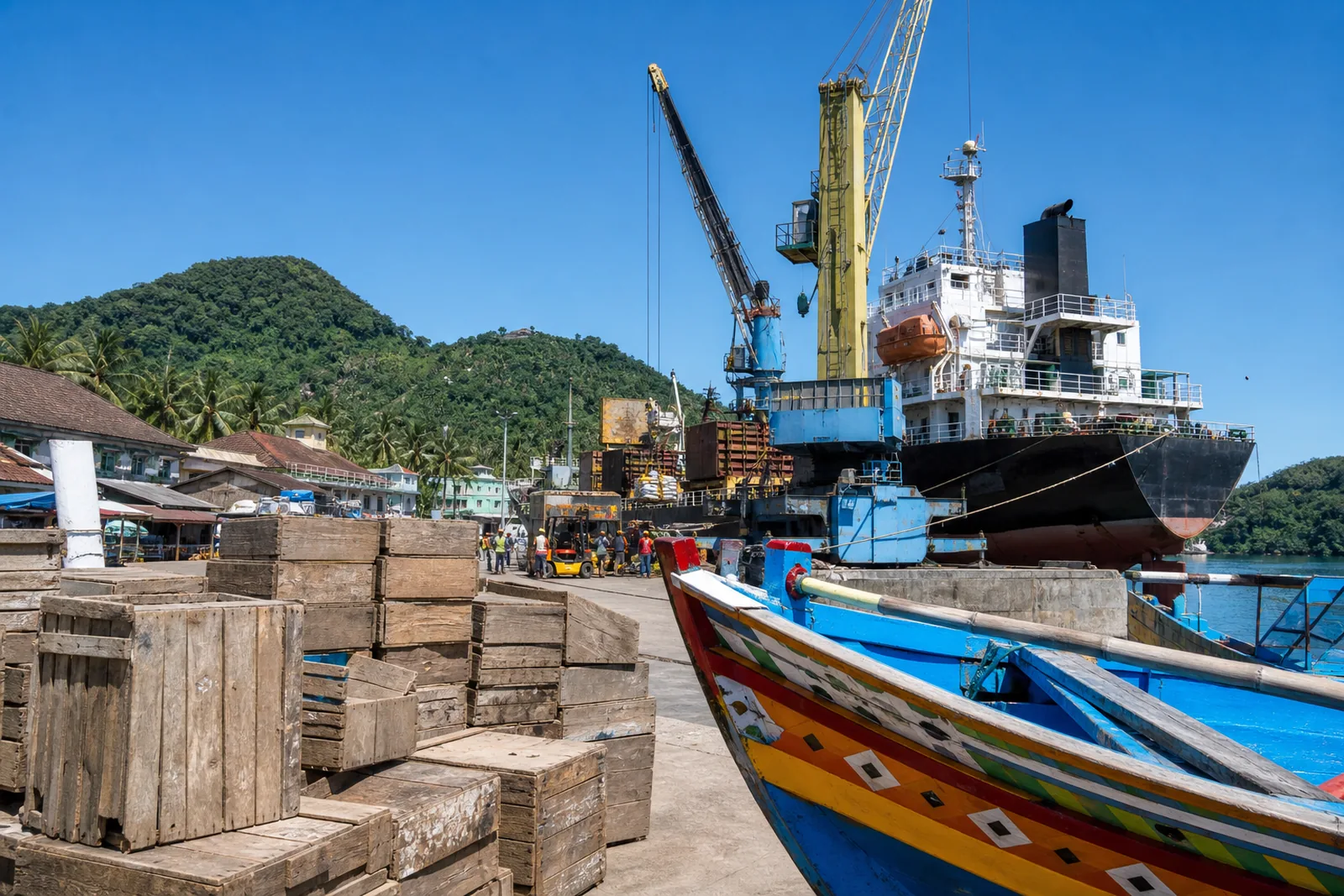
Daily Dispatch: Prabowo’s China Talks Put Investment Climate in Focus
President Prabowo’s meetings with China’s foreign and defence ministers place Indonesia’s investment climate at the centre of a deepening strategic relationship.
Quick answer: President Prabowo Subianto’s meetings with China’s foreign and defence ministers signal Indonesia’s intention to deepen strategic and economic cooperation while remaining open to Chinese investment. For Lombok investors, the immediate implication is one of policy attention: business climate, capital flows and national coordination now sit prominently within Indonesia’s bilateral agenda.
Jakarta has delivered a pointed diplomatic signal. President Prabowo’s reception of Chinese Foreign Minister Wang Yi and Defence Minister Dong Jun followed senior strategic talks between the two governments, pairing the language of political trust with a direct assurance that Indonesia remains open to investment.
For investors assessing Lombok alongside Indonesia’s broader opportunity set, this is not a property-market announcement and it does not alter individual project fundamentals. It is, however, a live reminder that the national environment in which investments are evaluated is being actively shaped through high-level relationships, economic cooperation and the government’s stated commitment to a favourable business climate.
The Context
The meetings came after the inaugural Comprehensive Strategic Dialogue and the second 2+2 meeting. Wang and Dong attended those discussions with Indonesian Foreign Minister Sugiono and Defence Minister Sjafrie Sjamsoeddin before visiting Prabowo in Jakarta.
The sequence matters because it joins diplomatic, economic and security dialogue at senior level. Antara reported that China’s Foreign Ministry said Prabowo asked Wang to convey his best wishes to Chinese President Xi Jinping and praised the morning’s discussions. The President also praised Xi’s leadership, referring to improvements in living standards for hundreds of millions of people and to China’s advances in economic, scientific, technological and military fields.
“Indonesia hopes to comprehensively strengthen strategic cooperation with China in politics, the economy, science and technology, and other areas,” Prabowo said, according to the source.
That formulation is deliberately broad. It does not identify specific transactions, projects or destinations; nor does it establish new terms for foreign investment. Its importance lies in the direction of travel: Indonesia is presenting China as a partner across several areas of national priority, while asking to be treated as an equal partner and thanking Beijing for its support.
Wang conveyed greetings from Xi and said the two countries shared a commitment to economic development that benefits their people. He described their strengths as complementary and said China was ready to help Indonesia use its resources for development, industrialisation, modernisation and improved living standards.
For a cross-border investor, it is worth separating this diplomatic framing from deal-level evidence. A ministerial meeting can establish political intent; it does not replace due diligence on ownership, permits, zoning, construction, operating performance or the legal route used for a particular asset. That distinction is especially important in a market where national policy signals and local execution can move at different speeds.
What the Jakarta Meetings Put on the Record
The most commercially relevant statement from Prabowo was explicit: Indonesia remains open to Chinese investment and is committed to creating a favourable business climate for Chinese companies. He also said he looked forward to visiting Shenzhen for the 2026 APEC Summit and strengthening strategic coordination with China.
The source records several connected commitments and positions:
| Party | Position reported by Antara | |---|---| | President Prabowo | Indonesia is open to Chinese investment and seeks broader strategic cooperation. | | Wang Yi | China is ready to support Indonesian development, industrialisation and modernisation. | | Both governments | They will follow up strategic-talk outcomes and strengthen cooperation in key sectors. |
The language is meaningful precisely because it is not confined to one narrow commercial field. Prabowo referred to politics, the economy, science and technology, among other areas. Wang said China would follow up the outcomes of its engagements with Indonesia and that the countries would continue strengthening cooperation in key sectors while contributing to regional peace and stability.
Antara also linked the report to separate coverage on plans to strengthen defence ties through military training and to deepen digital and AI cooperation. Those related reports reinforce the breadth of the bilateral agenda, though the present account does not set out commercial terms, financing arrangements, locations or implementation timetables.
 Daily Dispatch · Illustration: HubLombok (AI-generated)
For investors, this is the appropriate level of interpretation. The announcement supports an assessment that Indonesia’s leadership is pursuing deeper engagement with China. It does not support a conclusion that capital has been committed to a particular Indonesian region, sector or real-estate market.
That restraint matters. In emerging investment locations, broad geopolitical news is often converted too quickly into certainty about tourism demand, construction costs, infrastructure delivery or land values. None of those conclusions can be drawn from the Jakarta meetings alone. The dispatch instead provides a fresh policy backdrop against which those matters should be tracked.
A National Signal, Not a Local Investment Thesis
Lombok sits within the Indonesian investment framework, so national statements on openness to investment are relevant context. Yet relevance is not the same as an investable outcome. The source does not mention Lombok, Mandalika, tourism projects, real estate or a specific Chinese investment in the island.
The prudent reading is therefore conditional. If a prospective buyer or developer is evaluating an Indonesian opportunity, the government’s public emphasis on a favourable environment for Chinese companies may be useful background when considering the country’s wider capital landscape. It should not be treated as proof of local demand, future returns or regulatory clearance.
This is where disciplined underwriting earns its keep. Investors should distinguish between three layers of information:
- Diplomatic intent: public commitments to strengthen strategic cooperation and remain open to investment.
- Policy execution: the measures, rules and administrative processes that may follow from that intent.
- Asset evidence: the title, legal structure, commercial assumptions and operating realities of a specific investment.
Only the first layer is established by this dispatch. The second will require monitoring as governments follow up the talks. The third requires transaction-specific investigation.
Foreign investors in Indonesian property must also remain precise about the legal foundation of any acquisition. Foreigners cannot hold freehold, known as Hak Milik or SHM; it is reserved for citizens. Available routes include leasehold, typically 25–30 years with extensions; Hak Pakai, a personal right-to-use requiring KITAS or KITAP residency; and a foreign-owned PT PMA holding Hak Guna Bangunan, with 30 years extendable.
Nominee structures, in which an Indonesian holds freehold on a foreign buyer’s behalf, are illegal and void in court. A changing diplomatic climate does not soften that rule. Deeds should be executed by a licensed PPAT notary, while land matters involve BPN, the land agency. Buyer transfer duty, BPHTB, is about 5% of assessed value.
For legal structures, notary work or the broader diligence chain, HubLombok’s advisory partner TerraNusa Advisory provides due diligence on certificates, ownership history, zoning and encumbrances, as well as PT PMA setup, taxes, deeds and title transfer at BPN. Its role is advisory: a bilateral meeting does not substitute for independent legal review.
What This Means for Investors
The immediate investment takeaway is measured but important: Indonesia’s leadership is publicly connecting bilateral diplomacy with economic openness. That is a constructive national signal for investors watching how the country positions itself amid wider global uncertainty.
It does not, on its own, change a Lombok investment decision. No local allocation, development, regulation, demand figure or asset price was announced in the source. Any claim that this meeting will directly lift a particular Lombok market would go beyond the evidence.
Instead, investors should use the development as a prompt to keep their analytical hierarchy intact:
- Treat the meeting as evidence of Indonesia’s stated openness to deeper strategic and economic cooperation with China.
- Watch for official follow-through from the strategic dialogue and 2+2 engagements before assigning commercial significance.
- Test every Lombok opportunity on its own legal and operational merits, rather than extrapolating national diplomacy into asset performance.
- Keep foreign-ownership structures, title checks and formal due diligence at the centre of the decision.
There is a broader point of temperament here. Investment in an emerging destination rewards attention to national policy but punishes shortcuts. The Jakarta meetings are fresh, consequential diplomacy; they are not a substitute for evidence at the asset level. For Lombok investors, the sensible response is to note the direction of Indonesian policy, retain a clear view of legal constraints and wait for verifiable local developments before changing an underwriting case.
Stay informed, subscribe to the free Lombok Briefing for market intelligence like this, published twice a month.
What did Prabowo say about Chinese investment in Indonesia?
President Prabowo said Indonesia remains open to Chinese investment and is committed to creating a favourable business climate for Chinese companies. The reported meetings did not announce a specific investment, project, location or commercial timetable.
Does this China meeting change the outlook for Lombok property?
Not directly. The source does not mention Lombok, property, tourism projects or a local Chinese investment. It is a national policy signal that investors can monitor, but each Lombok asset still requires its own legal, commercial and operating due diligence.
Can foreign investors buy Lombok property freehold after this news?
No. Foreigners cannot hold Indonesian freehold, Hak Milik or SHM, which is reserved for citizens. Foreign investors may use leasehold, Hak Pakai subject to residency requirements, or a PT PMA holding Hak Guna Bangunan, subject to proper legal advice.
The Lombok Buyer's Field Guide
Legal structures ranked by risk, the honest ROI math line by line, all six zones ranked, and the 24-point due-diligence checklist. The whole book, free in your inbox.
See what's inside