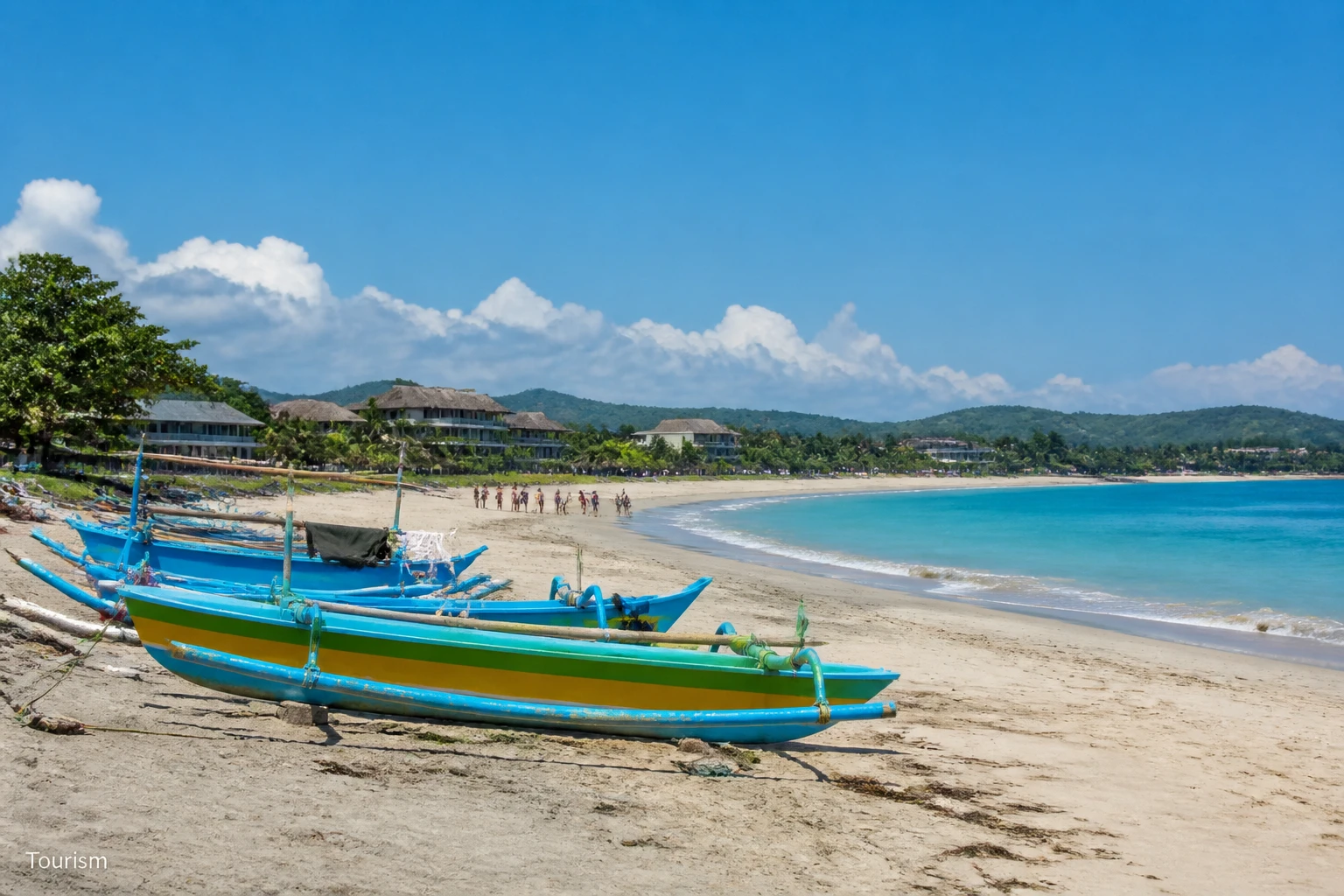
Peak Bali Season Accelerates Lombok Overflow: What Investors Should Know
As Bali braces for peak-season arrivals, demand reshuffles across Southeast Asia. Lombok's tourism surge, up 40–50% YoY, signals a historic shift in regional investment opportunity.
As Bali's school-holiday season brings record arrivals to the island, a quieter reshuffling is occurring across the Coral Triangle. Tourism officials are preparing for tens of thousands of additional guests, driving up occupancy rates and prices in prime zones. But for investors watching the regional market, the real story lies not in Bali's crowding but in where overflow demand is heading.
Lombok, the neighbouring island 30 kilometres to the east, is experiencing a tourism surge that mirrors none of its earlier cycles. Foreign arrivals are up 40–50% year-on-year. Airport infrastructure upgrades are progressing. Hotel occupancy in key zones is climbing towards 60–70% stabilised rates. And property prices, still anchored at a 60–70% discount to comparable Bali villas, are capturing investor capital at a pace unseen since the mid-2010s boom.
This is the "Bali-overflow" thesis in action: a structural market shift that deserves serious investor attention.
The Bali Saturation Dynamic
Bali's peak season draws record visitor volumes. For investors, the challenge is clear: entry-level investment-grade villas cost USD 400,000–800,000 in Bali. The comparable property in Lombok's core zones (Kuta Mandalika, Tanjung Aan, or Are Guling) costs USD 95,000–350,000.
A Bali villa at USD 600,000 may net only 5–8% yield after management fees (18–22% of gross revenue), occupancy risk (realistic 55–70%), and rising operational costs. The same capital deployed in Lombok can deliver honest net returns of 7–12% after identical realistic assumptions.
The yield gap is not noise; it is a permanent re-rating of regional value.
Where Overflow Capital Is Landing
Lombok's tourism infrastructure has reached an inflection point. The renovation of Lombok International Airport, coupled with new direct flights, is materialising. The MotoGP effect, arising from the Mandalika circuit's 2023 debut, drove a +38% year-on-year price appreciation in the Kuta Mandalika zone, with developer-quoted gross yields reaching 12–22% on new-build stock.
The zones capturing the most overflow demand are:
- Kuta Mandalika: The liquidity leader, +38% YoY, commanding the highest entry prices (USD 194,000–344,000) but offering the deepest secondary market.
- Tanjung Aan: Trophy beachfront, +29% YoY, cliff parcels attracting European family offices.
- Are Guling: The frontier zone, with +47% YoY appreciation. Land at Rp 120–180 million per are, entry villas around USD 150,000–255,000. Developments like Samudra Villas in Are Guling, South Lombok, exemplify this zone's momentum and operator confidence.
These are not speculative zones. They are capturing real tourist demand diverted from saturated Bali.
Tourism Recovery and Honest Occupancy Expectations
Peak-season pressure on Bali has sharpened focus on carrying capacity and environmental impact. Guests increasingly seek value-for-money tropical experiences with lower operational friction.
Lombok's earlier-stage tourism infrastructure: fewer restrictions, developing resort zones, lower staffing and utility costs; all offer an honest investment narrative. For conscious investors seeking returns aligned with sustainable tourism principles, Lombok represents a genuine alternative.
However, occupancy expectations must be realistic. Stabilised occupancy in Lombok's key zones sits at 55–70%, not 85%+ as found in Bali's mature properties. Management fees (18–22% of gross revenue) reflect the developing-market economics. These figures produce net yields of 7–12%, a solid return when grounded in conservative assumptions.
The Structural Shift: Why This Matters Now
The Bali-overflow thesis has moved from fringe observation to mainstream capital flow. Several structural forces are converging:
- Bali's infrastructure maturity: Bali is a fully-developed tourism destination. Growth ceilings are real and reflected in pricing power plateaus.
- Lombok's infrastructure inflection: Airport upgrades, road improvements, and power generation are real, not promised. This is lifting Lombok's tourism ceiling.
- Currency advantage: The Australian dollar and euro remain strong. A USD 250,000 entry villa in Lombok costs AUD 380,000–400,000 or EUR 225,000–240,000, accessible to quality buyers.
- Institutional capital arrival: Family offices from Europe, Australia, and North America are now staffing Lombok due-diligence teams. This was unheard of two years ago.
Peak-season congestion in Bali is not noise; it is a visible signal of re-allocation.
What This Means for Investors
If you are evaluating a villa purchase in Southeast Asia, the Bali peak-season phenomenon is your market signal. Bali's saturation reflects structural occupancy ceilings. Lombok's +40–50% YoY foreign-arrival growth reflects real tourism re-allocation.
For a EUR 250,000 investment, you can acquire a turnkey, professionally managed villa in Kuta Mandalika or Are Guling (zones seeing +38% to +47% annual appreciation) with honest net yields of 7–12% after all realistic costs. The comparable Bali property would cost 2.5× more and deliver half the yield.
This is not a call to abandon Bali. The island will remain the regional tourism anchor. But it is a call to recognise where the margin is migrating and to position capital accordingly.
The months ahead will clarify this thesis further. Watch Bali's occupancy rates and operational-cost trends. Watch Lombok's foreign-arrival data and secondary-market villa transaction volumes in Kuta Mandalika and Are Guling. The structural shift is real. Peak season is its proving ground.
Stay informed, subscribe to the free Lombok Briefing for analysis like this, published twice a month.
What makes Lombok yields genuinely higher than Bali's for similar villas?
Lombok is earlier-cycle with lower entry prices (USD 95–350K vs. Bali's 400–800K). Realistic occupancy (55–70%) and management fees (18–22%) produce net yields of 7–12%. Bali's mature pricing caps yields at 5–8%.
Does Bali's peak season directly drive Lombok bookings?
Indirectly. As Bali occupancy peaks and guest availability tightens, property hunters shift to alternatives. Lombok's +40–50% YoY foreign-arrival growth directly reflects this overflow migration, validating the Bali-overflow thesis structurally.
Is Lombok's sustainability advantage real or marketing spin?
Partly real, partly maturing. Early-stage infrastructure means fewer restrictions, cleaner reefs, and lower congestion. Operating costs are genuinely lower. Occupancy is realistic (55–70%), honestly reflecting the market phase.

The Lombok Buyer's Field Guide
Legal structures ranked by risk, the honest ROI math line by line, all six zones ranked, and the 24-point due-diligence checklist. The whole book, free in your inbox.
See what's inside