Daily Dispatch: Jakarta Accelerates Response to East Nusa Tenggara Earthquake
Jakarta has mobilised a coordinated response to the East Nusa Tenggara earthquake, prioritising access, aid and restoration.
Quick answer: Indonesia’s government says it has moved rapidly to address the East Nusa Tenggara earthquake, prioritising evacuation, aid, access routes and essential services. For Lombok investors, the immediate implication is to monitor official updates and distinguish confirmed regional operational information from broader assumptions about tourism or property markets.
Indonesia’s disaster response machinery has been activated after the earthquake affecting East Nusa Tenggara (NTT), with Jakarta stressing speed, coordination and access to affected communities. The first investment lesson is not to extrapolate: this is a humanitarian emergency, and any assessment of implications for nearby travel, assets or supply chains should rest on verified operational information rather than rumour.
The Context
Coordinating Infrastructure and Regional Development Minister Agus Harimurti Yudhoyono said on Sunday that the government had acted quickly following the earthquake in NTT. According to Antara Current, President Prabowo Subianto instructed all levels of government to respond rapidly and in a coordinated fashion.
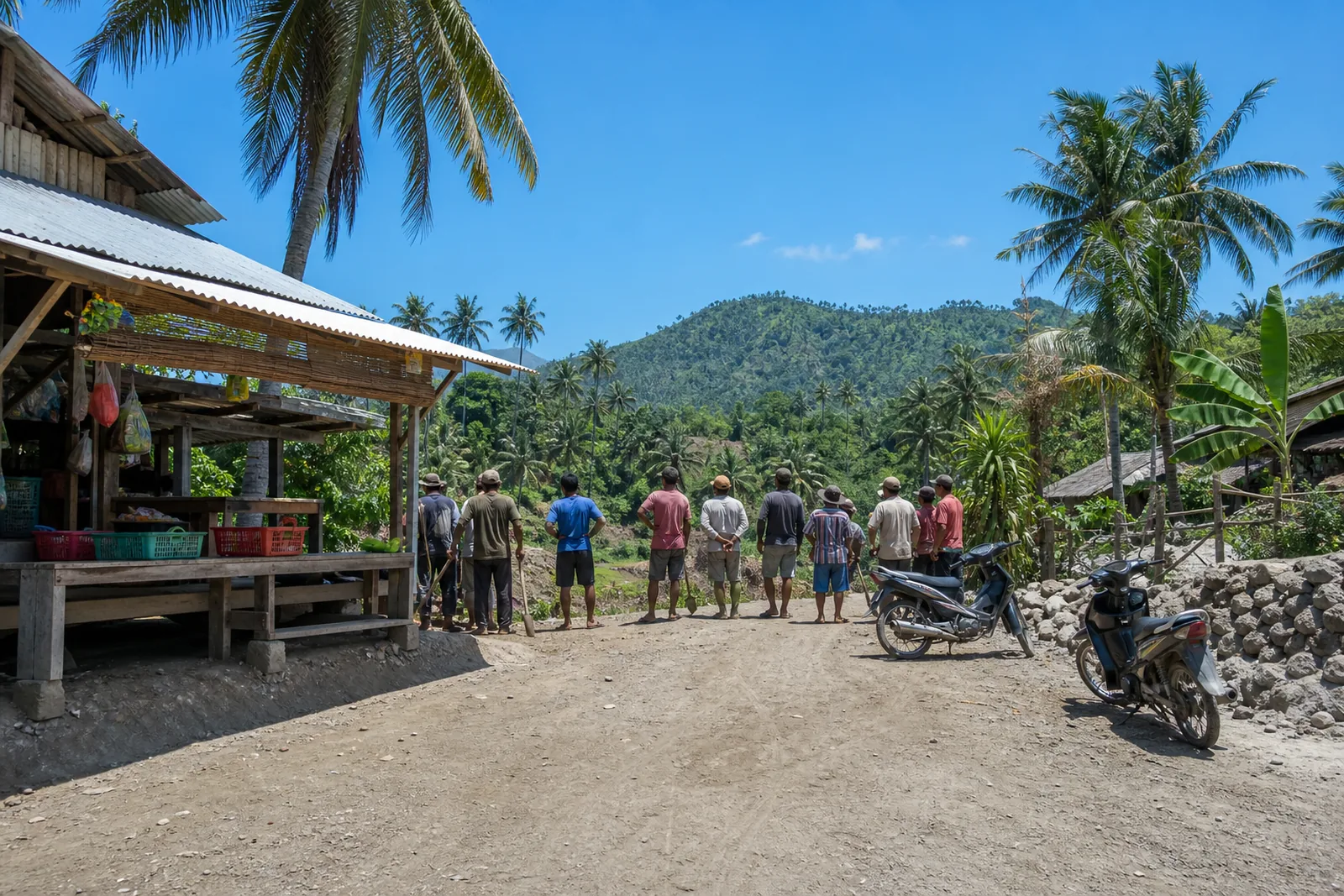
Officials from the central government have been sent to Labuan Bajo and Maumere to support the response on the ground. The stated priority is practical and immediate: affected communities must receive assistance, aid and services, while access to impacted areas is secured so that emergency operations can proceed.
“The government is moving fast,” Yudhoyono said, adding that access to affected areas must be secured quickly so emergency response is not hindered.
The official response encompasses several parallel tasks:
- assistance for victims and evacuation efforts;
- distribution of aid;
- reopening cut-off access routes;
- restoration of connectivity and basic public services; and
- subsequent rehabilitation and reconstruction of homes, infrastructure and public facilities.
Antara reported that tens of thousands of staple-food packages supplied through Presidential Assistance had been dispatched for affected communities. Relevant ministries and agencies are continuing the response within their respective duties and authorities.
For investors accustomed to reading disaster events through a market lens, the sequencing matters. The immediate issue is the safety and welfare of affected people. The next is whether access, logistics and public services can be restored effectively. Only after confirmed operational information emerges is it sensible to assess implications for visitor movement, local businesses or real-estate activity.
A Coordinated Infrastructure Test
The response brings together the Coordinating Ministry for Infrastructure and Regional Development, the Ministry of Public Works, the Ministry of Transportation, the National Disaster Management Agency (BNPB), regional governments, regional disaster management agencies (BPBD), and other relevant parties.
That coordination is central to the government’s stated approach. Disaster management is not solely a relief operation; it also depends on restoring access and the infrastructure that allows aid, people and services to move. Yudhoyono said the government remains engaged through both the emergency phase and the recovery process.
The language from Jakarta is therefore significant for anyone with exposure to eastern Indonesia. It signals that the administration is treating connectivity and public services as integral to the emergency response, alongside aid distribution and evacuation.
Yet investors should keep the boundary between statement and outcome clear. The source reports the government’s priorities, deployments and coordination efforts. It does not provide a verified account of the eventual condition of individual transport links, tourism facilities, property assets or commercial operations. Those questions require site-specific and official confirmation.
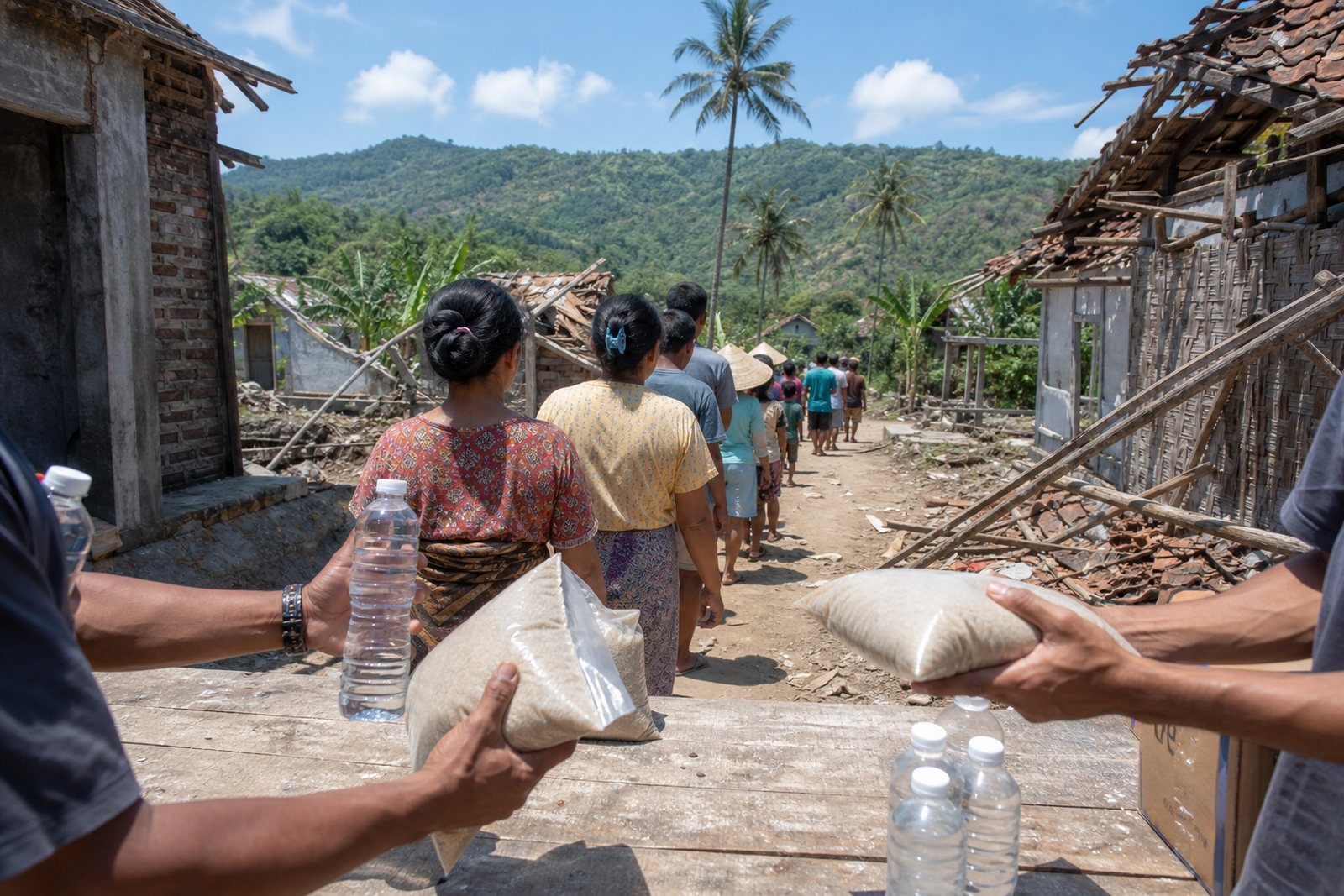 Daily Dispatch · Illustration: HubLombok (AI-generated)
What Is Confirmed, and What Is Not
The most disciplined reading of a fast-moving disaster story is to separate confirmed facts from unverified inferences. At present, the supplied report confirms the government’s response measures and its intention to restore connectivity and basic services. It also records condolences from the minister for lives lost, injuries and damage caused by the earthquake.
It does not establish a direct impact on South Lombok. Nor does it provide a basis for quantifying disruption to Lombok tourism, construction schedules, villa operations, land values or rental performance. A responsible investor should not treat a regional headline as evidence of a change in any of those areas.
This distinction is especially important in a market where investment decisions can involve multiple moving parts: travel access, contractor availability, property management and legal completion. During a live event, the most useful information is often specific rather than dramatic. Is the relevant route operating? Can a local team access a site? Are public services functioning? Has an operator issued a verified update?
For foreign buyers, it is also a reminder that property diligence has to extend beyond a glossy investment case. In Lombok, foreigners cannot hold freehold Hak Milik (SHM); citizens only may do so. Available routes include leasehold, Hak Pakai for qualifying residents, and a foreign-owned PT PMA holding Hak Guna Bangunan (HGB). Nominee arrangements in which an Indonesian holds freehold on a foreigner’s behalf are illegal and void in court.
Those legal facts do not change because of this earthquake report. But a rapidly evolving event underscores why buyers should have a clear documentary record, an independently reviewed transaction structure and reliable local channels for operational updates. TerraNusa Advisory, HubLombok’s independent licensed-notary and legal advisory partner for foreign buyers in Lombok, advises across due diligence, company setup, taxes and title-transfer processes at the land office (BPN).
What This Means for Investors
For now, the appropriate posture is alert, humane and evidence-led. The government’s response is focused on NTT: evacuation, relief, access, connectivity, essential services and eventual reconstruction. Investors with eastern Indonesian travel plans, operational dependencies or local counterparts should seek updates directly from official channels and their own verified service providers.
A useful decision framework is straightforward:
| Question | Sensible response now | |---|---| | Is a specific asset affected? | Seek confirmation from the operator, owner or local manager. | | Is a journey affected? | Check the relevant transport provider and official notices. | | Does this alter a Lombok investment thesis? | Do not assume so without verified Lombok-specific evidence. | | Is a transaction under way? | Keep legal, title and payment checks independent and documented. |
This caution does not mean ignoring the event. It means responding proportionately. For investors, resilience is partly a matter of information discipline: knowing the difference between a confirmed government action, a local operational update and an untested market narrative.
HubLombok’s editorial perspective is also necessarily clear about its own position. HubLombok is the editorial arm of Samudra Villas, an active developer in Are Guling, South Lombok. That connection does not provide evidence about the NTT earthquake’s operational effects, and it should not be read as such. The current report concerns the government’s response in NTT, not a verified change to conditions in South Lombok.
The next meaningful signals will be official updates on the emergency response, access and restoration of services. Until then, investors should resist the temptation to turn a live humanitarian event into a premature market call. Jakarta has stated that it will remain on the ground through the emergency period and recovery process; the quality of subsequent, verified operational information will matter more than speculation.
Stay informed, subscribe to the free Lombok Briefing for market intelligence like this, published twice a month.
Does the NTT earthquake have a confirmed impact on Lombok property?
No confirmed direct impact on South Lombok property is stated in the supplied report. It covers the government response in East Nusa Tenggara, including aid, evacuation, access routes, connectivity and basic services. Investors should seek verified, site-specific updates before altering a property decision.
What is the Indonesian government prioritising after the earthquake?
The government says it is prioritising assistance to victims, evacuation, aid distribution, reopening cut-off access routes, and restoring connectivity and basic public services. Central and regional agencies are coordinating the emergency response and the later rehabilitation and reconstruction process.
How should a Lombok investor respond to this live event?
Monitor official notices and confirm operational details with relevant transport providers, property operators or local managers. Do not infer a change to Lombok tourism, villa operations, land values or rental performance from this report, because it does not establish Lombok-specific effects.

The Lombok Buyer's Field Guide
Legal structures ranked by risk, the honest ROI math line by line, all six zones ranked, and the 24-point due-diligence checklist. The whole book, free in your inbox.
See what's inside