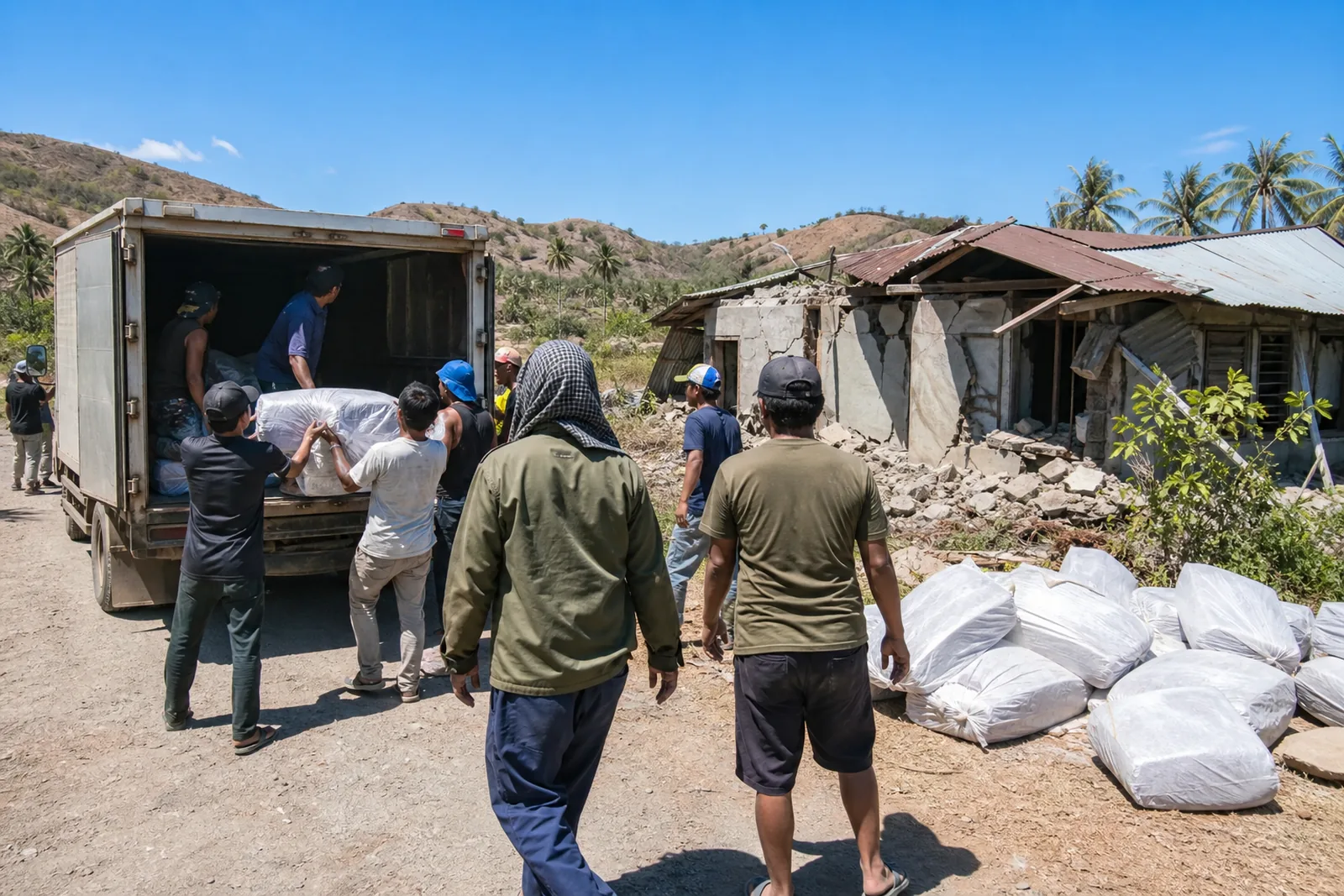
NTT earthquake death toll rises to 103 as BNPB updates injury data
Indonesia’s disaster agency reports 103 deaths and 1,666 injuries following the August 15 earthquake in East Nusa Tenggara.
Indonesia’s National Disaster Mitigation Agency (BNPB) has reported that the death toll from the East Nusa Tenggara earthquake has risen to 103. The agency also said the number of injured people had increased to 1,666 as additional reports arrived from affected areas.
BNPB reports a further rise in fatalities
The updated figures were presented by Berton SP Panjaitan, acting head of BNPB’s Disaster Data, Information, and Communication Center, at a Tuesday press conference, according to Antara.
Panjaitan said that three additional deaths had been recorded since the previous update, when the reported toll stood at 100 on Monday, August 24. The earthquake struck East Nusa Tenggara, or NTT, in the early hours of Saturday, August 15.
BNPB’s latest update records 103 deaths and 1,666 injuries following the magnitude-7.7 earthquake.
The reported fatalities were distributed across several districts:
- Manggarai: 41 deaths
- East Manggarai: 34 deaths
- Nagekeo: 13 deaths
- Sikka: six deaths
- Ngada: five deaths
- Ende: three deaths
- West Manggarai: one death
The distribution underlines the broad geographical reach of the disaster response. BNPB said it was continuing to update casualty data as information arrived from affected communities.
Injury count reaches 1,666
The number of people reported injured rose from 1,603 on Monday, August 24, to 1,666 in the Tuesday update. East Manggarai District recorded the largest injury count cited in the BNPB briefing.
There, 239 people were reported to have suffered serious injuries and 404 people minor injuries. These figures offer an indication of the continuing emergency burden on local communities and the agencies working on the ground.
BNPB has cautioned, in effect, that the data remains subject to ongoing revision as further reports are received. That is an important distinction for readers following the situation: disaster reporting develops as affected areas are assessed, victims are identified and local authorities consolidate information.
Demographic profile of the reported fatalities
BNPB also provided a demographic breakdown of those reported dead. Men accounted for 45% of fatalities, while women accounted for 55%.
By age group, the agency said:
- 45% of those who died were elderly people;
- 37% were adults;
- 12% were children and adolescents; and
- the remaining fatalities were infants and toddlers.
These details focus attention on the human consequences behind the aggregate death toll. They also help explain why relief operations are not simply a matter of restoring physical access: the needs of elderly residents, injured people, children and families can differ substantially during an emergency response.
Tsunami warning lifted after the August 15 quake
The Meteorology, Climatology and Geophysics Agency (BMKG) issued a tsunami early warning after the earthquake struck. According to the source report, that warning was lifted several hours later.
President Prabowo Subianto said the government was deploying relevant personnel to address conditions on the ground and to support affected communities. In an Instagram post monitored on August 16, he said the aim was to ensure prompt and comprehensive emergency assistance.
The response has continued alongside efforts to establish the scale of casualties and injuries. Antara also listed related reports concerning a 24-hour free clinic, roads as a recovery priority in Flores, and trauma-relief activities for children affected by the earthquake.
What this means for investors
For investors with an interest in Indonesia, the immediate significance of this story is humanitarian rather than transactional. The verified information available here concerns casualties, injuries, emergency warnings and the public response to a major earthquake in NTT; it does not provide evidence of effects on particular property markets, tourism activity, infrastructure assets or investment projects.
That restraint matters. In periods of crisis, market commentary can easily outrun the available facts. The responsible approach is to distinguish clearly between confirmed disaster information and claims about commercial consequences that have not been substantiated.
Investors assessing Indonesia-related exposure should therefore follow official updates from BNPB and BMKG, while treating any wider conclusions with care until supported by reliable reporting. The current record establishes a grave human toll and an active relief effort, but it does not itself quantify any economic or property-market impact.
As casualty reporting continues to develop, the clearest priority remains the delivery of emergency assistance to communities affected by the August 15 earthquake.
Stay informed, subscribe to the free Lombok Briefing for analysis like this, published twice a month.
What is the latest reported death toll from the NTT earthquake?
BNPB reported 103 deaths in its Tuesday update on the East Nusa Tenggara earthquake that struck on August 15, 2026. The figure was three higher than the 100 deaths reported on Monday, August 24, as additional reports were received from affected areas.
How many people were injured in the NTT earthquake?
BNPB reported 1,666 injured people in its Tuesday update, up from 1,603 recorded on Monday, August 24. In East Manggarai District, the agency cited 239 serious injuries and 404 minor injuries.
Does the report confirm an impact on Lombok property or tourism?
No. The supplied report confirms casualty figures, injuries, a magnitude-7.7 earthquake, a tsunami early warning that was later lifted, and government emergency support in NTT. It does not quantify any effect on Lombok property, tourism, infrastructure or investment activity.

The Lombok Buyer's Field Guide
Legal structures ranked by risk, the honest ROI math line by line, all six zones ranked, and the 24-point due-diligence checklist. The whole book, free in your inbox.
See what's inside