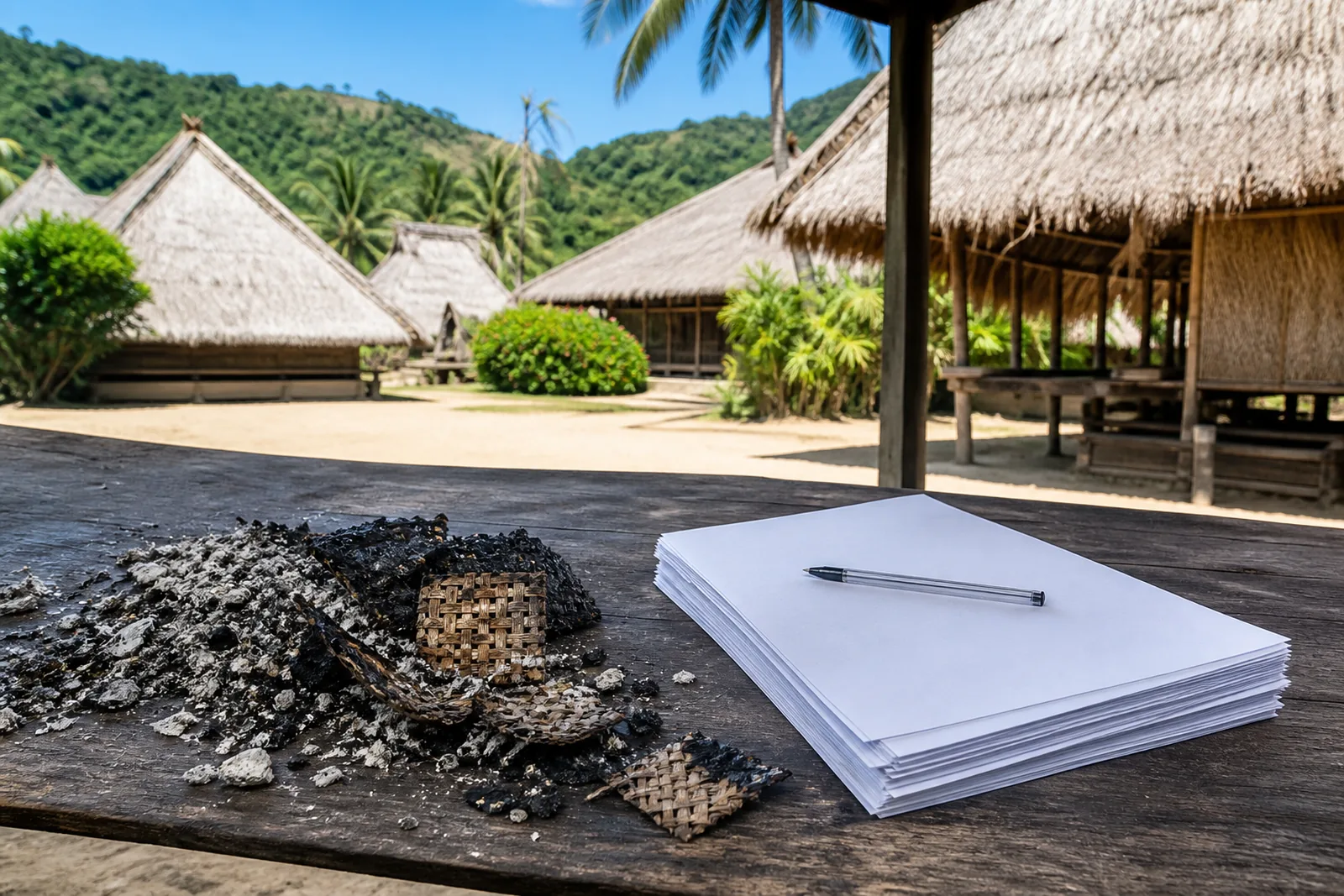
Daily Dispatch: NTB Starts Sade Heritage Inventory After Village Fire
NTB has begun documenting cultural losses at Sade Traditional Village, with reconstruction planning to follow alongside local and national heritage bodies.
Quick answer: West Nusa Tenggara’s Culture Office has begun inventorying cultural artifacts and living traditions affected by the fire at Sade Traditional Village in Central Lombok. For Lombok investors, the immediate significance is cultural: authorities are prioritising preservation, documentation and a reconstruction plan, while no assessment of commercial or tourism impact has been announced.
The response is moving beyond the visible damage. Officials are seeking to identify and save what remains, while recording the stories, knowledge and traditions held by Sade’s indigenous community, an acknowledgement that the village’s heritage is both physical and lived.
For a destination economy, that distinction matters. Sade is renowned for weaving, and the work now described by the provincial government concerns not simply rebuilding structures, but preserving the cultural references that allow heritage to be understood and restored after disaster.
The Context
The Culture Office of the West Nusa Tenggara provincial government has started an inventory of artifacts and cultural elements damaged by the fire in Sade Traditional Village, Central Lombok District. Muhamad Ihwan, head of the NTB Culture Office, said the process is the initial step in preserving the village’s cultural heritage.
The stated task has two strands. The office is identifying and saving remaining cultural artifacts; it is also documenting the knowledge, stories and traditions that continue among Sade’s indigenous people. Ihwan described the latter as especially important.
“The most important part is saving cultural artifacts, including the stories of local residents,” Ihwan said after inspecting post-fire conditions at Sade Traditional Village.
That formulation is important because the planned review extends beyond tangible objects. The inventory is intended to evaluate damage to physical cultural items as well as intangible cultural elements that form part of Sade Traditional Village’s identity.
The source does not set out the scale of the loss, a timetable for reconstruction, or an estimate of the fire’s effect on visitors, businesses or nearby property. Investors should therefore resist converting a heritage-preservation response into a claim about short-term tourism or asset performance. The verified development is narrower, but consequential: officials have begun the record-making needed to decide what can be protected and how restoration should proceed.
From Inventory to Reconstruction
Once the inventory is complete, the NTB Culture Office says it will formulate reconstruction steps and plan redevelopment of the area. The work is to be undertaken in collaboration with the Cultural Preservation Center, the Central Lombok District Government and local traditional elders.
This proposed arrangement places cultural stewardship alongside government coordination. It also recognises that restoration decisions cannot be reduced to replacing damaged objects. Traditional elders are named as collaborators in a process concerned with the identity of the village, while the preservation authorities will help shape the formal response.
The emphasis on documentation is particularly clear around weaving. Sade Traditional Village is renowned for this tradition, and the Culture Office is encouraging comprehensive records of cultural objects, especially collections and weaving equipment. Ihwan said the government wants relevant items documented and replicas made, so that references exist for future preservation and restoration.
A concise reading of the announced programme is below:
| Announced action | Purpose stated by the NTB Culture Office | |---|---| | Inventory damaged artifacts and cultural elements | Evaluate damage to tangible and intangible heritage | | Save remaining artifacts and document local stories | Preserve objects, knowledge and traditions | | Record weaving collections and equipment | Protect a defining element of Sade’s identity | | Produce replicas | Create references for future restoration | | Plan reconstruction with public and customary partners | Redevelop the affected area after the inventory |
The practical value of such an inventory is easy to see. Damage that is not recorded is harder to evaluate; cultural material that has no reference is harder to recreate faithfully. Yet the article makes no promise that every affected item can be restored. Its significance lies in the authorities’ decision to build an evidential base before setting reconstruction steps.
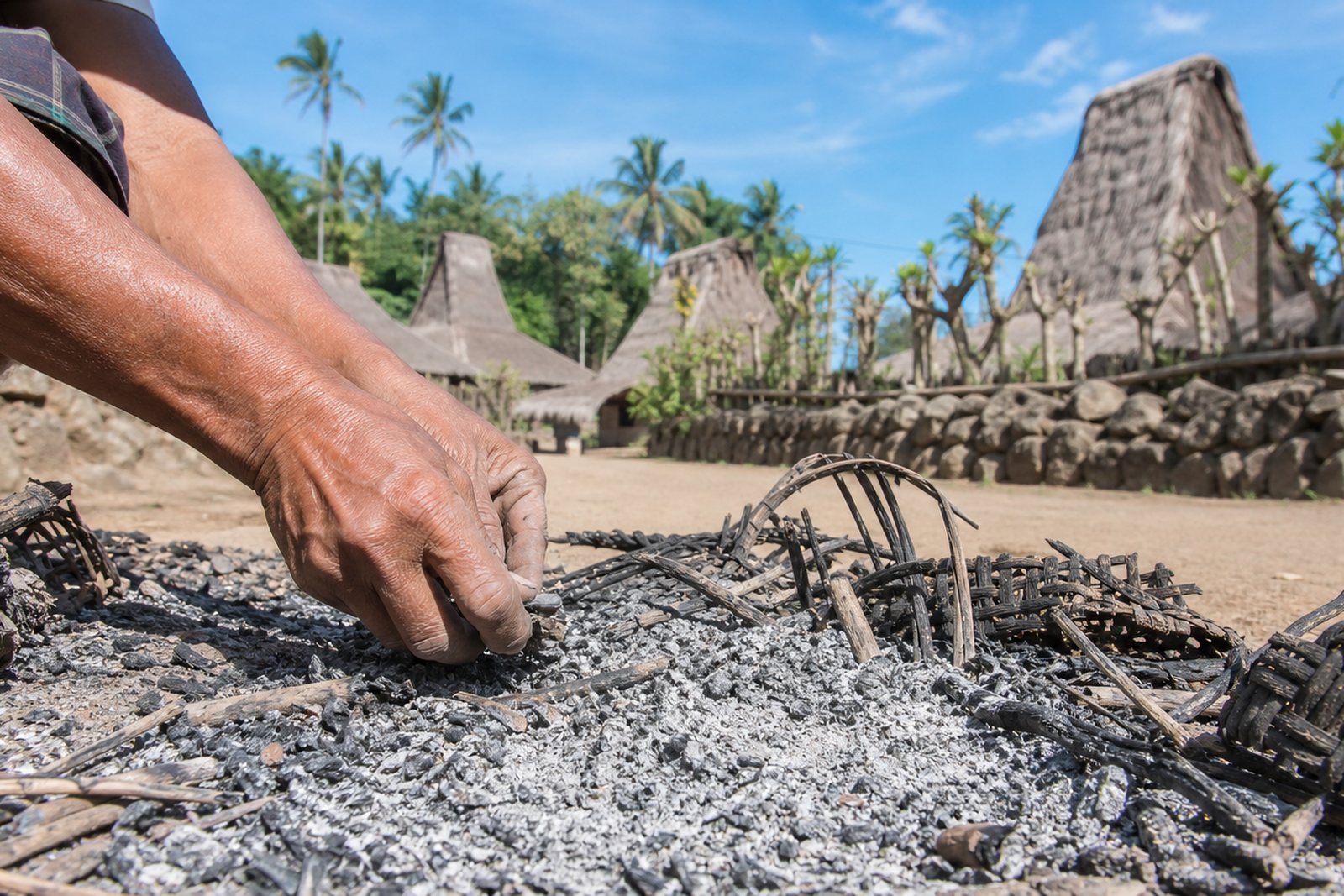 Daily Dispatch · Illustration: HubLombok (AI-generated)
A Wider Test of Disaster Readiness
Ihwan has framed the incident as an opportunity to strengthen protection for cultural assets vulnerable to disasters. His warning was not confined to Sade. He cited a fire at Bayan Traditional Village several months earlier, followed by the fire in Sade, as grounds for reminding traditional villages across West Nusa Tenggara to improve preparedness.
The requested safeguards are specific:
- fire-extinguishing systems or early-warning systems in all traditional villages in West Nusa Tenggara;
- personnel specially trained in disaster mitigation;
- more comprehensive documentation of cultural objects;
- replicas that can support preservation and restoration after future disasters.
“All traditional villages in West Nusa Tenggara must be equipped with fire extinguishing systems or early warning systems,” Ihwan said. “Traditional villages must also have personnel specially trained in disaster mitigation.”
For investors, this is a reminder that destination quality includes resilience, not just scenery or accommodation. Heritage locations depend on assets that can be unusually difficult to replace: physical artifacts, techniques, local narratives and community-held knowledge. A formal inventory and replica programme does not remove that exposure, but it is a practical response to it.
It is also worth separating confirmed actions from inference. The government has begun the inventory, is encouraging documentation and replicas, and plans to formulate reconstruction steps with named partners. The source does not say that systems have already been installed, that a reconstruction plan has been finalised, or that any specific property or tourism outcome will follow.
What This Means for Investors
The immediate investment takeaway is not a pricing signal. It is a live governance and resilience development in Central Lombok: provincial authorities are treating Sade’s post-fire recovery as a cultural-preservation exercise, with attention to both material artifacts and intangible heritage.
Investors with exposure to Lombok’s visitor economy should monitor three areas as the response develops:
- The inventory outcome: this should clarify the damage to physical and living cultural elements, though no scope or completion timetable has been provided.
- The reconstruction plan: the Culture Office says it will formulate one with the Cultural Preservation Center, the Central Lombok District Government and local traditional elders.
- Preparedness measures: officials are calling for fire systems, early warning and trained disaster-mitigation personnel across traditional villages in West Nusa Tenggara.
There is a broader lesson in the sequencing. Before redevelopment is planned, the authorities are trying to establish what remains, what has been affected and what knowledge should be retained. That is sensible cultural-risk management, and a more reliable basis for judging future developments than speculation in the immediate aftermath of a fire.
Sade’s recovery will ultimately be measured by more than rebuilt fabric. The current official effort is aimed at retaining the artifacts, weaving heritage, stories and traditions that give the village its character. For investors watching Lombok, the relevant near-term signal is that cultural continuity is now explicitly part of the public response.
Stay informed, subscribe to the free Lombok Briefing for market intelligence like this, published twice a month.
What is NTB doing after the Sade Traditional Village fire?
The NTB Culture Office has begun inventorying damaged cultural artifacts and elements at Sade Traditional Village. It is also identifying remaining items and documenting local knowledge, stories and traditions before formulating reconstruction steps with heritage authorities, Central Lombok’s government and traditional elders.
Will Sade Traditional Village be reconstructed after the fire?
The NTB Culture Office says it will formulate reconstruction steps and plan redevelopment after the inventory process. The work is planned with the Cultural Preservation Center, the Central Lombok District Government and local traditional elders; the source provides no timetable or final reconstruction plan.
What does the Sade fire mean for Lombok investors?
The immediate confirmed implication is a cultural-resilience response, not a property or tourism forecast. Officials are documenting artifacts, weaving equipment and living traditions, while calling for fire systems, early warning and trained disaster-mitigation personnel in traditional villages across West Nusa Tenggara.
The Lombok Buyer's Field Guide
Legal structures ranked by risk, the honest ROI math line by line, all six zones ranked, and the 24-point due-diligence checklist. The whole book, free in your inbox.
See what's inside