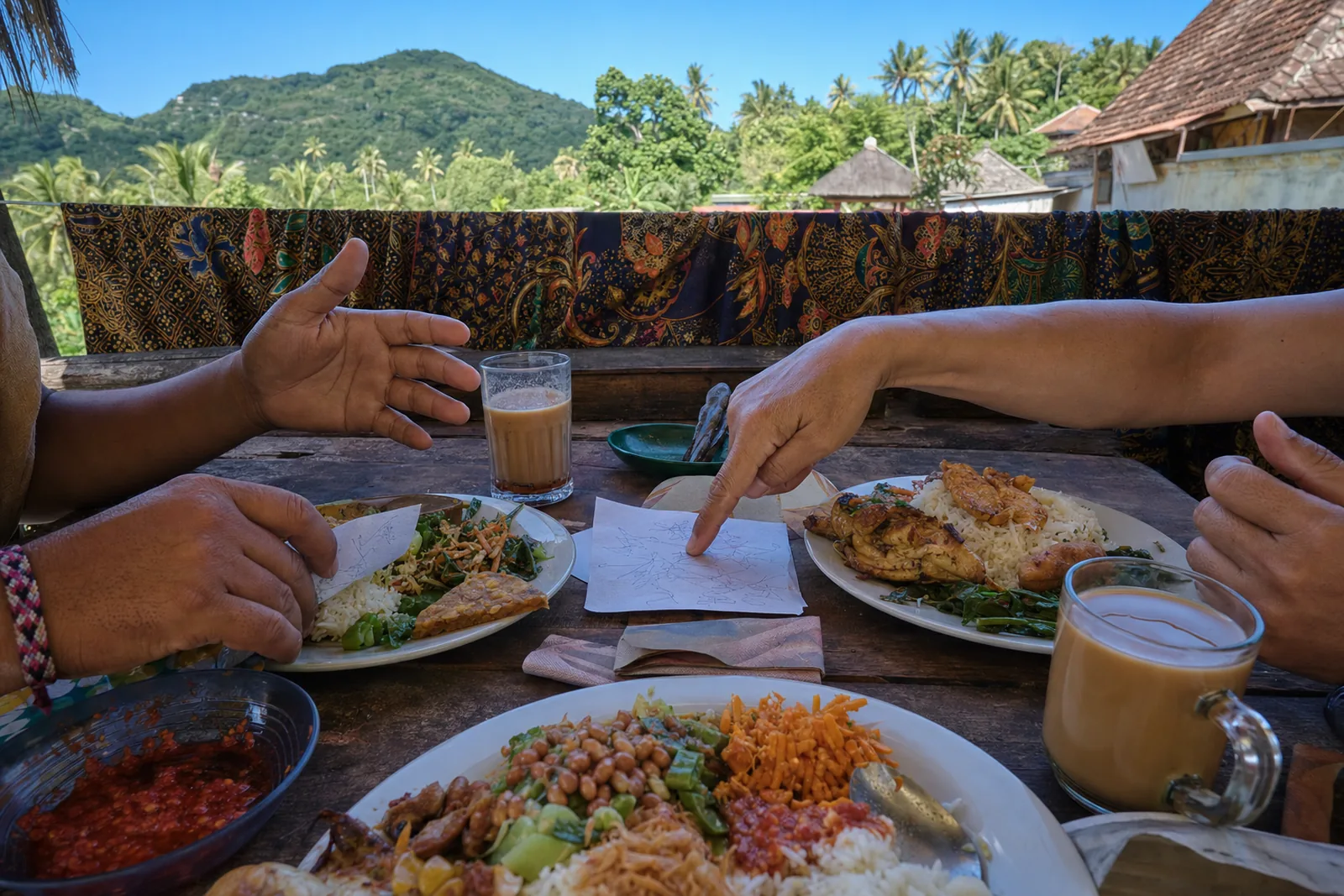
Lombok Notebook: Why NTB’s tourism strategy matters beyond hotels
NTB officials are framing tourism as a cross-sector economic programme. For Lombok investors, execution and local participation now matter as much as visitor growth.
Quick answer: NTB’s government is positioning quality tourism and the creative economy as a cross-sector priority, linking destinations to local enterprise, skills and natural assets. For Lombok investors, the significance is strategic rather than immediate: the investable question is whether this co-ordination improves the quality, resilience and local economic reach of tourism demand.
A co-ordination meeting in Mataram is not, on its own, an investable event. Yet it offers a useful window into how the provincial government wants to think about tourism: not as a standalone visitor industry, but as an organising framework for agriculture, fisheries, forestry, small businesses, creative industries and human-capital development.
That distinction matters in Lombok. Investors often focus, understandably, on a villa’s location, design and projected bookings. But the durability of any destination rests on a wider system: the quality of its products, the capabilities of its workforce, the condition of its landscapes and the extent to which communities see a reason to participate in tourism’s growth.
The Context
On 25 June, according to an official Instagram post from DPMPTSP Provinsi NTB, the provincial development planning agency, Bappeda NTB, convened a co-ordination meeting to strengthen the region’s flagship programme for quality tourism and a globally oriented creative economy. Representatives of provincial government bodies attended, with the stated purpose of improving synergy and collaboration around regional priorities.
The key message from Bappeda’s head was institutional rather than promotional. Tourism programmes, the official said, require cross-sector collaboration and cannot be delivered in fragments by a single government department. The post identified links with agriculture, forestry, fisheries, micro, small and medium-sized enterprises, the creative economy and human-resource development.
“Tourism is not only the business of the Tourism Office,” the Bappeda head said, according to the official post. “All sectors have an important role” in creating destinations that are high-quality, sustainable and economically beneficial to communities.
For investors, this is a more mature framing than a simple arrivals narrative. Tourism can create demand for accommodation, but destination value is shaped by what visitors experience beyond their room: food supply, cultural activity, local services, landscapes, transport reliability and the consistency of hospitality. A provincial programme does not guarantee those outcomes; it does, however, acknowledge that they are interdependent.
The official post also points to NTB’s rice fields, forests, beaches and community life as assets that can become economically valuable visitor attractions if managed in an integrated and sustainable way. That language deserves careful reading. It is an expression of government intent, not evidence that any particular asset has been commercialised successfully or that a specific investment will benefit. The useful signal is the direction of policy: tourism is being discussed alongside stewardship and participation, rather than solely as construction or promotion.
This arrives against a South Lombok market backdrop in which foreign arrivals have been trending 40–50% year on year, according to HubLombok’s verified market data. Kuta/Mandalika villa rates are about 38% year on year higher. Those figures describe market momentum, not the outcome of this meeting; investors should resist treating a policy discussion as a direct cause of either trend.
Tourism as an Economic System
The NTB Tourism Office, as represented in the official account, described its quality-tourism concept as focused on improving destination quality, tourism products, human resources and local-community involvement. It also placed this work within efforts to strengthen the creative economy and tourism competitiveness nationally and internationally.
That agenda shifts the analytical lens from volume to composition. More visitors are not automatically better visitors for a destination, its residents or asset owners. Quality tourism, as framed by the provincial authorities, implies a concern with the standard of the destination and the product, as well as who is equipped to participate in the economy around it.
For a property investor, several distinctions follow:
- A growing accommodation market is not identical to a stronger destination economy.
- A visually attractive site is not identical to a managed, sustainable visitor product.
- A rental forecast is not identical to an operating plan that accounts for fees, booking channels and realistic occupancy.
- A development’s success is not independent of the surrounding community, workforce and local supply base.
The last point is particularly important in an earlier-cycle market. South Lombok offers turnkey investment-grade villa entry prices of EUR 95,000–350,000, compared with USD 400,000–800,000 for comparable specification in Bali. That relative pricing supports the familiar “Bali-overflow” thesis: rising costs and congestion in Bali may push some demand towards a cheaper, earlier-stage Lombok market. But it is a thesis, not a guarantee.
The provincial meeting adds a complementary perspective. If NTB’s strategy is implemented as described, investment appeal need not depend solely on a transfer of demand from elsewhere. It could increasingly depend on whether Lombok develops a more coherent visitor proposition of its own, built around destination quality, local products and a capable workforce. Conversely, if cross-sector co-ordination remains aspirational, investors should expect the usual friction between a promising location and an uneven operating environment.
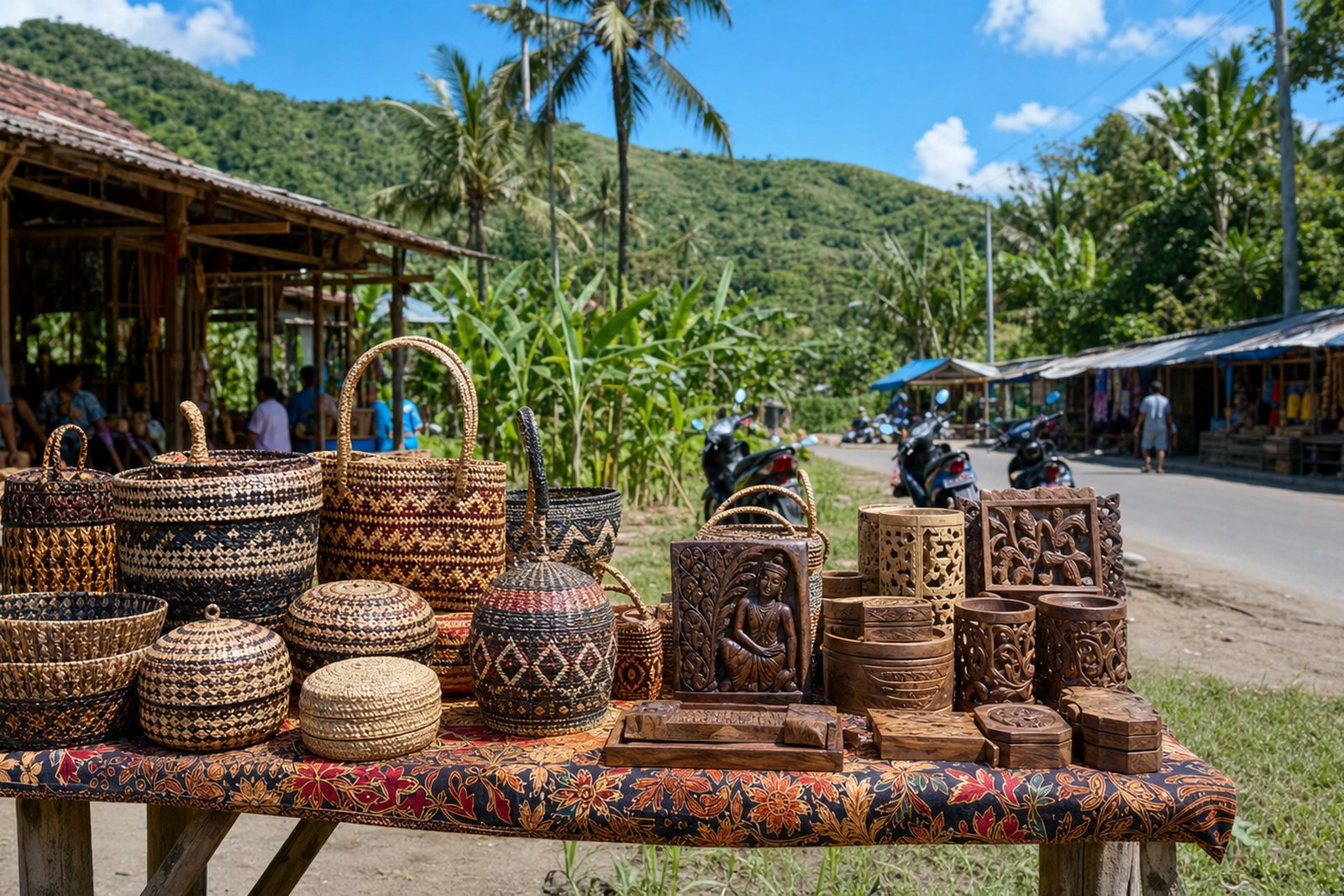 Lombok Notebook · Illustration: HubLombok (AI-generated)
A useful way to read the official announcement is therefore as a governance signal. It tells investors what provincial institutions say they wish to align. It does not reveal a budget, timetable, delivery milestones, visitor targets or project pipeline. None was provided in the source. Those omissions are not a criticism; they define the limits of what can responsibly be concluded from a first-party social-media post.
The Local Participation Test
The strongest part of the announcement may be its emphasis on community involvement. The Tourism Office said local participation forms part of the quality-tourism approach, while Bappeda linked tourism to sectors that are deeply local by nature: farms, fisheries, forests, small businesses and creative work.
This matters because a destination’s licence to grow is rarely an abstract matter. A visitor economy becomes more durable when economic benefits are sufficiently visible to the people and enterprises that share the place. That is not a claim that such a distribution has already been achieved in NTB. Rather, it is the practical implication of the provincial government’s stated objective that tourism should deliver economic benefits to communities.
For investors, community participation should be assessed as operating due diligence, not as a decorative sustainability paragraph. Questions worth asking a developer, operator or adviser include:
- Which local services and suppliers will the asset rely on?
- How will staffing, training and service standards be developed over time?
- Does the project complement the character and capacity of its surrounding area?
- What assumptions link the visitor experience to natural and community assets?
- Which claims are documented plans, and which are merely marketing language?
The same discipline applies to income projections. Developer-quoted gross yields in South Lombok can range from 12–22%, but gross income excludes material costs. Honest net rental yields are typically 7–12% after management fees and realistic occupancy, while top-performing assets can reach about 15% net. Management fees can be 18–22% of gross rental revenue, and OTA or booking commissions 15–20%.
The official meeting did not discuss these investment mechanics. It did, however, put destination quality and human resources at the centre of its stated approach. In practical terms, those themes are relevant to the service quality that helps an accommodation asset compete, even though they cannot substitute for project-specific underwriting.
Investors should also separate tourism policy from property rights. Foreigners cannot hold Indonesian freehold, or Hak Milik/SHM. Available legal routes include leasehold, Hak Pakai for qualifying residents, and a foreign-owned PT PMA holding HGB. Nominee arrangements, in which an Indonesian national holds freehold on a foreign buyer’s behalf, are illegal and void in court. A licensed PPAT notary executes deeds; careful title, zoning and encumbrance checks remain essential regardless of the broader tourism narrative.
What This Means for Investors
The immediate conclusion is measured. NTB’s official post is not a reason to revise a valuation or assume a faster return. It is a useful indicator that provincial authorities are articulating a broader model of tourism-led development, with quality, local participation, creative industries and cross-sector collaboration at its centre.
For those considering Lombok exposure, the sensible response is to incorporate that model into a wider diligence framework:
| Investor lens | What the NTB announcement suggests | What still requires proof | |---|---|---| | Destination demand | Authorities want to improve destination and tourism-product quality | Local demand drivers and asset-level bookings | | Operations | Human resources are a stated priority | The operator’s staffing, standards and cost assumptions | | Community context | Local involvement is part of the stated approach | Specific supplier, employment and engagement plans | | Sustainability | Natural assets are to be managed in an integrated way | Site suitability, permissions and practical safeguards |
The discipline here is to distinguish direction from delivery. The provincial government’s ambition may support a more balanced long-term destination proposition. Yet investors should make decisions from legal documents, site-specific evidence, realistic revenue assumptions and an operator’s demonstrated capability, not from an announcement alone.
For Lombok, that may be the most encouraging aspect of the message. The authorities are explicitly treating tourism as connected to the real economy around it. If that view is translated into consistent execution, it could strengthen the foundations on which hospitality assets ultimately depend. Until then, it is a lens for asking better questions, rather than a shortcut to an investment conclusion.
Stay informed, subscribe to the free Lombok Briefing for market intelligence like this, published twice a month.
What did NTB officials say about quality tourism?
According to DPMPTSP Provinsi NTB’s official post, provincial officials described quality tourism as a cross-sector priority involving destination quality, tourism products, human resources and local-community involvement, alongside the creative economy.
Does NTB’s meeting change the investment case for Lombok now?
No immediate valuation conclusion follows from the meeting. It signals the provincial government’s stated direction, but the post provided no budget, timetable, delivery milestones or project pipeline. Investors still need asset-specific legal, operational and revenue due diligence.
How should investors assess Lombok rental-yield claims?
Separate gross from net returns. Developer-quoted gross yields can be 12–22%, while honest net rental yields are typically 7–12% after management fees and realistic occupancy. Management fees can be 18–22% of gross rental revenue, with OTA commissions of 15–20%.

The Lombok Buyer's Field Guide
Legal structures ranked by risk, the honest ROI math line by line, all six zones ranked, and the 24-point due-diligence checklist. The whole book, free in your inbox.
See what's inside