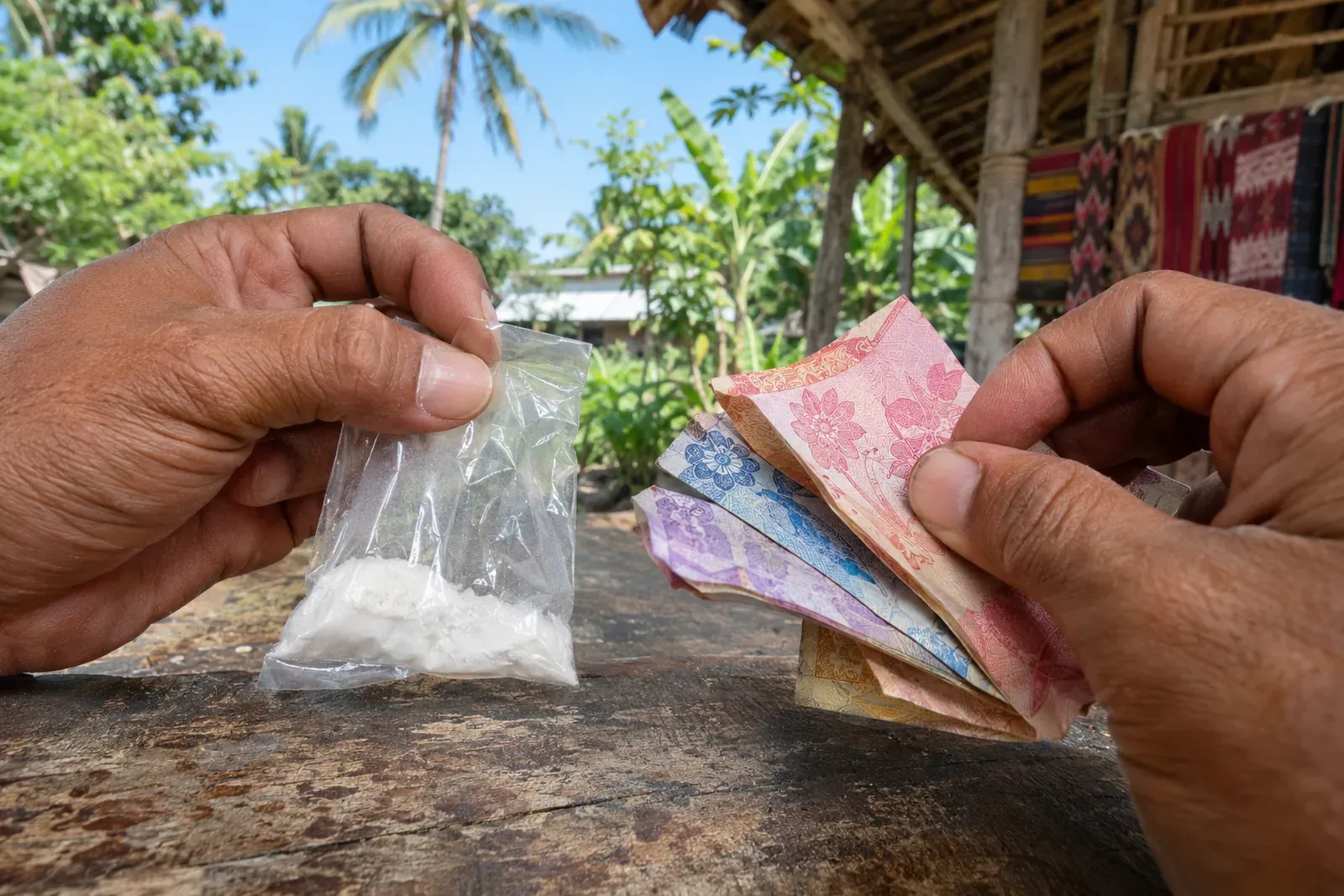
NTB Police Face Scrutiny as Mataram Drug Case Raises Due Diligence Questions
A denial of police payoffs following a Mataram narcotics raid highlights the vital role of formal legal compliance and institutional transparency for Lombok investors.
Public integrity and the rule of law in West Nusa Tenggara have come under renewed focus following public allegations surrounding a narcotics raid in the provincial capital of Mataram. For international investors deploying capital across Lombok, the episode provides an instructive case study in regional institutional accountability and the absolute necessity of formal legal procedure.
According to regional reporting by Radar Lombok, three university students from Bima, identified by the initials GT, WAM, and WH, were secured by the Directorate of Narcotics Investigation of the West Nusa Tenggara Regional Police (Ditresnarkoba Polda NTB) during a search of a boarding house in Mataram. Following their subsequent release, public rumours suggested that illicit payments had been delivered to police investigators to halt legal proceedings. Legal counsel representing the three individuals, Safran, firmly rejected those claims, stating on the record that his clients never provided money or informal settlements of any kind to avoid prosecution.
While narcotics enforcement in an urban student residence may appear distant from the commercial real estate and tourism projects taking shape across the island, experienced market participants recognise that jurisdictional perception is indivisible. As foreign direct investment accelerates, the administrative and legal conduct of provincial authorities establishes the framework within which private enterprise operates.
Governance and Institutional Transparency in West Nusa Tenggara
West Nusa Tenggara is undergoing one of the most rapid economic evolutions in eastern Indonesia. Provincial authorities in Mataram oversee regulatory administration, land certification, and law enforcement for both Lombok and Sumbawa. In this climate of rapid expansion, administrative transparency serves as the bedrock for cross-border capital.
When allegations of procedural irregularity or informal settlement arise in the local press, they test public confidence. The prompt public denial by legal counsel Safran illustrates the scrutiny now directed at policing practices across the province. In an earlier era of frontier investment, informal dispute resolution was frequently whispered about but rarely challenged publicly. Today, formal legal representation and public accountability are becoming standard features of the civic landscape.
For foreign family offices and individual buyers evaluating Lombok, institutional credibility directly influences sovereign risk assessments. Foreign-arrivals trend data indicates a substantial expansion of +40-50% YoY, supported by broad tourism recovery and international sporting events. Sustaining this momentum requires local institutions to demonstrate reliable, transparent governance across civil administration and criminal justice alike.
Moving Past Informal Pathways in Emerging Markets
The Mataram case reinforces an essential lesson: informal arrangements and undocumented transactions present severe liabilities in Indonesia. In property acquisition and commercial structuring, foreign entrants historically encountered intermediaries proposing administrative shortcuts, off-the-books facilitation, or informal nominee titles.
Indonesian law is unequivocal regarding foreign ownership and formal title. Nominee agreements, where an Indonesian citizen holds freehold title on behalf of a foreign national, are strictly illegal and entirely void in a court of law. Similarly, any transaction attempting to bypass official statutory procedures exposes the investor to total capital forfeiture without judicial recourse.
Legitimate foreign investment must adhere strictly to statutory mechanisms defined by the agrarian law and monitored by the national land agency (BPN):
- Leasehold (Hak Sewa): Standard long-term lease structures, typically spanning 25 to 30 years with formal contractually defined extension terms.
- Right to Use (Hak Pakai): A personal title registered directly in the foreigner's name, requiring valid KITAS or KITAP residency status. Under Hak Pakai over Hak Milik land, the foreigner holds only the Hak Pakai entitlement, not the underlying freehold title.
- Foreign-Owned Corporate Entity (PT PMA): A corporate vehicle qualified to acquire commercial operational titles, primarily the Right to Build (Hak Guna Bangunan, or HGB), issued for 30 years and legally extendable.
Every formal property conveyance requires direct execution before a licensed Land Deed Official (Pejabat Pembuat Akta Tanah, or PPAT), documentation through a formal deed of sale (Akta Jual Beli, or AJB), and settlement of standard statutory transfer duty (BPHTB, calculated at approximately 5% of assessed value).
What This Means for Investors
For foreign nationals and institutional syndicates entering Lombok, local controversies involving state agencies underscore three operational imperatives.
First, investors must separate frontier hype from statutory reality. While market momentum in South Lombok remains notable, with Kuta and Mandalika villa rates up approximately +38% YoY and Are Guling recording +47% YoY momentum, high capital appreciation does not replace procedural caution. Emerging markets demand rigorous verification of all statutory permissions, zoning clearances, and administrative approvals.
Second, relying on informal dispute resolution or local political connections is an unacceptable hazard. Legal counsel must be institutional, independent, and documented. Whether setting up a PT PMA or executing a lease deed, retaining licensed professionals who operate strictly through established regulatory bodies protects assets from political shifts or anti-corruption sweeps.
"In emerging property markets, informal arrangements are not cost-saving efficiencies. They are existential balance-sheet vulnerabilities."
Finally, investors must align commercial projections with verified operational fundamentals. Developer marketing in frontier zones frequently promises developer-quoted gross yields of 12-22%. However, prudent portfolio models deduct management fees (18-22% of gross revenue), booking platform commissions (15-20%), and model realistic stabilised occupancy of 55-70%. This discipline yields an honest net rental yield of 7-12%, with top-performing luxury assets occasionally touching approximately 15% net.
As West Nusa Tenggara continues its transition from a regional agricultural economy into an international investment destination, administrative scrutiny will inevitably intensify. Investors who build on formal statutory foundations will find their assets fortified against regulatory uncertainty, while those reliant on informal mechanisms face compounding operational exposure.
Stay informed: subscribe to our free Lombok Briefing, published twice a month (the 1st and 15th), for analysis like this.
Why does a local police story in Mataram matter to foreign property investors?
Mataram is the administrative and legal centre of West Nusa Tenggara. Regulatory governance, law enforcement integrity, and official transparency directly define the legal security of foreign capital operating across Lombok.
Can foreign investors use informal agreements or local nominees in Lombok?
No. Nominee structures where a local citizen holds freehold title for a foreigner are illegal and void in court. Foreigners must use legal routes such as Hak Sewa leaseholds, Hak Pakai, or a PT PMA holding Hak Guna Bangunan.
What official taxes and professionals are required for legal property transactions?
Transactions must be executed by a licensed PPAT notary via an official deed of sale (AJB) and registered with the land agency (BPN). Buyers pay BPHTB transfer duty of approximately 5% of assessed value.

The Lombok Buyer's Field Guide
Legal structures ranked by risk, the honest ROI math line by line, all six zones ranked, and the 24-point due-diligence checklist. The whole book, free in your inbox.
See what's inside